
Fear leaves behind clues your dog can detect, and scientists are only beginning to understand what happens next.

Dogs have an extraordinary ability to detect subtle changes in the people around them, often reacting before humans are even aware something has shifted. Fear is one of the most powerful examples.
When a person feels afraid, their body chemistry changes in ways that are invisible to other humans but highly noticeable to dogs. What looks like intuition or emotional awareness is increasingly understood as a biological process driven by scent.
Fear doesn’t stay internal. It alters sweat, hormones, and scent in measurable ways, and dogs respond to those signals almost immediately.
Click through to learn how fear moves from the human nervous system into the air, and how dogs detect, interpret, and react to it.
1. Dogs experience the world primarily through scent
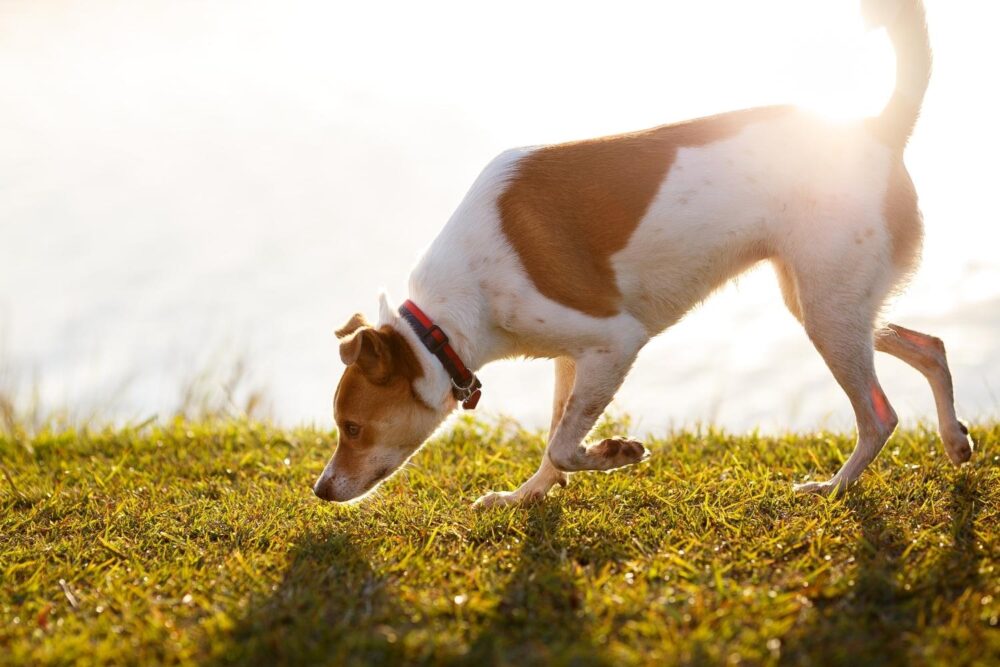
For dogs, smell is the dominant sense used to understand people, places, and situations. Their noses contain hundreds of millions of scent receptors, allowing them to detect chemical changes far beyond human perception.
Because of this, emotional states are not abstract to dogs. When a human’s internal chemistry shifts, dogs receive that information instantly through scent. To a dog, smell isn’t supplemental. It’s the main channel through which the world makes sense.
Follow us and access great exclusive content every day
2. Fear produces distinct chemical changes in the body

When fear activates the stress response, the body releases hormones that influence sweat composition and breathing. These changes subtly but measurably alter body odor.
Unlike regular perspiration, fear-related sweat carries stress-linked compounds. Humans may only notice physical sensations like tension or a racing heart, but dogs encounter a distinct chemical signal that indicates heightened emotional arousal.
3. Dogs react behaviorally to fear-based scents

Research shows dogs don’t simply detect fear-related odors — they respond to them. When exposed to human fear scent, dogs often display increased vigilance and stress-related behaviors.
These reactions suggest fear scent carries meaning for dogs. It doesn’t register as neutral information. Instead, it influences how dogs behave in the moment, shaping their responses even when no visible danger is present.
4. Smell communicates fear faster than words or expressions

Visual cues like facial expressions and tone of voice take time to register. Scent does not. Dogs can detect chemical changes almost instantly, sometimes before a person consciously recognizes their own fear.
This explains why dogs may react before anything outward seems wrong. By the time someone tries to appear calm, their body chemistry may already be communicating stress through scent.
Follow us and access great exclusive content every day
5. A university study showed dogs distinguish fear from neutral scent
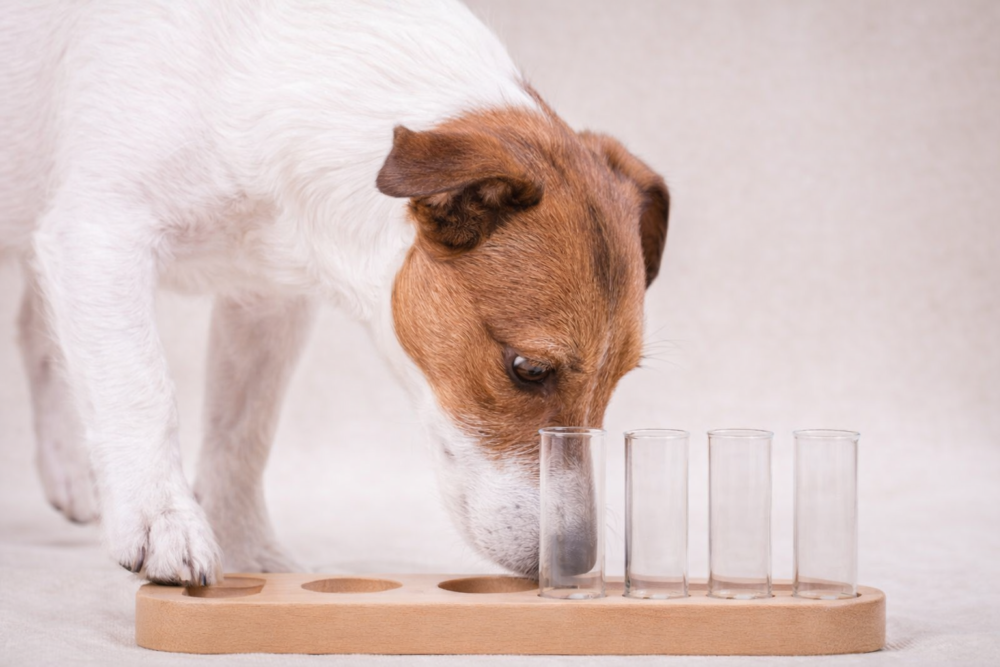
In a controlled study conducted at the University of Naples Federico II, researchers collected sweat samples from people experiencing fear and from people in neutral emotional states. Dogs exposed to these samples responded differently depending on the scent.
Fear samples prompted more stress behaviors and increased proximity-seeking toward handlers. The results demonstrated that fear has a recognizable scent profile and that dogs can reliably distinguish it from non-emotional human odors.
6. Fear scent can shift how dogs interpret their environment
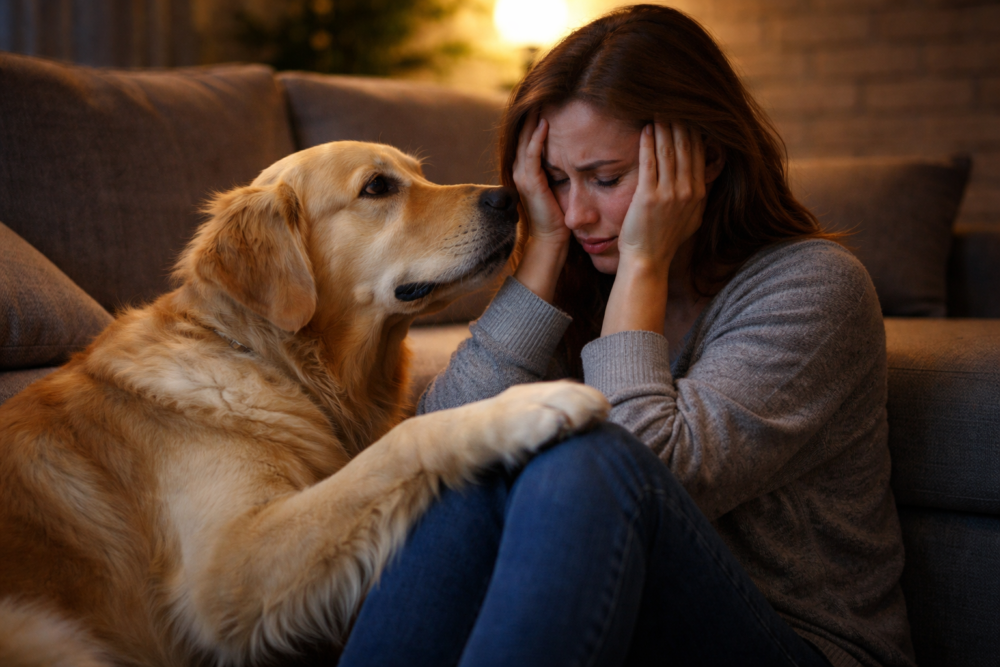
When dogs detect fear-related scent, it may change how they assess the situation around them. The scent acts as a biological warning, signaling potential risk even if no immediate threat is visible.
This can make dogs more cautious, alert, or reactive. They may scan their surroundings more carefully, stay closer to trusted humans, or hesitate before engaging. The response is not emotional reasoning in a human sense.
It’s a survival-oriented reaction to chemical information that suggests uncertainty or danger. For dogs, fear scent isn’t just about the person emitting it. It becomes part of the environment itself, influencing decisions about movement, attention, and social interaction until the signal fades.
7. Dogs may absorb human fear through emotional contagion

Another study, conducted by researchers at the University of Bristol, found that dogs exposed to fear-related human scent showed changes consistent with emotional contagion. Their behavior became more cautious, and they were more likely to expect negative outcomes in problem-solving tasks.
This suggests fear can spread between humans and dogs through scent alone. Dogs aren’t just detecting fear — they may be emotionally influenced by it, reinforcing stress within shared spaces.
Follow us and access great exclusive content every day
8. Sensitivity to fear likely evolved for survival

Detecting fear would have offered clear evolutionary advantages. For early canines, sensing stress or danger in others could provide critical information about nearby threats.
Over time, domestication strengthened dogs’ responsiveness to human cues. Living alongside humans refined their ability to read emotional signals, turning an ancient survival trait into a cornerstone of companionship.
9. Dogs sense fear without knowing its cause

While dogs can detect fear, they don’t understand why it’s happening. The scent provides no context, only information that something is wrong.
This can lead to cautious or confused behavior, especially if fear is unrelated to the immediate environment. Dogs respond to the signal itself, not the reason behind it, which explains why they may seem uneasy in otherwise safe situations.
10. Awareness of fear scent can change human–dog interactions

Understanding that fear has a detectable scent can help people interact more thoughtfully with dogs. Calm behavior alone may not fully mask internal stress.
When humans recognize that dogs are responding to chemistry rather than intention, it encourages patience and empathy. Fear may feel private to us, but to dogs, it’s something tangible — carried on the air and impossible to ignore.