
Some foods with a “healthy” reputation can quietly work against your goals, depending on how they’re eaten.

Many foods earn a health halo because they sound nutritious, are marketed that way, or were once widely recommended.
But doctors and nutrition experts say context matters more than labels. Portion size, processing, added sugars, and how foods affect blood sugar and satiety can all change whether something actually supports health.
In some cases, foods people rely on daily may not be harmful—but they also may not be doing the good they expect.
1. Flavored yogurt can behave more like dessert

Yogurt is often seen as a go-to health food, especially for protein and probiotics. But many flavored varieties contain as much added sugar as ice cream.
That sugar can spike blood glucose and cancel out potential benefits. Without enough protein or fat to slow digestion, some yogurts don’t keep people full for long. Plain yogurt with simple add-ins tends to be far more supportive.
2. Granola is easy to overeat
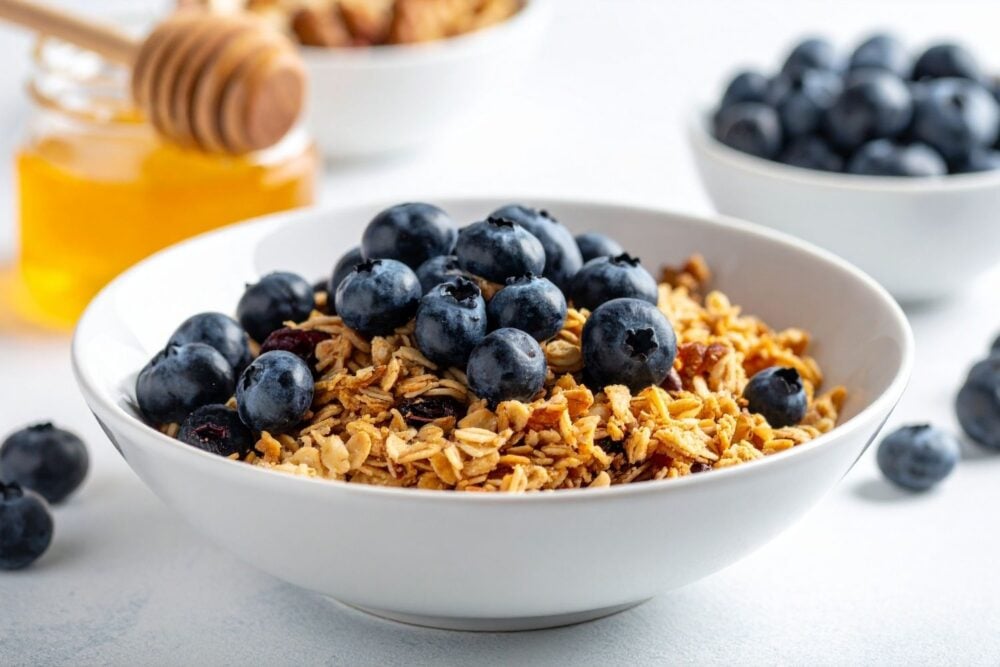
Granola is associated with whole grains and nuts, which sounds ideal. The problem is that it’s calorie-dense and often coated in sweeteners and oils.
Small portions add up quickly, especially when poured freely into bowls or eaten as a snack. For many people, granola delivers more sugar and calories than they realize. It’s not unhealthy—but it’s rarely as light as it seems.
3. Fruit juice lacks the benefits of whole fruit

Fruit juice feels healthy because it comes from fruit. But juicing removes most of the fiber that helps regulate blood sugar and digestion.
Without fiber, the body absorbs sugar rapidly. This can lead to energy crashes and increased hunger later. Whole fruit generally provides better blood sugar control and longer-lasting fullness.
4. Plant-based meat substitutes aren’t always nutritious

Meat alternatives are often marketed as healthier by default. In reality, many are highly processed and contain long ingredient lists.
Some are high in sodium, refined oils, and additives. While they can be useful for reducing meat intake, they don’t automatically improve nutrition. Doctors often recommend viewing them as occasional substitutes, not staples.
5. Protein bars can act like candy bars

Protein bars are popular for convenience and muscle support. But many contain added sugars, syrups, and refined carbs.
If the protein content is modest and sugar is high, the bar won’t stabilize energy or appetite. Some bars are better than others, but many people assume all are equally beneficial. Reading labels makes a big difference.
6. Smoothies can hide a lot of sugar

Smoothies are often packed with fruit, juice, and sweetened ingredients. While they contain nutrients, the sugar load can be substantial.
Drinking calories also reduces the feeling of fullness compared to eating solid food. This makes it easier to overconsume without realizing it. Balanced smoothies require careful ingredient choices.
7. Multigrain labels can be misleading

Foods labeled “multigrain” sound healthier than white versions. But the term doesn’t guarantee whole grains or fiber.
Some multigrain breads are still made mostly from refined flour. Without enough fiber, they affect blood sugar much like white bread. Doctors advise checking fiber content rather than relying on the name.
8. Low-fat products often replace fat with sugar

Low-fat foods gained popularity decades ago and still seem virtuous. To maintain flavor, many replace fat with sugar or starch.
Fat isn’t inherently harmful and helps with satiety. Removing it can make people less satisfied and more likely to overeat. Balance often matters more than fat reduction.
9. Snack packs encourage grazing, not fullness

Pre-portioned snack packs look controlled and sensible. But many are built around refined carbs and quick sugars.
They digest fast and don’t provide lasting energy. This can lead to repeated snacking rather than true meals. Doctors often recommend prioritizing protein and fiber instead.
10. “Natural” sweeteners still affect blood sugar

Honey, agave, and coconut sugar are often seen as healthier alternatives. While they may contain trace nutrients, they still act like sugar in the body.
They raise blood glucose and add calories without much satiety. Using them sparingly is key. “Natural” doesn’t mean neutral.
11. Health depends on patterns, not single foods

No single food makes or breaks health. The issue arises when certain “healthy” foods dominate the diet without delivering balance.
Doctors emphasize overall eating patterns over individual items. Foods that sound good on paper may fall short in practice. Awareness—not restriction—is usually the most effective adjustment.