
What science can measure, what it can’t observe, and why the answer may always stay out of reach.
The question of whether the universe is infinite sounds simple, but astrophysicists say it may be one of the hardest questions science can ever answer. Modern telescopes can see farther than at any point in history, yet they still show only a fraction of what exists.
What we observe is limited by the speed of light, the age of the universe, and the way space itself expands. As a result, scientists must rely on measurements, models, and careful reasoning rather than direct observation.
Click through to learn what researchers know, what remains uncertain, and why the universe’s true size may always stay just beyond our reach.
1. What we can see is not the whole universe
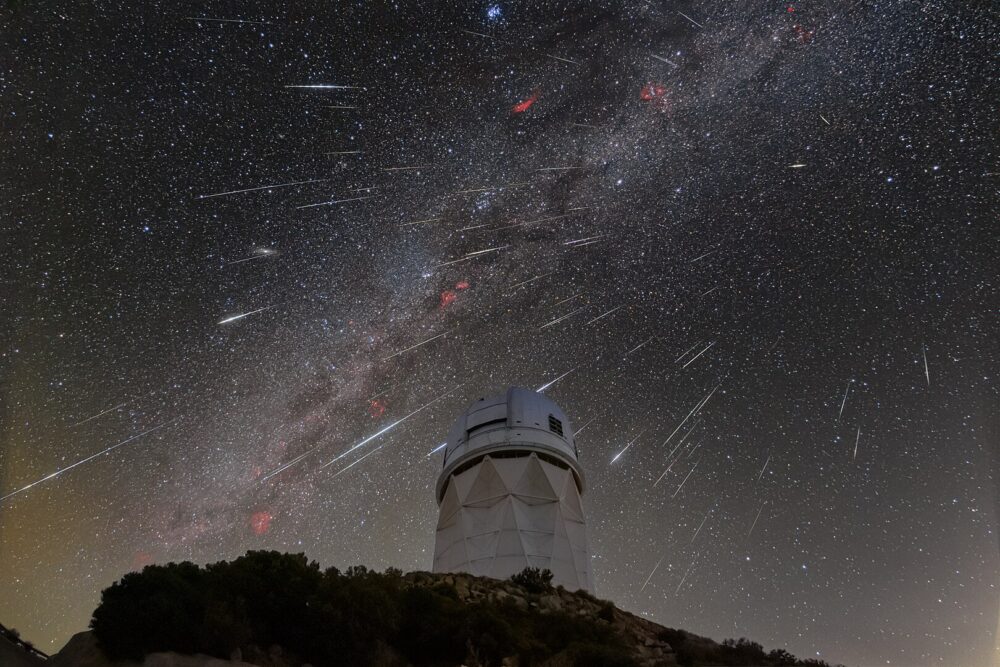
When scientists observe the universe, they are limited to what is called the observable universe. This is the region of space from which light has had time to reach Earth since the Big Bang.
Anything beyond that boundary is invisible to us, not because it doesn’t exist, but because its light hasn’t arrived yet. This makes the observable universe a window, not a map of everything.
Follow us and access great exclusive content every day
2. The universe has a measurable age
The universe is about 13.8 billion years old, based on precise measurements of cosmic expansion. That age places a hard limit on how far we can see.
Light travels at a finite speed, so distant regions simply haven’t had enough time to send information to us. This creates a natural horizon that blocks direct answers about what lies beyond.
3. Expansion complicates the idea of “edges”
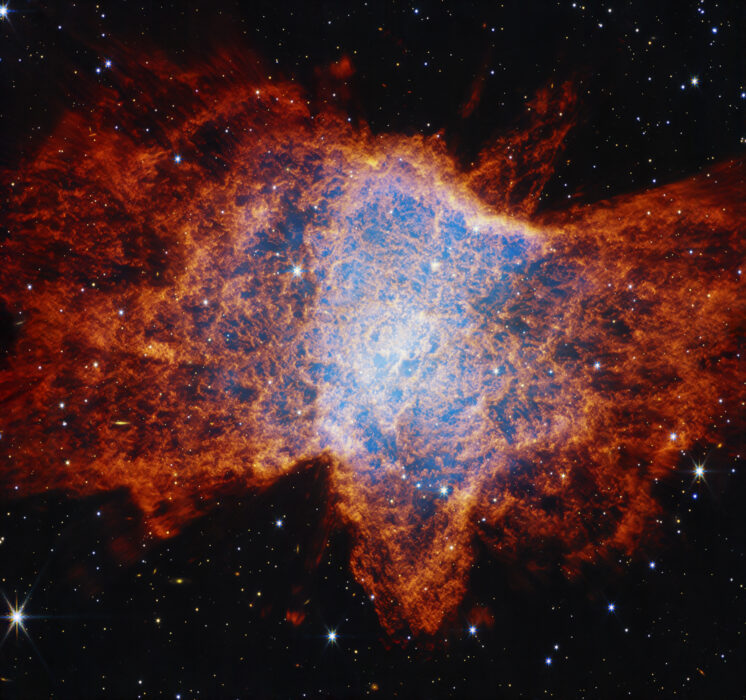
The universe isn’t expanding into empty space. Instead, space itself is stretching, carrying galaxies farther apart over time.
Because of this, there may be no physical edge or boundary. The universe can be finite without having an edge, similar to how the surface of a sphere is finite but has no borders.
4. Flat geometry allows for infinite possibilities
Measurements of cosmic background radiation suggest the universe is geometrically flat, at least within observational limits.
A flat universe could be infinite, extending forever in all directions. However, it could also be extremely large but finite, making the difference impossible to detect with current tools.
Follow us and access great exclusive content every day
5. Observations can’t rule out infinity

Even the most powerful telescopes cannot confirm whether the universe goes on forever. Scientists can only measure curvature and structure within the observable region. I
f the universe is finite but vastly larger than what we can see, it would look flat and endless from our perspective. This means an infinite universe and a very large finite universe can produce the same observational evidence.
As a result, infinity remains a theoretical possibility rather than a measurable conclusion, rooted in mathematics and models rather than direct proof.
6. Inflation theory makes the universe harder to measure
The theory of cosmic inflation suggests the universe expanded extremely rapidly just after the Big Bang. This expansion would have smoothed out curvature.
Inflation could make the universe appear flat even if it has a larger shape beyond observation. That makes distinguishing between finite and infinite even more difficult.
7. Finite doesn’t mean small or simple

If the universe is finite, it could still be unimaginably large. Some models describe a closed universe that loops back on itself.
In such a case, traveling far enough in one direction could theoretically return you to your starting point, even though the universe feels endless locally.
Follow us and access great exclusive content every day
8. Scientists rely on background radiation for clues

One of the best tools for studying the universe’s shape is the cosmic microwave background, leftover radiation from the early universe.
Tiny fluctuations in this radiation help scientists estimate curvature. So far, results show no detectable curvature, but that doesn’t prove infinity.
9. Mathematics allows multiple valid models
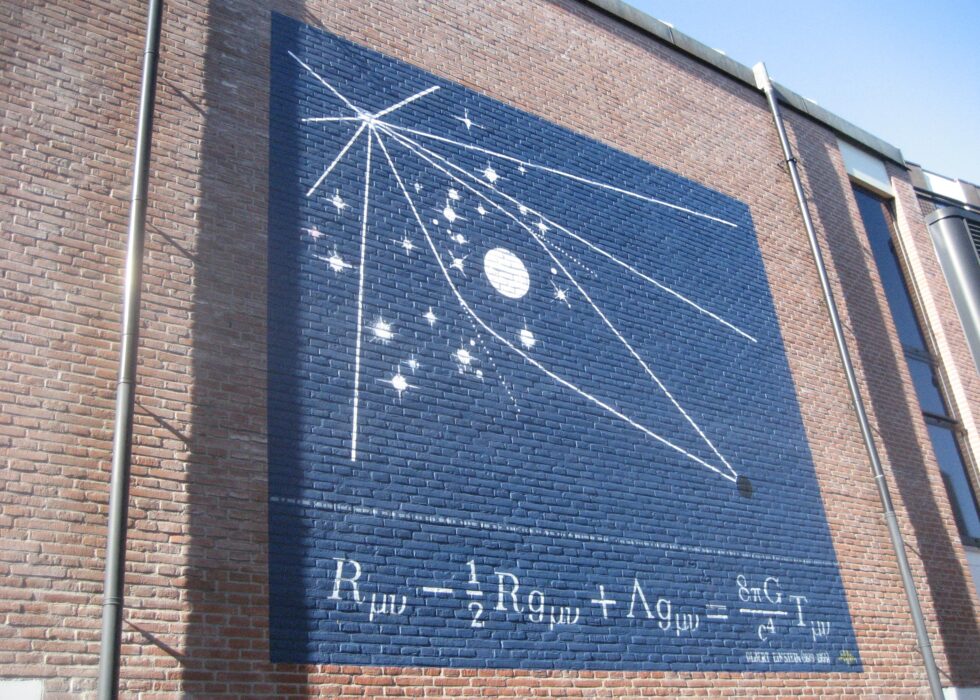
Cosmological equations allow for both infinite and finite universes. Each model fits current data within uncertainty limits.
Without new kinds of observations, scientists can’t eliminate one possibility. The universe’s true size may depend on conditions forever hidden beyond our horizon.
10. Infinity may be scientifically untestable
Some physicists argue that whether the universe is infinite may never be settled by observation. It could remain a philosophical question.
Science can describe what is observable and predictable, but infinity might lie outside the limits of experimental verification.
11. The mystery reflects the limits of knowledge
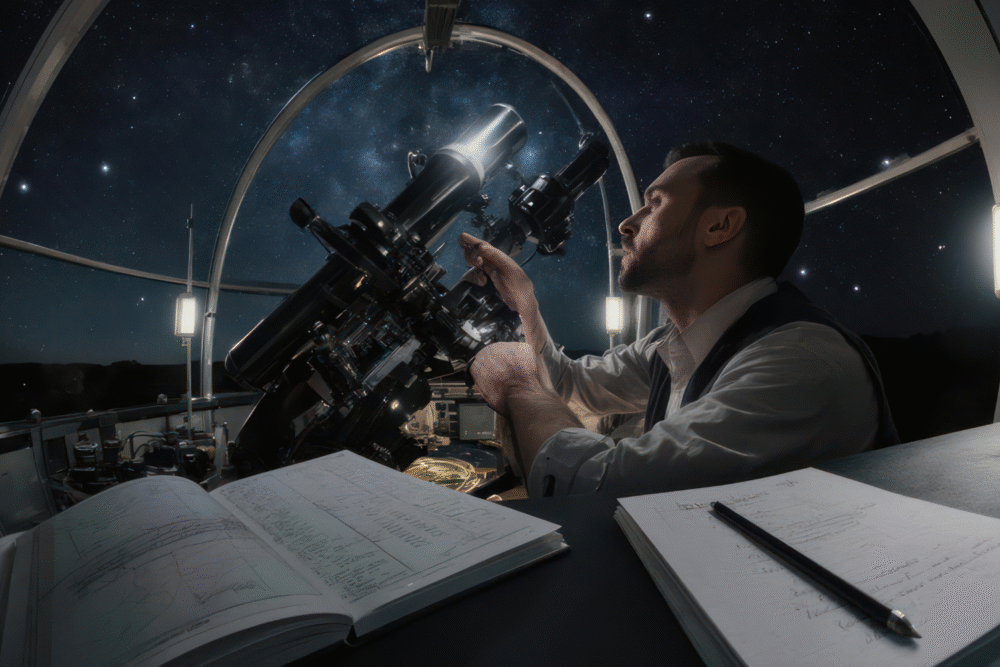
The question of an infinite universe highlights how far science has come and where it still stops. Astrophysics explains expansion, age, and structure with remarkable precision.
Yet some questions may always remain unanswered, not because science failed, but because the universe itself keeps certain truths beyond reach.