
New research points to an unexpected method that may explain how the moai were moved.
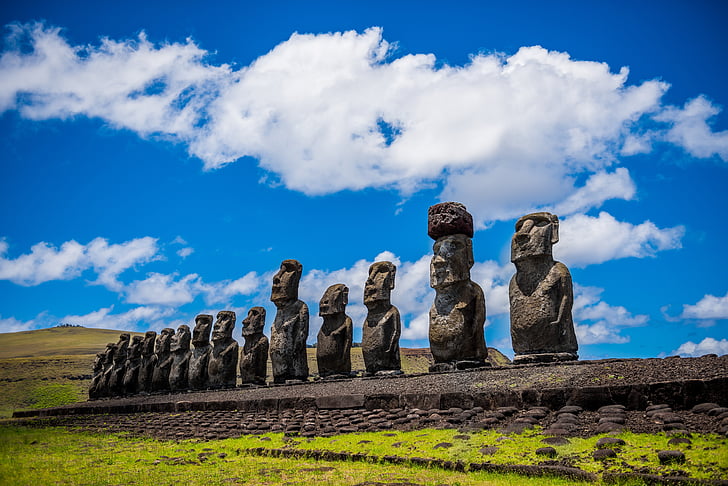
For centuries, the Polynesian people of Easter Island told European explorers their giant statues “walked” — a claim long dismissed by scholars. But new experiments and physics-based modeling are breathing life into that legend.
Researchers have now moved a replica moai upright for 300 feet in just 40 minutes using a rope-rocking method, and they argue that ancient builders engineered the statues to tilt forward slightly, enabling controlled side-to-side rocking. If accepted, this may rewrite how we understand ancient engineering on Rapa Nui.
1. The Mystery of Easter Island’s Moving Giants
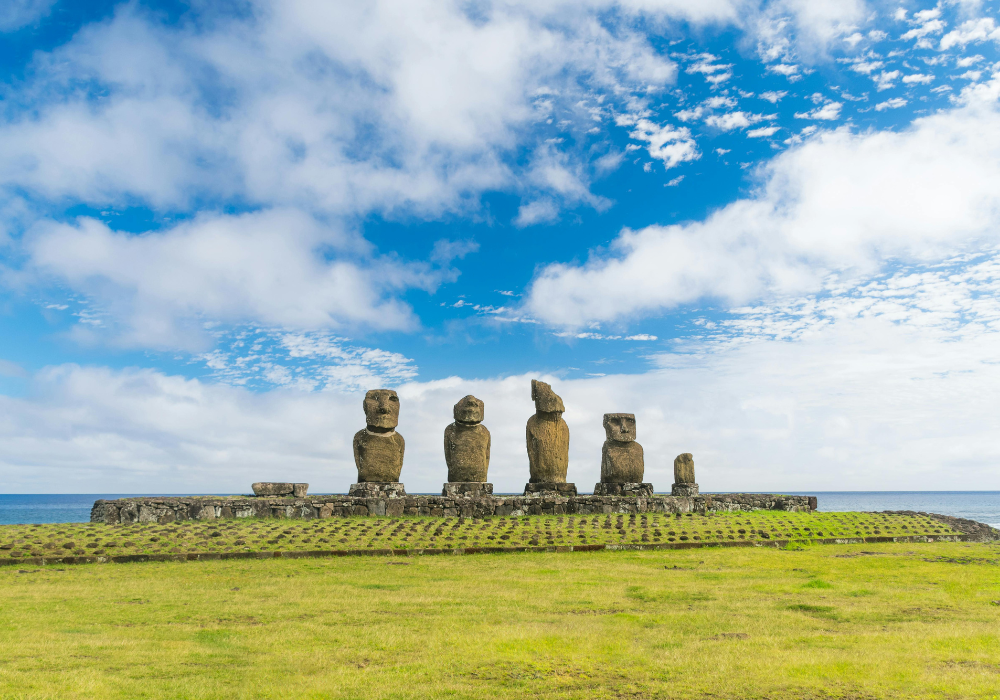
For centuries, the towering moai statues of Easter Island—some weighing up to 80 tons—have puzzled historians and engineers alike. How did a small island community move nearly 900 of these massive figures without wheels, cranes, or draft animals?
Oral traditions recorded by early European visitors offered a stunning claim: the statues “walked” to their platforms. Long dismissed as myth, that story has now gained new traction thanks to modern physics and careful archaeological testing that suggest ancient Rapa Nui builders used an ingenious method of balance and motion.
2. New Evidence Points to “Walking” Movement
Recent research published by anthropologists Carl Lipo and Terry Hunt has revived the walking theory. Using replicas and precise measurements, their team showed that the statues could be rocked forward using ropes and gravity in a controlled, upright “walking” motion.
Unlike dragging, which would have required immense manpower and risked breakage, this side-to-side rocking technique let small groups move statues efficiently. The study suggests the moai’s forward-leaning design was intentional—helping them shift balance smoothly as they “walked” along prepared paths.
3. A Physics-Based Solution to an Ancient Puzzle
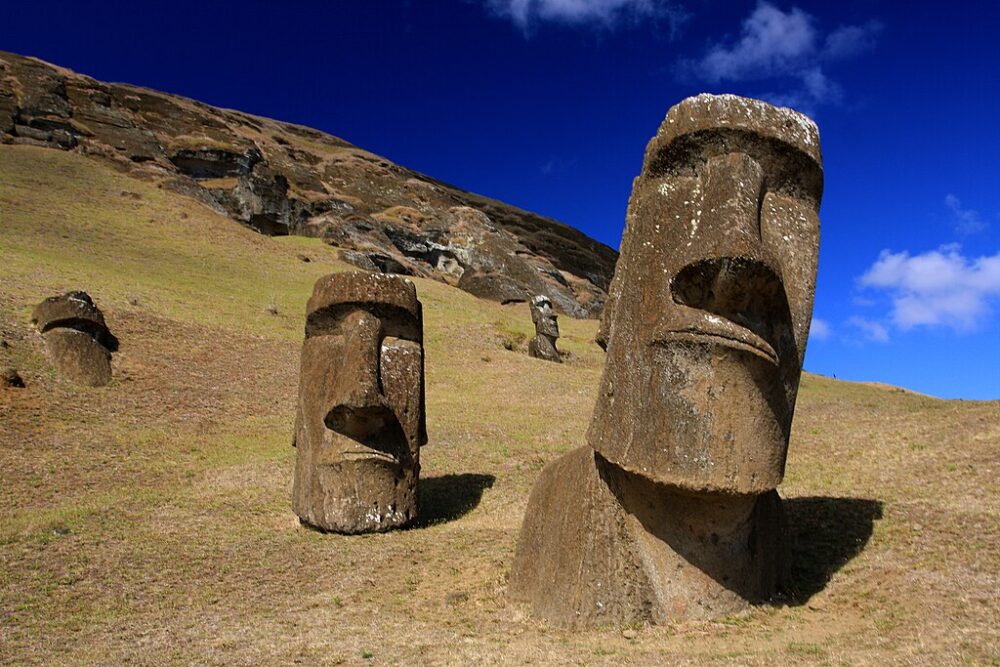
Engineers studying the moai’s shape found that their low centers of gravity and rounded bases make them inherently stable yet capable of rocking motion. By tugging ropes from alternating sides, workers could tilt and pivot each statue forward.
Computer simulations confirmed that this technique would minimize friction and match wear patterns found on ancient transport roads. The experiment offers a rare convergence of physical evidence, oral history, and modern mechanics—turning what once seemed mythological into a plausible feat of prehistoric engineering.
4. Experiments Prove the Concept Works
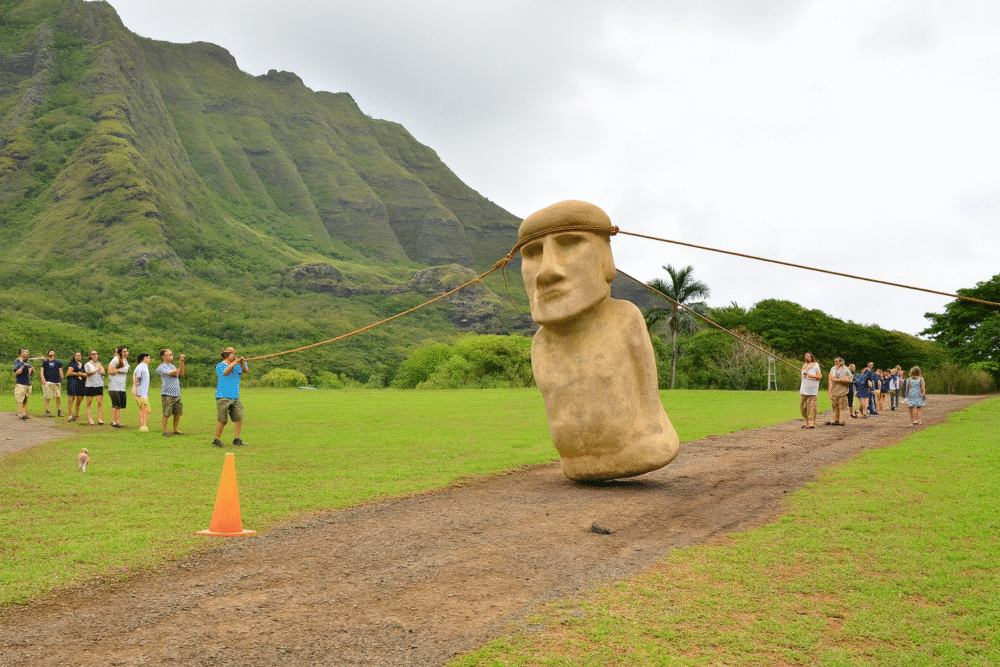
To test the theory, researchers built a 10-foot-tall concrete replica modeled on authentic moai proportions. In a dramatic experiment, 18 volunteers moved it upright over 300 feet in just 40 minutes using only three ropes and synchronized pulling.
The statue rocked gently side to side, maintaining balance as it moved forward in short, rhythmic steps. High-speed motion analysis showed that its movement closely matched marks found on ancient roads in Rapa Nui. For the first time, science demonstrated that the islanders’ “walking” explanation could actually be true.
5. Ancient Design, Not Accident
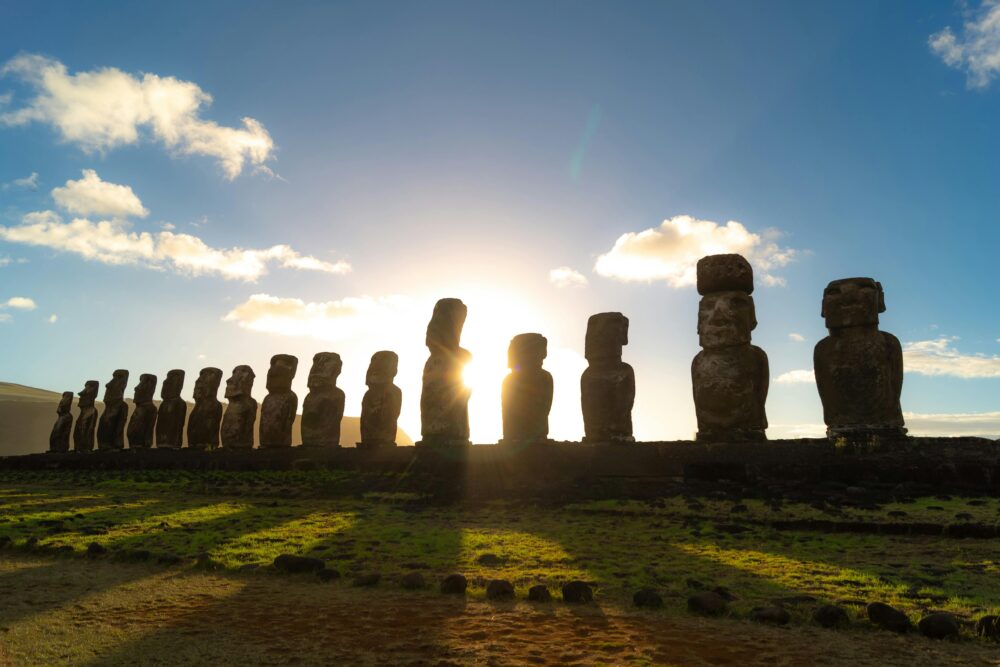
The new findings suggest that the moai’s unique design—narrow base, protruding belly, and slightly tilted stance—was deliberate, not aesthetic coincidence. The forward lean helped lower the center of gravity, making it easier to rock forward without tipping.
This insight reframes the moai not as static monuments but as functional objects engineered for motion. The people of Rapa Nui were not simply builders; they were expert designers who understood how to exploit balance, rhythm, and teamwork long before modern physics described such principles.
6. Oral Traditions Reconsidered as Historical Clues
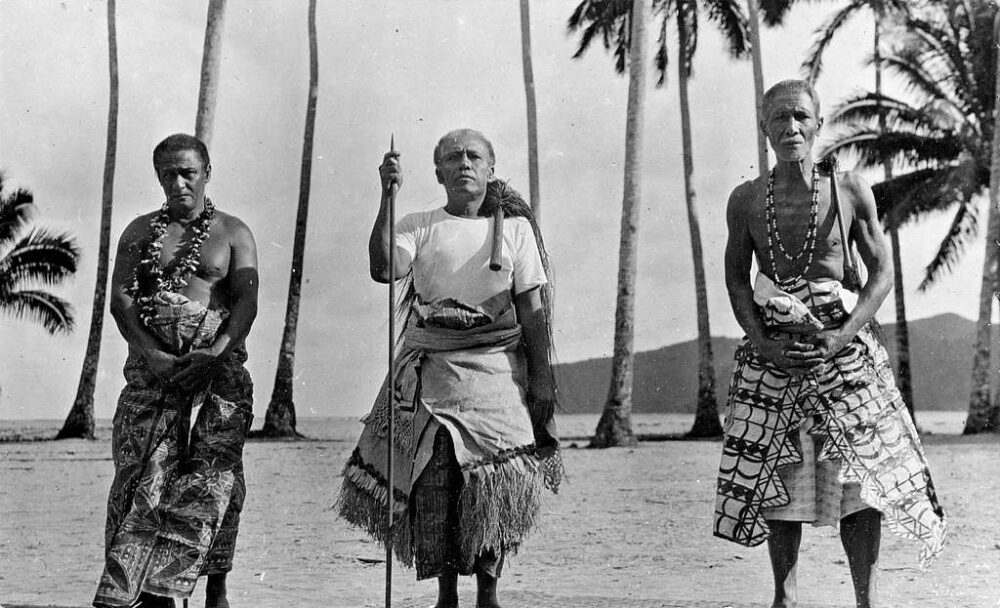
When early European explorers arrived in the 18th century, the island’s Polynesian inhabitants insisted that the statues “walked” with spiritual power. Western archaeologists long dismissed this as metaphorical or mythic storytelling.
Now, that oral history appears rooted in real technique. Scholars believe the “walking” story may have preserved cultural memory of the statues’ upright transport method. The discovery highlights the reliability of Indigenous knowledge systems, reminding researchers that oral traditions can encode complex technical understanding across generations.
7. Evidence Hidden in the Landscape
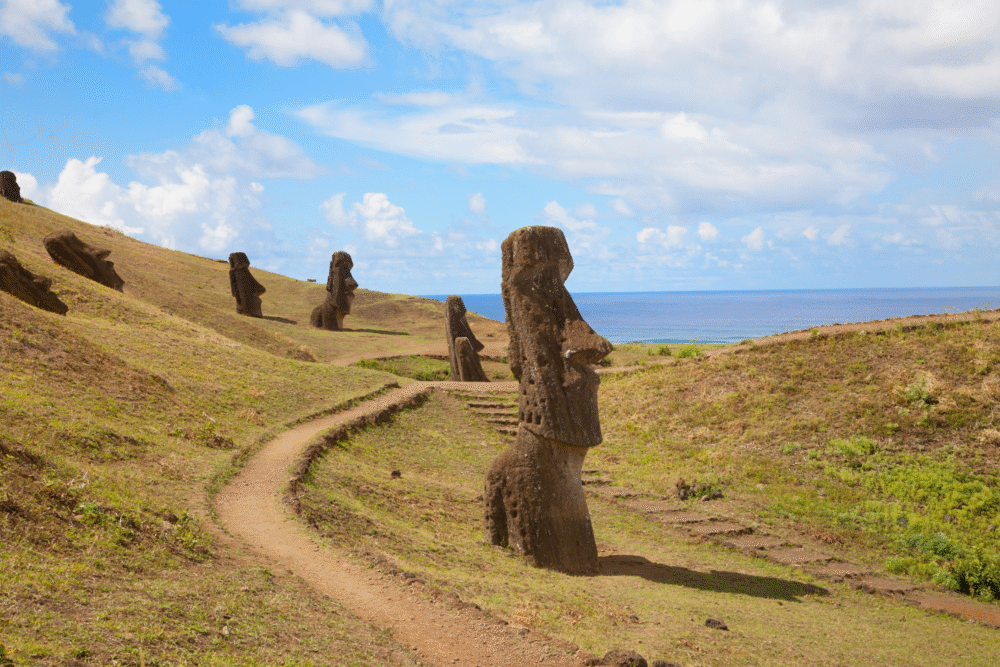
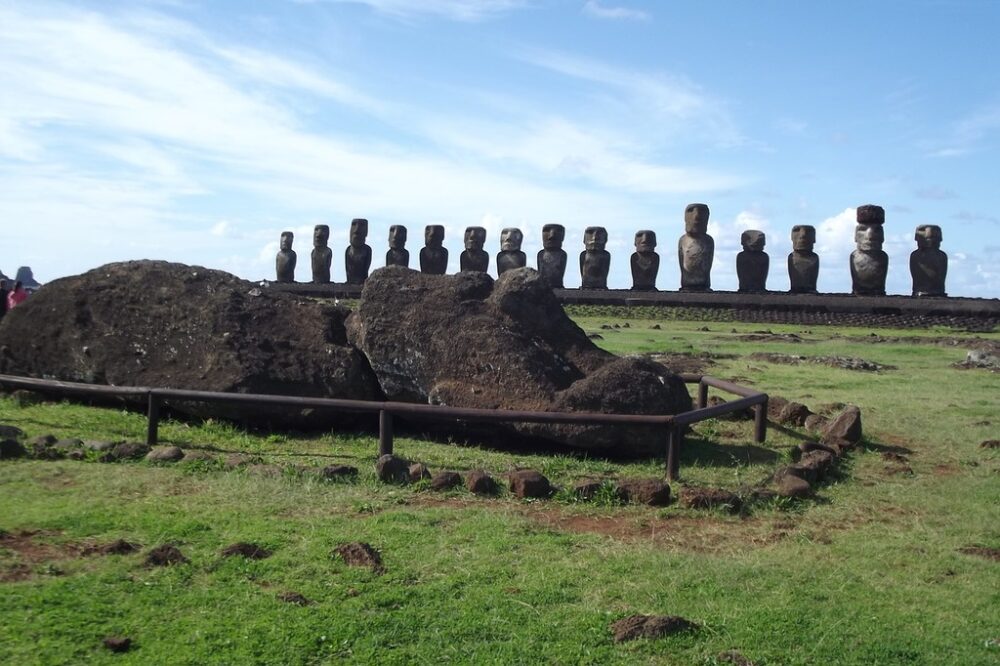
Archaeologists studying Easter Island’s terrain have identified ancient roads with consistent grooves and wear patterns along their edges—signs that statues were moved upright rather than dragged flat. These transport routes lead directly from quarry sites to coastal platforms known as ahu.
Some moai were found abandoned mid-route, still standing upright in place, frozen in motion as if left during transport. Their positions align perfectly with the paths predicted by the rocking technique, providing further proof that the “walking” motion wasn’t just symbolic—it was literal.
8. The Human Collaboration Behind the Feat
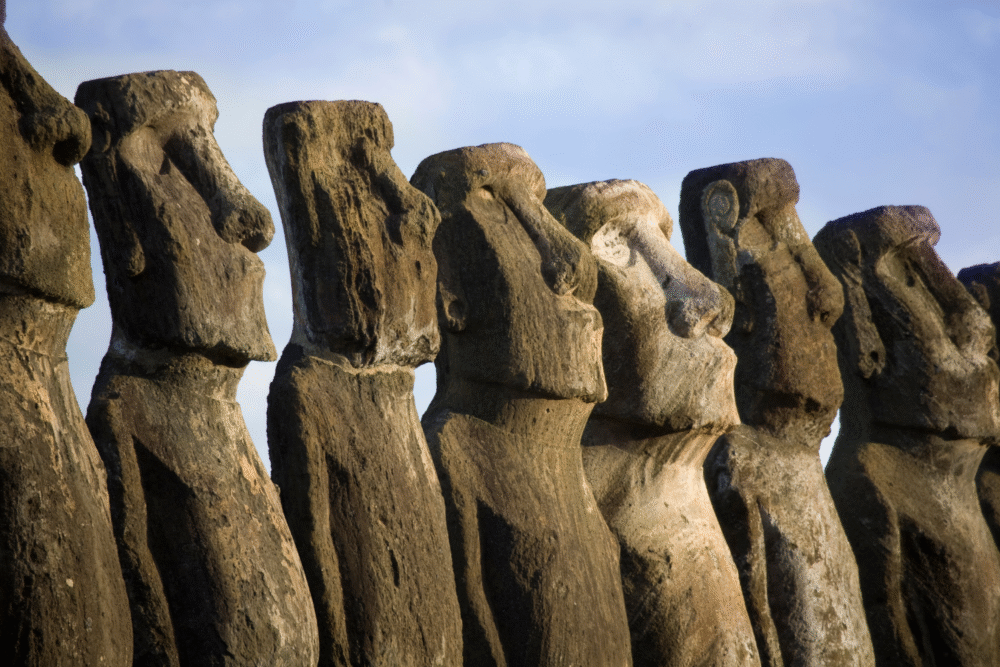
Moving a 13-foot-tall, 10-ton moai required extraordinary coordination. Teams likely worked in rhythmic unison, chanting to maintain timing and balance as the statue shifted forward. Rope fibers and tool remnants found on-site support this cooperative process.
Such communal labor reflected not only engineering prowess but also deep spiritual purpose. Each moai represented an honored ancestor, and guiding it to its platform was a sacred act. The research underscores that early Polynesians combined technical mastery with cultural reverence in ways modern science is only beginning to appreciate.
9. Debunking Old Theories of Dragging
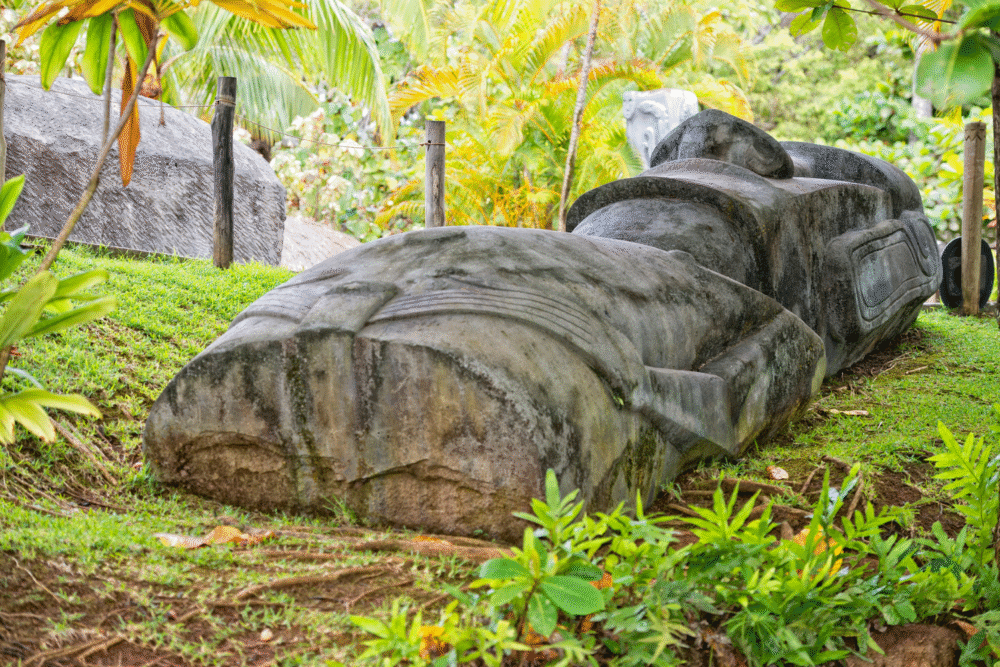
Earlier explanations proposed that the statues were dragged horizontally on wooden sleds or rollers—methods that required massive tree resources the island did not possess in abundance. Critics also noted that horizontal transport would likely damage the fragile tuff stone.
The walking hypothesis resolves these issues neatly. It requires fewer people, minimal timber, and matches the archaeological record. By moving the statues vertically, the Rapa Nui people conserved energy and preserved the integrity of each monument, making it a more sustainable and elegant solution than previous theories allowed.
10. A Lesson in Ancient Engineering Ingenuity
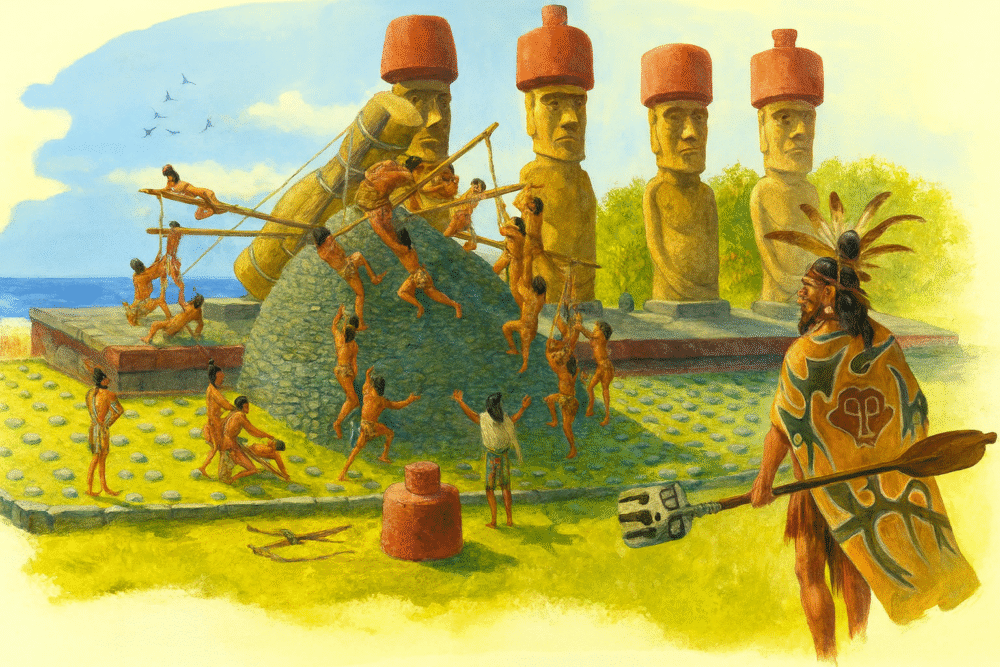
The experiments have reshaped how scientists view Rapa Nui civilization. Far from an isolated culture in decline, the island’s people demonstrated extraordinary creativity under environmental constraints. They applied balance, rhythm, and observation to solve one of the ancient world’s most challenging logistical problems.
Modern engineers studying the moai’s movement describe it as “an intuitive understanding of physics without equations.” The discovery challenges long-held stereotypes about prehistoric technology and places Polynesian innovation alongside other great engineering achievements of the ancient world.
11. Cultural Legacy and Preservation
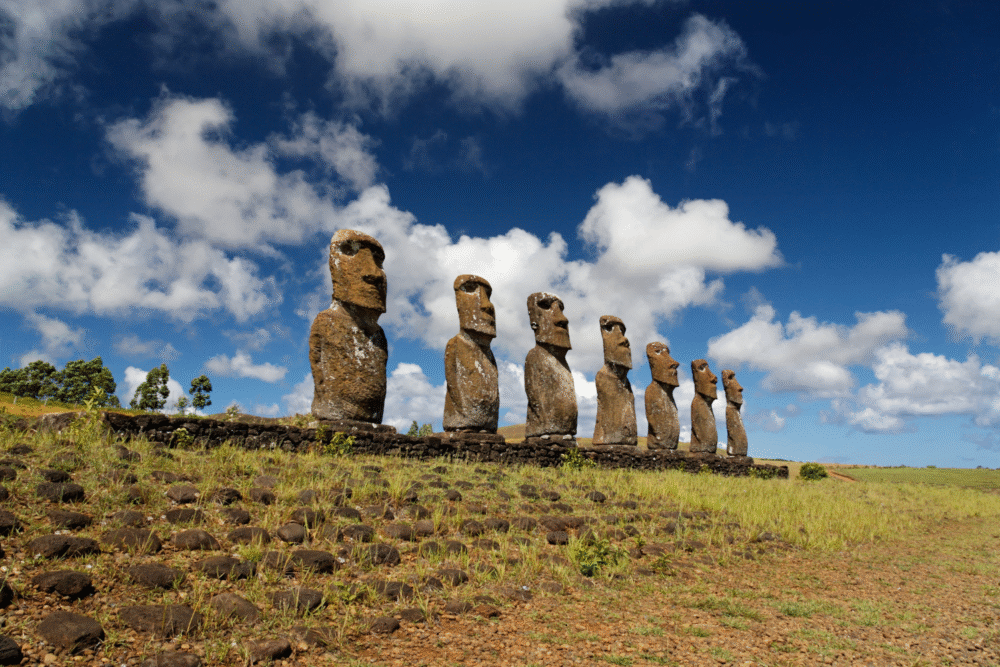
Easter Island’s moai remain a powerful symbol of Polynesian identity and resilience. Today, conservation teams face new challenges as climate change, erosion, and tourism threaten the statues’ stability. Understanding how they were originally moved and positioned helps protect them for the future.
By recreating the moai’s “walking” technique, researchers not only solved a historical mystery but also deepened global respect for Indigenous science. Each new discovery reinforces that ancient ingenuity often rivals—or surpasses—modern assumptions about human innovation.
12. Science and Legend Finally Align
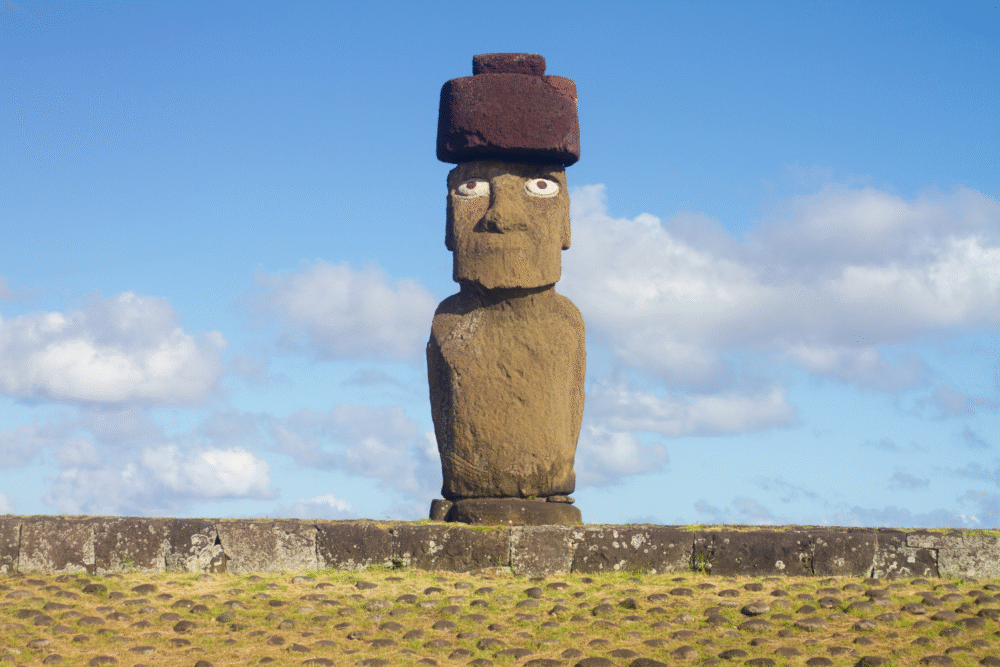
After centuries of speculation, the latest findings bridge myth and mechanics. The statues may not have walked on their own, but they did move upright, step by step, under human guidance—a living embodiment of faith, artistry, and physics intertwined.
This revelation doesn’t diminish the wonder of Easter Island; it enhances it. The people of Rapa Nui achieved the impossible with nothing but intelligence, coordination, and belief. Their story reminds us that history’s greatest mysteries often endure because their answers are both simple and profoundly human.