
Most people never talk about these insecurities, but they affect almost everything they do.

You might look at someone’s seemingly perfect life—their confident smile, their effortless success, their polished social media—and feel a twinge of inadequacy. It’s easy to believe that everyone else has it all figured out, while you’re secretly battling a host of personal demons. But what if I told you that beneath those carefully constructed exteriors, almost everyone is wrestling with their own quiet anxieties and self-doubts?
We live in a world that often demands perfection, creating immense pressure to appear strong, capable, and completely secure. This makes us hide our vulnerabilities, fearing that any crack in our facade will expose us as uniquely flawed. But the truth is, many of the insecurities you feel are universal human experiences, secretly carried by countless others. Get ready to peel back the layers and recognize the shared humanity in our struggles.
1. That quiet voice saying you’re not good enough never seems to shut up.

It lurks in the background—persistent, nagging, relentless. No matter how many goals you crush or compliments you get, it finds a way to twist your wins into “not quite there yet.” This insecurity worms its way into your career by making you doubt your competence and creeps into relationships by whispering that you’re unworthy of real love, according to Georgia McCartney at Yahoo Life. It’s exhausting, always chasing an elusive “enough” that keeps changing shape. Often, this fear traces back to childhood moments when love or praise felt conditional.
Now, it shows up as perfectionism, imposter syndrome, or chronic people-pleasing. But just because it’s loud doesn’t mean it’s right. That voice isn’t reporting facts—it’s echoing outdated beliefs you’ve outgrown. You can challenge it. You can interrupt the cycle. And you can choose to believe that showing up as you are is already more than enough.
2. You worry deep down that no one could love the real you.

It’s that shaky internal narrative telling you, “If they really knew me, they’d leave”, as reported by Ruth Gotian Ed.D., M.S. at Psychology Today. So, you hide the messy parts—your fears, flaws, quirks, or even your dreams. You become a master of shaping yourself to fit in, which only deepens the loneliness. This fear often stems from past rejection or being shamed for who you were. Over time, it builds a wall between you and real connection. You might become overly accommodating, terrified of rocking the boat, or, ironically, push people away first so they can’t reject you. But love isn’t earned through perfection—it thrives on authenticity.
When you risk being seen for who you truly are and discover that someone still chooses you, it starts to unravel the lie that you’re unlovable. You’re not too much. You’re not too flawed. You’re just human—and that’s all it takes to be worthy of love.
3. Rejection doesn’t just sting—it can feel like a total identity crisis.

Even a small “no” can spiral into a landslide of self-doubt, as stated by Nick at Nick Wignall. Whether it’s a job you didn’t get, a friend who ghosts, or a partner who pulls away, rejection feels personal—even when it’s not. That’s because, at its root, this fear isn’t about the other person’s decision. It’s about what that decision seems to say about you. Maybe it echoes old feelings of being overlooked or unworthy. So, you start tiptoeing around risk: staying silent in meetings, avoiding dating apps, skipping that audition. But playing it safe slowly suffocates your potential.
Rejection happens to everyone. It doesn’t mean you’re broken or doomed—it just means you’re human and brave enough to try. Each no brings you closer to the right yes, and your value doesn’t shrink because someone else couldn’t see it.
4. You might avoid taking chances because failure feels too personal.

It’s not just the fall that scares you—it’s what the fall says about who you are. When failing feels like proof that you’re flawed or incapable, the stakes suddenly feel sky-high. Instead of seeing missteps as normal parts of growth, you take them as confirmation that you’re not cut out for success. This belief can shrink your world until you’re stuck in a tiny comfort zone, afraid to test your own potential. You might procrastinate, overthink every decision, or stick to “safe” choices that don’t light you up.
But avoiding risk doesn’t prevent failure—it just prevents progress. You weren’t meant to play it small to protect your pride. Real growth comes from getting it wrong sometimes and figuring out what works through trial and error. Failure isn’t a character flaw—it’s a teacher with grit. You can fear it, sure, but don’t let it steer the wheel.
5. You constantly measure your life against someone else’s.

Comparison can feel like a sport you never meant to sign up for—but somehow, you’re always keeping score. That friend who just got promoted, the influencer with the seemingly perfect marriage, the neighbor who always looks put-together—they become silent benchmarks. You start to question if you’re falling behind or missing something.
The trap is, you’re stacking your messy, real life against their highlight reel. This constant ranking game distorts reality and erodes your self-esteem. You might downplay your wins or overlook the fact that their life isn’t spotless behind the curtain. The more you compare, the harder it becomes to appreciate what’s already good in your world. The only timeline that matters is your own. You don’t have to hustle to catch up to someone else’s life. Your milestones, no matter how quiet or delayed, are still valid and worthy of celebration.
6. You hesitate to speak your mind because judgment feels unbearable.

There’s this unspoken rule in your head: if you just say the “right” thing, no one will criticize you. So you rehearse your thoughts before sharing, second-guess your gut reactions, and maybe stay quiet even when your opinion matters. This fear of judgment isn’t shallow—it’s rooted in a deep need to feel accepted and safe. But censoring yourself doesn’t really protect you—it just builds resentment and chips away at your sense of identity. Eventually, you start wondering if people like you or the version of you you’ve crafted for approval. The truth? People will judge anyway. Some will misunderstand you.
That doesn’t mean your voice isn’t worth hearing. Speaking your truth, even when it’s imperfect or unpopular, helps you find the ones who value authenticity over polish. You don’t need to be palatable to be respected.
7. You quietly doubt your intelligence even when others see your worth.

You may be the go-to person for advice, solving problems left and right, and still wonder if you’re really smart enough. That inner voice keeps whispering that your success is just luck or that you’re one question away from being exposed as a fraud. Imposter syndrome loves to latch onto people who care deeply about doing well. But intelligence isn’t just about having the right answers—it’s about curiosity, growth, and how you handle uncertainty.
You don’t need a perfect memory or a fancy degree to be smart. The ability to think critically, admit what you don’t know, and keep learning? That’s the real deal. Give yourself credit for the wisdom you’ve earned and the insight you bring. You don’t have to feel smart every day to be brilliant in your own way.
8. The idea of being truly alone gnaws at the back of your mind.

It’s not just about being without company—it’s about feeling invisible or disconnected from something meaningful. You might fill your calendar, stay in a relationship that drains you, or cling to group chats that feel shallow, just to avoid the ache of solitude. The fear of being forgotten or emotionally abandoned often drives people to compromise their own needs just to maintain any connection.
Loneliness doesn’t always look like sitting alone in a room—it can hide behind forced laughter at a crowded party. And ironically, the harder you work to escape it, the more it grows. Facing this fear means learning to sit with yourself and actually like the company. When you do, relationships shift—they become choices instead of lifelines. You stop chasing connection from a place of need and start building it from a place of strength.
9. You might doubt your ability to be fully seen and still be accepted.

There’s something terrifying about being truly known—warts, weird habits, bad moods, and all. You may find yourself editing parts of who you are depending on the people around you, hoping that staying likable means staying loved. This insecurity doesn’t always scream for attention; sometimes, it whispers in your decisions to stay quiet, avoid conflict, or keep your deepest truths under wraps.
The thought that full vulnerability equals rejection can be so powerful, it convinces you to only show the “safe” parts of yourself. But real connection doesn’t come from perfection—it comes from honesty. The people who matter won’t run when they see your whole story. In fact, they’ll probably draw closer.
10. The mirror can become your harshest critic.
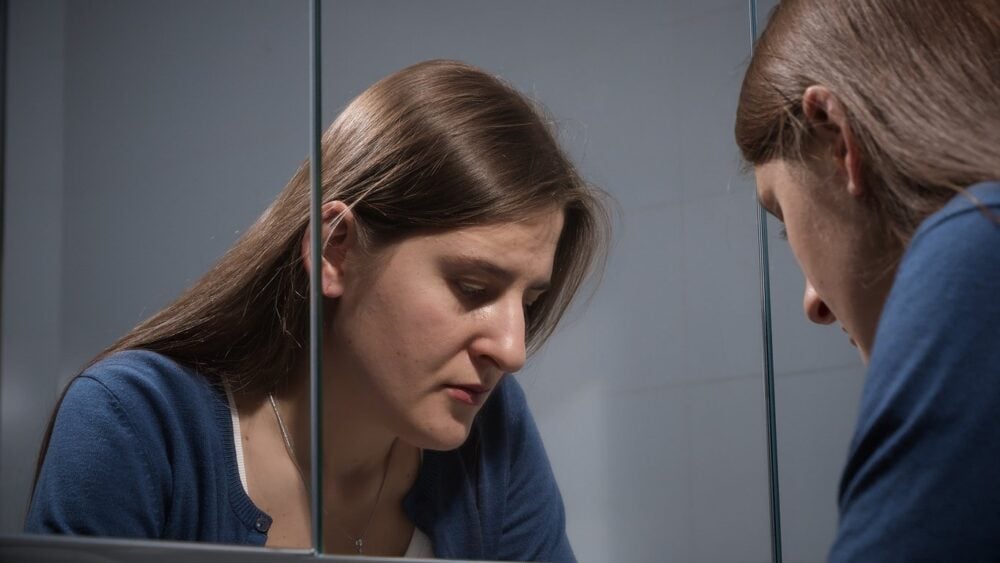
When self-worth gets tangled up with physical appearance, it creates a mental minefield. Every blemish, wrinkle, or perceived imperfection becomes exaggerated under your own internal magnifying glass. Even compliments feel hard to trust because you’re so focused on what’s “wrong.” This insecurity is constantly reinforced by unrealistic beauty standards and filtered social media images. It might make you avoid photos, dread events, or obsessively compare yourself to strangers online.
But what’s really getting lost here is how little looks define your true impact. The way you make people feel, the energy you bring, and the stories etched in your face all matter far more than the size of your jeans or the symmetry of your features. Confidence doesn’t require perfection—it grows from compassion, and that starts with how you speak to yourself.
11. You crave control more than you let on because chaos feels dangerous.

If you’re constantly planning every detail, micromanaging situations, or feeling tense when things don’t go as expected, it might not be about being “organized.” It could be a deep-rooted fear of unpredictability. When life feels uncertain, control becomes your safety blanket—even if it’s exhausting to hold on so tightly. You might struggle to delegate, hesitate to try new things, or spiral when plans change. This insecurity can wear you out and create friction in relationships, especially when others feel stifled by your need for structure.
Learning to tolerate uncertainty doesn’t mean becoming passive—it means trusting yourself to adapt when things shift. Letting go of total control creates space for freedom, spontaneity, and yes, a bit of joy you didn’t schedule.
12. You often feel like you’re missing out on the life everyone else is living.

That nagging fear that other people are having more fun, more success, or deeper connections can sneak into your thoughts without warning. Social media only fuels it—scrolling through curated snapshots of smiling faces, exotic vacations, and life milestones can leave you wondering why your life feels so… normal.
This feeling makes you question your choices, worry you’re not doing enough, and chase after experiences just for the sake of being part of something. The problem isn’t your life—it’s the illusion that you’re the only one who hasn’t figured it all out. Everyone wrestles with doubts and disappointments, even if they don’t post about it. Real happiness comes from tuning into your life, not constantly measuring it against a highlight reel.
13. You don’t always trust your gut—and it’s messing with your confidence.

You probably know that feeling—you sense something’s off, or you have a strong opinion about a decision, but you second-guess it until the moment passes. Then, you beat yourself up for not listening to your instincts. Doubting your intuition often comes from past moments where things didn’t go as planned or someone made you feel foolish for speaking up. Over time, this self-doubt becomes a reflex. You end up crowd-sourcing every decision, hesitating on your own truth, and feeling even less sure about your judgment.
But your inner voice isn’t there to be perfect—it’s there to guide you. Trusting it doesn’t mean you’ll never make mistakes; it means you’ll stop abandoning yourself. Your gut isn’t just a feeling—it’s experience, observation, and quiet wisdom all rolled into one. And it deserves to be heard.