
New theories about time and consciousness suggest the mind may process information before events actually happen.

Scientists are taking a fresh look at one of the strangest questions in human experience: why do some people feel they “know” something before it happens? New research into consciousness and time suggests that our perception of events may lag behind what our brains register, creating the illusion of intuitive foresight. Physicists studying the nature of time and psychologists exploring unconscious processing both point to a possibility that challenges everyday assumptions. While not evidence of true future-seeing, these ideas reveal how the brain and the universe may operate in ways far more complex than we realize.
1. Scientists Are Reexamining How the Brain Processes Time

Researchers note that the brain does not perceive the world in real time. Sensory information is processed with small delays, and the mind stitches inputs together to create a smooth timeline of experience. This means what we think is “now” may actually be a slightly edited version of events.
Small timing gaps in perception leave room for moments when the brain reacts before conscious awareness catches up. These effects can give people the sense that they sensed or anticipated something just before it happened, even though the brain was simply processing information rapidly.
2. Conscious Awareness May Arrive Later Than Unconscious Signals
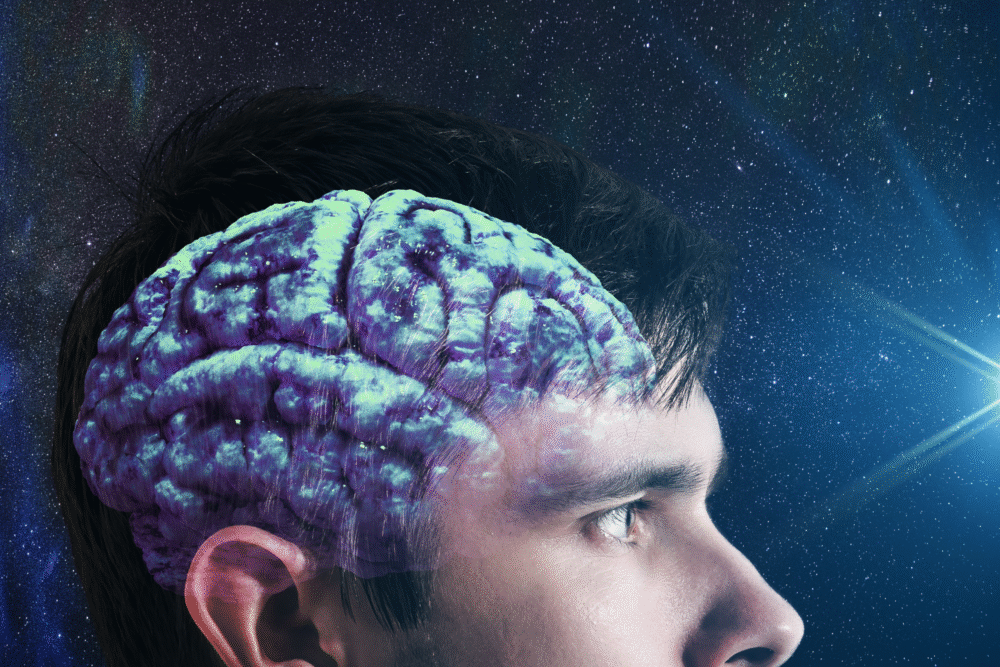
Scientific experiments show that the brain often begins preparing for action milliseconds before we consciously decide to move. This timing gap suggests that unconscious processes can register patterns or signals earlier than our reflective awareness does.
People sometimes interpret this lag as intuition or precognition. In reality, the unconscious brain may detect subtle cues, allowing individuals to respond seconds or fractions of a second before they consciously realize why. This ability can feel uncanny, even though it remains consistent with known neuroscience.
3. Predictions May Arise From Pattern Recognition, Not the Future
The brain is a powerful prediction engine. It constantly anticipates what will happen next based on patterns it has learned over a lifetime. When these predictions match reality—especially during emotionally intense or unusual moments—they can feel like accurate flashes of the future.
Researchers emphasize that this is not supernatural foresight. Instead, it’s a natural feature of human cognition. The brain forms expectations based on experience, sometimes so quickly and subtly that people believe they perceived an event before it occurred.
4. Physicists Note That Time May Not Flow Strictly Forward

Some physicists studying the nature of time argue that the traditional view of past, present, and future as separate may be incomplete. In certain theoretical frameworks, time may be more flexible than everyday experience suggests, with events interconnected in ways that are not intuitively obvious.
Although this does not mean humans can see the future, it raises questions about how consciousness interacts with time. These theories help scientists explore why some experiences feel temporally strange, even without invoking paranormal explanations.
5. Experiments Show Brain Activity Sometimes Predicts Decisions

Studies measuring brain activity have found that neural signals can indicate a person’s impending decision moments before they become aware of choosing. This implies a measurable delay between unconscious processing and conscious realization.
To people experiencing it, this delay can feel like a premonition or spontaneous insight. Scientists interpret it as evidence that the brain begins forming decisions earlier than consciousness recognizes, reinforcing the idea that unconscious activity plays a major role in “gut feelings.”
6. The Brain May Use Incoming Data Before We Fully Notice It

Researchers studying perception note that the brain sometimes reacts to information before a person consciously identifies it. Subliminal cues, rapid motion, or subtle sensory details may prompt a quick, accurate response.
This can give individuals the sense that they anticipated an event before it occurred. In fact, the brain simply processed the information faster than conscious awareness could label it. These effects are well documented in psychology and reflect normal brain function.
7. Emotional Events Heighten the Sense of Precognition

High-stress or emotionally charged situations can alter people’s perception of time. During moments of fear or surprise, the brain records more details, making events feel slower or oddly extended. These distortions can create the impression that someone sensed danger “in advance.”
Scientists studying these experiences find that intense emotion sharpens attention and improves rapid processing. This heightened awareness can make reactions seem precognitive, even though they are grounded in natural brain responses.
8. Memory Reconstruction Can Create the Illusion of Prediction

Human memory does not operate like a perfect recording. Instead, the brain reconstructs past events each time they are recalled, sometimes blending details or altering the order of experiences. This reconstruction can make an intuitive feeling seem more accurate in hindsight.
When people remember an event where they “felt something coming,” they may unintentionally exaggerate how strong or early the feeling was. Memory research shows this is a common cognitive bias that can mimic precognition.
9. Some Theoretical Physicists Explore the Idea of “Block Time”

In certain interpretations of physics, time is viewed as a dimension similar to space, where all moments exist simultaneously rather than flowing like a river. This perspective, sometimes called “block time,” suggests that past, present, and future may be part of a single structure.
These ideas do not imply that humans can access future information. However, they challenge conventional thinking about temporal boundaries, opening philosophical questions about how consciousness moves through time and why some experiences feel temporally unusual.
10. Cultural Narratives Shape How People Interpret Intuition

Stories of premonitions and prophetic dreams are found in cultures around the world. These narratives influence how people explain uncanny feelings or rapid reactions. When something unexpected happens, cultural beliefs may lead individuals to label coincidental timing as meaningful.
Researchers studying these phenomena note that cultural expectations can amplify the sense of prediction. People are more likely to view intuitive reactions as future-seeing when they grow up in environments where such experiences are widely discussed.
11. Scientists Stress That “Precognition” Has Natural Explanations

Despite public fascination, researchers say claims of true future-seeing lack scientific evidence. Instead, neuroscience and physics offer grounded explanations for experiences that feel precognitive. Delayed consciousness, rapid brain processing, memory reconstruction, and theoretical models of time can all contribute to these sensations.
While the mysteries of time and consciousness remain far from fully understood, scientists emphasize that intuition and rapid cognition can explain most of the phenomena people associate with precognition. These natural mechanisms reveal just how sophisticated—and sometimes surprising—the human brain really is.