
A new physics theory links gravity to information flow, raising questions about how real the universe truly is.
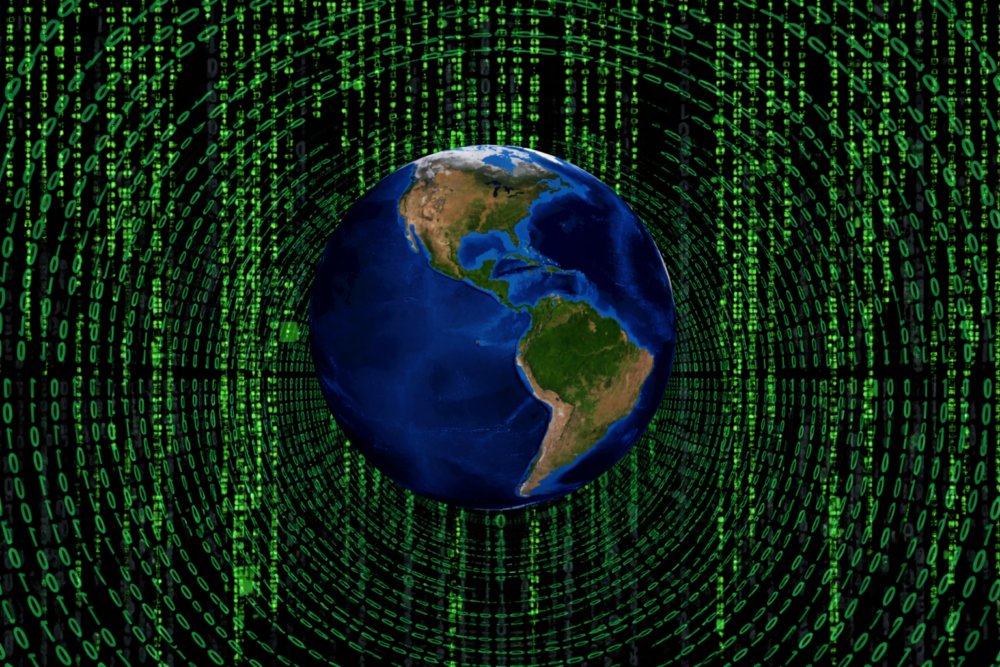
What if gravity is more than just a force that pulls objects together? What if it’s actually a clue about how reality itself is structured? That’s the question raised by a recent theoretical study by physicist Melvin Vopson, who argues that gravity may emerge from how the universe organizes information rather than from mass alone.
His work builds on ideas from information theory and thermodynamics, proposing that the universe may behave less like a smooth physical stage and more like a system that processes and optimizes data. This idea matters because it challenges one of the most basic assumptions about how the universe works.
Gravity is usually treated as a fundamental force, something that simply exists. But if gravity instead arises from deeper informational rules, it could reshape how scientists think about space, time, and reality itself.
Click through to learn what Vopson’s theory claims.
1. How gravity is usually understood today
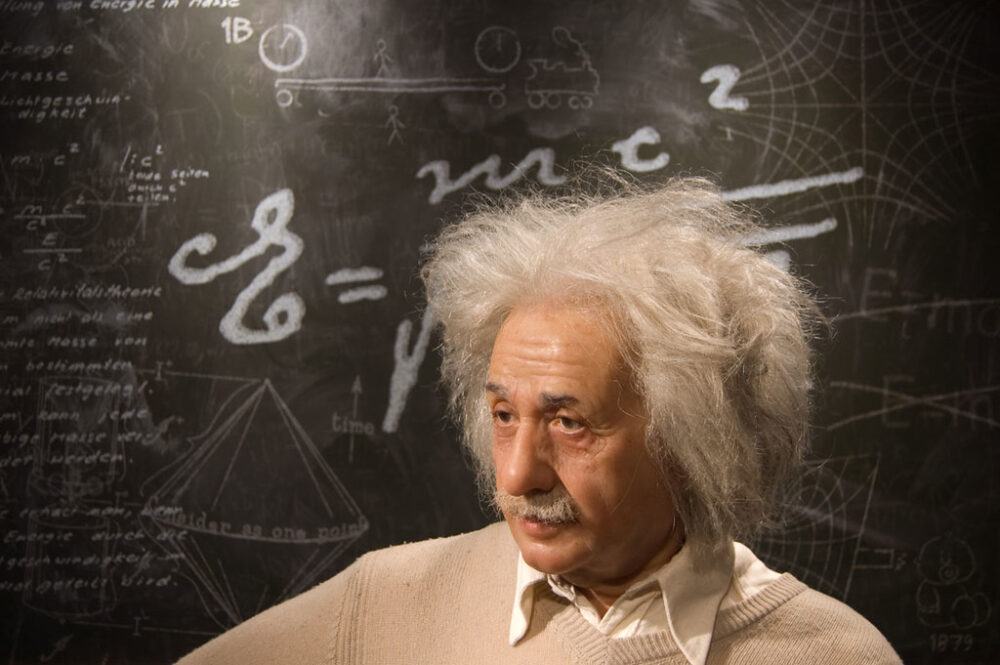
In modern physics, gravity is best explained by Einstein’s theory of general relativity. According to this framework, massive objects bend spacetime, and other objects move along those curves. This model has been tested repeatedly and explains everything from falling objects to the motion of planets and galaxies.
However, general relativity describes how gravity behaves, not why it exists. It treats gravity as a property of spacetime itself, leaving open deeper questions about its origin at the most fundamental level.
Follow us and access great exclusive content every day
2. A new idea reframes gravity as an information effect
The new theory suggests gravity may not be fundamental at all. Instead, it could emerge from how information is distributed and organized in the universe. In this view, space itself may be composed of tiny informational units, similar in spirit to pixels in a digital image.
When information becomes unevenly distributed, the system naturally evolves toward states that are more orderly and efficient. Gravity, under this framework, would be the physical effect of that informational rebalancing.
3. Why information already matters in physics

Information isn’t foreign to physics. Concepts like entropy already measure how much information or disorder exists in a system. Thermodynamics, one of the most reliable branches of physics, is built around these ideas.
The new proposal extends that logic. It treats information not just as a way to describe physical systems, but as something that actively shapes how those systems behave.
4. How this connects to earlier gravity theories
Physicists have previously explored ideas like “entropic gravity,” which suggests gravity arises from statistical tendencies toward disorder. The new work builds on that foundation but focuses more directly on information itself rather than energy or heat.
This places gravity in the same category as other emergent phenomena, like temperature or pressure, which arise from underlying microscopic behavior rather than existing as fundamental forces.
Follow us and access great exclusive content every day
5. How information flow could create a gravity-like pull

In Vopson’s model, space is made up of tiny units of information that the universe naturally tries to organize as simply as possible. When information becomes more orderly, it requires less complexity to describe. That drive toward efficiency, he suggests, could produce the same effect we experience as gravity.
A useful comparison is data compression on a computer. Nothing is physically pulled together, yet the information becomes more compact and organized. In a similar way, if the universe rearranges information to be more efficient, the result could look like objects being drawn toward each other.
This view suggests gravity may not be a fundamental force, but a byproduct of how information is arranged across space, hinting that reality may operate more like an information system than previously thought.
6. Why this idea is sometimes linked to simulation talk
Scientists have long struggled to explain how gravity fits with quantum mechanics, because the two describe the universe in very different ways. Gravity explains how large objects move, while quantum physics focuses on the tiny building blocks of matter, and the rules don’t easily match.
Quantum science already treats information as something fundamental, especially in areas like quantum computing and particle entanglement. If gravity also turns out to come from information, it could mean both systems follow the same deeper rules, instead of being separate pieces of physics that don’t quite connect.
7. Why some physicists find this compelling
One reason this idea stands out is that it may help explain something physics has struggled with for decades: how gravity fits together with quantum mechanics. These two parts of science describe the universe in very different ways and don’t easily line up.
Quantum physics already treats information as a basic building block of reality, especially in areas like quantum computing and entanglement. If gravity also comes from information, it suggests there may be a deeper set of rules connecting both worlds, rather than two separate systems that just happen to coexist.
Follow us and access great exclusive content every day
8. Why skepticism remains strong
Despite its appeal, the theory remains speculative. It has not yet been tested experimentally, and many physicists caution against drawing sweeping conclusions from abstract models.
There is also disagreement about whether information should be treated as a physical substance or simply a descriptive tool. These debates are ongoing and unresolved.
9. How this theory fits into bigger questions about reality

This proposal arrives at a time when physics is already questioning long-held assumptions. Dark matter, dark energy, and quantum gravity all suggest that our current models are incomplete. An information-based view of gravity fits into this broader pattern of re-examination.
Rather than replacing existing theories, the idea adds another layer of interpretation. It encourages scientists to ask whether forces and particles are the deepest level of reality, or whether something more abstract sits beneath them.
10. Why the idea matters even if it turns out to be wrong
Even if future research disproves this specific model, it still serves an important role. Challenging assumptions forces physics to sharpen its theories and clarify what can and cannot explain the universe.
Ideas like this also help guide new experiments and mathematical approaches. By exploring unconventional explanations, scientists often uncover insights that advance understanding in unexpected ways.
11. The takeaway from this new way of thinking

The idea that gravity might emerge from information doesn’t prove we live in a simulation. What it does show is that reality may be more subtle and layered than it appears. Gravity, one of the most familiar forces we experience, could be the surface expression of deeper rules at work.
For now, this theory stands as a reminder that physics is still evolving. Even the most basic features of the universe remain open to new interpretations as scientists continue probing what reality is truly made of.