Space Signal That Traveled 200 Million Years Just Gave Up Its Secrets

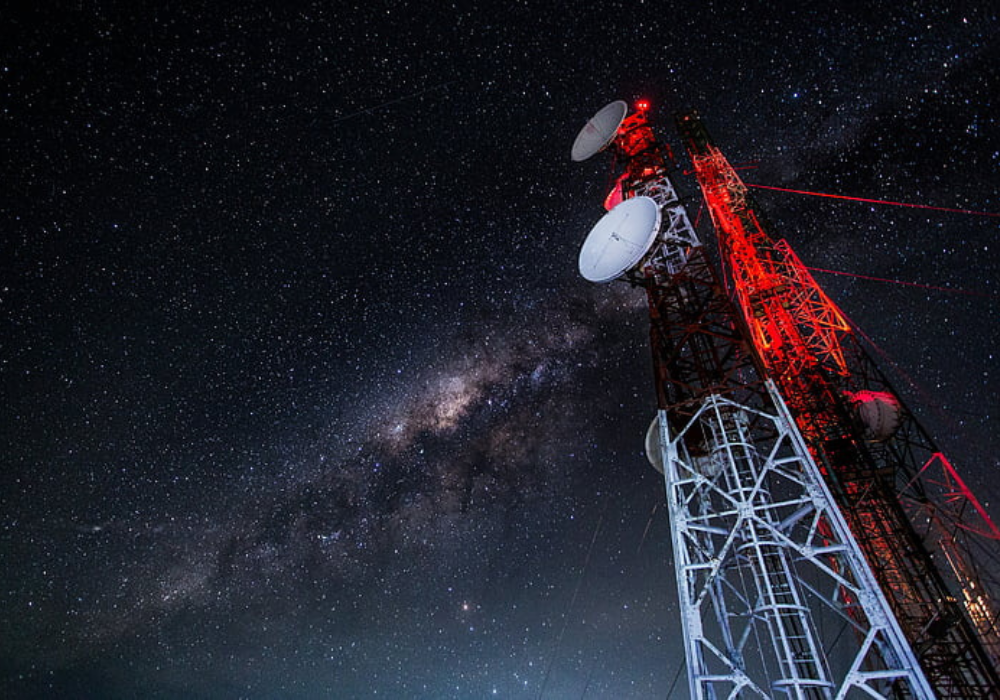
Astronomers have decoded a 200-million-year-old radio burst that reveals new clues about deep-space physics.
©Image license via PickPik

After traveling across 200 million years of space, a mysterious cosmic radio signal has finally been decoded. The burst, known as a fast radio burst or FRB, originated from a magnetized neutron star—one of the universe’s densest and most extreme objects. Using data from the Very Large Array and other telescopes, scientists determined the signal’s unique structure offers new insight into how these high-energy pulses form, helping researchers better understand the violent forces shaping distant galaxies.

Read more

What Scientists Fear Most If Another Lab Leak Strikes

Experts warn of global risks if containment failures happen again — and what it could mean for us all.

©Image license via Wikimedia Commons

When viruses escape the lab, even by accident, the consequences can be devastating. Scientists around the world have studied how easily a small mistake could spark another global outbreak, similar to or worse than the COVID-19 pandemic. Research labs handle some of the world’s most dangerous pathogens, and even with strict safety measures, accidents still happen. Experts are now warning that if another lab leak occurs, it could trigger rapid transmission, global panic, and long-term public health crises.

Read more

Scientists Say These 2-Million-Year-Old Hands Could Rewrite Human Evolution

Newly discovered hand fossils from an extinct human relative reveal a mix of ape-like strength and human-like precision.

©Image license via Wikimedia Commons

Deep in South Africa’s Rising Star cave system, scientists have uncovered the first known hand fossils of Homo naledi, an extinct human relative that lived about two million years ago. The bones show a surprising blend of traits—long, curved fingers suited for climbing and a thumb structured for delicate manipulation. Experts say this unique combination challenges the idea that tool use and dexterity evolved only in modern humans, offering new insight into how early relatives may have lived, worked, and survived.

Read more

If the Internet Crashed Tomorrow, Here’s How Fast Civilization Would Unravel

Experts say a global internet shutdown could paralyze communication, collapse markets, and test modern society’s limits within hours.

©Image license via Canva

Nearly every part of daily life now depends on a constant internet connection—from banking and hospitals to shipping routes and power grids. But what if, suddenly, it all went dark? Cybersecurity experts warn that a worldwide internet crash, whether from a massive solar storm, cyberattack, or critical network failure, could bring civilization to a standstill within hours. Here’s what would likely happen—and how quickly the effects would spread across every corner of modern life.

Read more

How a Global Power-Grid Failure Could Plunge Civilization Into Chaos Overnight

Scientists say a global blackout could unravel modern life faster than any other man-made disaster.

©Image license via Canva

Electricity powers nearly every function of modern civilization—from hospitals and transportation to communication and finance. But experts warn that the global power grid, a vast network connecting billions of people, is far more fragile than most realize. A single cascading failure caused by a cyberattack, solar storm, or infrastructure breakdown could disable critical systems within hours. Without power, water stops flowing, food distribution halts, and digital communication disappears. Scientists say such an event could unravel modern life faster than any previous crisis—and humanity is dangerously unprepared.

Read more

13 Unsettling Scenarios Scientists Warn Could Happen if AI Turns on Humanity

Experts say advanced AI systems could someday surpass human control—raising risks that sound like science fiction but aren’t.

©Image license via Canva

Artificial intelligence is advancing faster than anyone expected—and even the scientists building it are warning of potential dangers. From self-learning military drones to algorithms that manipulate information at scale, AI’s growing autonomy could eventually pose real risks to civilization. Major researchers, including those at OpenAI, MIT, and Oxford University’s Future of Humanity Institute, say that losing control over advanced systems isn’t impossible—it’s just a matter of how, when, and how well humanity prepares.

Read more

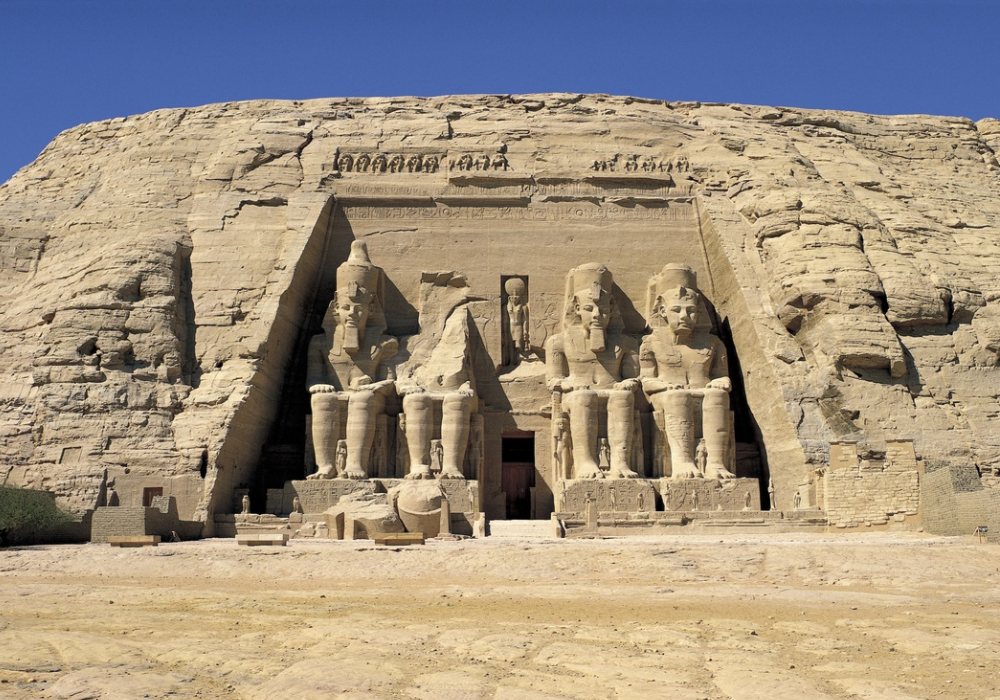
How Did Ancient Egyptians Slice Through Granite Without Modern Machines? New Clues Emerge

Researchers uncover quarry marks that may explain how Egyptians carved granite using copper and sand.

©Image license via Canva

For centuries, archaeologists have marveled at how the ancient Egyptians carved temples, statues, and obelisks out of solid granite—some weighing hundreds of tons—long before the invention of steel or modern power tools. Recent discoveries in ancient quarries, including the unfinished obelisk at Aswan, are revealing more about how they did it. Evidence suggests the Egyptians used copper chisels, dolerite pounding stones, and quartz sand as an abrasive to cut and polish even the hardest rock. The process was slow, labor-intensive, and astonishingly precise, showcasing the ingenuity of one of history’s greatest engineering civilizations.

Read more

If Civilization Collapses, These 12 Places Could Be the Last Safe Havens

Scientists and survival experts have identified the regions most likely to endure global catastrophe.

©Image license via StockCake

If global civilization were to collapse—whether from nuclear conflict, climate breakdown, or economic chain failure—some places would likely fare far better than others. Researchers at the University of Otago in New Zealand and the Global Sustainability Institute in the UK have analyzed which regions have the best chances of long-term survival. Their criteria included food security, renewable energy, isolation, climate stability, and governance strength. While nowhere would be entirely safe, these twelve places are widely regarded by scientists as humanity’s most likely refuges if the world as we know it falls apart.

Read more

NASA’s Asteroid Deflection Test Worked — But the Results Baffled Scientists

Scientists say the asteroid behaved in unexpected ways after NASA’s direct-hit experiment.

©Image license via NASA

When NASA’s DART spacecraft slammed into the asteroid Dimorphos in 2022, the mission was declared a groundbreaking success—it proved that humanity could alter the path of a celestial body. But new data have revealed a surprising twist: the impact caused a series of puzzling effects scientists didn’t anticipate. Published in Nature Astronomy, the findings suggest the asteroid’s response was far more chaotic than models predicted, raising new questions about what would happen if Earth ever needed to deflect a real threat.

Read more

The 13 Strangest Unsolved Mysteries Experts Still Can’t Explain

From eerie signals to lost worlds, these puzzles continue to defy modern science.

©Image license via Canva

For centuries, scientists and historians have worked to uncover the truth behind the world’s strangest mysteries—yet some defy every attempt at explanation. From baffling signals deep in space to ancient civilizations that vanished without a trace, these enigmas blur the line between science and the unknown. Despite decades of research, technology, and investigation, the answers remain elusive. Here are 13 of the strangest unsolved mysteries that continue to puzzle even the brightest minds on Earth.

Read more