Earth Keeps Picking Up New “Mini-Moons,” and Scientists Say More Are Coming

Earth quietly captures small space rocks into temporary orbits far more often than most people realize.

©Image license via Chat GPT

Earth doesn’t just have one moon—astronomers say it regularly picks up small “mini-moons” that slip into our orbit before drifting away again. Most are only a few feet across and remain invisible to all but the most advanced telescopes. Yet these temporary moons reveal surprising details about the asteroids constantly moving through our neighborhood. As new sky surveys come online, scientists expect to find many more of these hidden companions quietly looping around Earth at any given moment.
Read more

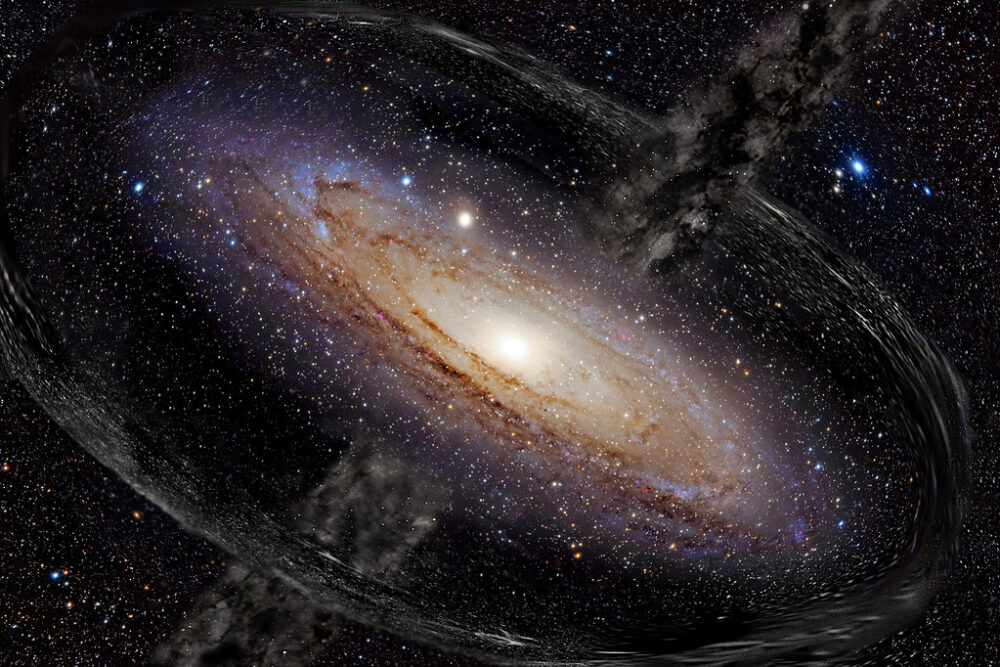
Dark Matter Is Behaving Strangely—and Scientists Now Suspect a Hidden ‘Fifth Force’

A powerful unseen force may be shaping the universe in ways physicists never expected.

©Image license via Flickr

Dark matter has long been one of the biggest mysteries in cosmology, but new research suggests it might interact through an undiscovered “fifth force” beyond gravity, electromagnetism, and the two nuclear forces. Scientists are detecting puzzling motions and patterns in galaxies that don’t match existing physics, raising the possibility that dark matter is governed by something entirely new—something influencing the cosmos from the shadows.

Read more

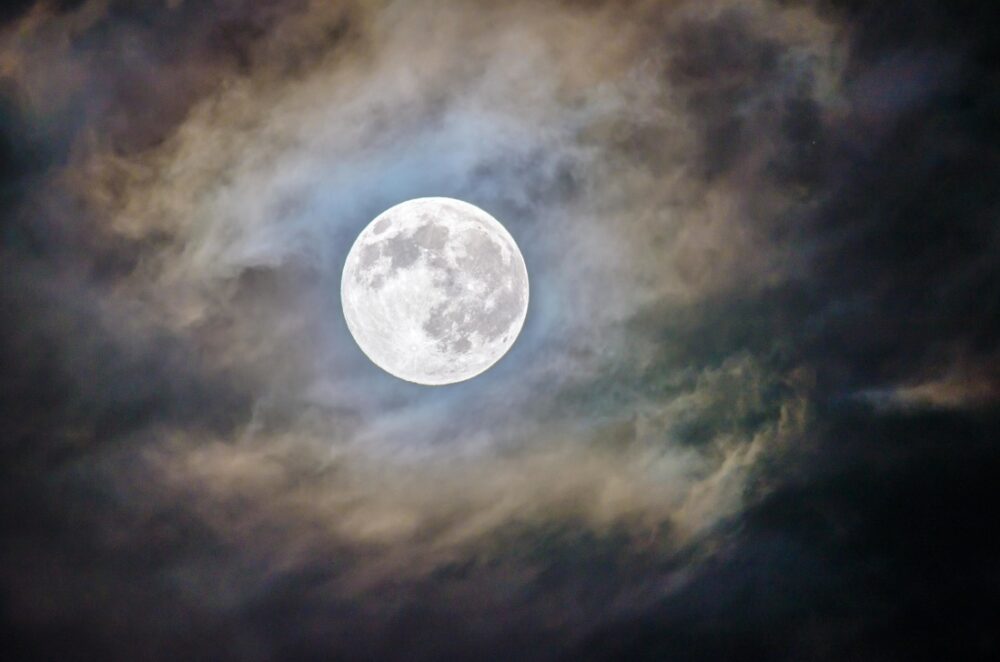
Scientists Just Confirmed What’s Inside the Moon — And It’s More Earth-Like Than We Thought

New research has uncovered a hidden feature deep inside the Moon—and it’s changing how scientists view our closest neighbor.

©Image license via Pixnio

A new analysis led by researchers from France’s CNRS and Université Côte d’Azur has offered the most detailed glimpse yet into the Moon’s hidden interior. Drawing on decades of seismic data from Apollo missions, precise laser measurements, and advanced computer modeling, the team created a more complete picture of what lies beneath the lunar surface. Their findings, published in Nature, challenge long-held assumptions about the Moon’s formation, early behavior, and ongoing evolution—revealing that its interior holds more surprises than scientists expected.

Read more

Scientists Crack the Mystery of 5,200 Ancient Holes in the Peruvian Andes

After decades of debate, researchers say they may have finally uncovered the purpose of Peru’s strange “Band of Holes.

©Image license via Chat GPT

High in Peru’s Pisco Valley, thousands of perfectly aligned holes stretch across a barren mountainside, forming one of archaeology’s most baffling enigmas. For centuries, no one knew who created them—or why. The 5,200 man-made pits, nicknamed the “Band of Holes,” have inspired countless theories, from ancient burial grounds to alien runways. Now, after years of study and new high-tech mapping, scientists believe they’re closer than ever to solving this centuries-old mystery hidden in the Andes.

Read more

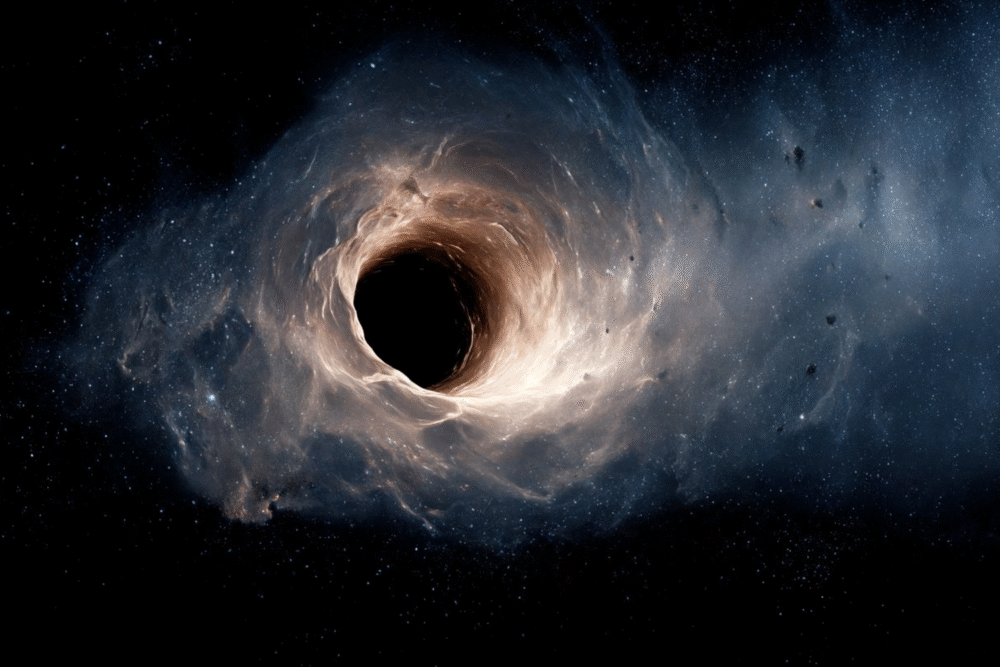
The Universe Is Humming — And Black Holes May Be Behind It

Scientists have detected a faint gravitational “hum” echoing across the cosmos, and it could change how we understand space-time.

©Image license via Picryl

For the first time, astronomers have confirmed the existence of a low-frequency “hum” vibrating through the fabric of space-time itself. This faint cosmic signal, detected by pulsar-monitoring networks around the world, is thought to come from supermassive black holes colliding and merging in distant galaxies. The discovery offers a new way to “listen” to the universe—revealing hidden activity across billions of light-years and opening a fresh chapter in the study of gravitational waves and cosmic evolution.

Read more

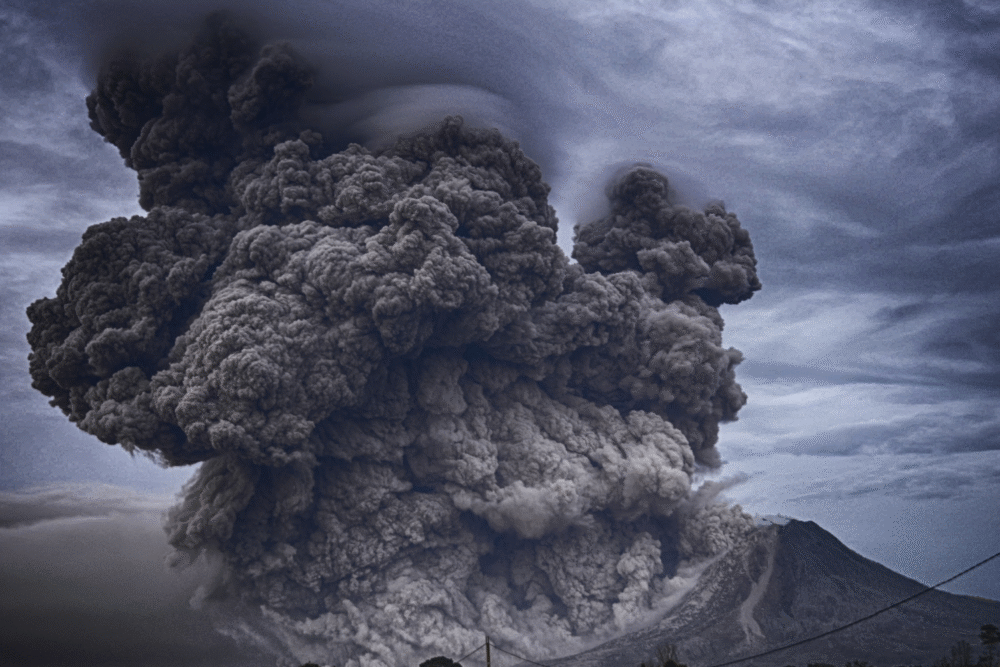
If Yellowstone Erupted Tomorrow, It Wouldn’t Be Like the Movies — It Would Be Much Worse

Scientists say a real Yellowstone eruption would unfold slowly, spread globally, and reshape life in America for generations.

©Image license via NASA

Deep beneath Yellowstone National Park lies one of the most powerful volcanic systems on Earth — a supervolcano capable of an eruption thousands of times stronger than Mount St. Helens. Movies often depict it as an instant apocalypse, but scientists say the real scenario would be far more complex — and far more devastating. From suffocating ash clouds to global cooling and food shortages, a Yellowstone eruption wouldn’t just destroy the American West — it could disrupt the entire planet’s climate and economy.

Read more

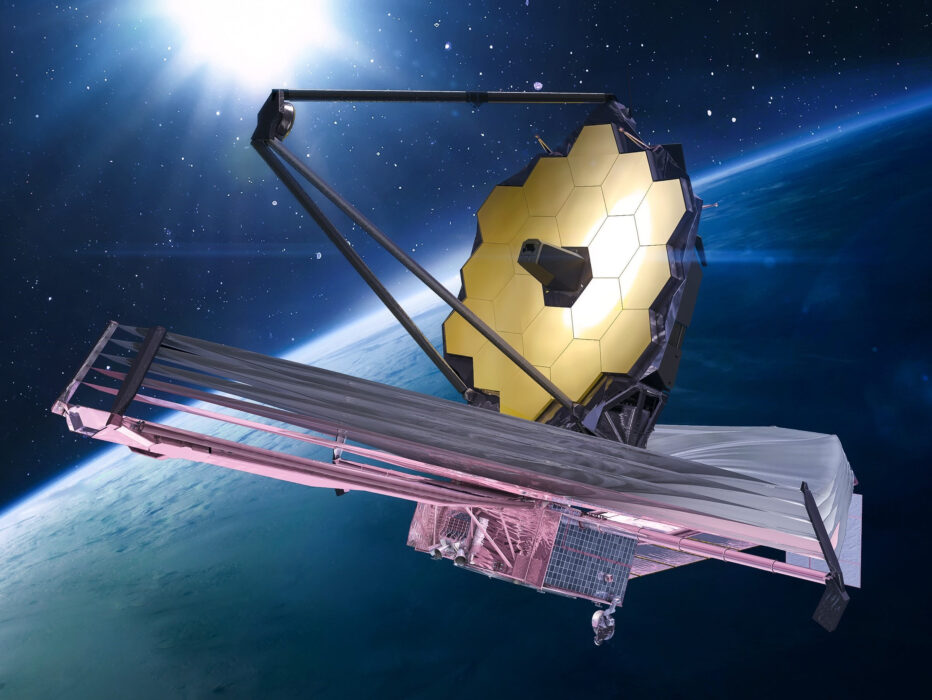
The James Webb Telescope May Have Just Glimpsed the First Stars Ever Born

Astronomers believe the powerful space telescope may have captured light from the universe’s earliest generation of stars—nearly 13 billion years old.

©Image license via Wikimedia Commons

The James Webb Space Telescope may have achieved what astronomers have dreamed of for decades: spotting the universe’s very first stars. These so-called Population III stars are thought to have formed from pure hydrogen and helium just a few hundred million years after the Big Bang. Now, scientists analyzing Webb’s deep-space images have found evidence of their possible glow—ancient light that could reveal how the first elements, galaxies, and cosmic structures were born at the dawn of time.

Read more

The Universe’s Expansion Might Be Slowing — And That Could Change Everything

A surprising new study challenges what scientists thought they knew about the fate of the cosmos.

©Image license via Wikimedia Commons

A new study published in The Astrophysical Journal is shaking up what scientists thought they knew about the universe. Researchers from Yonsei University in South Korea analyzed light from distant galaxies using data from NASA’s James Webb Space Telescope and other observatories. Their results suggest that the universe’s expansion may be slowing down, not speeding up — a stunning contradiction to the 2011 Nobel Prize-winning discovery that found the opposite. If confirmed, this finding could rewrite our understanding of dark energy and the ultimate fate of the cosmos itself.

Read more

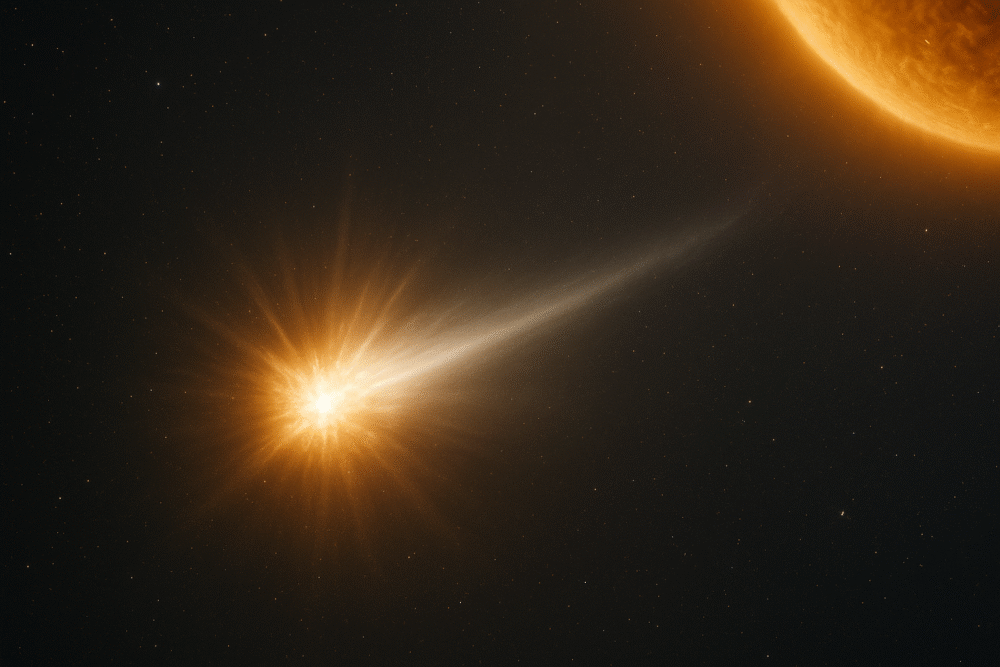
An Interstellar Object May Have Just Blown Apart — and No One Knows Why

Astronomers say 3I/ATLAS, only the third known interstellar visitor, may have exploded near the Sun.

©Image license via Chat GPT

Astronomers are investigating what appears to be the first recorded explosion of an object from another star system. The object, named 3I/ATLAS, was discovered earlier this year as it passed through our solar system — only the third interstellar visitor ever detected after ‘Oumuamua and 2I/Borisov. But recent data from the Solar and Heliospheric Observatory (SOHO) suggest it may have broken apart near the Sun. Scientists observed a sudden bright flash consistent with a disintegration event, though its exact cause remains unknown. If confirmed, it would mark an unprecedented cosmic first: an interstellar object self-destructing in our neighborhood.

Read more

Scientists Open a Cave Untouched for 5 Million Years—and Discover ‘Alien’ Life Inside

Trapped beneath the Earth for millions of years, Romania’s Movile Cave is home to bizarre creatures that evolved in total darkness.

©Image license via Chat GPT

Discovered by accident in 1986, Romania’s Movile Cave has been sealed off from the surface for more than 5 million years—and what scientists found inside is unlike anything else on Earth. The cave’s air is thick with carbon dioxide and hydrogen sulfide, making it toxic to humans, yet life thrives within. Researchers have identified dozens of species—blind spiders, translucent worms, and sulfur-eating bacteria—that evolved entirely in isolation, creating one of the most alien ecosystems ever discovered on our planet.

Read more