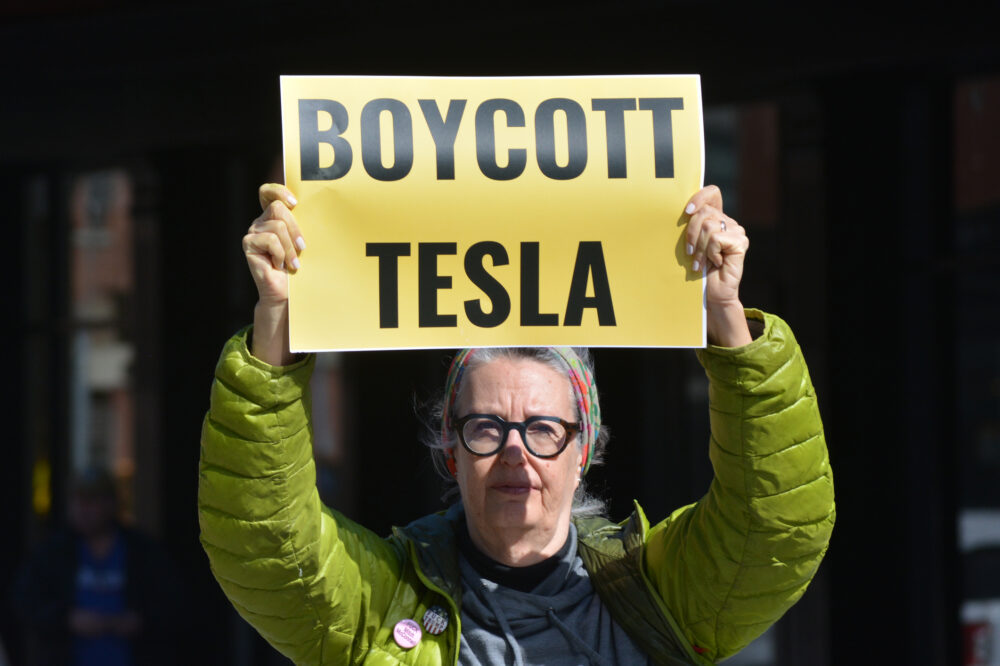
The Tesla Love Affair Is Over—11 Reasons Climate Activists Are Dumping Them in Droves

What once symbolized the future of green tech now feels like a giant betrayal.
©Image license via Cpenler | Dreamstime

For a while, Tesla felt unstoppable—a sleek, electric symbol of hope for the future. Climate activists, eco-conscious buyers, and tech dreamers all rallied behind it like it was more than just a car company. It was a movement, a promise that we could innovate our way out of a climate crisis. But lately, that love affair has hit a major rough patch. The same people who once championed Tesla are walking away, frustrated, disappointed, and in some cases, downright furious. It’s not about the cool factor anymore. It’s about trust, values, and what Tesla now represents versus what it used to stand for.

A lot of activists feel like the company—and its leadership—stopped leading for the planet and started chasing something else entirely. The shift didn’t happen overnight, but it’s impossible to ignore now. For many, supporting Tesla feels less like a solution and more like a sellout.


Read more

10 Wellness Trends That Thrive on Your Insecurity

The “solutions” they’re pushing are just new ways to make you doubt yourself.

©Image license via Canva

It’s wild how wellness, a word that’s supposed to mean “taking care of yourself,” has turned into another way to feel like you’re never doing enough. Everywhere you look, there’s a new magic solution promising to fix problems you didn’t even know you had. It’s not about feeling good anymore—it’s about chasing perfection you’ll never reach. The truth is, a lot of today’s wellness trends aren’t designed to empower you. They’re designed to keep you buying, stressing, and second-guessing yourself forever.

They poke at your insecurities, whisper that you’re falling behind, and then conveniently sell you a “cure.” But once you see the pattern, you can finally stop playing their game. Not everything that’s labeled “healthy” or “transformative” is actually good for you—or even necessary. Let’s call out the biggest offenders and talk about what’s really going on behind the scenes before you waste another dollar or another ounce of self-confidence.

Read more

Not All Who Wander Are Free—13 Signs Van Life Is Really Survival on Wheels

When the cost of living forces you out, the road is the last place left to go.

©Image license via iStock

Van life used to be sold like a dream: sunsets, open highways, total freedom. And for a few people, maybe it still is. But for more and more, it’s not about chasing adventure—it’s about survival. Skyrocketing rents, low wages, medical bills, eviction notices. The reality is, a lot of people living in vans, RVs, and cars didn’t choose it because they wanted to simplify. They chose it because it was the only thing left.

It’s easy to romanticize the road when you still have a stable address to come back to. It’s different when your vehicle is the only thing between you and homelessness. Van life isn’t always about liberation. It’s often about loss, hustle, exhaustion, and making a home out of whatever you can afford. These first six signs show how survival—not freedom—became the real engine behind so many lives lived on wheels.

Read more

You Gave Them Your Face for Free—Now These 10 Technologies Won’t Let It Go

What felt harmless at the time is now fueling a machine you can’t control.

©Image license via iStock

It didn’t seem like a big deal. You uploaded a selfie, let a friend tag you, unlocked your phone with a quick face scan. You clicked “accept” on the terms of service without reading them because everyone else did too. Nobody told you that what felt like a moment of fun—or convenience—would quietly outlive your control. But it did. And now, pieces of you are woven into systems you can’t see and can’t fully escape.

It’s not just your face. It’s your voice, your fingerprints, your keystrokes, your location history. It’s every small data point that felt too tiny to matter until it became part of something massive. Companies promised safety, connection, innovation. What they built was surveillance, prediction, and profit. These first five technologies show how easily your life became raw material for machines that don’t ask permission—and don’t plan to let go.

Read more

10 Relationship Lessons That Can Save Your Marriage

Learning these lessons now can save years of heartbreak later.

©Image license via Canva

No one walks down the aisle thinking they’ll end up feeling distant from the person they once couldn’t get enough of. But life gets busy, communication gets sloppy, and before you know it, frustration and silence start filling the spaces where connection used to live. It’s rarely one huge betrayal that breaks a marriage—it’s the small, repeated moments where partners miss each other without realizing it.

The truth is, lasting love isn’t built on grand romantic gestures or perfect compatibility. It’s built on habits, conversations, and hard-won lessons that most of us aren’t taught growing up. Without those tools, even good relationships can crumble under the weight of daily life. No marriage is immune, but every marriage can be strengthened. It starts by seeing what matters most—and being willing to work on it before resentment takes the wheel and drives you apart.

Read more

Quiet Used to Be Free—Now These 11 Things Make It a Luxury

The noise is constant, but only some of us can afford to escape it.

©Image license via iStock

Silence used to be part of daily life. You could walk through the woods, sit in your car, or wake up before everyone else and just hear… nothing. Not the buzz of notifications. Not background music piped into every store. Not the low hum of machines always running. Just stillness. And it didn’t cost anything.

But today, quiet is something you have to chase. Pay for. Schedule. Curate. For many, it’s out of reach entirely. Whether it’s the volume of the city, the demands of care work, or the algorithms that won’t leave you alone, constant stimulation has become the baseline. And silence? That’s a luxury. These 11 realities show how quiet slipped out of reach—and why those who still have access to it often don’t realize just how rare it’s become.

Read more

How Wellness Brands Co-Opt Community—12 Red Flags to Spot

Connection shouldn’t come with a price tag or a product pitch.

©Image license via Canva

It starts with good vibes and group chats. Maybe it’s a retreat, a digital circle, or a glowing Instagram post promising “healing in community.” But look a little closer, and suddenly that safe space feels more like a sales funnel. Wellness brands are increasingly packaging connection—and they’re charging for it. The result? A version of community that looks supportive on the outside but is designed to sell you something on the inside.

We all crave belonging, especially when life gets overwhelming. And these brands know it. They speak the language of care and authenticity, but often deliver curated sameness and subtle pressure to buy in—literally. That’s not to say every wellness space is a scam. But it’s worth knowing when community is being used as a marketing tactic, not a meaningful connection. These red flags will help you spot the difference.

Read more

What You Lose When Everything Goes Digital—11 Things We Miss About Analog Life

We got more speed, but lost more soul than we realized.

©Image license via Canva

Everything now fits on a screen. Your bookshelf? It’s an app. Your camera? Also an app. Even friendships, music collections, and daily routines have been shrunk into pixels and notifications. There’s no doubt tech makes life faster, more efficient, and in many ways, easier. But somewhere in that transition, we traded away things we didn’t realize we’d miss—until they were gone.

Analog life had a texture. A slowness. A sense of presence that’s harder to come by in a world buzzing with alerts and updates. It wasn’t perfect, but it was tangible. You could hold it, rewind it, hear the static, feel the weight. Now that we live through screens, a lot of the analog world feels like a dream we woke up from. But the truth is, some of that old reality might’ve been more real than what we’ve replaced it with.

Read more

You Don’t Actually Want to Look Hot—These 12 Beauty Shifts Are About Something Else

If you can’t win the beauty game, rewrite the rulebook.

©Image license via iStock

You probably started out just wanting to feel pretty. To fit in, to glow up, to be wanted. But somewhere along the way, it got weirder. The goalposts moved. “Hot” became a moving target. Beauty wasn’t just about attraction—it became about power, protection, survival. It became a language. And a shield.

Now, when you tweak your look, it’s not just about aesthetics. It’s about control. About crafting the version of you that gets taken seriously, feels safe in public, or just looks back in the mirror like she’s got your back. Beauty isn’t shallow. It’s strategic. It’s emotional. And a lot of us are playing a game we never actually agreed to—but we got damn good at bending the rules. These shifts aren’t about vanity. They’re about reclaiming space in a world that taught us to shrink.

Read more

These 10 Degrees Were Supposed to Guarantee Security—Now They Can’t Even Cover Rent

They sold it as a smart investment, but now it barely covers groceries.

©Image license via iStock

You did what you were told. Pick a “practical” major, work hard, graduate on time. You sat through required credits and group projects. You racked up debt with the promise that it would all pay off—that a degree meant stability, maybe even comfort. But somewhere along the line, the equation broke.

The job market shifted. The cost of living exploded. And those “safe” majors? Many of them can’t even get you to a living wage, let alone the life you imagined. It’s not that you chose wrong—it’s that the system changed without updating the rules. These ten degrees were marketed as reliable, but for a growing number of people, they’ve become expensive proof that following the formula doesn’t guarantee anything anymore.

Read more