Why Carter and Gore’s “Crazy” Climate Predictions Don’t Look So Crazy Now

Decades ago, Presidents Carter and Gore sounded alarms on climate change—warnings that are proving all too real today.

©Image license via Wikimedia Commons

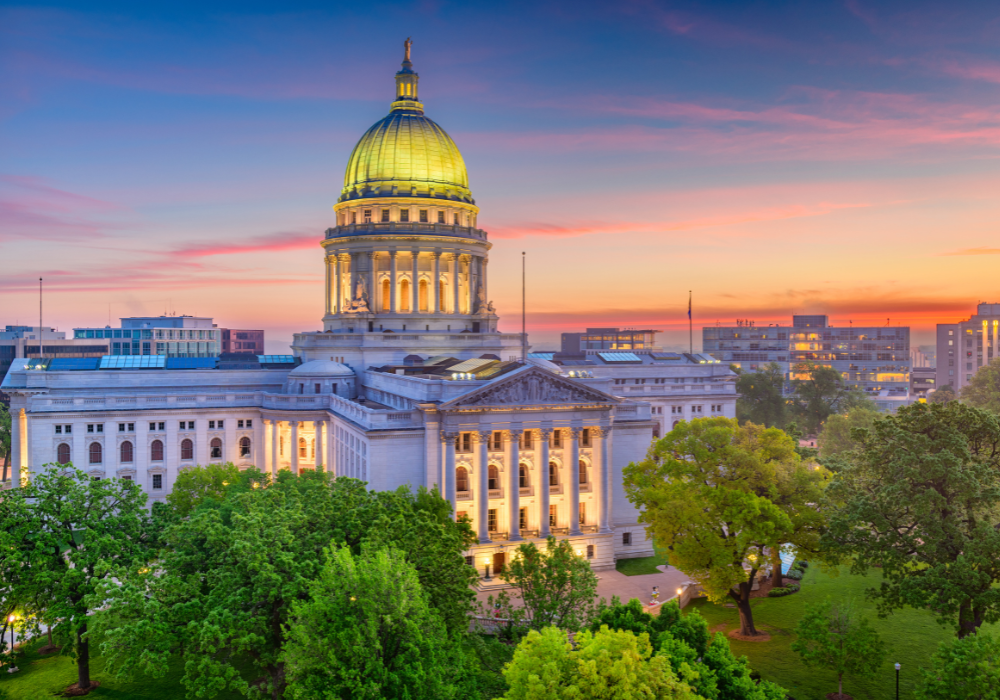
Back in the 1970s and 1980s, Jimmy Carter was talking about solar panels and global warming while most Americans were focused on gas lines and the Cold War. Al Gore spent the 1990s warning about melting ice caps and rising seas while critics rolled their eyes and called him an alarmist. Both politicians took massive political heat for pushing environmental issues that seemed abstract and far-fetched to most voters.

Fast-forward to today, and their “crazy” predictions are looking pretty spot-on. Carter’s administration suggested limiting global temperature rise to 2°C above preindustrial levels – the exact target adopted by world leaders 35 years later in the Paris Agreement. Average global temperatures have indeed broken records in the subsequent three decades, just like Gore warned they would. These two politicians were basically climate prophets, but nobody wanted to listen to what they were saying at the time.

Read more

The World Is Burning—And Millions Don’t Seem to Care

As climate disasters grow, experts ask why denial and apathy still shape how millions respond to a burning planet.

©Image license via Canva

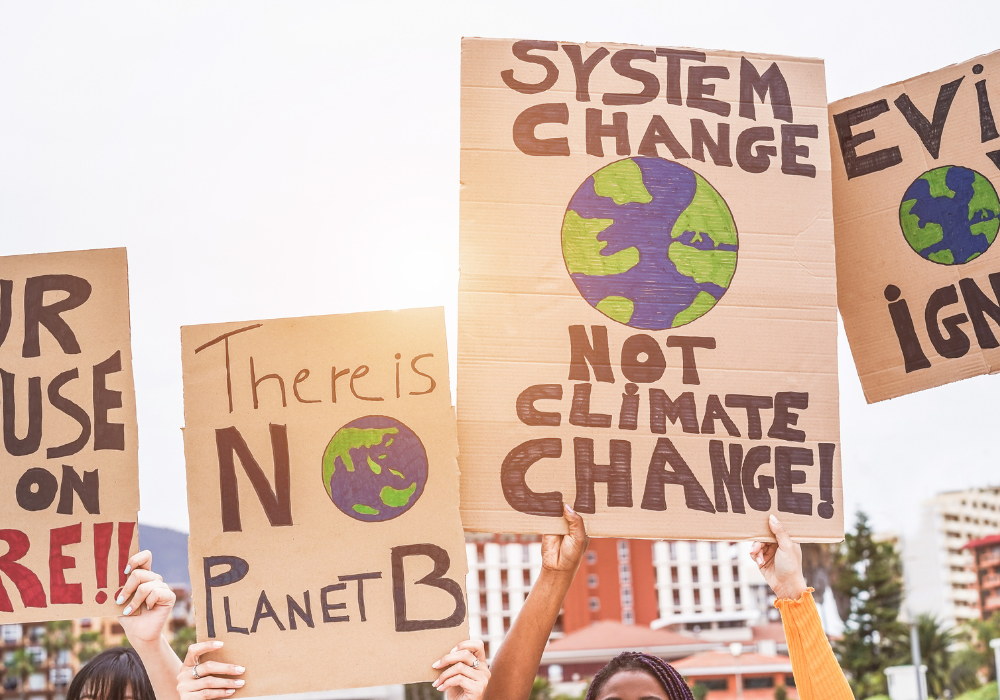
Record-breaking heatwaves are killing thousands, hurricanes are destroying entire cities, and wildfires are turning forests into ash – yet millions of people seem more concerned about their favorite TV show than the planet melting around them.

Nearly 15% of Americans deny that climate change is real, while climate apathy is especially high among younger men who should be the most worried about their future. The disconnect between the urgency of our climate crisis and public indifference is staggering and terrifying.

Read more

Climate Denial’s Secret Weapons: Why They’re So Effective

Scientists reveal the psychological tricks and misleading tactics that have confused millions about climate change.

©Image license via Canva

Climate change denial isn’t just people disagreeing with science. It’s a sophisticated strategy that uses proven psychological techniques to create doubt about well-established scientific facts. These tactics work so well that they’ve managed to delay climate action for decades, even as evidence for human-caused warming has become overwhelming. The people behind climate denial have studied what makes arguments persuasive and turned those insights into powerful weapons against scientific consensus.

Understanding these tactics helps explain why climate denial has been so persistent despite rock-solid evidence. The strategies aren’t random or accidental. They’re borrowed from successful campaigns in other industries and refined through decades of practice. Once you know how these techniques work, you’ll start recognizing them everywhere.

Read more

12 Amazing Ways Appalachia Is Turning Dead Mines Into Living Forests

Former coal mining communities are creating jobs, restoring ecosystems, and building sustainable futures from environmental devastation.

©Image license via Canva

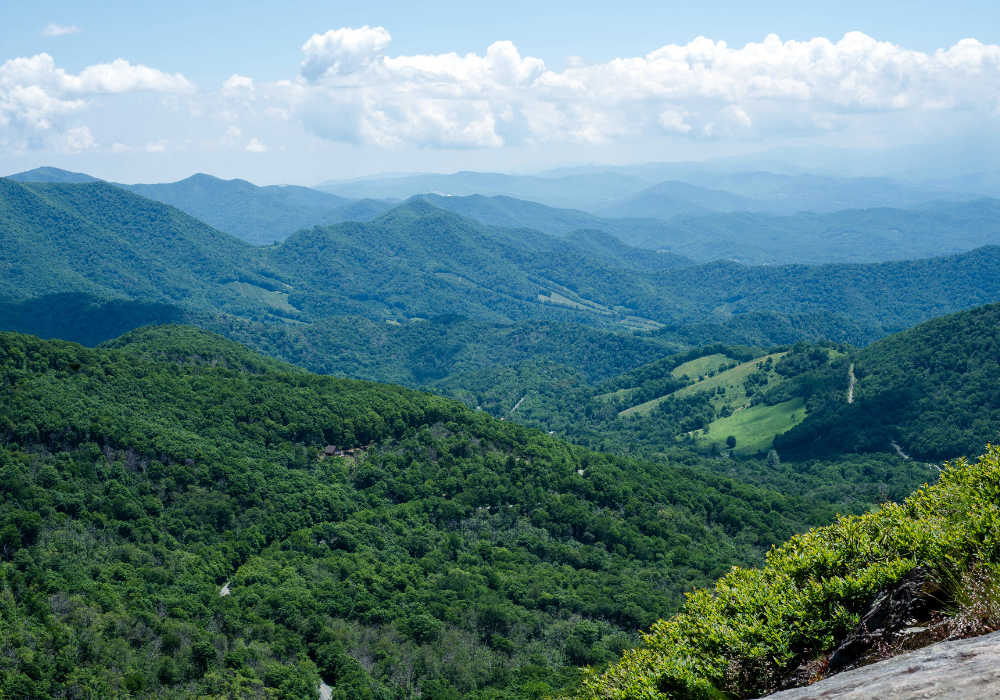
Drive through parts of Appalachia today and you’ll see something that would have seemed impossible just twenty years ago: lush green forests growing where strip mines once left behind moonscapes of toxic waste and barren rock. The transformation is so dramatic that it’s hard to believe these thriving ecosystems were once environmental disasters that poisoned water and air for generations.

This incredible recovery didn’t happen by accident — it’s the result of determined communities, innovative science, and programs like the Appalachian Regional Reforestation Initiative that have planted over 200 million trees on former mining sites. Forest ecologist Dr. Patrick Angel, who helped pioneer these restoration techniques, has watched dead mining sites transform into wildlife havens that are now more biodiverse than the original forests.

Read more

11 Devastating Ways the U.S. Is Actively Failing the Planet

While other nations race toward sustainability, the U.S. is hitting reverse—and the consequences are global.

©Image license via Canva

The U.S. isn’t just failing the planet—it’s sabotaging it. As ecosystems unravel and climate chaos escalates, America clings to fossil fuels, guts environmental protections, and props up industries that profit from destruction. This isn’t passive neglect but rather a conscious choice to prioritize short-term gains over global survival.

While other nations scramble to adapt, the U.S. keeps dragging its feet—sometimes sprinting in the wrong direction. The world can’t afford our arrogance much longer. We’re not leading; we’re obstructing. And the window to reverse course is slamming shut. If we don’t change now, we won’t just lose leadership—we’ll lose the future.

Read more

They’re Using Oysters to Battle Sea Level Rise—And These 10 Reasons Prove It’s Brilliant

This small town’s oyster reef project is redefining coastal erosion control and turning shellfish into shoreline superheroes.

©Image license via Flickr

As sea levels rise and storms grow stronger, the coastal town of Barnegat Light, New Jersey isn’t turning to concrete seawalls or high-tech engineering—it’s turning to oysters. Yes, oysters. These humble shellfish are being used to fight off coastal erosion, absorb wave energy, and help restore fragile ecosystems.

What might seem like a quirky idea is actually backed by science and growing global interest in nature-based climate solutions. Oyster reefs, once overharvested and overlooked, are now getting a second chance—as coastal defenders. And in Barnegat Light, they may just be the key to saving the shoreline.

Read more

Citizen Scientists Are Quietly Powering a Revolution in Environmental Research

How volunteers armed with smartphones and passion are filling crucial gaps in scientific data.

©Image license via Canva

They’re not wearing lab coats, but they’re changing the future of science. Across the globe, ordinary people armed with smartphones and curiosity are stepping up to track everything from monarch butterfly migrations to urban air quality—often without fanfare or funding.

These citizen scientists are collecting vital data through platforms like iNaturalist, uploading geotagged photos and observations that experts rely on to detect patterns, spot ecological threats, and guide conservation decisions. It’s grassroots science at its most powerful.

Whether it’s a retired teacher photographing rare mushrooms or a teen monitoring coastal erosion, these volunteers are filling crucial data gaps traditional researchers can’t reach alone. And in an era of climate urgency, their observations are shaping real-time responses to environmental change. They may not be famous, but their impact is quietly revolutionary.

Read more

These 12 Cities Are Saving the Planet—While Their National Leaders Sit on Their Hands

Local leaders aren’t waiting for permission—they’re rewriting the playbook on climate action.

©Image license via Canva

While national leaders hold summits and debate targets, cities around the world are getting to work. From rising sea levels to blistering heat, urban areas are on the frontlines of the climate crisis—and many mayors aren’t waiting for federal permission to act.

They’re slashing emissions, redesigning streets, and rethinking how cities consume energy, often with more speed and creativity than national governments. These leaders know their residents can’t wait for gridlocked politicians to catch up. So, they’re turning city halls into climate command centers.

Their solutions aren’t just bold—they’re working. This isn’t about lofty promises or distant deadlines. It’s about results now. These city-led actions show how local leadership is quietly reshaping the climate fight—and why the future of the planet may just depend on the choices made at your local city council.

Read more

These 11 States Are Actually Ready for the Climate Crisis—Is Yours on the List?

While others delay and deny, these states are planning—and acting—for a hotter future.

©Image license via Canva

The climate crisis isn’t a distant threat—it’s already battering communities with record heat, wildfires, floods, and rising seas. Yet while many states are still arguing over whether climate change is real, a few have moved beyond denial and into serious, strategic action. These states aren’t just talking about the environment—they’re investing in infrastructure, rewriting policy, protecting vulnerable populations, and preparing for a new era of climate extremes.

Their forward-thinking efforts could mean the difference between catastrophe and survival. Whether your state is part of this elite group or still dragging its feet could impact everything from your health and safety to your home insurance rates. Want to know if your state is ready for what’s coming?

Read more

A 2,000-Year-Old Roman Law Could Be the Key to Saving America’s Beaches

This ancient legal principle once governed empires—and it might now protect our eroding coasts.

©Image license via Canva

As rising seas swallow coastlines and private development fences off public access, America’s beaches are in crisis. But a 2,000-year-old Roman law might offer a surprising solution. Known as the Public Trust Doctrine, this ancient legal principle held that shorelines, rivers, and the sea were common property—owned by no one and shared by all. In Roman times, it protected the public’s right to access and use natural resources. Today, that same doctrine could be the key to reclaiming eroding beaches, restoring public access, and challenging private interests that treat the coast as their own. It’s old—yet more urgent than ever.

Read more