12 Foods Your Heart Doctor Would Never Touch—and You Shouldn’t Either

These 12 foods are a one-way ticket to heart disease, according to top cardiologists.

©Image license via iStock

You won’t believe what your heart doctor secretly avoids eating—and for good reason! We all want to keep our hearts healthy, but with so much conflicting advice out there, it’s easy to feel lost. You might think you’re making good choices, dutifully reaching for what you believe are “healthy” options, only to discover they could be silently sabotaging your ticker. What if some of the foods you regularly enjoy are the very culprits behind heart troubles, despite their innocent appearance?

It’s time to pull back the curtain on those sneaky dietary dangers. Forget the generic advice you’ve heard a thousand times. Instead, imagine having a candid conversation with a top cardiologist, asking them directly, “What do you refuse to put on your plate?” This isn’t about extreme diets or deprivation; it’s about empowering you with knowledge. You’ll learn which common foods are red flags for heart health, giving you the power to make informed decisions that genuinely protect your most vital organ. Get ready to transform your understanding of what truly nourishes—and harms—your heart.

Read more

Fathers Are Asking Different Questions Now—Here Are 12 That Truly Matter

It’s not about being the provider anymore—it’s about being present.

©Image license via iStock

The idea of a good dad used to be simple: bring home a paycheck, show up to the big games, maybe teach your kid how to ride a bike or fix a tire. That was enough. Or at least, it was supposed to be. But something’s shifted. Today’s fathers aren’t just following inherited scripts—they’re rewriting them. They’re questioning what it means to raise a whole human, not just support one. They’re asking how to nurture, not just provide.

It’s not always easy. Many were raised in households where emotions were private, discipline was rigid, and vulnerability wasn’t modeled—let alone accepted. But a new kind of fatherhood is emerging, shaped less by tradition and more by intention. The questions dads are asking now go deeper than logistics or discipline. They’re about identity, healing, connection, and legacy. And the answers are reshaping what fatherhood looks like—for good.

Read more

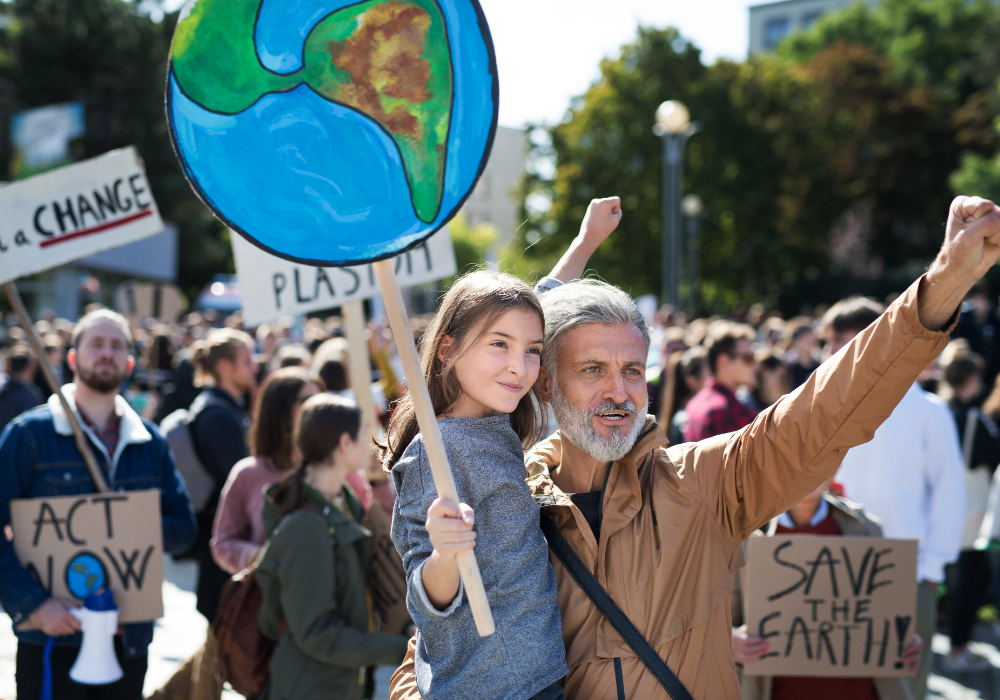
Your Child Will Inherit the Climate You Ignored—Here Are 10 Ways to Shift That Now

Today’s habits will shape the conditions your children grow up in.

©Image license via Canva

Climate change isn’t waiting for some distant tipping point—it’s already reshaping everyday life. What was once considered extreme has started to feel routine: hotter summers, unpredictable seasons, damaged crops, smoky air. And while adults have spent years debating solutions, children are growing up in the aftermath of delay. The systems they’ll rely on are already being tested, from food security to clean water to the stability of housing and jobs.

This isn’t just about guilt or responsibility. It’s about recognizing how much is still within reach. The decisions made today—by individuals, families, communities—will set the stage for what’s possible in the next few decades. While no single action can reverse the damage, small changes, multiplied across households, do shift the trajectory. And when those changes reflect care for future generations, they carry more than practical value—they carry meaning.

Read more

12 Unexpected Things That Happen When You Stop Buying Things You Don’t Need

Unlock a richer, more meaningful life by breaking free from the urge to constantly acquire.

©Image license via iStock

You know that fleeting thrill of buying something new, followed by the inevitable guilt, clutter, or the realization that you didn’t really need it in the first place? We live in a world constantly whispering, or rather, shouting, at us to consume more, often leaving us feeling overwhelmed by possessions and perpetually wanting more. But what if the key to a richer, more fulfilling life wasn’t about adding, but about subtracting?

Imagine the freedom of a lighter home, a healthier bank account, and a clearer mind, all achieved by simply opting out of the endless cycle of acquiring things you don’t genuinely need. This isn’t about deprivation or living without; it’s about intentionality and recognizing the true value in experiences, relationships, and well-being over material accumulation. Surprising transformations that occur when you embrace a lifestyle of conscious consumption, proving that less truly can be more.

Read more

NASA Drops 11 Critical Climate Bombshells—And the Clock Is Ticking

This isn’t a drill: NASA’s top scientists just delivered a dire climate update, and its implications are massive.

©Image license via iStock

NASA issued its latest report on climate change findings on June 17, 2025. This report, based on newly released data from NASA’s GRACE satellite, highlights a dramatic increase in the intensity and frequency of extreme weather events—such as floods and droughts—over the past five years, with last year’s events nearly twice as intense as the 2003–2020 average warnings about our changing climate. The findings are still undergoing peer review but align with previous NASA studies linking global warming to more severe and frequent extreme weather. 

While climate discussions can sometimes feel abstract or distant, NASA’s latest findings are bringing the reality home with startling clarity. These are unbiased scientific observations, gathered over decades, now painting a picture that demands immediate attention. This isn’t speculation; it’s what happens when you have the best eyes in the sky constantly observing our planet’s vital signs. The insights they’re sharing are critical, leaving no room for doubt about the challenges we face and the urgency of our response.

Read more

These 12 “Healthy” Foods Are Designed to Keep You Addicted

These foods wear a health halo, but they’re engineered like junk.

©Image license via Canva

It’s easy to assume that if something’s labeled “clean,” “natural,” or “high-protein,” it’s automatically good for you. But many of the foods we reach for in the name of health are built using the same tactics as ultra-processed junk—just with better branding. These products often rely on carefully engineered flavors, textures, and nutrient blends that hit your brain’s reward system and leave you reaching for more.

The problem isn’t just sugar or salt—it’s how these foods are formulated. A little fiber to slow absorption, just enough protein to keep the label looking balanced, and a blend of additives to make sure each bite is as satisfying as the last. You think you’re fueling your body, but you’re stuck in a loop of cravings. And that’s by design. Healthier packaging doesn’t mean healthier behavior—especially when profit depends on your inability to stop.

Read more

You Don’t Have to Be a Minimalist to Ditch These 11 Clutter Traps

You don’t need to own nothing to want less chaos.

©Image license via Canva

You don’t have to live in a spotless white cube or count your possessions to crave a calmer home. Most people aren’t looking for aesthetic perfection—they just want space to think, breathe, and exist without tripping over junk that doesn’t serve them. But clutter isn’t always obvious. It hides in “just in case” drawers, piles of aspirational items, and guilt-laced leftovers from past versions of yourself.

This kind of clutter is sneaky because it pretends to be useful. It whispers that you might need it someday or that getting rid of it is wasteful. But the real waste is living in a space that feels heavy and overcrowded. You don’t have to throw everything out. You just have to start questioning what’s actually helping you live—and what’s just taking up room.

Read more

Weird But True—11 Animal Adaptations Humans Secretly Copy

Scientists are shocked by how many animal traits humans are borrowing.

©Image license via iStock

Your body might be more of a copycat than you ever imagined. You probably think of humans as the pinnacle of evolution—high-tech, self-aware, uniquely intelligent. But biology doesn’t always hand out gold stars for originality. In fact, when you take a closer look at how we function, it starts to feel like nature handed us a cheat sheet filled with tips from the animal kingdom. And we totally used it. Without realizing it, you’re carrying around upgrades borrowed from creatures you probably wouldn’t expect. These aren’t just random similarities either—they’re strategic, time-tested survival moves that have been tweaked and reworked to fit our needs.

It’s kind of humbling, actually. For all the futuristic gadgets and modern medicine we’ve come up with, some of our most essential systems are straight-up nature hacks. You might roll your eyes at a lizard or a jellyfish, but chances are, your body’s been taking notes. Once you start to spot the connections, it changes how you see yourself—and everything else.

Read more

10 Popular Ingredients in Natural Health That Are Wrecking Ecosystems

What’s helping your body might be destroying someone else’s land.

©Image license via Canva

The wellness world loves to talk about purity, balance, and connection to nature—but it rarely talks about where those “natural” ingredients actually come from. Superfoods, supplements, herbal remedies—many are sourced from fragile ecosystems and overharvested landscapes that can’t keep up with global demand. You’re told they support your health, but no one tells you what they’re doing to the places and people supplying them.

Some of the most popular ingredients in holistic and alternative medicine are tied to land degradation, species loss, and exploitation of Indigenous knowledge or labor. None of this means you have to stop caring about your body. But it does mean the industry’s halo of green doesn’t always match the damage behind the scenes. If your wellness depends on someone else’s collapse, it’s not really healing.

Read more

The Water Tastes Off for a Reason—11 Early Signs of a Regional Collapse

You don’t need a headline to know something’s breaking close to home.

©Image license via iStock

Collapse, when it arrives, is rarely declared. It tends to unfold gradually, accumulating in the background of daily life. A region in decline may not look dramatically different at first—services still operate, shelves are mostly stocked, and infrastructure appears intact. But the patterns shift. Systems that once functioned with a degree of reliability begin to erode. Responses become slower, access less certain, and explanations harder to come by.

This kind of decline often starts subtly, in ways that are easy to overlook or explain away. One missed delivery. One longer wait. One small disruption after another. Over time, these minor incidents become normalized, even as they collectively point to a broader unraveling. Recognizing these signals doesn’t necessarily mean disaster is imminent, but it does suggest that the conditions sustaining a region’s stability are under strain.

Read more