A Brutal Winter Could Be Coming to Florida—Here’s Why

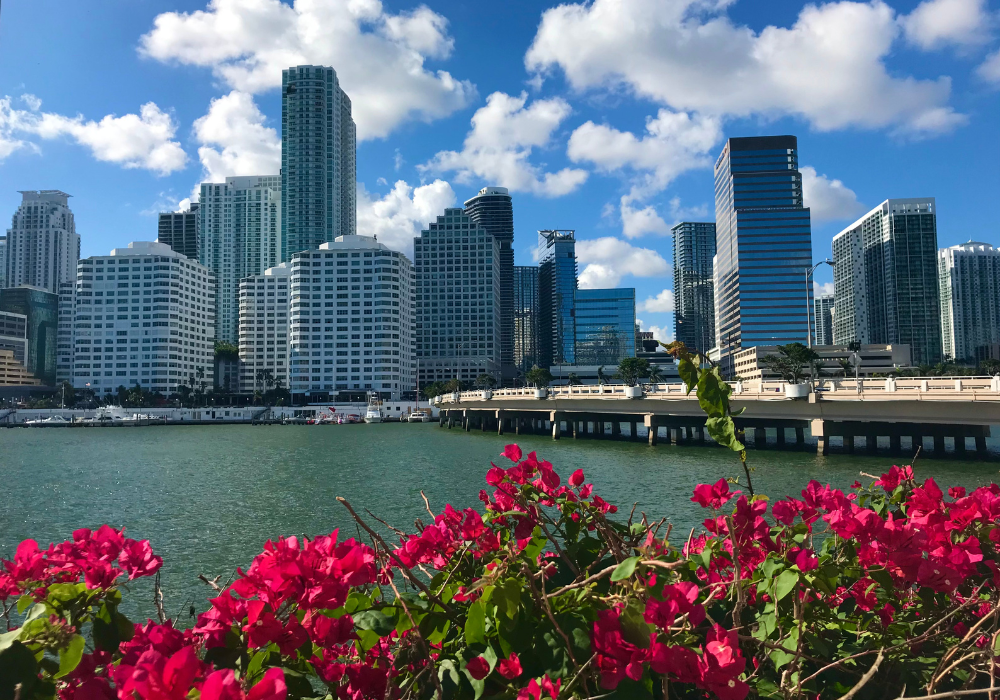
Forecasters warn shifting weather patterns could bring Florida one of its harshest winters in years.

©Image license via Flickr

Florida may be known for sunshine and mild winters, but forecasters warn this year could be very different. Meteorologists are pointing to shifting weather patterns, including a strong El Niño in the Pacific, that could deliver unusually cold and stormy conditions across the state.

According to the National Oceanic and Atmospheric Administration (NOAA), El Niño winters often bring wetter, cooler weather to the Southeast, and Florida is right in the zone of greatest impact. While predictions aren’t guarantees, experts say residents should prepare now for the possibility of a far harsher winter than they’re used to.

Read more

New Data Warns These 12 U.S. Regions Could Be Unlivable by 2070

New warnings reveal which U.S. regions may become too dangerous and extreme for people to survive.

©Image license via Picryl

The future of where we live in America could look very different than it does today. Scientists are raising urgent alarms that the very land millions call home may no longer be safe within our lifetime. A recent study in Nature Sustainability warns that vast regions of the country are barreling toward conditions humans simply cannot endure.

This isn’t some far-off science fiction scenario—it’s a projection unfolding within decades. Rising heat, collapsing ecosystems, and escalating climate extremes are forcing experts to confront a sobering truth: parts of the U.S. may no longer be livable for the generations to come.

Read more

11 Places People Are Already Being Forced to Leave Because of Climate Change

From sinking islands to scorched towns, these places show how climate change is already displacing people.

©Image license via Canva

Climate migration refers to the movement of people caused by environmental changes such as sea level rise, extreme weather events, drought, and flooding. These changes disrupt livelihoods and force vulnerable populations to relocate, often permanently. Understanding climate migration involves considering environmental displacement in both urban and rural settings, influenced by complex social, economic, and political factors.

Recognizing hotspots where climate migration is occurring or expected to increase can help individuals and policymakers prepare and respond effectively. Long-term resilience and adaptation strategies in these regions are critical to supporting affected communities and managing migration patterns sustainably.

Read more

Why So Many Military Pilots Are Reporting UFO Encounters

Mysterious sightings by trained pilots are raising questions the Pentagon can’t easily explain.

©Image license via Picryl

Military pilots are trained observers, but more of them are coming forward with accounts of seeing unidentified aerial phenomena—better known as UFOs. These sightings often involve objects moving at incredible speeds or performing maneuvers that defy known physics. The Pentagon has acknowledged the reports, and in 2021 the Office of the Director of National Intelligence released an assessment confirming that many cases remain unexplained.

NASA has also launched a study into the phenomena, reflecting growing scientific and government interest. What pilots are seeing in the skies is no longer dismissed—it’s being taken seriously at the highest levels.

Read more

America’s Biggest Cities Are Sinking, New Satellite Data Reveals

Scientists warn subsiding land is putting millions at risk as infrastructure and coastlines face growing threats.

©Image license via Canva

While Americans obsess over rising sea levels, the ground beneath our biggest cities is quietly doing the opposite – sinking like stones tossed into a pond. Satellite data has revealed that major metropolitan areas are literally disappearing into the earth at alarming rates, creating a slow-motion disaster that makes rising oceans look like a gentle inconvenience.

Dr. Michelle Torres from the National Oceanic and Atmospheric Administration warns that urban subsidence is accelerating nationwide, with some cities dropping several inches per year. We’re so busy watching the horizon for climate change that we’ve missed the fact that our cities are staging their own underground disappearing act.

Read more

The Surprising Ways OCD Might Actually Protect You

New research suggests obsessive-compulsive traits may have hidden benefits for awareness and safety.

©Image license via Canva

Obsessive-compulsive disorder (OCD) is often seen only as a burden, but scientists are discovering a more complex picture. Certain OCD traits, like heightened vigilance and repetitive checking behaviors, may actually serve protective functions in daily life.

The International OCD Foundation reports that people with OCD often detect risks or anomalies that others overlook, which can translate into improved safety or problem prevention. While OCD remains a serious mental health condition, this research suggests that some of its behaviors may have evolved as adaptive responses—traits that helped our ancestors survive in uncertain or dangerous environments.

Read more

WHO Warns: Extreme Heat at Work Is Becoming a Deadly Threat

The UN health agency warns that hotter days may bring deadly consequences for workers everywhere.

©Image license via Wikipedia Commons

The World Health Organization is sounding the alarm: extreme heat is no longer just uncomfortable—it’s life-threatening on the job. As global temperatures climb, millions of workers are being pushed into dangerous conditions that put their health and lives at risk. Heat stress is triggering more illnesses, more injuries, and in the worst cases, sudden deaths.

What once felt like an occasional hazard is now becoming a routine threat in fields, factories, and construction sites worldwide. The warning is clear—rising heat is rewriting what it means to work safely in today’s world.

Read more

Alzheimer’s Breakthrough? Why Scientists Are More Hopeful Than Ever

Scientists say recent breakthroughs could finally slow Alzheimer’s and improve millions of lives.

©Image license via Canva

Alzheimer’s disease has long been one of medicine’s greatest challenges, stealing memories and independence from millions worldwide. But new advances are giving scientists fresh reasons for optimism. In 2023, the FDA approved lecanemab, a drug shown to slow cognitive decline in early Alzheimer’s patients, marking a major shift in treatment.

The Alzheimer’s Association hailed it as a “breakthrough moment” after decades of setbacks. Researchers are also exploring innovative therapies, from gene editing to blood tests that detect the disease earlier. For the first time, experts say meaningful progress feels within reach.

Read more

Climate Change Is Luring Great White Sharks North—And New England Is Ground Zero

Warming seas are drawing more great white sharks to the region, raising risks for swimmers and coastal communities.

©Image license via Canva

The waters off New England are changing fast, and not in ways most beachgoers expect. As ocean temperatures rise, great white sharks are following their prey north, showing up in places where sightings used to be rare.

Each summer, reports of fins breaking the surface stir both fascination and fear along the coast. Scientists warn the trend isn’t temporary—it’s the new reality of a warming world. For swimmers, surfers, and vacationers, that means sharing the water with one of nature’s most formidable predators more often than ever before.

Read more

NASA’s Next Mission to Mars Could Answer the Biggest Question of All

NASA’s latest Mars mission could finally provide answers to humanity’s oldest cosmic mystery.

©Image license via Canva

NASA’s eyes are once again fixed on Mars, and this time the stakes couldn’t be higher. The agency’s upcoming mission will probe the Red Planet for signs of ancient habitability, and possibly life itself.

Scientists have long suspected that Mars once had rivers, lakes, and even oceans, a theory supported by NASA’s Perseverance rover, which found evidence of an ancient river delta in Jezero Crater in 2021. Experts say the new mission could take that research even further, potentially answering humanity’s oldest question: are we alone in the universe?

Read more