
Three Earth-sized planets have been found orbiting twin stars—challenging what we thought we knew about planet formation.
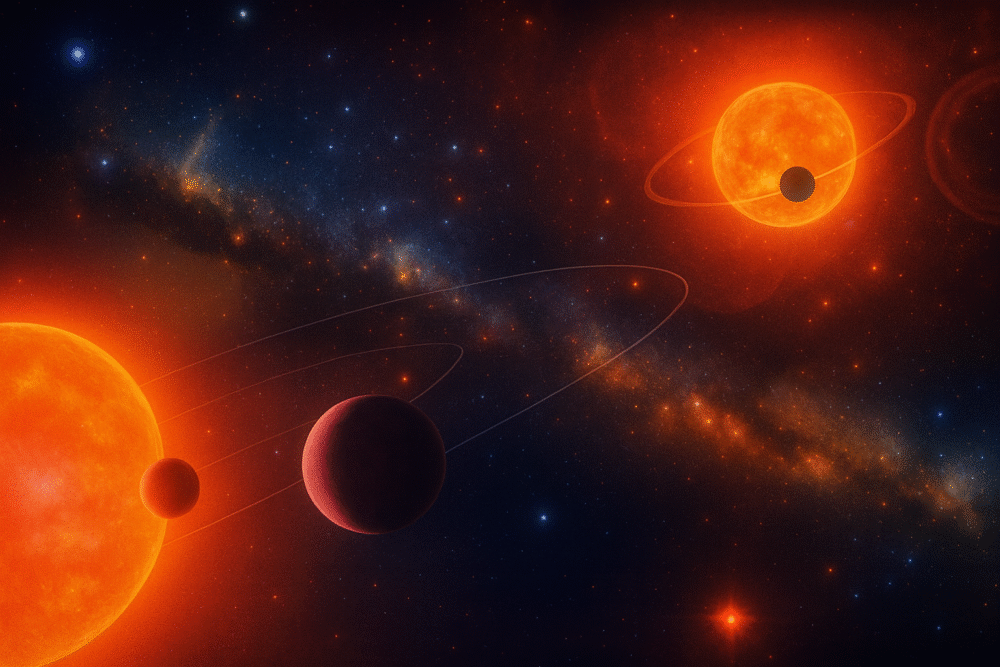
An international team of astronomers has discovered three Earth-sized planets orbiting a binary star system named TOI-2267, located approximately 190 light-years away. In a first for exoplanet research, two of the planets orbit one of the stars while the third orbits its companion—making this the first known system where planets transit both stars. The existence of rocky worlds in such a compact, gravitationally complex environment upends prevailing theories about how and where planets can form, opening new frontiers in the search for habitable worlds.
1. A Rare Binary Star System With Planets Around Both Suns
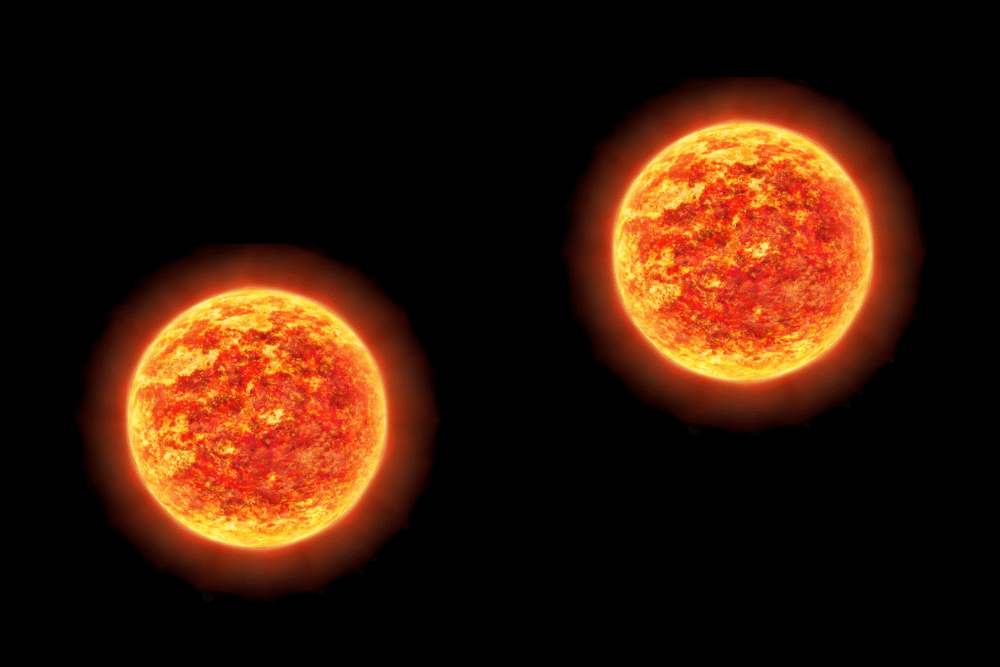
Astronomers have identified three Earth-sized planets orbiting a binary star system known as TOI-2267, located about 190 light-years from Earth. Unlike our single-sun solar system, TOI-2267 has two stars orbiting closely together, creating an intricate gravitational environment.
What makes this discovery so remarkable is that planets were detected around both stars—something never seen before in a transiting system. It’s the first confirmed case where two stars in the same binary each host their own planets, expanding scientists’ understanding of where planetary systems can form.
2. The Discovery Was Made Using NASA’s TESS Space Telescope

The Transiting Exoplanet Survey Satellite (TESS), launched by NASA in 2018, detected periodic dips in light from the TOI-2267 system, indicating planets passing—or “transiting”—in front of their host stars.
TESS specializes in finding exoplanets by observing the tiny brightness changes that occur when planets move across their stars’ faces. The precision of its instruments allowed researchers to distinguish two separate planetary orbits within a single binary system—an achievement made possible by years of improved data analysis techniques.
3. Three Earth-Sized Worlds, But No Twins of Earth Yet

All three newly discovered planets are similar in size to Earth, ranging from roughly 0.9 to 1.1 Earth radii. Despite their comparable dimensions, scientists do not believe these planets are likely to be habitable.
Their orbits are much closer to their stars than Earth’s distance from the Sun, making surface conditions too hot for liquid water to exist. Still, the discovery shows that rocky, Earth-sized planets can form and survive in dynamic binary systems—environments once thought too unstable for such small worlds to exist.
4. A First-of-Its-Kind Multi-Star Planetary System

Before this finding, scientists had confirmed planets orbiting binary stars, but never around both stars in the same system. Usually, planets either circle both stars as a single pair or orbit just one member of the duo.
In TOI-2267, however, one star hosts two planets, and the other hosts a third. This dual-host arrangement makes it the first known “compact binary multi-planet system.” Its unique configuration challenges existing theories that suggest gravitational interference between two stars would prevent planets from forming so close together.
5. The System’s Compact Nature Adds to the Mystery
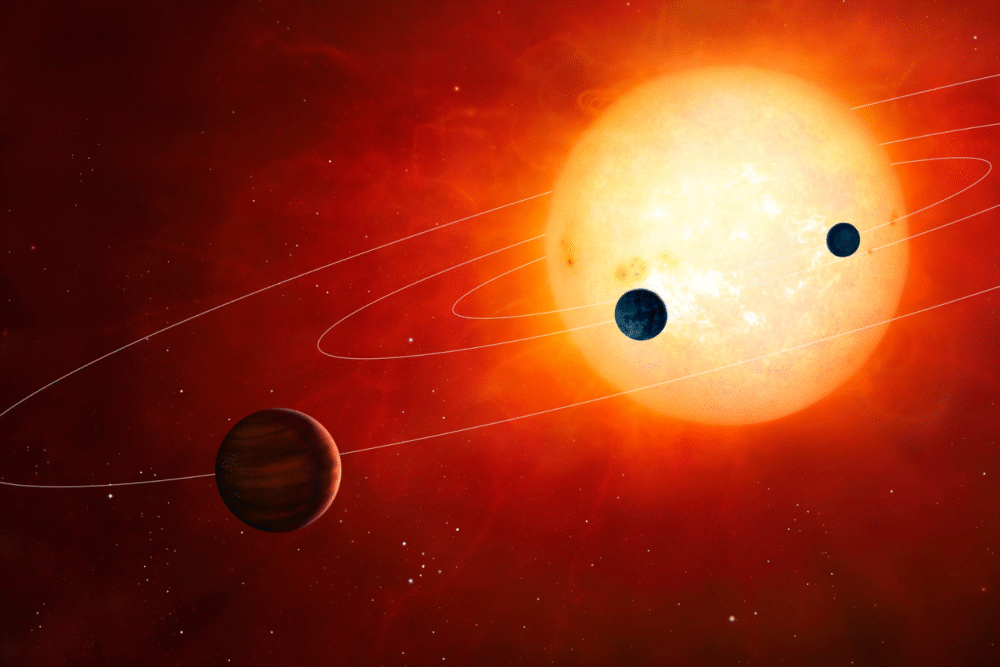
The TOI-2267 stars are separated by only about 150 million kilometers—roughly the distance between Earth and the Sun. For comparison, most binary systems with planets have stars that orbit much farther apart.
Because of this proximity, the gravitational pull between the two stars should make stable planetary orbits extremely difficult to maintain. Yet all three planets appear to have settled into consistent paths. Their survival suggests that planetary systems may form and stabilize in a wider range of cosmic conditions than scientists previously thought.
6. The Planets Were Verified With Ground-Based Telescopes

After TESS detected the initial signals, astronomers confirmed the planets using ground-based observatories. By analyzing subtle variations in brightness and gravitational effects, they confirmed that the dimming wasn’t caused by starspots, background stars, or instrumentation errors.
Follow-up data came from multiple observatories worldwide, helping to pinpoint the orbital periods and sizes of each planet. This multi-observatory collaboration was essential in confirming one of the most complex and precise multi-star exoplanet detections ever achieved.
7. The Discovery Challenges How Scientists Think Planets Form
Conventional planetary formation theories suggest that binary systems—especially tight ones—are too turbulent for planet formation. The gravitational forces between two close stars can disrupt the gas and dust disks needed to create planets.
The TOI-2267 discovery upends that assumption. It demonstrates that small, rocky planets can emerge and persist even in these dynamic, gravitationally complex systems. This finding forces astronomers to reconsider long-standing models of disk stability and planet formation, potentially redefining where we search for other Earth-sized worlds.
8. Scientists Used Precise Timing to Distinguish Orbits
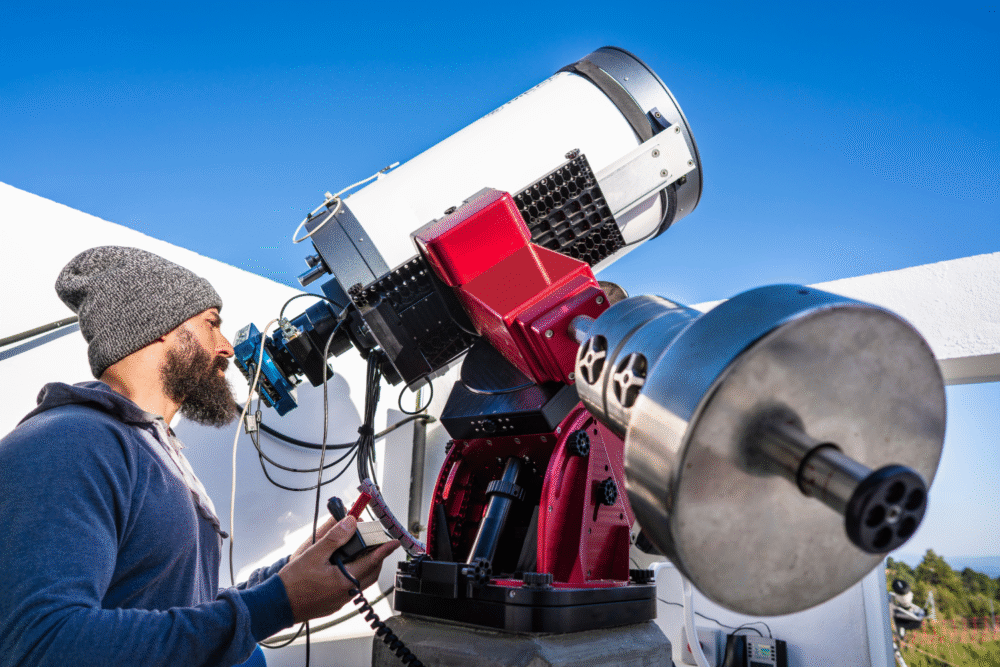
Because both stars in TOI-2267 are close and of similar brightness, separating which planet orbits which star required sophisticated modeling. Researchers analyzed variations in transit timing—minute shifts in when planets crossed their stars—to determine which dips in brightness belonged to which star.
This careful timing analysis revealed that two planets orbit one star, while the third circles the companion. The precision required for this analysis reflects how advanced modern exoplanet detection techniques have become, even in the most complex stellar environments.
9. The Finding Broadens the Search for Habitable Worlds
Although none of these planets are likely habitable, their existence broadens the range of systems scientists will study when searching for life. Previously, astronomers focused on single-star systems like our own, believing they were more likely to host stable, life-supporting planets.
TOI-2267 shows that binary systems can produce and sustain multiple rocky planets—meaning that potentially billions more planets could exist across the galaxy in environments once ruled out. The discovery dramatically expands the possibilities for future habitable planet searches.
10. A Glimpse Into the Future of Exoplanet Exploration
The discovery of three Earth-sized planets in a compact binary system is only the beginning. Future missions such as NASA’s James Webb Space Telescope and ESA’s PLATO mission will help refine measurements of these worlds and analyze their atmospheres.
By studying systems like TOI-2267, astronomers hope to understand how planets form in diverse environments—and whether complex systems like this could one day yield habitable conditions. Each new discovery brings humanity closer to answering one of science’s greatest questions: how common Earth-like worlds truly are in the universe.