
New data hints the universe’s expansion may be shifting, challenging a core idea in cosmology.

For decades, astronomers have worked with the idea that the universe’s expansion is speeding up under a steady, unchanging force called dark energy. That assumption has shaped everything from cosmic timelines to predictions about how the universe might eventually end.
Now, early results from the Dark Energy Spectroscopic Instrument (DESI) are adding an unexpected wrinkle. DESI maps millions of galaxies to track how space has stretched over time, and its latest data suggests that acceleration may not be behaving exactly as expected.
If the expansion is slowing even slightly, it hints that dark energy may not be a simple constant after all.
1. The Assumption That Shaped Modern Cosmology
For years, cosmologists have treated dark energy as a constant property of space, quietly pushing galaxies apart at an ever-increasing rate. That idea simplified calculations and helped unify many observations into one workable model.
Because it fit the data so well, the assumption became deeply embedded in cosmology. Questioning it now isn’t a small tweak—it touches nearly every major conclusion about the universe’s past and future.
2. Why Expansion Speed Matters So Much

The universe isn’t just expanding; the rate of that expansion shapes how galaxies form, drift, and evolve over billions of years. Acceleration is the reason dark energy was proposed in the first place.
If that acceleration changes over time, it suggests the force behind it might also change. That would alter how scientists interpret cosmic history and long-term predictions.
3. What DESI Is Actually Measuring

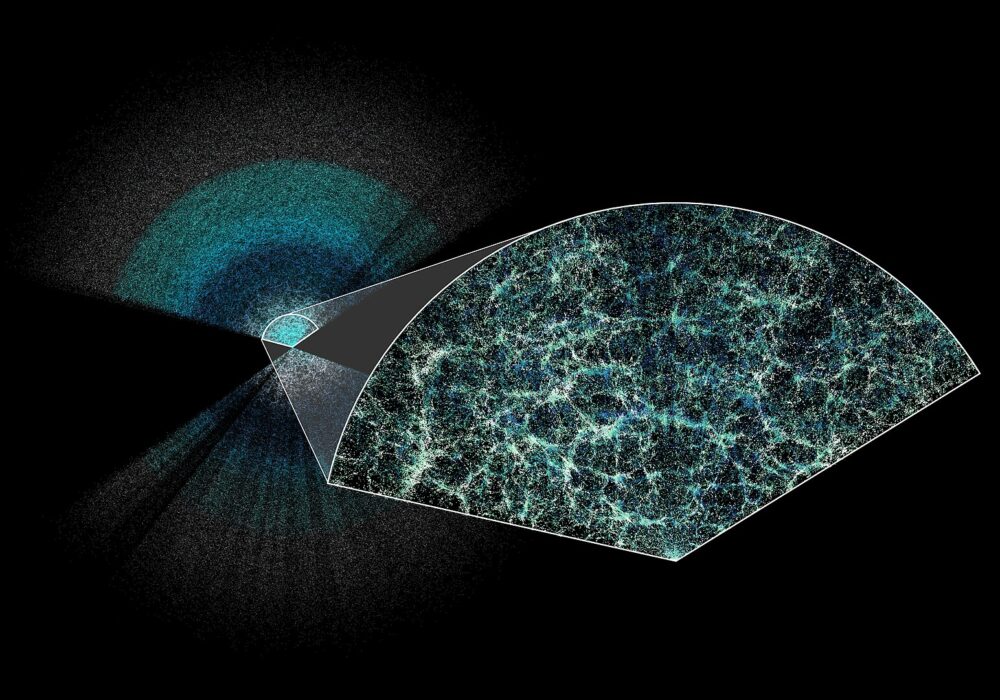
DESI doesn’t observe dark energy directly, because dark energy can’t be seen or detected on its own. Instead, it measures the precise positions and distances of millions of galaxies to see how space itself has stretched over vast periods of time. This creates a detailed three-dimensional map of the universe across different eras.
By comparing large-scale patterns from early cosmic history to more recent ones, astronomers can reconstruct how fast the universe expanded during each phase of its life. In effect, galaxy positions become markers that reveal how expansion has changed, even when the cause remains invisible.
4. The Early Signal That Raised Eyebrows
Early DESI data shows subtle but persistent deviations from predictions based on constant dark energy. In certain epochs, the universe’s expansion appears slightly less aggressive than standard models expect, hinting that acceleration may not be perfectly steady. These differences are small, but they show up repeatedly across the dataset.
On their own, such deviations wouldn’t normally cause concern. What made scientists take notice is that similar hints appear across multiple measurements and analyses, suggesting the signal may reflect something real rather than a single statistical fluke.
5. Why Scientists Are Proceeding Carefully

Cosmology has a long history of exciting early signals that weakened or disappeared once more data was collected. Researchers are keenly aware that subtle biases, calibration issues, or incomplete datasets can sometimes produce misleading trends that vanish with improved precision.
DESI’s results are still considered preliminary, and scientists are deliberately resisting dramatic conclusions. Confirming the signal will require years of additional observations, reduced uncertainties, and careful comparison with other independent surveys before anyone rewrites the rulebook.
6. What “Changing Dark Energy” Could Really Mean
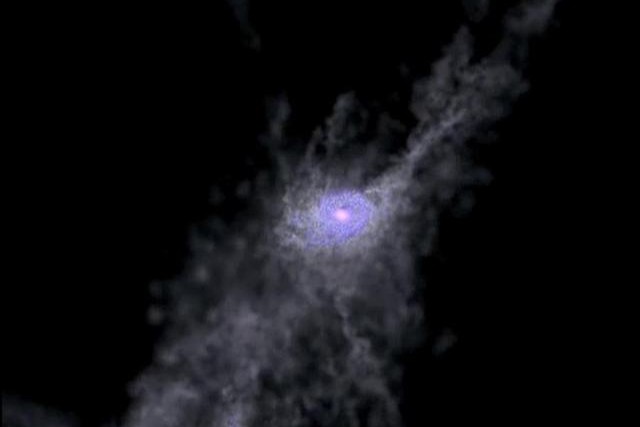
If dark energy changes over time, it wouldn’t behave like a fixed property of space anymore. Instead, scientists think it could act more like a dynamic field that slowly evolves as the universe expands, strengthening or weakening rather than staying constant.
That idea would open the door to new physics beyond current models. It could also help explain why different measurements of the universe’s expansion don’t always line up as neatly as expected.
Rather than breaking cosmology, evolving dark energy might actually connect those mismatched observations, offering a deeper explanation for how the universe changes over billions of years.
7. How This Affects the Universe’s Long-Term Future

The fate of the universe depends heavily on how expansion behaves over extremely long periods of time. If dark energy stays constant, most models predict an endlessly expanding universe where galaxies drift farther apart and become increasingly isolated. That idea has shaped how scientists talk about the cosmic future for decades.
But if acceleration is slowing, even slightly, those predictions may need revision. A changing expansion rate could lead to very different long-term outcomes, reminding scientists that the universe’s ending may be less settled than once thought.
8. Why This Doesn’t Overturn Everything Overnight
Despite the intrigue, DESI’s findings don’t undo decades of successful cosmology. The standard model still explains a vast range of observations with remarkable accuracy, from the early universe to galaxy formation today. Most of what astronomers see still fits comfortably within that framework.
Instead of signaling a collapse, the new data functions more like a stress test. It highlights where the model may be stretched thin, helping researchers understand which assumptions deserve closer scrutiny.
9. The Role of Other Cosmic Surveys
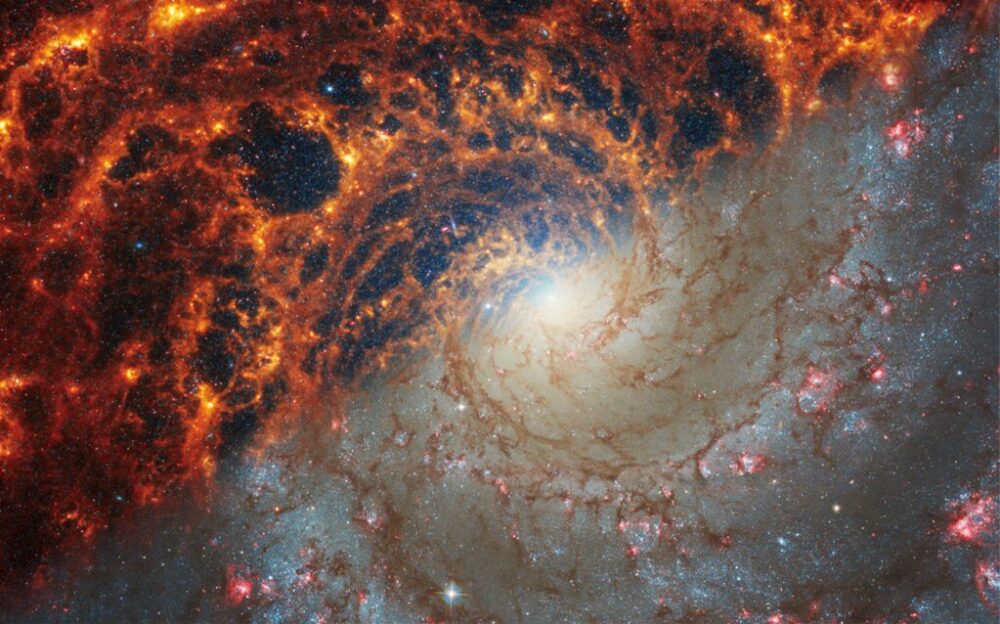
DESI is part of a much larger ecosystem of cosmic observation. Other galaxy surveys, along with measurements of the universe’s earliest light, provide independent ways to track expansion and test dark energy models. Each approach comes with its own strengths and uncertainties.
When multiple datasets begin pointing in the same direction, confidence grows. When they disagree, scientists learn just as much by uncovering where and why the differences appear.
10. What Comes Next for DESI
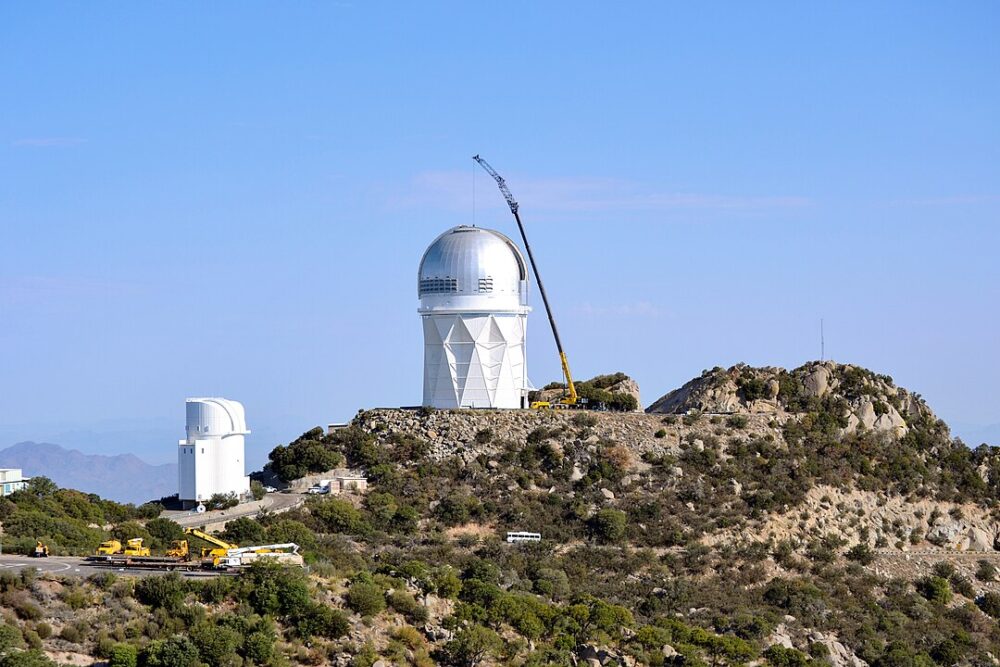
DESI is still early in its planned mission, meaning the most powerful data is yet to come. As it observes more galaxies, statistical noise will shrink and long-term trends will become easier to separate from coincidence. Patience is built into the project’s design.
Future releases will help determine whether the current signal strengthens into a clear pattern or fades away. Either outcome provides valuable insight into how the universe actually behaves.
11. Why This Moment Matters for Science

This phase reflects how science really progresses, especially in fields dealing with enormous timescales. Progress often comes from tension between theory and observation, not dramatic overnight revolutions.
If dark energy turns out to be more complex than assumed, the reward won’t just be revised equations. It will be a deeper, more accurate story about how the universe has evolved—and where it may be headed next.