
It looks like fear, but something else may be triggering the reaction.
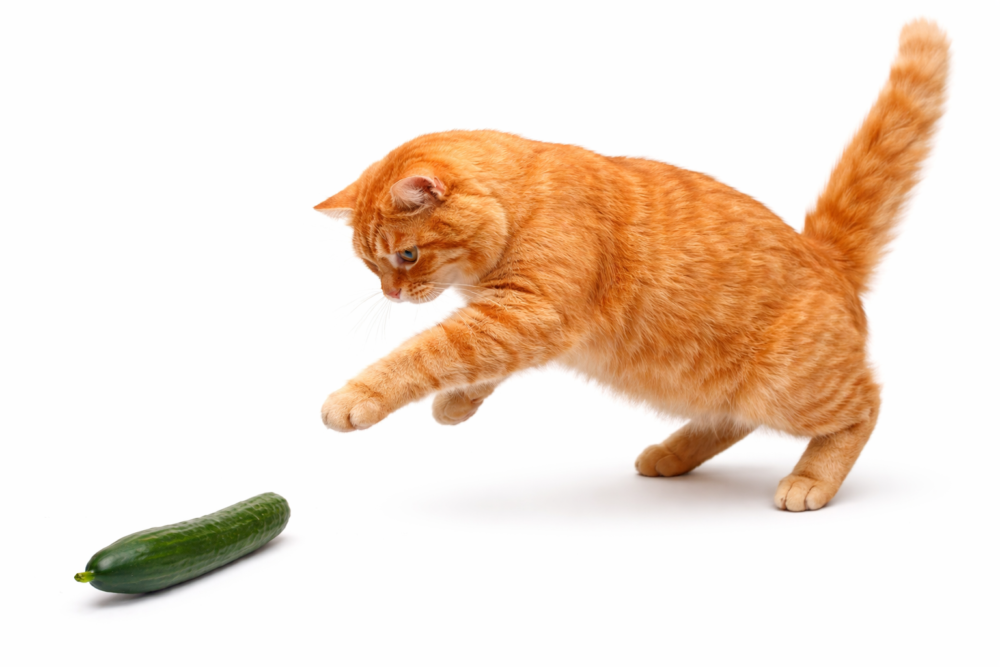
Videos of cats leaping into the air after spotting a cucumber have racked up millions of views, turning a simple vegetable into an internet punchline. The reactions look dramatic, even comical, and are often framed as proof that cats are inexplicably terrified of cucumbers.
But animal behavior experts say the truth is far less random and far more revealing. These moments tap into how cats perceive sudden changes in their environment, how their instincts evolved, and why surprise matters more than the object itself.
Click through and find out what’s really happening when a cat encounters a cucumber—and why the viral trend misunderstands feline behavior.
1. Cats aren’t reacting to cucumbers specifically

Despite the memes, experts say cats don’t have an innate fear of cucumbers. There’s nothing about the vegetable itself that triggers a built-in response.
Cats react the same way to many unfamiliar objects if they appear suddenly behind them. The cucumber just became famous because it’s common, harmless, and visually striking on camera.
Follow us and access great exclusive content every day
2. Surprise is the real trigger

In most viral videos, the cucumber is placed behind a cat while it’s distracted, often eating. When the cat turns around, the object appears to have come out of nowhere.
That sudden change is what causes the jump. Cats are highly alert animals, and unexpected objects in their personal space can trigger an instant reflex.
3. Instincts evolved to detect potential threats

Cats evolved as both predators and prey. That means their survival depended on quickly detecting possible danger.
When something unfamiliar appears suddenly, a cat’s nervous system reacts first, before the brain evaluates what the object actually is. The leap is a reflex, not a conscious decision.
4. The shape can add to the reaction

Some experts note that long, curved objects can resemble snakes at a glance. While cats don’t consciously think “snake,” their visual system is tuned to notice certain shapes quickly.
This may amplify the startle response, especially in environments where the cat expects safety and familiarity.
5. Context matters more than the object itself

What really drives the reaction is where and how the object appears. A cat resting or eating feels secure and focused. Introducing a new object directly into that safe zone violates the cat’s expectations of its surroundings.
Because cats rely heavily on spatial awareness, sudden changes signal potential risk. The jump is a way to create distance instantly.
If the same cucumber were placed in plain sight, most cats would simply sniff it or ignore it entirely. This shows the reaction is about context and timing, not fear of a specific item.
6. Not all cats react the same way

Some cats barely flinch when encountering a cucumber, while others react dramatically. Personality, past experiences, and confidence all play a role.
More anxious or cautious cats are more likely to startle easily, while relaxed cats may show little reaction at all.
Follow us and access great exclusive content every day
7. Repeated scares can increase stress

While the videos may look funny, deliberately startling a cat can raise stress levels. Chronic stress can affect a cat’s health and behavior over time.
Experts warn that intentionally scaring pets for entertainment can damage trust and make animals more anxious in their own homes.
8. Curiosity usually follows once fear fades

After the initial jump, many cats cautiously approach the object from a distance. This is when curiosity replaces the reflexive fear response.
Once the cat realizes the object isn’t a threat, interest often fades quickly and the cat moves on. That shift shows the reaction is brief, situational, and driven more by surprise than lasting fear.
9. The internet trend misreads feline behavior

Viral clips often suggest cats are “afraid of cucumbers,” but that oversimplifies what’s happening. The reaction is about perception, not phobia.
Understanding the behavior helps explain why the same reaction can happen with shoes, toys, or even harmless household items.
10. The videos reveal more about instincts than humor

The cucumber trend works because it highlights how fast animal instincts operate. Cats react before they think, just as evolution designed them to.
What looks funny on camera is actually a glimpse into how finely tuned a cat’s survival system still is, even in a modern home.