
Faint Latin words scratched into a Pompeii wall reveal a surprisingly tender message from 2,000 years ago.
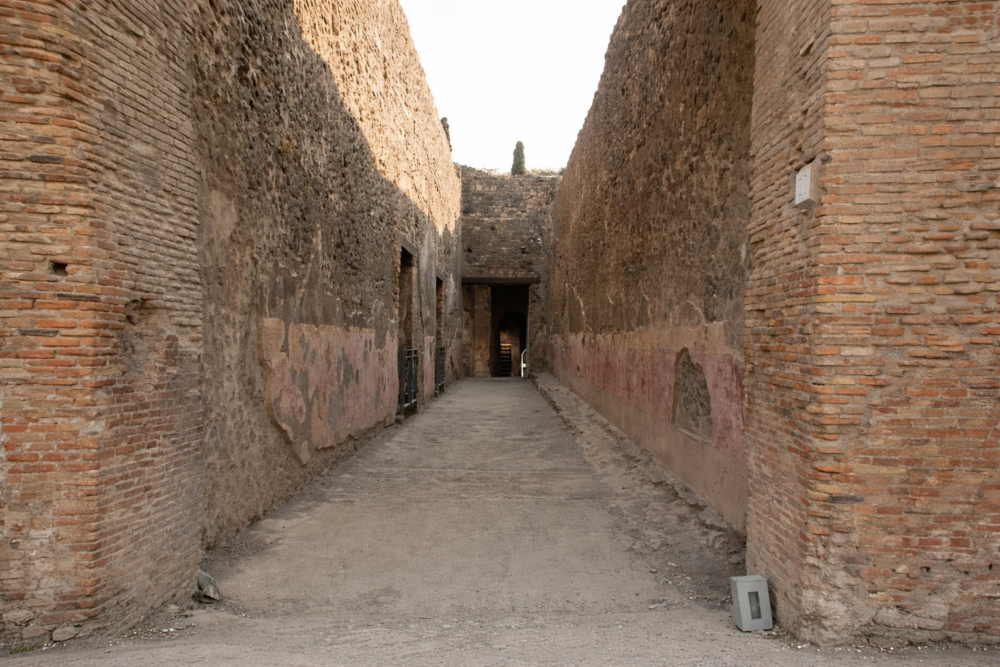
Pompeii is often remembered for tragedy—the eruption of Mount Vesuvius in 79 CE that buried an entire city in ash. But beneath the dramatic story of destruction lies something quieter: the preserved details of ordinary human life.
Recently, archaeologists identified traces of what appears to be a 2,000-year-old love note etched into a wall in the ancient city. The inscription is subtle, worn, and easy to miss.
Yet its discovery adds another deeply human layer to Pompeii’s story—proof that even in a bustling Roman city, someone once paused long enough to carve their feelings into stone.
1. The message was hiding in plain sight
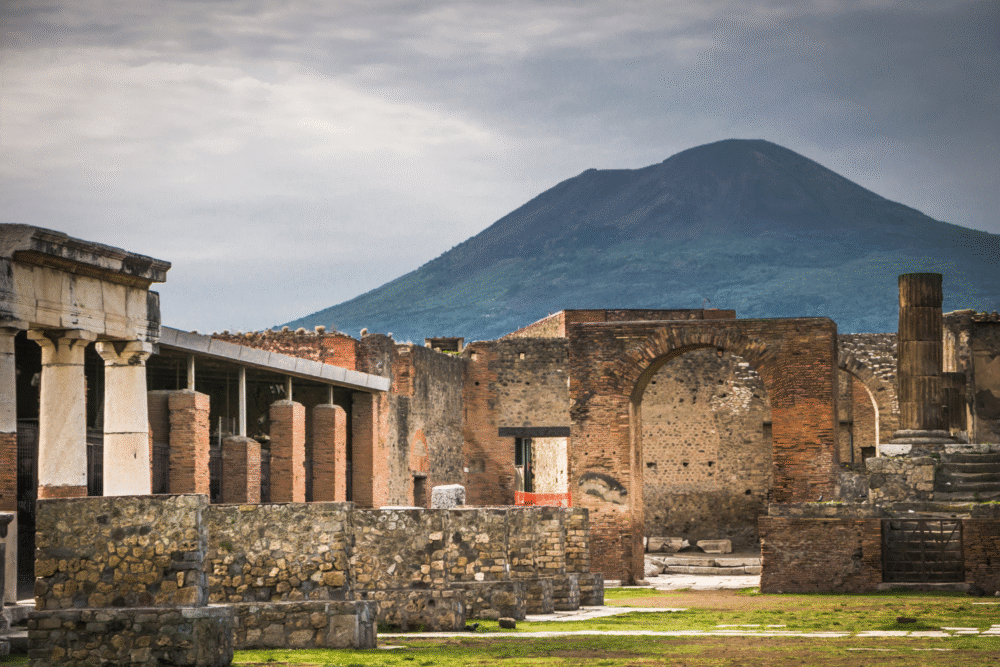
The faint inscription was carved into a wall that had already been examined many times by researchers and visitors. Like much of Pompeii’s graffiti, it blended into weathered plaster and faded surfaces, making it nearly invisible at first glance.
Only careful reexamination and improved documentation techniques allowed archaeologists to distinguish the delicate lettering. What once looked like random scratches turned out to be intentional words, preserved for nearly two thousand years beneath dust, erosion, and layers of history.
2. Pompeii is filled with ancient graffiti
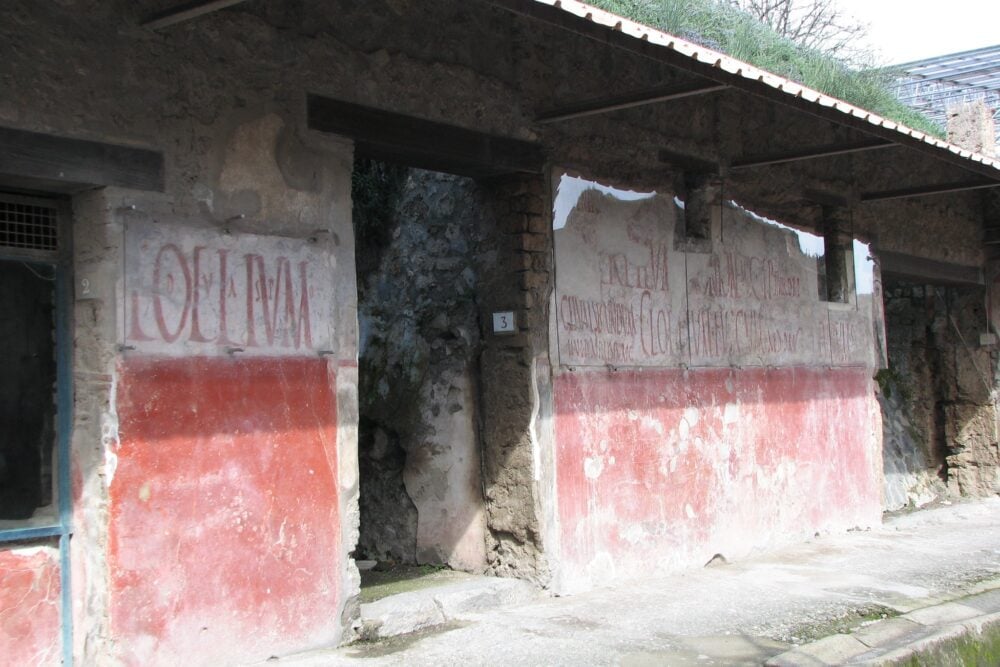
Graffiti was a normal part of life in Roman cities, and Pompeii is especially rich in it. Residents scratched messages onto walls to advertise businesses, insult rivals, comment on politics, or express devotion to gods and lovers.
Unlike formal inscriptions commissioned by elites, these carvings were informal and spontaneous. They capture everyday voices—ordinary citizens who rarely appear in historical texts—giving modern researchers a rare and intimate glimpse into daily Roman life.
3. This inscription appears to be a love note
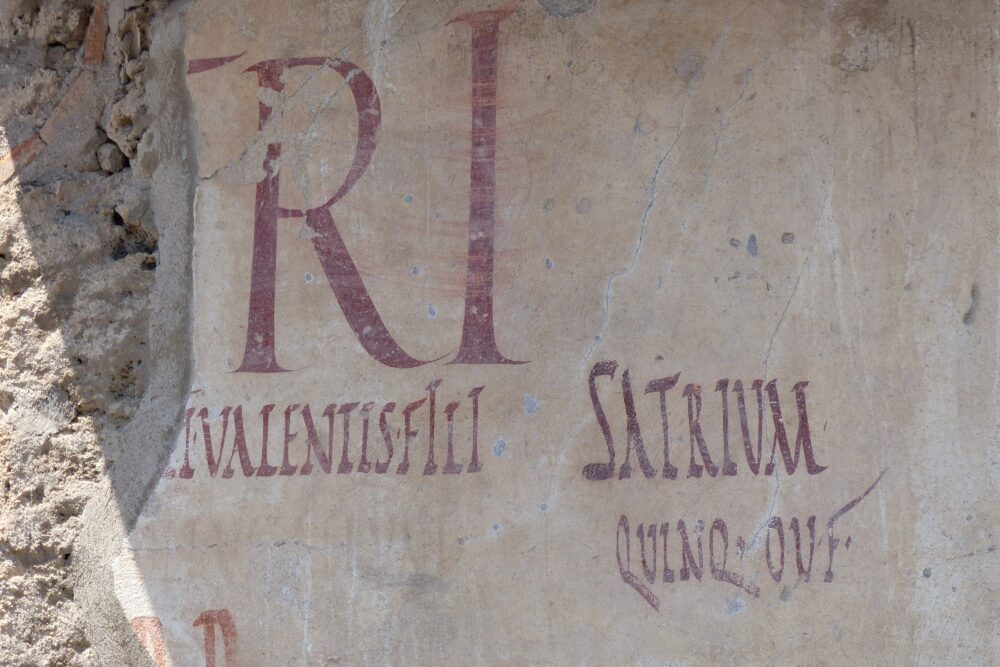
Researchers interpret the newly identified text as an expression of romantic affection, placing it among the many personal messages found across Pompeii’s streets and buildings. While brief, the wording suggests admiration directed toward a specific individual.
The tone feels intimate rather than public or political. Instead of commemorating an event or advertising a service, it appears to record a personal feeling—something someone wanted to leave behind, even if it was meant for only one pair of eyes.
4. Love in ancient Rome looked surprisingly familiar
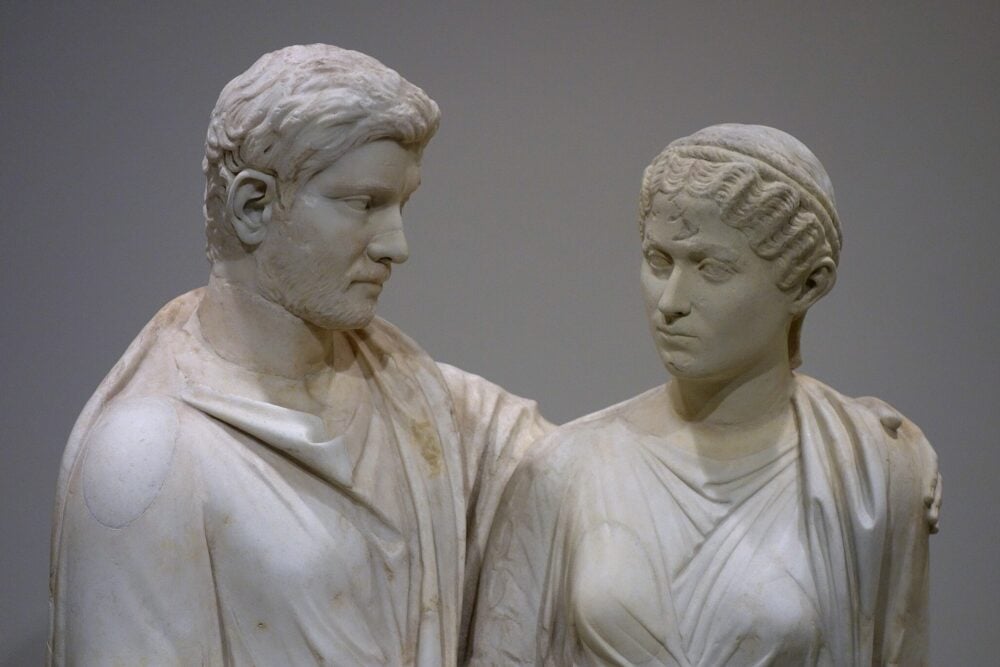
Romantic graffiti in Pompeii often includes declarations of longing, jealousy, attraction, and devotion. Some messages openly name beloved individuals, while others speak more poetically about desire and emotional attachment.
These inscriptions reveal that ancient relationships carried many of the same emotions people recognize today. Beneath the toga-clad imagery and Latin phrasing were familiar feelings—hope, admiration, heartbreak, and affection—etched into walls by people who wanted their emotions remembered.
5. The eruption helped preserve a private moment
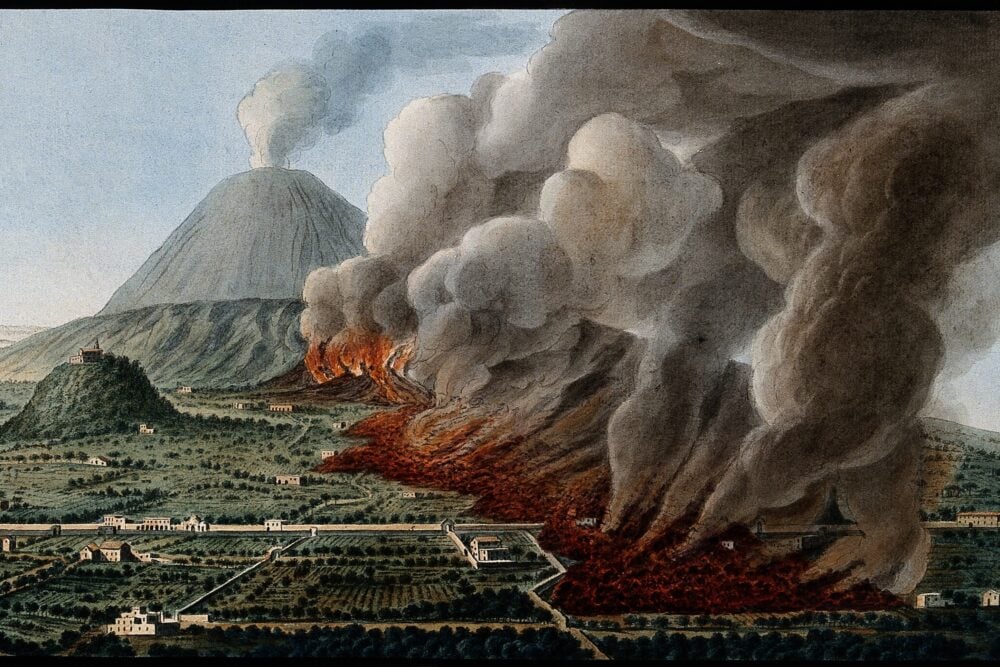
When Mount Vesuvius erupted in 79 CE, ash and pumice buried Pompeii under several meters of debris. Buildings collapsed, streets disappeared, and daily life came to a sudden halt.
Yet that same catastrophe preserved fragile details that would have otherwise vanished. The thin lines of this love note survived because the wall it was carved into was sealed and protected. What began as a fleeting expression of affection became an unintended time capsule, frozen in place for nearly two thousand years.
6. The handwriting offers clues about the writer
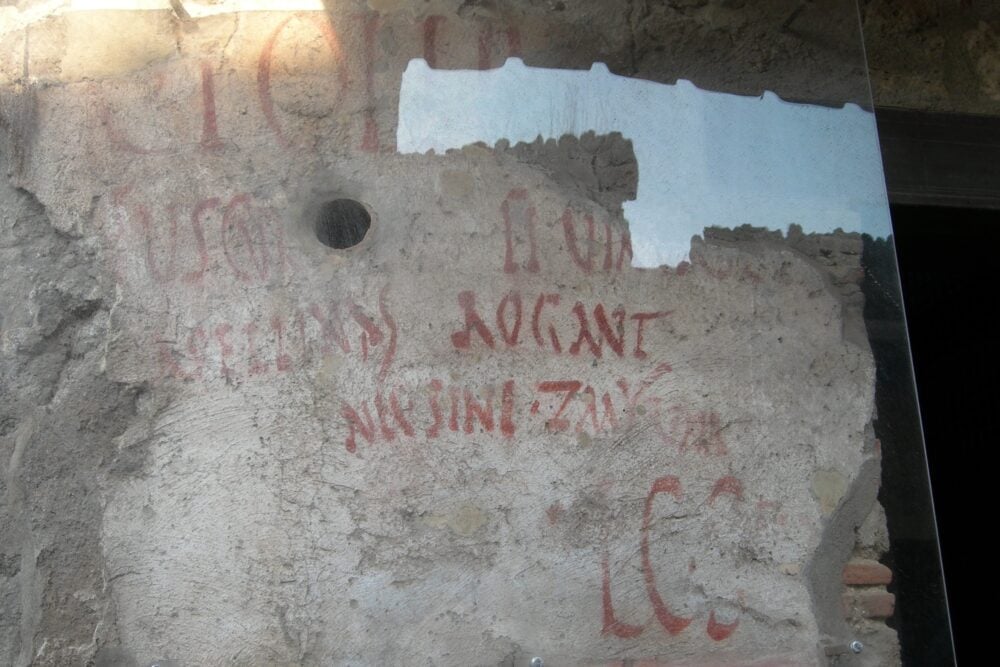
Graffiti in Pompeii varies widely in style, from carefully carved letters to hurried, uneven scratches. The shape and depth of lettering can hint at how much time and effort someone invested in their message.
Even without knowing the writer’s identity, the inscription reflects intention. Someone paused, chose their words, and carved them deliberately. That physical act—pressing metal or stone into plaster—turns emotion into something permanent, making the message feel both impulsive and deeply considered at the same time.
7. Pompeii’s walls acted like an ancient message board
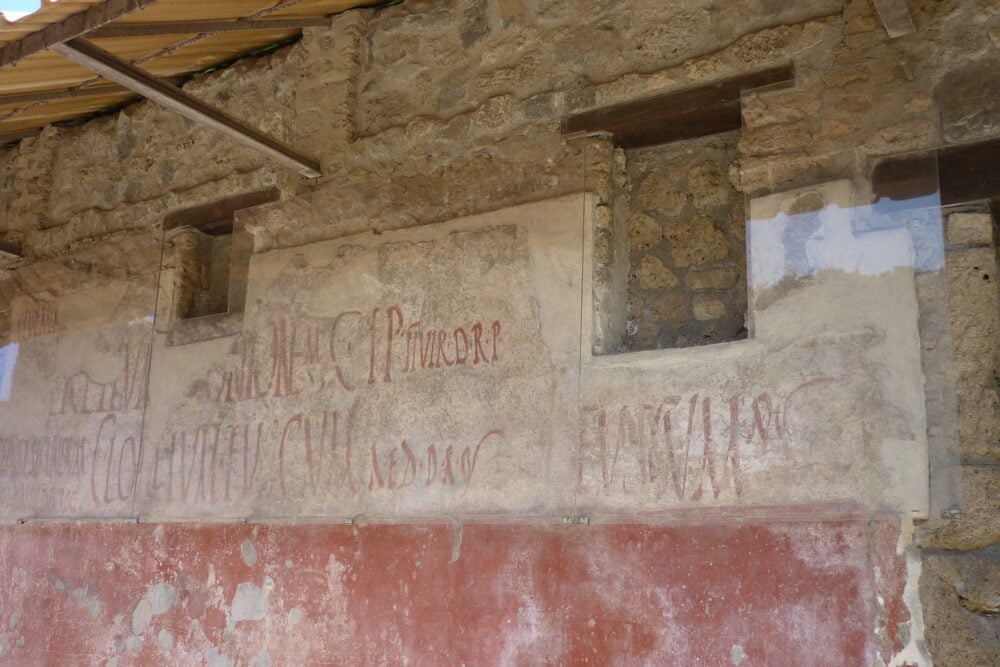
In many ways, Pompeii functioned like a public forum where walls served as communication platforms. People left announcements, responses, jokes, and commentary layered over one another across shared spaces.
A love note in that environment wasn’t necessarily hidden. It may have been meant to be seen, even admired, by others. Public expressions of affection were part of the city’s visual culture, blending personal emotion with communal life in ways that feel surprisingly modern.
8. These discoveries reshape how we see ancient cities
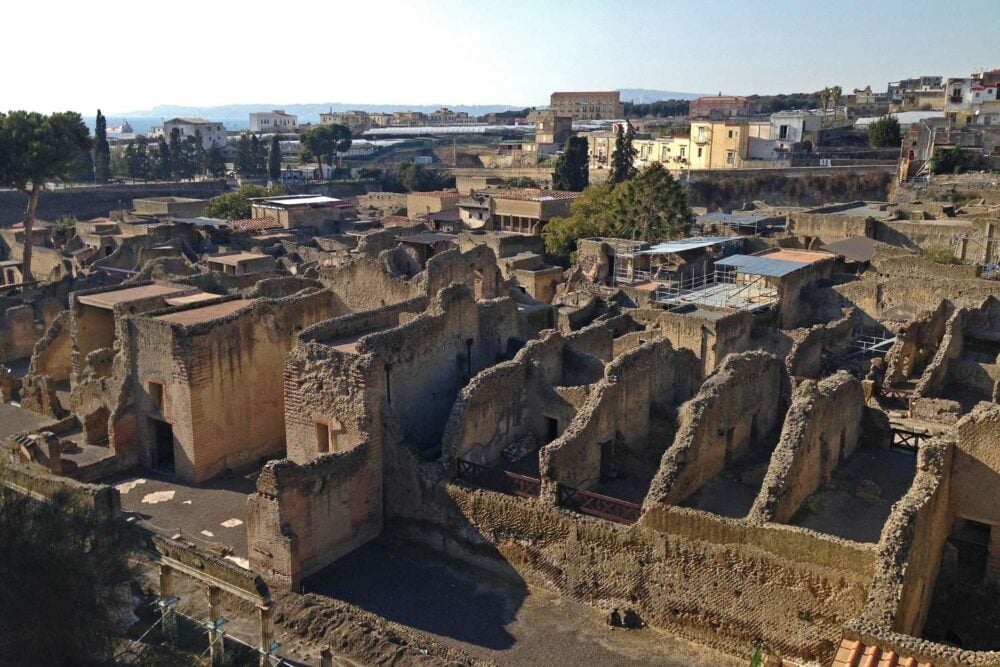
It’s easy to picture ancient Rome as distant and formal, defined by emperors, gladiators, and grand temples. But graffiti reminds us that cities were filled with everyday people navigating friendships, rivalries, and romance.
Small inscriptions like this one humanize history. They pull attention away from monumental events and toward individual voices, reminding us that ancient life was lived by people with familiar emotions and personal stories.
9. Technology helps reveal what the eye can miss

Over time, weathering and restoration efforts can blur fine markings. Inscriptions that were once clear may fade into nearly invisible grooves.
Modern documentation techniques allow researchers to detect faint carvings by studying surface variations and lighting angles. These tools make it possible to rediscover messages long overlooked, expanding the number of voices emerging from Pompeii’s walls.
10. The message bridges two distant worlds
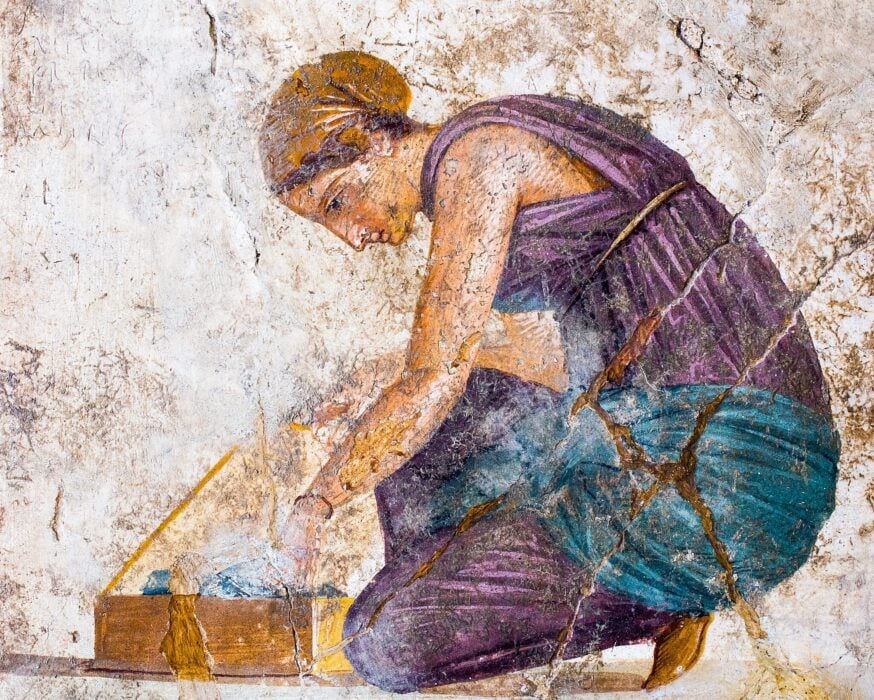
A short declaration of affection carved in Latin connects the ancient city to modern readers in a direct way. Across centuries, language, clothing, and culture have changed dramatically.
Yet the desire to express love publicly—or even impulsively—remains constant. The inscription collapses time, reminding us that beneath the layers of ash and history were people who felt much as we do today.
11. Pompeii continues to reveal new stories
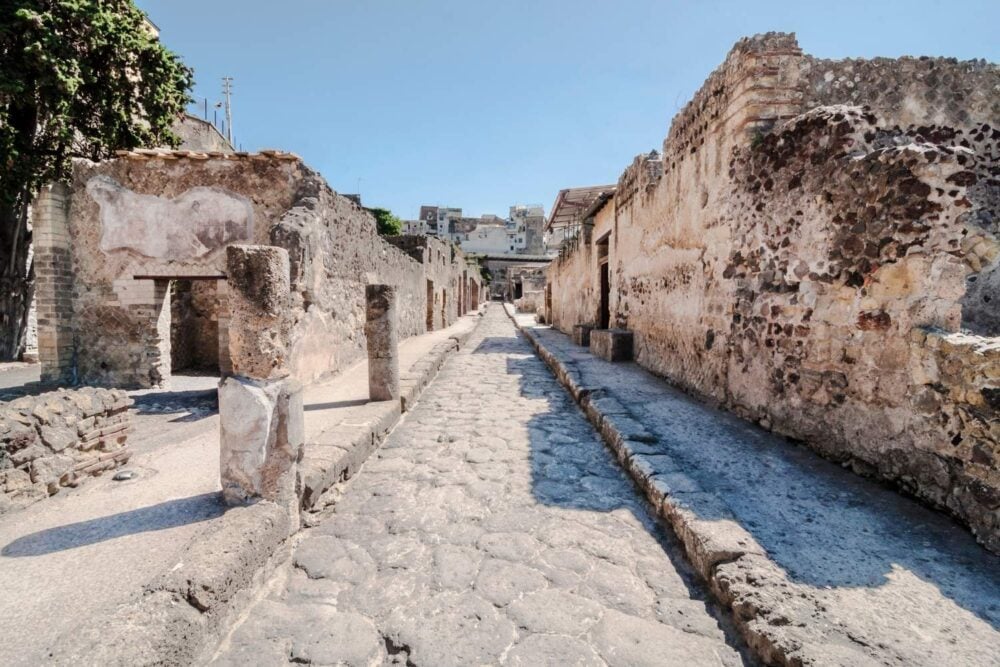
Even after centuries of excavation, Pompeii still holds discoveries waiting in plain sight. Each reexamination of walls and structures can uncover overlooked details.
This love note shows that the city’s most meaningful finds are not always grand statues or elaborate villas. Sometimes the most powerful discoveries are simple words left behind by someone who never imagined they would be read thousands of years later.