
The change didn’t happen by accident — and it wasn’t driven by comfort.
Airplane seats didn’t suddenly become uncomfortable overnight. The cramped feeling many passengers notice today is the result of decades of quiet changes driven by economics, competition, and regulatory gaps.
What started as a way to lower ticket prices slowly reshaped how planes are designed and how space is allocated inside them. Most travelers experienced these shifts gradually, without realizing how much room had been lost over time.
Understanding why airline seats are so small now helps explain how modern flying became less about comfort and more about efficiency, and why reversing the trend has proven so difficult.
1. Airline cabins used to be designed around comfort

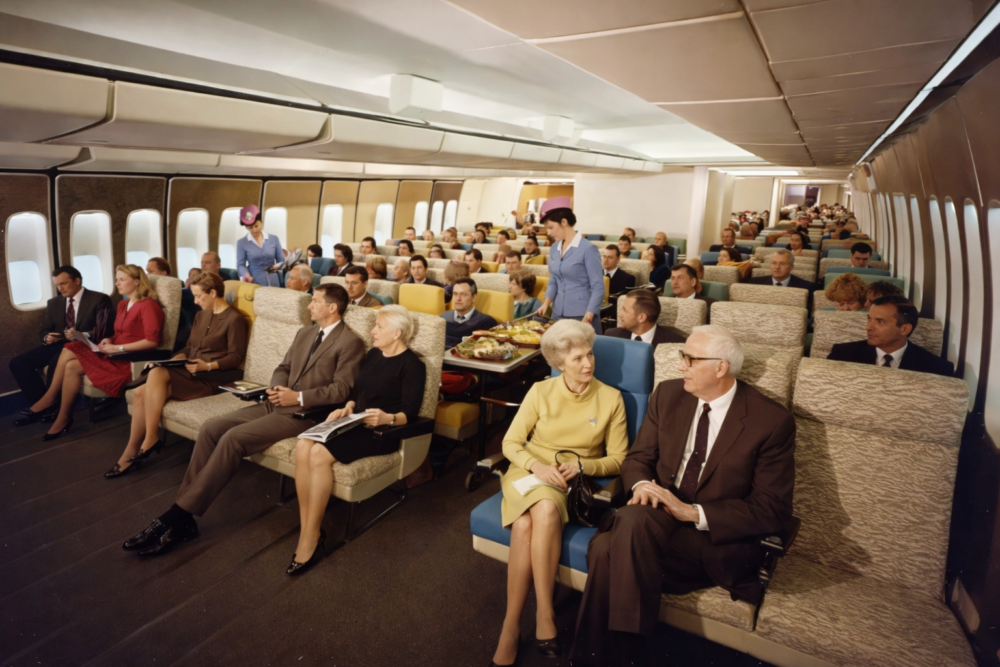
In the early days of commercial aviation, airlines sold flying as an experience. Seats were wider, legroom was generous, and cabins prioritized passenger comfort.
Fewer people flew, tickets cost more, and airlines competed by offering better service and space. Comfort wasn’t a premium add-on. It was part of the basic ticket.
2. Deregulation reshaped how airlines made money

In 1978, U.S. airline deregulation removed government control over fares and routes. Airlines suddenly had to compete aggressively on price.
Lower fares brought more people into the skies, but they also squeezed profit margins. Airlines began searching for ways to cut costs and increase revenue without raising ticket prices.
3. Adding more seats became the easiest solution
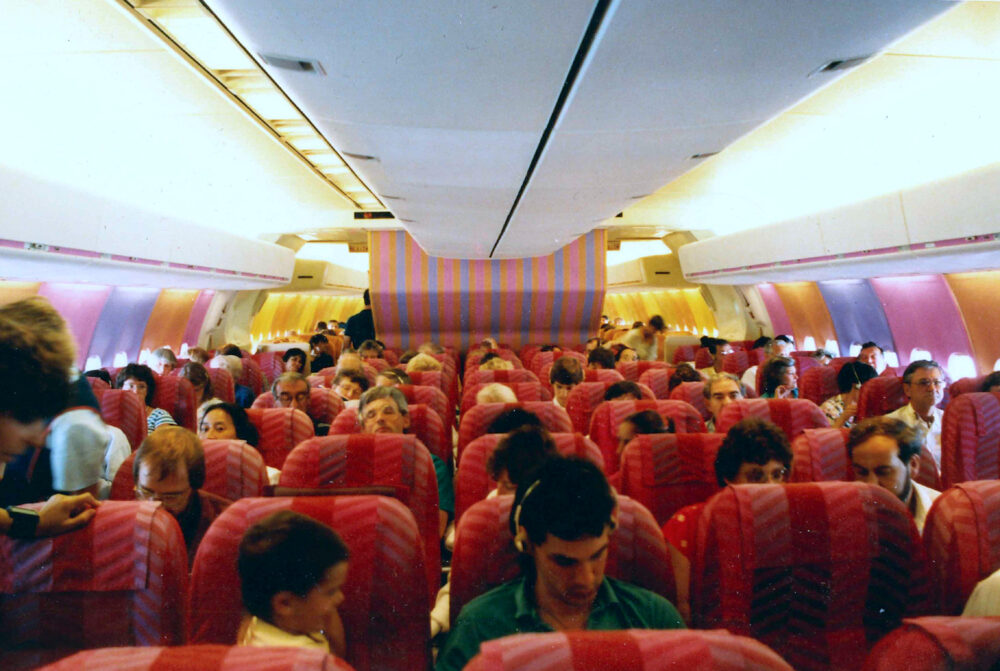
One of the fastest ways to earn more per flight was to carry more passengers on the same plane. Shrinking seat size allowed airlines to add rows.
Over time, this strategy became standard. Each small reduction felt minor, but together they dramatically changed how cabins feel today.
4. Seat pitch slowly declined over decades

Seat pitch, the distance between rows, gradually decreased across most aircraft. What used to be normal legroom became something you pay extra for.
Because these changes happened incrementally, many passengers didn’t notice until the loss of space became impossible to ignore.
5. There are no minimum seat-size rules in the U.S.

Despite widespread complaints, U.S. regulators do not set minimum standards for seat width or legroom. Safety rules focus on evacuation timing, not passenger comfort.
As long as airlines can demonstrate that a plane can be evacuated within required limits under test conditions, seat size is largely left to the airline. Critics argue these tests don’t reflect real-world passengers or crowded cabins with carry-on bags.
Without firm rules, airlines have little incentive to increase space, especially when tighter seating improves profits and keeps fares low.
6. Evacuation tests don’t reflect real flights

Emergency evacuation tests are conducted with selected participants under controlled conditions. They don’t include children, elderly passengers, or people with mobility challenges.
This has raised concerns that shrinking seats may affect safety in ways current testing doesn’t fully capture.
7. Basic economy made shrinking space more obvious
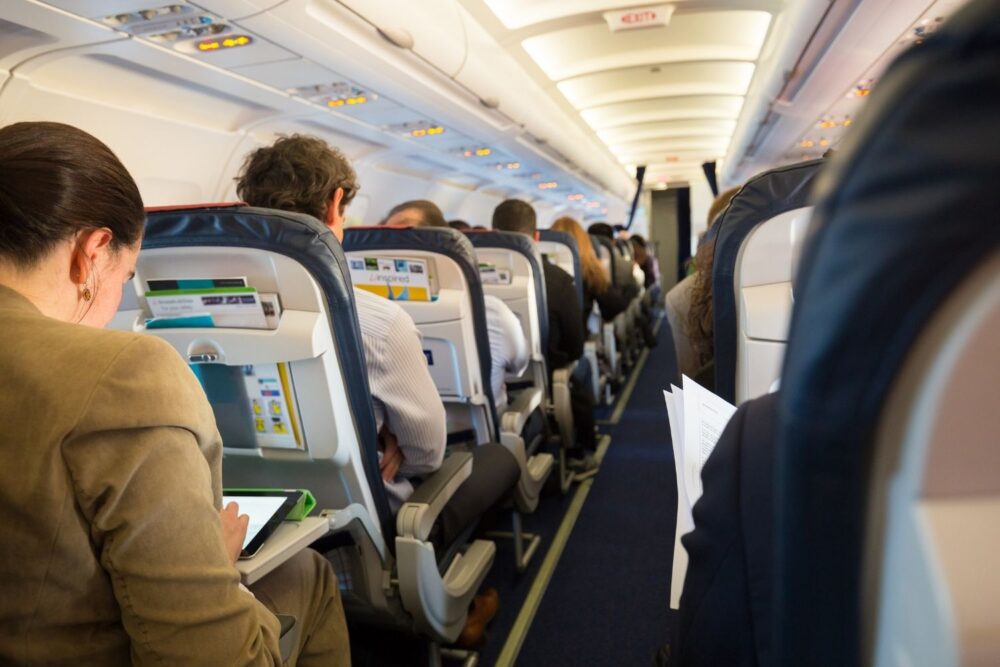
The rise of basic economy fares highlighted how space became a product. Passengers pay less upfront, but lose seat choice and legroom.
What used to be standard is now something travelers must buy back, reinforcing the idea that comfort is optional.
8. Modern seats look thinner but feel tighter
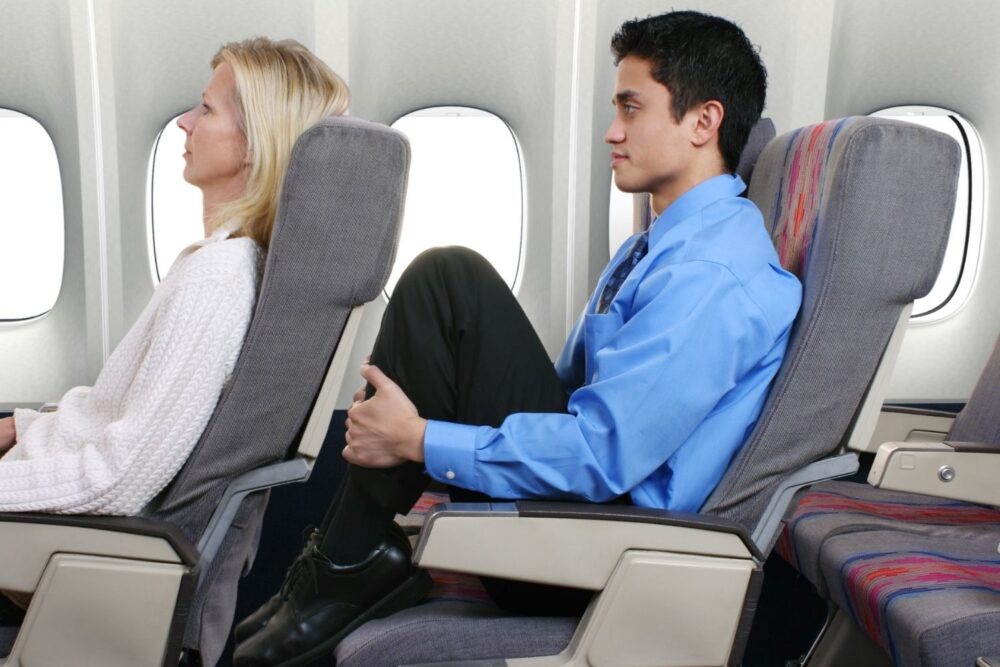
Airlines often advertise unchanged seat pitch, but thinner seatbacks reduce usable space. Knees, shoulders, and personal space still feel more restricted.
Design efficiency helps airlines fit more passengers while technically meeting measurement requirements.
9. This isn’t just a U.S. issue
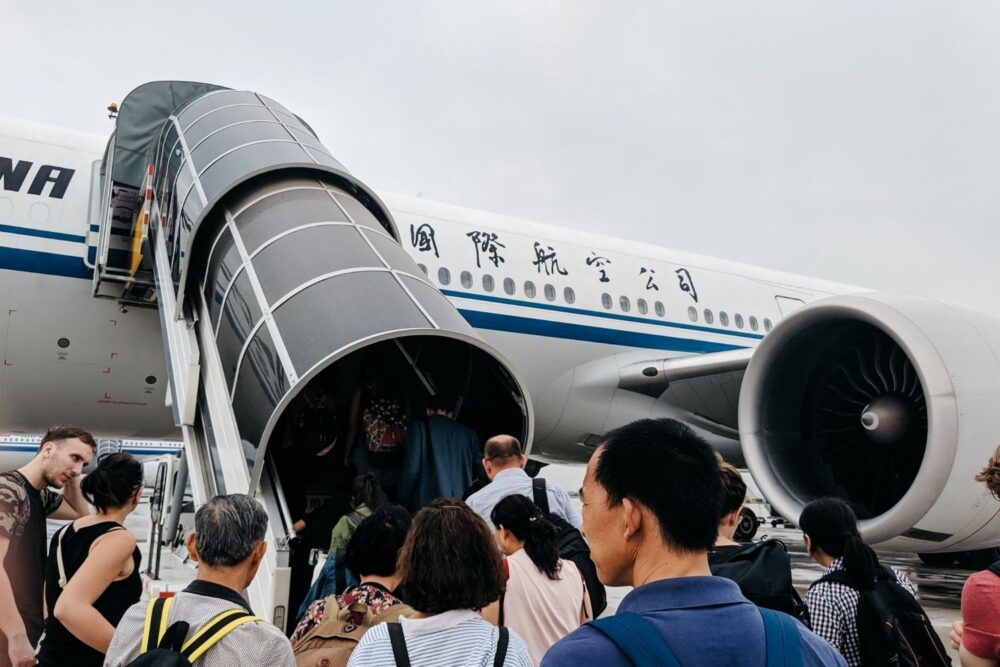
While regulations differ globally, airlines worldwide face similar economic pressures. High-density seating has become common across international carriers.
Competition and rising fuel costs pushed many airlines toward similar layouts, making cramped cabins a global norm.
10. Pushback exists, but progress is slow

Passenger advocates and some lawmakers have called for minimum seat standards tied to safety and accessibility.
Airlines counter that more space would raise fares. So far, regulatory action has been limited and incremental.
11. Smaller seats reflect how flying is sold today
Modern air travel is marketed as transportation, not experience. Low prices attract passengers, while comfort is sold separately.
As long as fares remain the main selling point, seat size is unlikely to grow without outside pressure or new rules.