
New research shows a long-assumed inactive rift between Africa and Asia is still moving after millions of years.
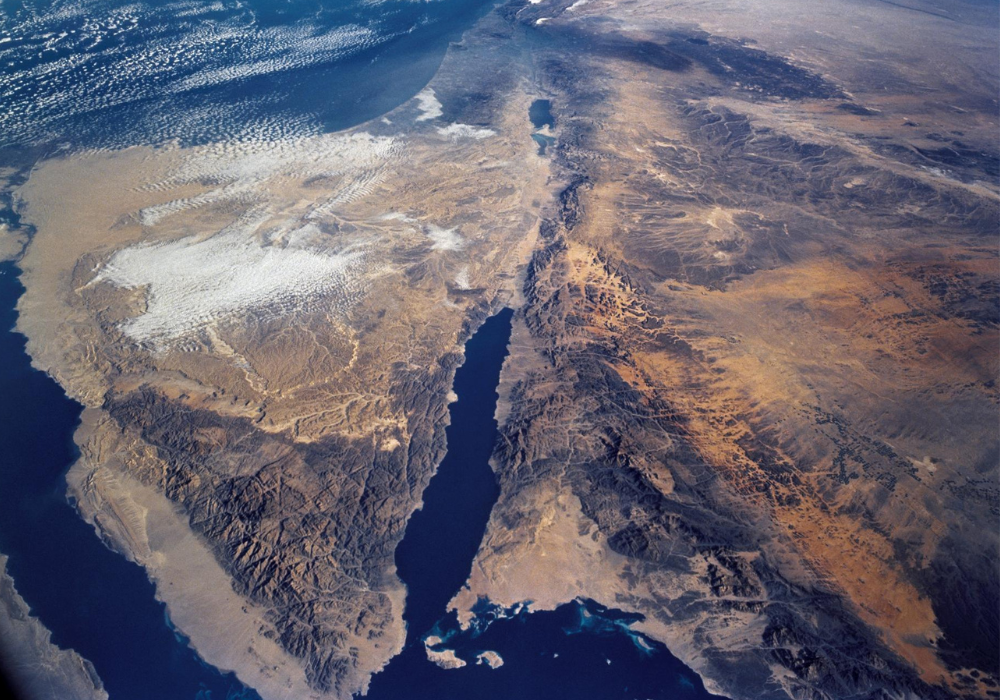
Scientists studying the Gulf of Suez have discovered that the rift separating Africa and Asia is still slowly pulling apart, millions of years after researchers believed the spreading had stopped. Using modern satellite data and precise geological surveying, the new study found that the region continues to widen at measurable rates. This unexpected motion suggests the rift never fully went dormant. The finding could reshape how geologists understand regional tectonics and long-term seismic risks in northeastern Africa and the Middle East.
1. A Rift Once Thought Inactive Is Still Very Much Alive

For decades, geologists believed the Gulf of Suez rift had stopped spreading around 5 million years ago. The region was long considered a “failed” rift that began to split but then stalled. New GPS data now shows the land on either side of the gulf is still moving apart at slow but measurable rates. This motion challenges the long-held assumption that tectonic activity in the area had ceased.
Because the rift sits between two heavily populated continents, even small movements matter. Ongoing extension can influence regional seismic patterns and long-term landscape evolution.
2. Modern Satellite Measurements Revealed Subtle but Real Motion

Researchers relied on high-precision satellite instruments capable of detecting millimeter-scale ground shifts. These tools revealed that the African and Arabian plates continue to separate along the Gulf of Suez, although at a much slower pace than more active rifts like the Red Sea. The motion was too subtle to detect with older, less accurate equipment.
This advanced technology allows scientists to revisit regions previously assumed stable. In this case, it showed that even “quiet” tectonic zones may have ongoing activity hidden beneath the surface.
3. The Rift’s History Helps Explain Why Scientists Misjudged It

The Gulf of Suez began forming around 24 million years ago during the breakup of Africa and Arabia. For a long period, it expanded steadily before slowing dramatically. Around 5 million years ago, geological evidence suggested spreading had ceased, leading most researchers to classify it as tectonically inactive.
The new findings show that while the rift did slow significantly, it never fully stopped. This nuance helps explain why older geological markers indicated inactivity while modern GPS now detects continuing motion.
4. The Rift Is Moving Far More Slowly Than Other Tectonic Boundaries
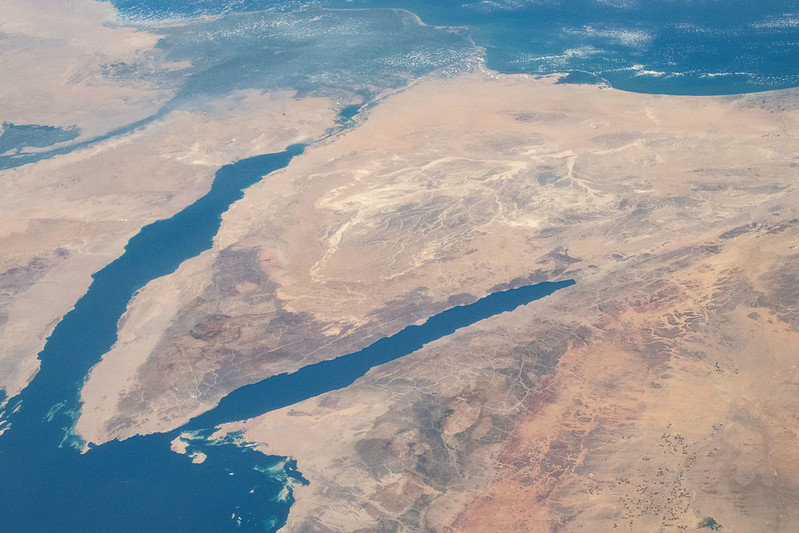
While the Gulf of Suez is still spreading, its pace is extremely slow compared to major tectonic boundaries. The separation rate is only a tiny fraction of the movement seen in places like the East African Rift or the Mid-Atlantic Ridge. This slow motion explains why earlier methods failed to detect the change and why the region remained classified as dormant.
Even so, slow does not mean insignificant. Long-term movement can still reshape fault systems and influence local earthquake behavior.
5. Slow Extension Could Influence Local Seismic Risk
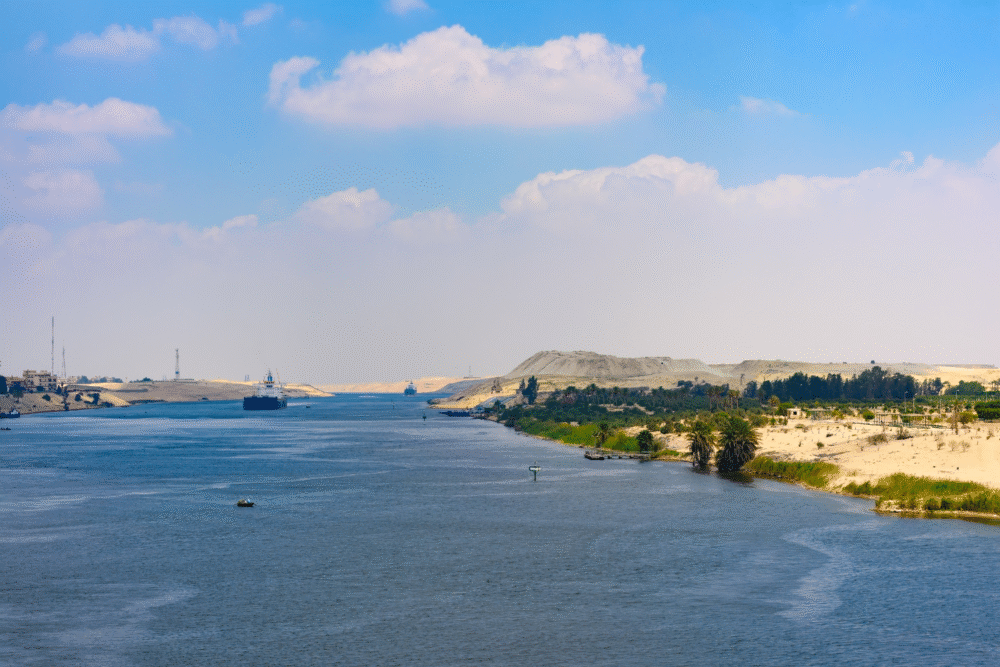
Although the region is not among the world’s most active earthquake zones, ongoing spreading creates stress along faults. Over long timescales, these stresses can contribute to periodic seismic activity. Scientists emphasize that the discovery does not imply immediate danger but highlights the importance of monitoring tectonically complex regions.
Understanding subtle extension helps refine seismic risk assessments for nearby communities in Egypt, Israel, and surrounding areas. Even millimeter-level movements can matter when accumulated over thousands of years.
6. The Finding Redraws Part of the Geological Map of the Region
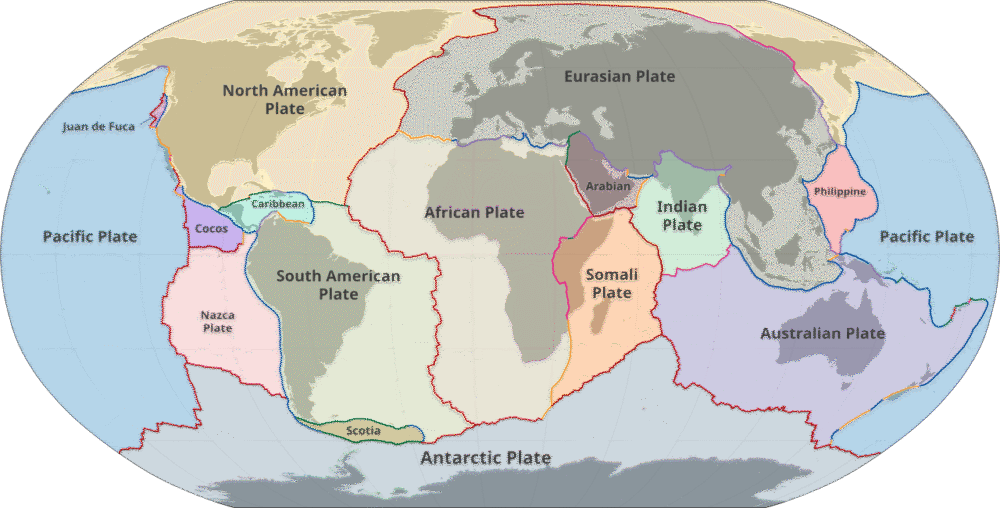
Geologists rely on classifications like “active,” “stalled,” or “failed” to describe the history of tectonic structures. The Gulf of Suez had long been labeled a failed rift. The new data forces a reclassification: it is not fully failed nor fully active, but a slow-moving extensional zone still accommodating motion.
This redefinition helps refine models of how the Arabian Plate continues to move relative to Africa. It also influences understanding of how the Red Sea rift system evolved over millions of years.
7. The Discovery Shows How Much More Sensitive Modern Tools Have Become
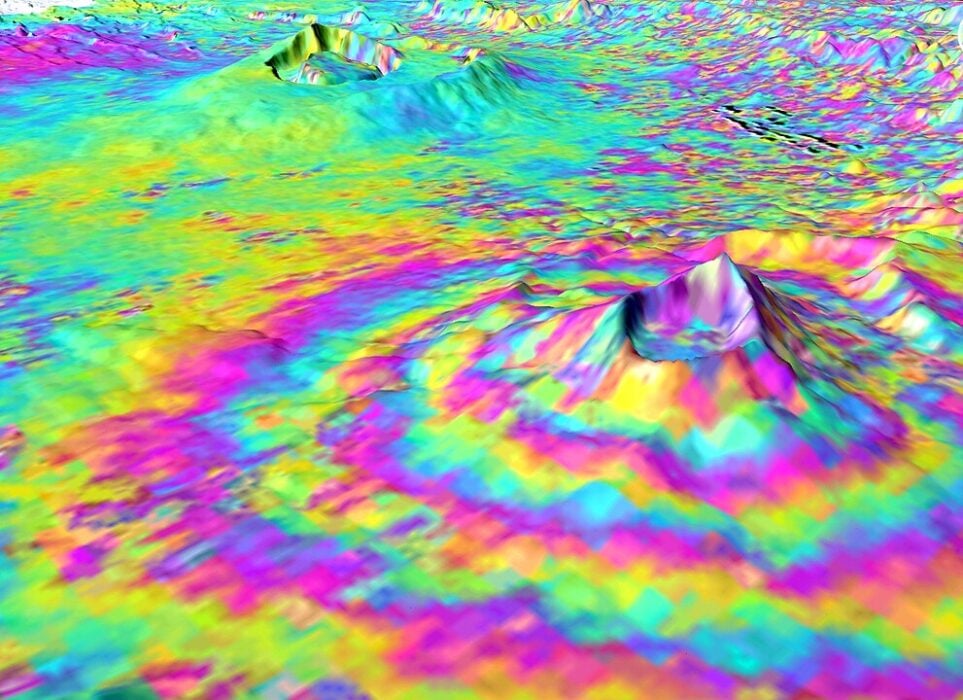
In past decades, small tectonic movements were nearly impossible to distinguish from background noise. Today’s GPS and InSAR satellite systems provide extremely precise measurements of ground displacement. These tools can detect changes as small as a few millimeters per year.
The ability to detect such subtle motion allows scientists to revisit long-held assumptions. In the Gulf of Suez, improved precision revealed a process that had been invisible for much of the modern geological era.
8. The Rift’s Continued Motion Helps Explain Its Landscape Features

The Gulf of Suez’s steep cliffs, narrow basins, and fault-scarred coastlines all reflect a long history of extensional tectonics. For years, scientists thought these features were relics of ancient activity. The new findings show these landscapes continue to evolve, albeit slowly.
Ongoing spreading may contribute to gradual changes in shoreline shape, sediment distribution, and localized fault activity. The topography makes sense when viewed through the lens of a rift that never completely shut down.
9. The Study Helps Refine Models of African and Arabian Plate Movement
Plate tectonics is an interconnected system. Understanding motion in one region helps scientists model larger plate interactions. The Gulf of Suez sits between the African Plate and the Arabian Plate, both of which continue to shift relative to one another.
Confirming that spreading persists—however slowly—helps improve estimates of long-term plate motion across the broader region. These insights feed into global tectonic models used for hazard assessment and geological research.
10. The Findings Highlight How Earth’s Crust Rarely Stays Completely Still
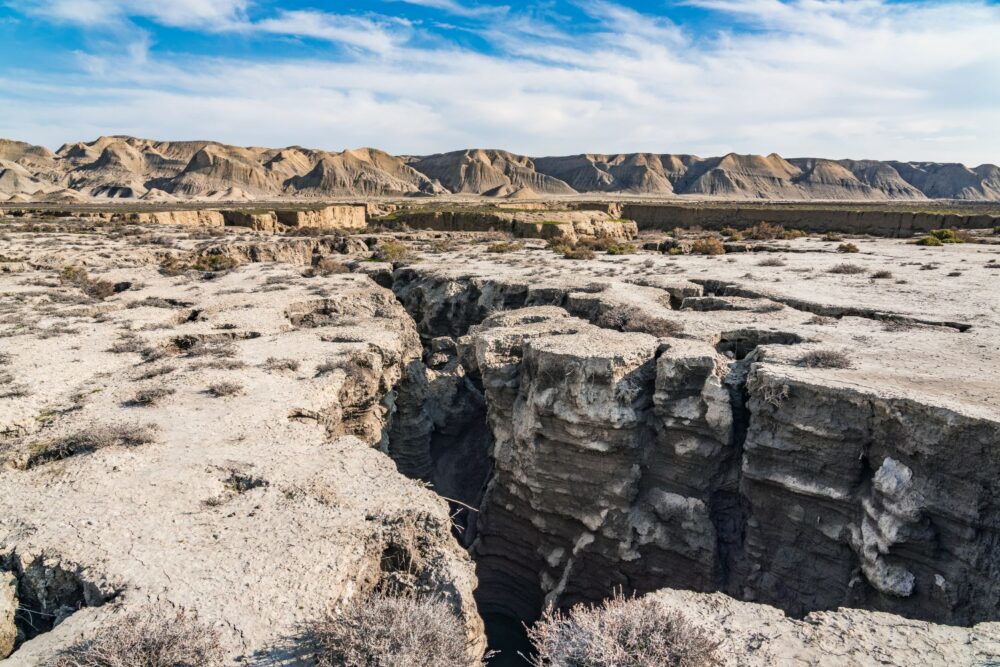
One of the broader lessons from the study is that “inactive” regions may still host slow, subtle geological processes. Earth’s crust is dynamic, and boundaries often continue to adjust long after major rifting phases appear to end. The Gulf of Suez is a clear example of a system that looked dormant but was quietly evolving all along.
This discovery encourages geologists to revisit other regions once believed inactive. With new tools, they may uncover additional slow-moving tectonic systems previously overlooked.