
New research reveals how Mars subtly alters Earth’s long-term climate cycles through orbital interactions.
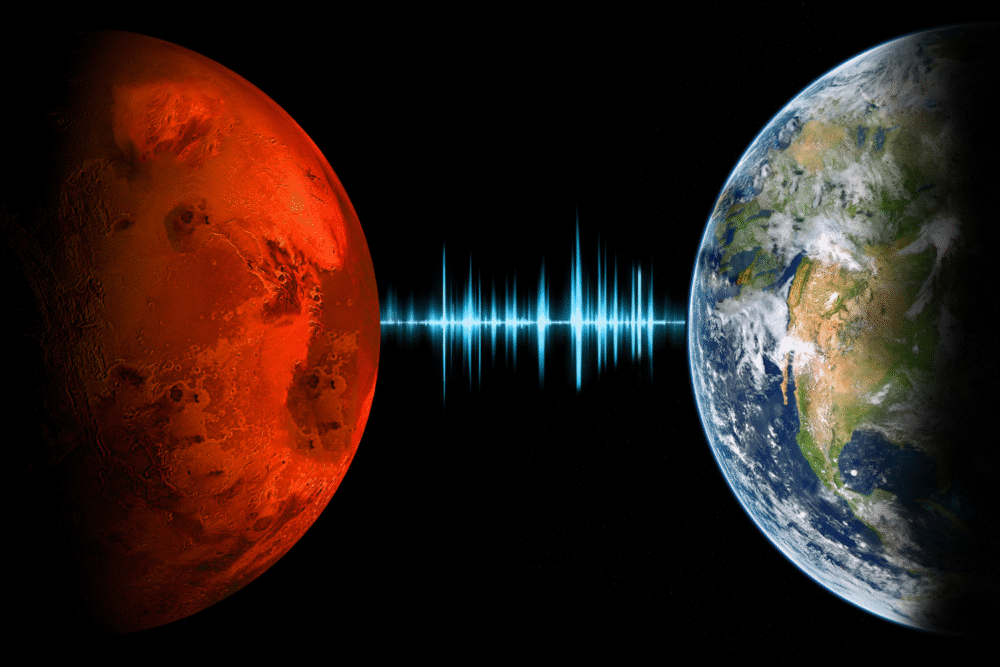
Scientists have found that Mars plays a surprising role in shaping Earth’s long-term climate cycles. The discovery comes from new research led by climate scientist Konstantin Batygin and planetary scientists at the California Institute of Technology (Caltech), who analyzed millions of years of orbital interactions across the Solar System. Their work shows that Mars’ gravitational pull subtly alters Earth’s orbital eccentricity, influencing the pacing of major climate rhythms such as ice ages. The findings reveal that Earth’s climate history is deeply connected to planetary dynamics extending far beyond our own world.
1. Mars alters the rhythm of Earth’s Milankovitch cycles.
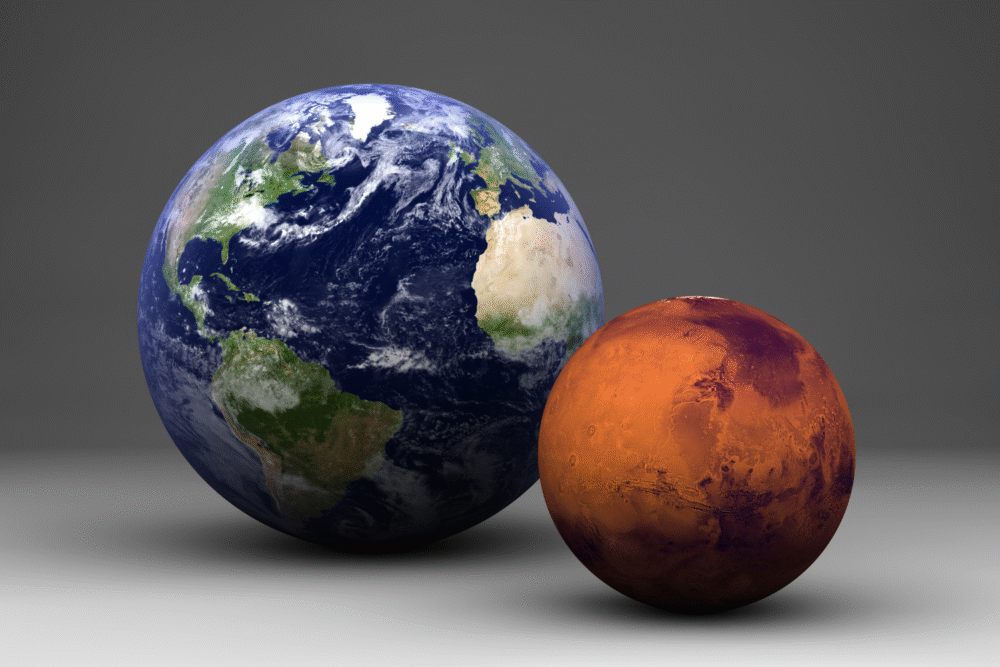
Earth’s long-term climate changes are shaped by Milankovitch cycles—patterns in orbital shape, tilt, and wobble that influence how much sunlight reaches the planet. The new study shows that Mars contributes to these cycles by affecting the orbital eccentricity that controls how elliptical Earth’s orbit becomes over time.
This added influence helps adjust the pacing of glacial and interglacial periods. While the effect is subtle, it is measurable and significant on million-year timescales, confirming that Earth’s climate rhythms depend partly on planetary interactions.
2. Scientists used 65 million years of orbital simulations to detect the pattern.

Researchers built high-precision simulations covering tens of millions of years to trace how the orbits of planets shift due to gravitational forces. These models revealed a repeating pattern linked to Mars that appears consistently throughout Earth’s climate history. The gravitational interplay modifies certain orbital frequencies that, in turn, affect solar energy distribution.
By matching the simulations with known geological data, scientists confirmed that the detected Mars-linked cycle aligns with documented climatic shifts. This correlation strengthens the case that Mars plays a small but real role in Earth’s long-term climate.
3. Gravitational interactions between planets affect Earth’s orbit.
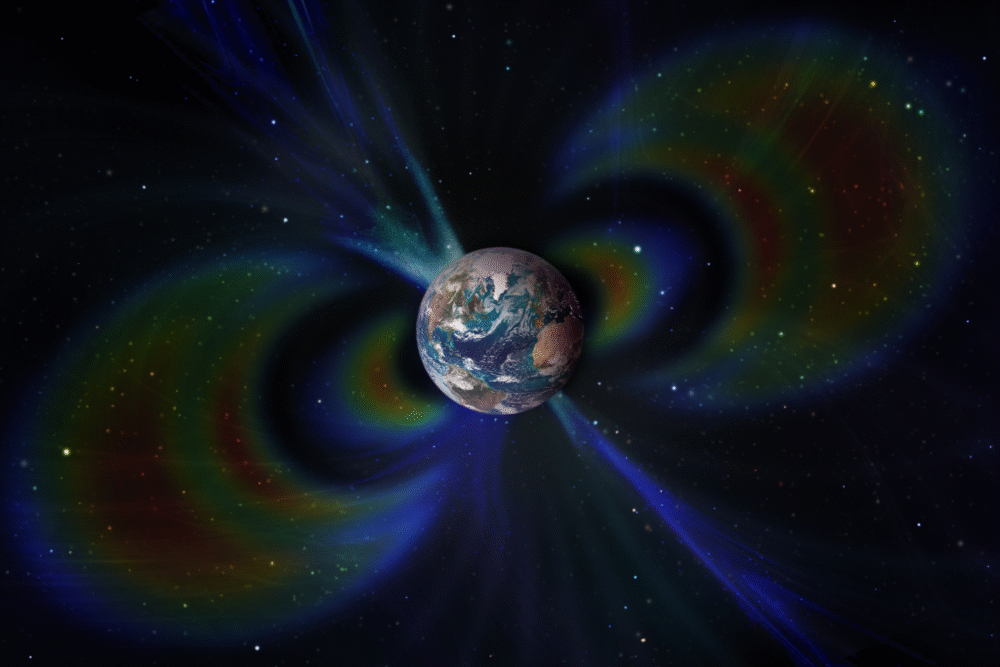
Earth does not orbit the Sun in isolation. Every planet exerts a gravitational pull, and Mars—being relatively close—has a detectable influence. Over millions of years, these small tugs add up, altering Earth’s orbital shape. Even a slight change in orbital eccentricity can modify how sunlight is distributed across seasons and latitudes.
These changes can influence the onset or intensity of ice ages. Although not the main driver of climate, Mars contributes to these variations by helping shape Earth’s orbital path in predictable ways.
4. Climate records show patterns that match the Mars-linked cycle.

Sediment cores and geological layers preserve evidence of ancient climate cycles. When scientists compared these records with orbital simulations, they found matching rhythms tied to the Mars-influenced orbital frequency. This connection suggests that Mars has been subtly shaping Earth’s climate for millions of years.
Earth’s climate system responds strongly to changes in solar input, and the Mars-linked cycles alter how that energy varies over long time spans. The geological match offered compelling support for the new findings.
5. Mars influences Earth’s orbital eccentricity every 2.4 million years.

One of the most important discoveries is that Mars contributes to a 2.4-million-year cycle that affects Earth’s orbital eccentricity. This periodic change influences how much solar radiation Earth receives during different seasons. When eccentricity increases, seasonal extremes become more pronounced.
This cycle aligns with cooling and warming periods evident in climate records. The gravitational interplay between Earth and Mars helps pace these long-term cycles, adding another dimension to the study of past climate behavior.
6. Orbital shifts help shape ice age timing and intensity.

Ice ages are strongly driven by variations in Earth’s orbit. The Mars-linked cycles add subtle shifts to these orbital patterns, which can influence when large ice sheets grow or retreat. Scientists emphasize that Mars does not directly cause ice ages, but it helps modulate the intensity of orbital forcing that contributes to their timing.
This additional factor helps explain why some ice age cycles are stronger or weaker than others. The gravitational partnership between Earth and Mars is now recognized as part of that long-term climate equation.
7. The Sun remains the dominant climate driver, but Mars adds nuance.

While the new findings reveal an important influence, scientists stress that Mars does not meaningfully affect short-term climate or modern warming trends. Solar energy, greenhouse gases, and Earth’s internal climate feedbacks remain far more powerful. Mars simply nudges the system over geological time.
Understanding these subtle interactions helps refine long-term climate models, but they do not alter conclusions about current climate change. The influence is real—but only on million-year scales.
8. Planetary gravitational cycles help explain ancient climate anomalies.
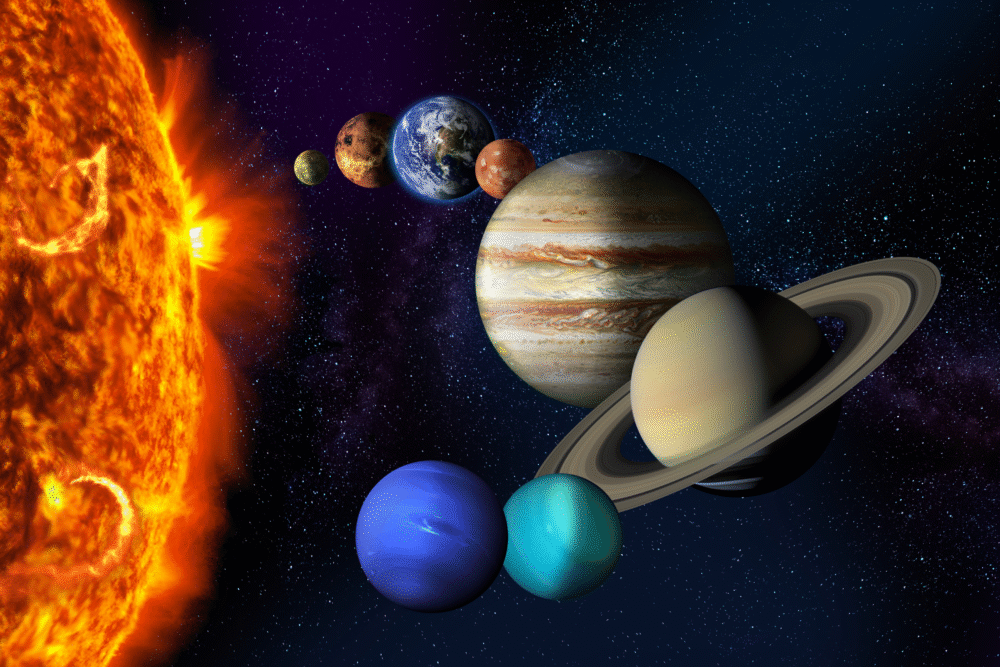
Certain irregularities in past climate cycles have puzzled scientists for decades. The Mars-linked orbital frequency helps account for variations that were not fully explained by Earth-only models. This additional factor clarifies why some warm or cold periods did not align perfectly with previously known orbital rhythms.
By incorporating Mars into the equation, researchers can better interpret the geological climate record and understand how multiple planetary forces worked together to shape Earth’s ancient climate history.
9. The study enhances the precision of future climate reconstructions.

High-resolution orbital models allow scientists to map past climate cycles with increasing accuracy. By including Mars’ gravitational influence, researchers can improve reconstructions of ancient climate events, helping identify when ice sheets expanded, seas rose, or global temperatures shifted.
This expanded understanding provides a more complete picture of how Earth’s climate operates over deep time. Although these insights won’t predict modern climate change, they improve our interpretation of Earth’s long-term climate evolution.
10. Earth and Mars share a dynamic orbital relationship.

The research underscores the interconnected nature of the Solar System. Even planets millions of miles apart exert influence on one another over long periods. These interactions create repeating orbital patterns that shape planetary environments in subtle but measurable ways.
This shared orbital relationship highlights the complexity of celestial mechanics. On Earth, the result is a climate system influenced not only by our distance from the Sun but also by the gravitational choreography of neighboring planets.
11. The findings show our climate is part of a larger cosmic system.
Earth’s climate is often viewed as an isolated system, but the new study demonstrates that it is tied to the broader dynamics of the Solar System. Mars, despite its distance, contributes to patterns that shape Earth’s climate rhythm over geological timescales.
This cosmic perspective adds depth to our understanding of climate science. It reveals that Earth’s environment is shaped by a combination of internal processes, solar influences, and long-term planetary interactions that have unfolded for millions of years.