
A mysterious carved face found underwater is offering new clues about life in medieval Poland.

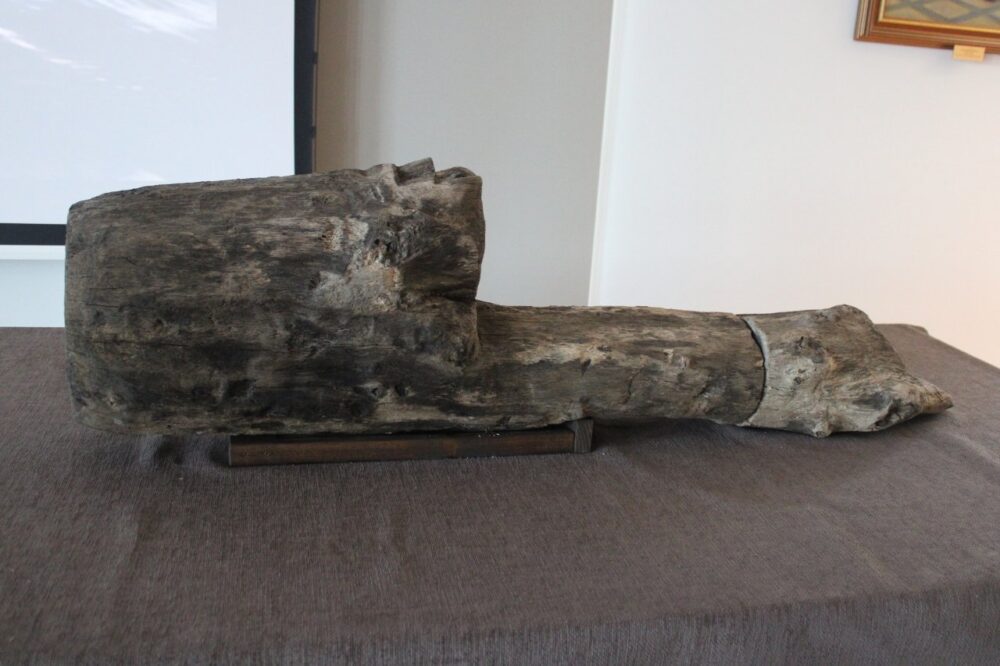
Divers exploring Lake Lednica in western Poland recently recovered a wooden beam carved with a human face dating to around 967 AD. The artifact survived for a millennium thanks to the lake’s oxygen-poor environment, which prevented the wood from decaying. Researchers believe the carving was once part of a defensive rampart that protected an early Slavic settlement, though its purpose remains unclear. The find is unusual because carved wooden faces from this period are extremely rare. Its discovery is giving archaeologists fresh clues about early Slavic beliefs, symbolism, and daily life.
1. The Carved Wooden Face Dates Back About 1,000 Years
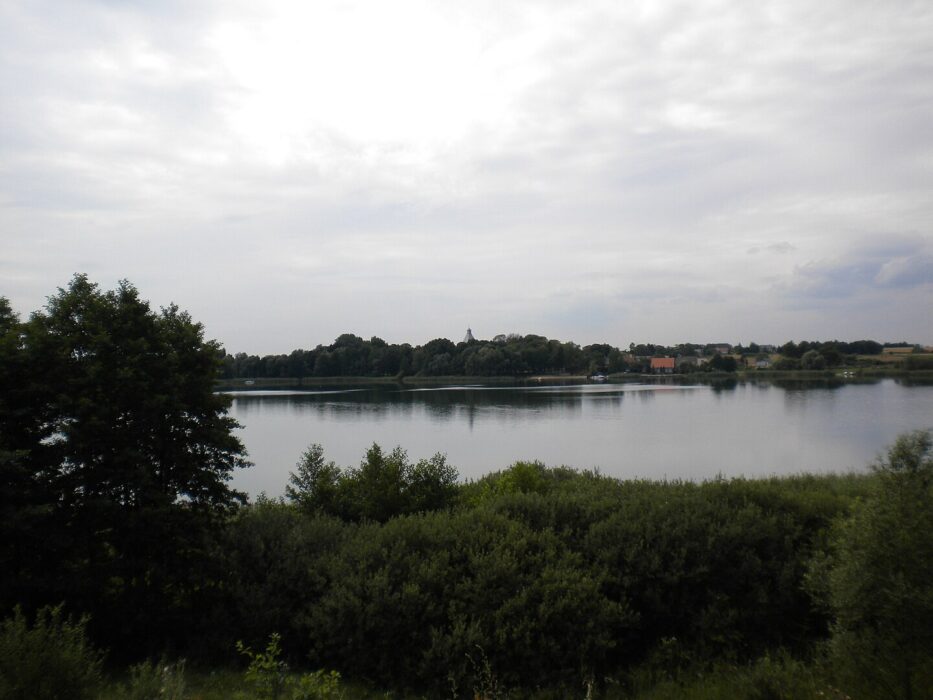
Archaeologists estimate the wooden face was carved sometime around the year 967, placing it firmly in Poland’s early medieval era. This period was marked by the rise of Piast-era settlements, expanding trade, and increasing contact with neighboring cultures. Finding a wooden artifact this old is uncommon because wood typically decays quickly unless preserved in special conditions.
The lake’s oxygen-poor water helped protect the carving from decomposition. Its survival gives researchers a rare chance to study wooden craftsmanship and symbolic expression from a time when most similar objects have long since disappeared.
2. Divers Found the Artifact in Lake Lednica

The wooden face was discovered during underwater excavations in Lake Lednica, an important archaeological site containing the remains of early Slavic settlements. Divers regularly explore the lake because several wooden bridges, fortifications, and artifacts from the early Middle Ages lie submerged there.
The carving was recovered near the remains of a defensive rampart, suggesting it was part of a larger structure. Lake Lednica’s calm, low-oxygen waters have preserved many organic materials unusually well, making it one of Poland’s most valuable underwater archaeological locations.
3. The Face Was Carved Into a Structural Wooden Beam

The artifact is not a standalone sculpture but a carved face incorporated into a long, sturdy beam. This type of construction suggests it may have been part of a building element, bridge support, or palisade within the fortified settlement on Lednica Island.
Its placement within a structural beam indicates the carving may have held symbolic or protective meaning. Decorative woodworking from this era was rare, so the presence of a carved face suggests intentional design rather than simple ornamentation.
4. The Beam Likely Came From a Defensive Rampart
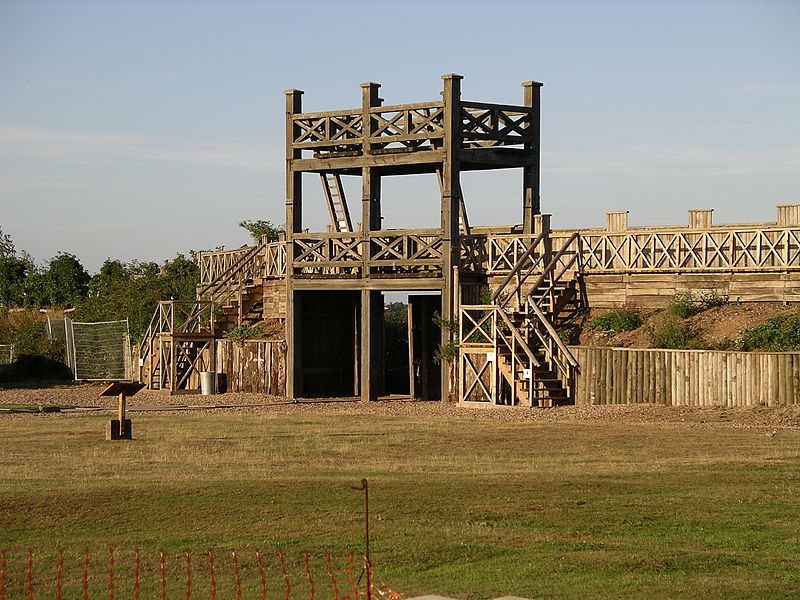
Researchers believe the beam originally belonged to a defensive wall or rampart surrounding the settlement on Lednica Island. These protective structures were typically made of timber, with vertical and horizontal components interlocked to strengthen the walls.
If the carved beam was part of the fortification, the face may have served as a symbolic guardian or marker. Defensive carvings are known in many cultures, and although Slavic examples are uncommon, the placement makes a ritual or protective interpretation plausible.
5. Wooden Carvings From This Era Rarely Survive

Medieval wooden carvings are exceedingly rare in Europe because organic materials deteriorate quickly above ground. Only waterlogged or oxygen-poor environments preserve wooden artifacts for centuries.
That makes the Lake Lednica site exceptional. Its unique preservation conditions allow archaeologists to recover wooden objects that would normally vanish within decades. The survival of a carved wooden face is especially valuable because it offers insight into artistic traditions that are often invisible in the archaeological record.
6. The Carving Provides Clues About Early Slavic Beliefs

While the exact purpose of the carved face is unknown, its presence suggests symbolic significance. Early Slavic societies used images of human and animal faces in ritual contexts, protection symbols, or markers of social importance.
The carving may reflect beliefs tied to guardianship, spirituality, or cultural identity within the fortified settlement. Because so few wooden carvings from this time survive, each new discovery helps researchers piece together the symbolic language of early medieval Poland.
7. The Expression on the Carving Is Purposefully Simple

The wooden face features basic, carved lines for eyes, a nose, and a mouth—characteristic of early medieval Slavic woodwork. Such simplicity may reflect technological limits or stylistic preferences of the era.
Despite the minimal detail, the intentional shaping of facial features indicates purposeful craftsmanship. These simple expressions were often meant to convey presence or watchfulness rather than realistic portraiture, adding to the interpretation that the carving may have held protective or symbolic meaning.
8. It May Have Marked a Significant Entrance

Archaeologists have proposed that carved beams like this one could have been positioned near gates, bridges, or key entry points of medieval settlements. The presence of a human face might have served as a symbolic overseer or protector for those entering the community.
Given that the beam was found near remains of wooden fortifications, this interpretation fits with known medieval construction practices. Such carvings could help signal the importance of a passageway or reinforce cultural messages tied to protection or identity.
9. The Discovery Adds to Lednica’s Archaeological Importance
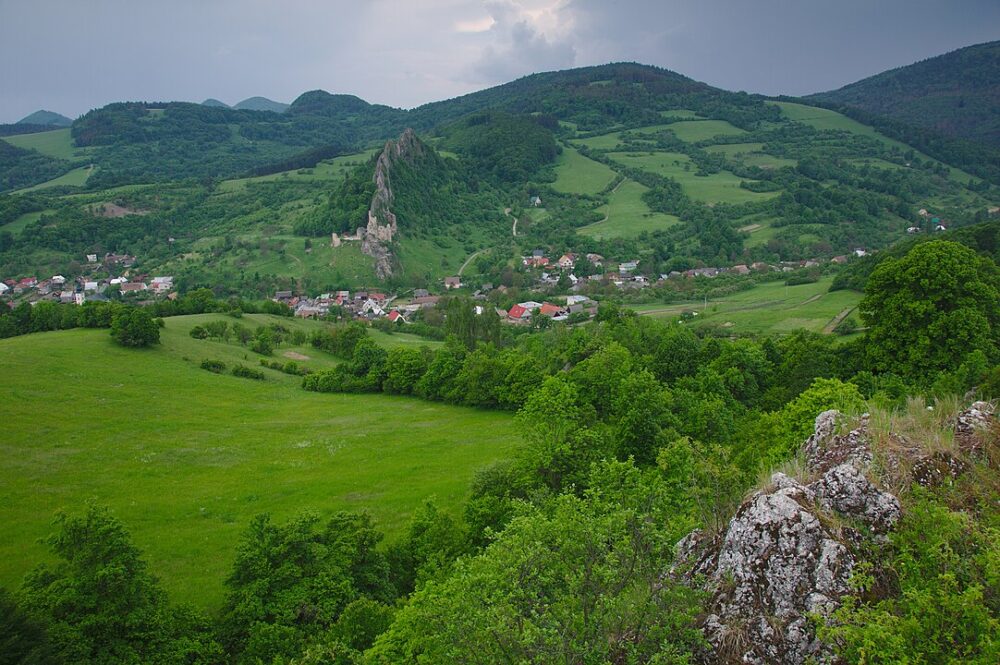
Lake Lednica is already one of Poland’s richest medieval sites, containing remnants of early Polish statehood, including bridges, weapons, tools, and carved wooden structures. The newly discovered wooden face adds a rare and culturally significant artifact to the collection.
Each find at Lednica helps researchers reconstruct daily life, defensive strategies, and symbolic practices of early medieval society. The carved beam strengthens Lednica’s role as a key window into the earliest phases of Polish nationhood.
10. The Carving Was Found in Remarkably Good Condition
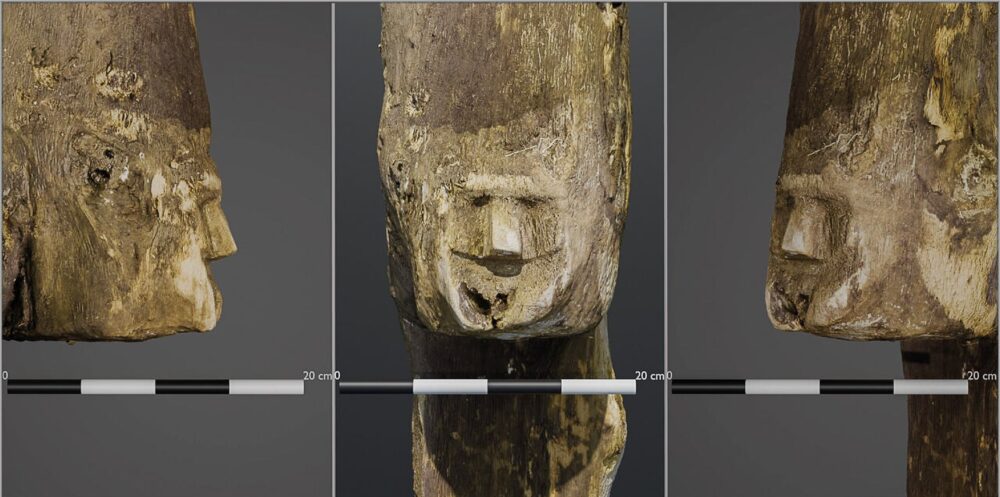
Although the carving shows signs of wear, the facial features remain clearly visible despite being submerged for centuries. The preservation quality is high enough that researchers can identify tool marks and carving techniques used by medieval woodworkers.
This level of detail allows archaeologists to study craftsmanship methods and compare them with other Slavic-era artifacts. Preserved wooden carvings from the 900s are so uncommon that even partial clarity provides significant research opportunities.
11. Researchers Are Continuing Analysis to Learn Its Purpose
Archaeologists are conducting ongoing studies to determine how the carved beam fit into the fortification and what role the face may have played. They will analyze tool marks, wood species, context, and structural connections to understand its original placement.
Further discoveries around the site may offer additional clues. As underwater excavations continue, researchers hope to uncover more carved or decorated beams that could reveal whether such symbolic elements were widespread in medieval Slavic architecture or unique to this settlement.