
A simple reflection trick helps cats see what we can’t.
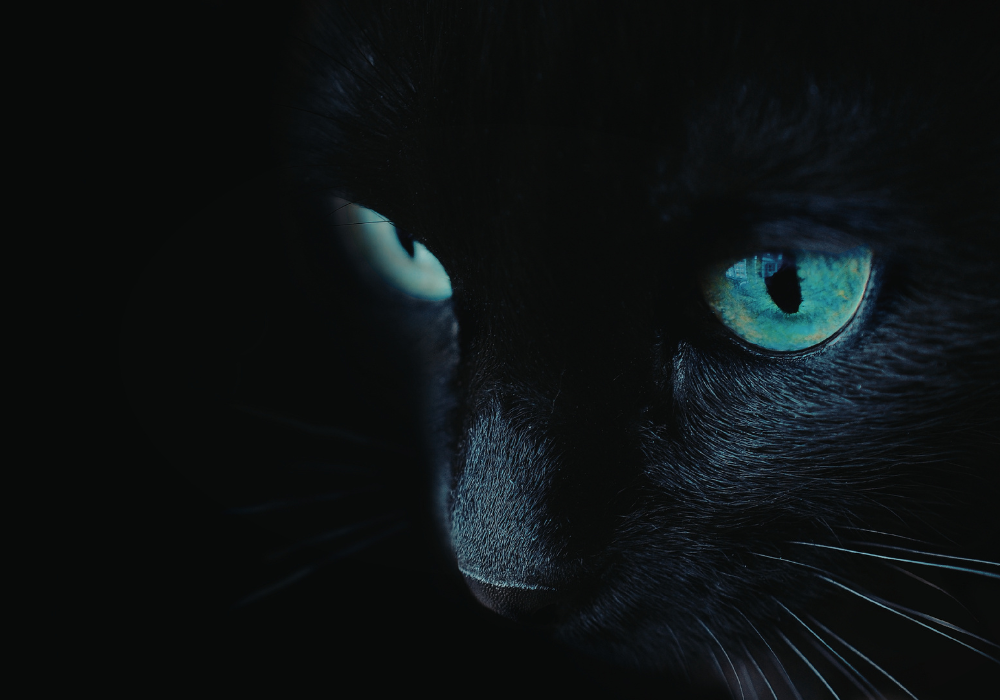
At night, a cat’s eyes can seem almost supernatural. One moment the room is dark, and the next two glowing orbs are staring back at you. It feels eerie, but there’s a precise biological reason behind it.
That glow isn’t light coming from the eye. It’s light being recycled. Cats evolved a specialized structure that gives incoming light a second pass through the retina, dramatically improving vision in dim conditions. What looks spooky to us is actually a visible sign of an adaptation that helped cats hunt, navigate unfamiliar terrain, and survive long before they lived alongside humans.
1. The glow isn’t light coming from the eye
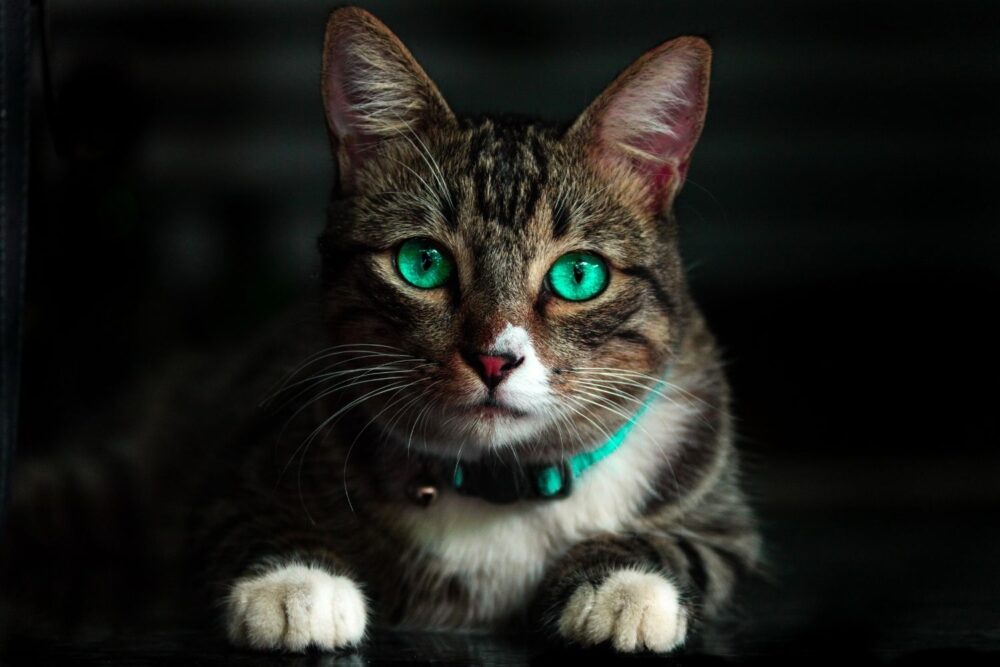
Cat eyes do not emit light of their own. The glow you see is simply reflected light that entered the eye and bounced back out toward the source.
When light from a flashlight, streetlamp, or camera flash enters a cat’s eye, it passes through the retina. Instead of disappearing, much of that light is reflected back outward, creating the illusion that the eye itself is glowing.
2. The tapetum lucidum makes it possible
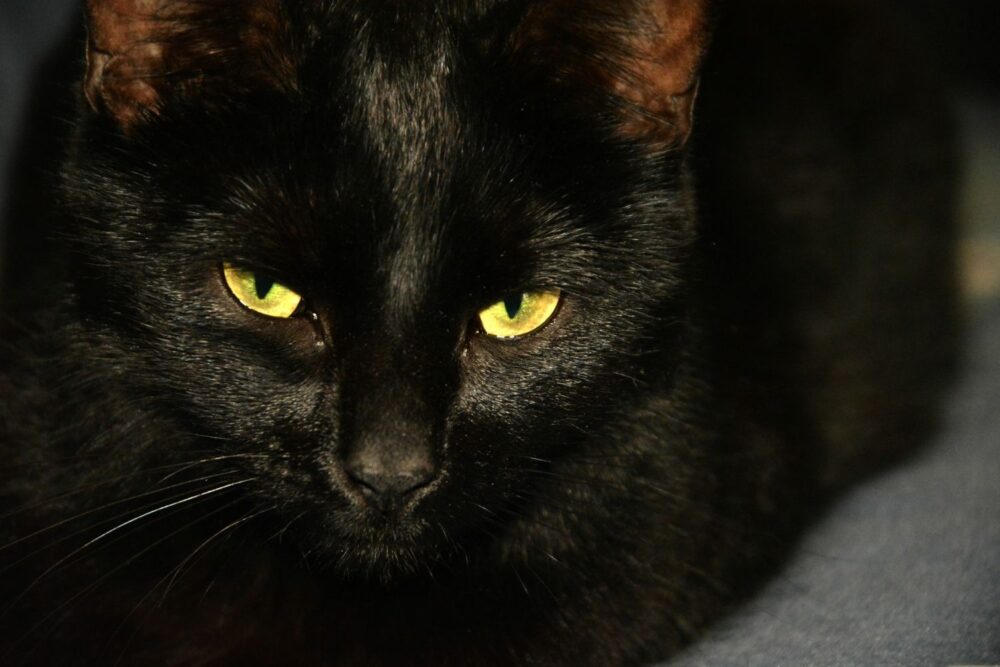
Behind a cat’s retina is a reflective layer called the tapetum lucidum. This layer acts like a biological mirror built directly into the eye.
Light that isn’t absorbed on its first pass through the retina is reflected back through it. That second opportunity allows more light-sensitive cells to register information, which is especially valuable in dim or fading light.
3. Why humans don’t have glowing eyes
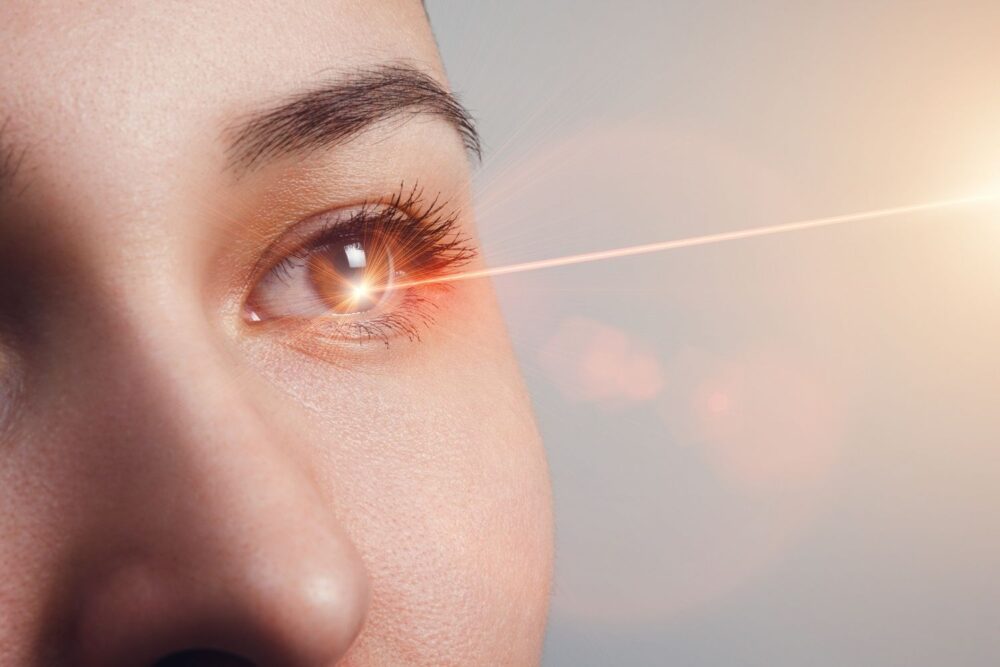
Human eyes do not contain a tapetum lucidum. Once light passes through our retina, it does not get a second chance.
This difference explains why humans struggle in low light while cats move confidently. Human vision prioritizes sharp detail and color accuracy during the day, while cats evolved eyes designed for sensitivity rather than precision.
4. How this boosts night vision
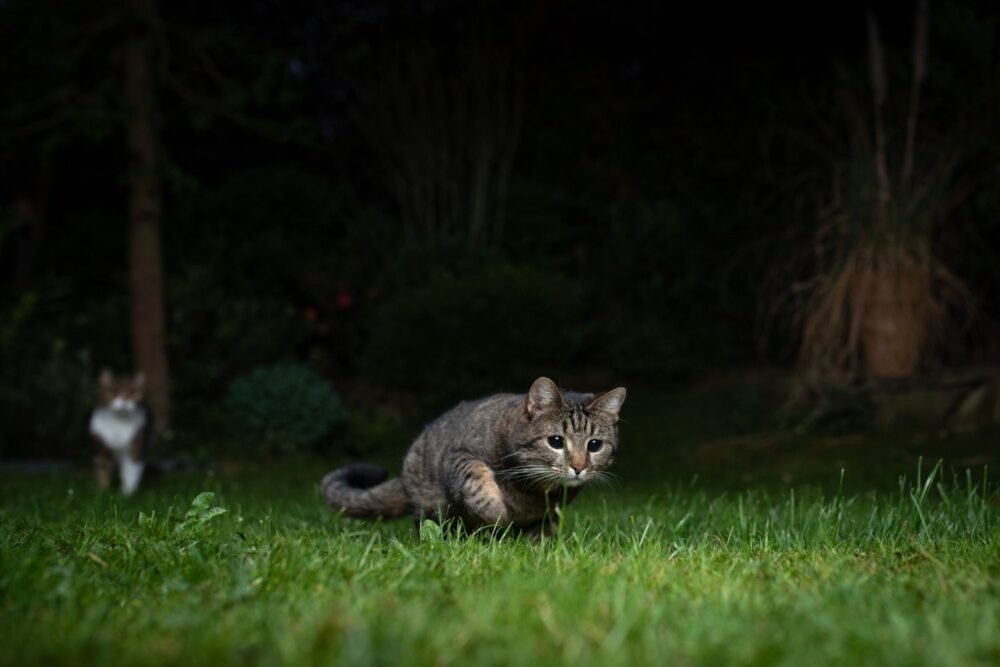
By recycling available light, cats can see movement and shapes in lighting conditions that seem nearly pitch black to us.
This doesn’t mean cats see perfectly in total darkness. Instead, their eyes are far better at making use of minimal light, which is ideal for dawn, dusk, and nighttime activity.
5. Why cat eyes glow different colors
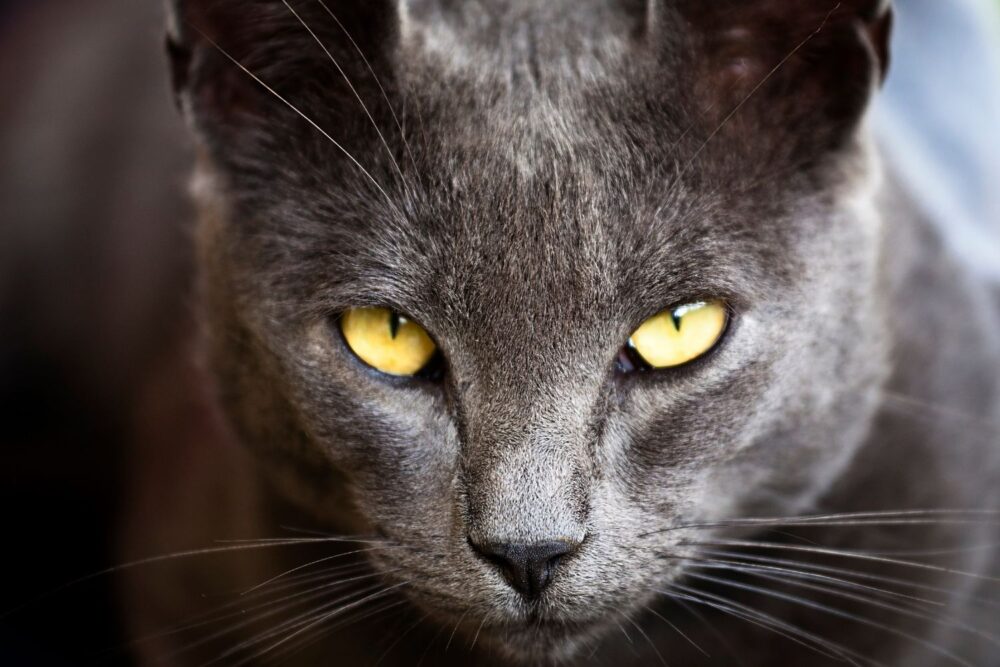
The color of the glow depends on the structure of the tapetum lucidum and how it reflects different wavelengths of light.
Most cats reflect green or yellow hues, while others may glow blue or pale white. The glow color is not tied to fur color or intelligence and does not indicate better or worse vision.
6. Why the glow looks stronger in photos
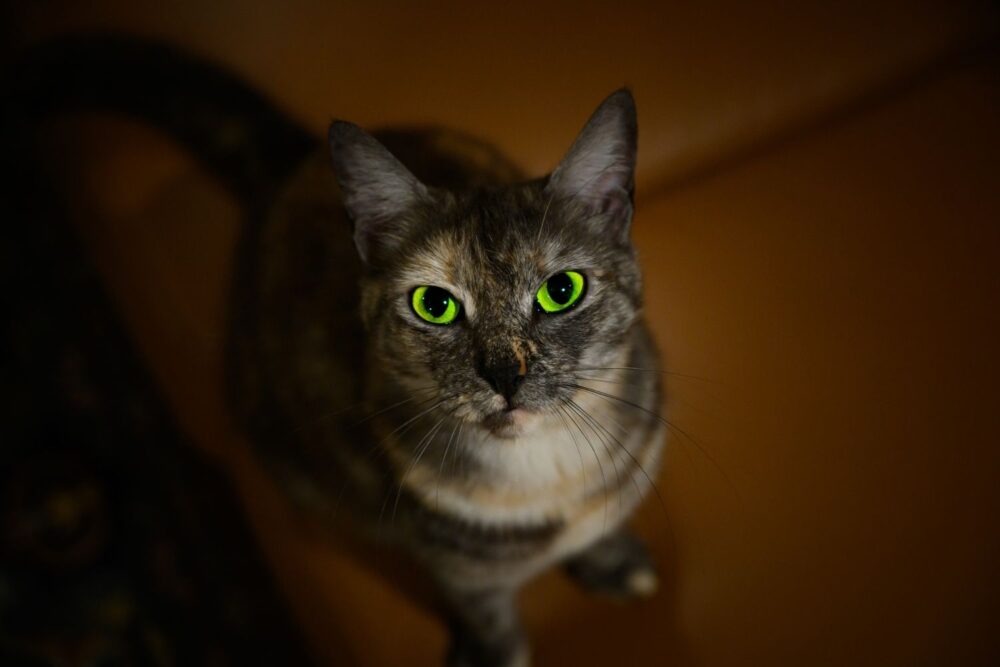
Camera flashes produce a direct burst of light straight into the eye, then immediately capture whatever reflects back.
Because cats have a highly reflective tapetum lucidum, their eyes often appear intensely bright in photos. Humans get red-eye instead, which is caused by light reflecting off blood vessels rather than a mirror-like layer.
7. Why kittens often glow more brightly

Kittens can appear to have especially bright eye glow because their eyes are still developing and adapting to light. The reflective layer can be proportionally more noticeable in young eyes.
As cats mature, subtle changes in eye structure can alter how light reflects. The glow may soften with age, even though strong night vision remains. This change is normal and does not signal a decline in visual ability.
8. Other animals with glowing eyes

Cats are not unique in this trait. Many nocturnal or crepuscular animals have a tapetum lucidum that reflects light back through the retina.
Dogs, deer, raccoons, foxes, and even some fish share similar reflective layers. Each species’ version is tuned to its environment and activity patterns. The glow you see can differ in color and intensity depending on how that species evolved to use low light.
9. The tradeoff cats make for low-light vision
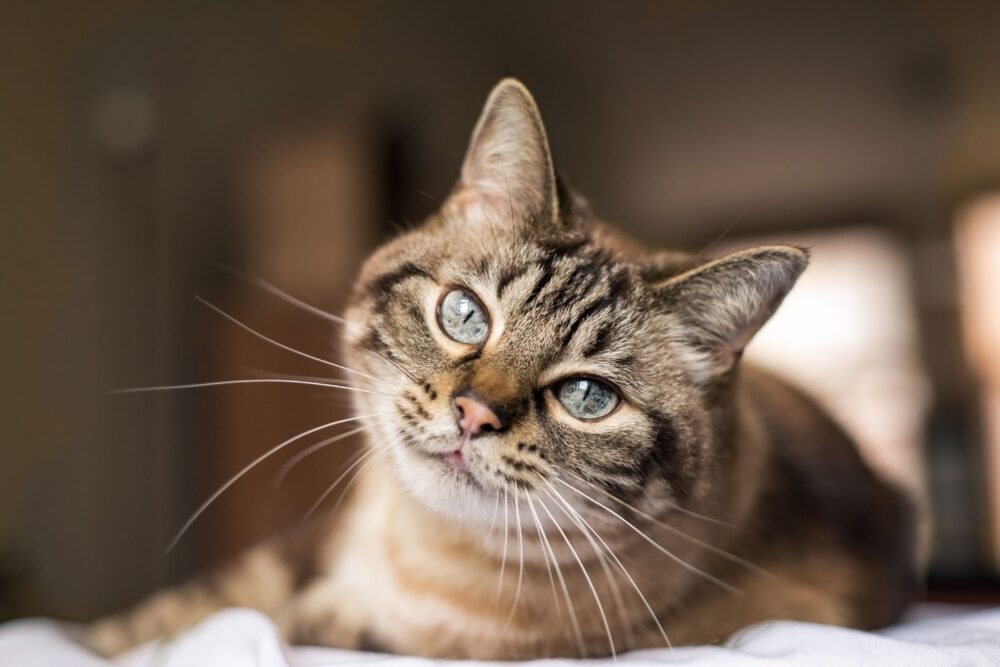
The tapetum lucidum improves sensitivity but slightly reduces sharpness in bright light. Reflected light can scatter within the eye, softening fine detail.
That’s why cats don’t see crisp outlines or fine textures as well as humans during the day. Their vision favors motion detection and light sensitivity over precision, a tradeoff that works well for hunting but not for reading small details.
10. Why glowing eyes aren’t a sign of intelligence
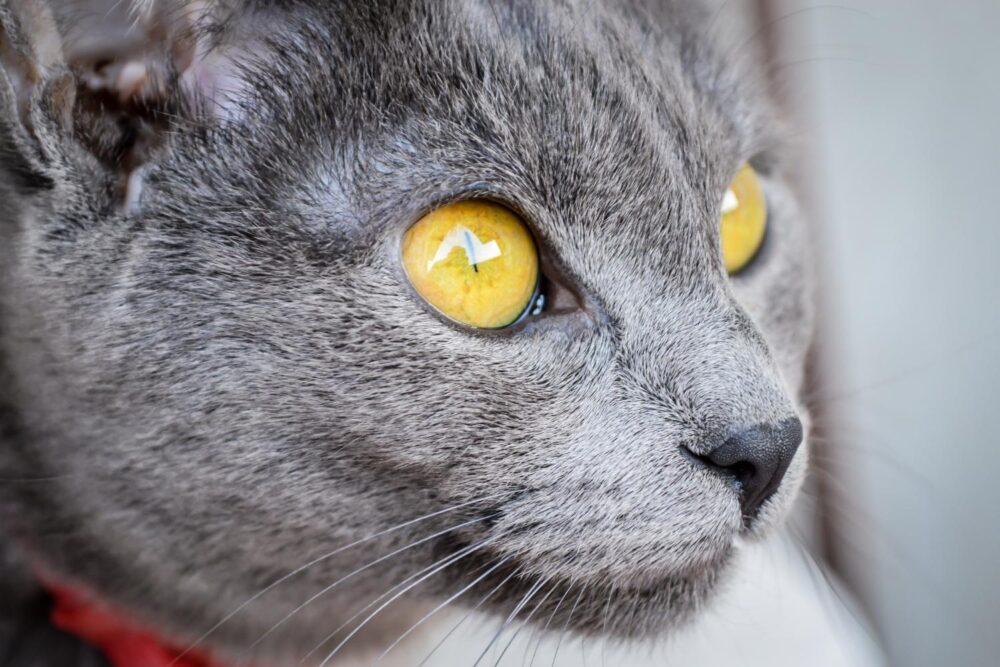
The glow has nothing to do with awareness, emotion, or intelligence. It’s a mechanical outcome of eye anatomy and how light behaves inside the eye.
The effect can look eerie or expressive, but it does not indicate heightened perception or supernatural awareness. It simply shows how efficiently a cat’s eyes handle low levels of light.
11. What glowing eyes really reveal about cats
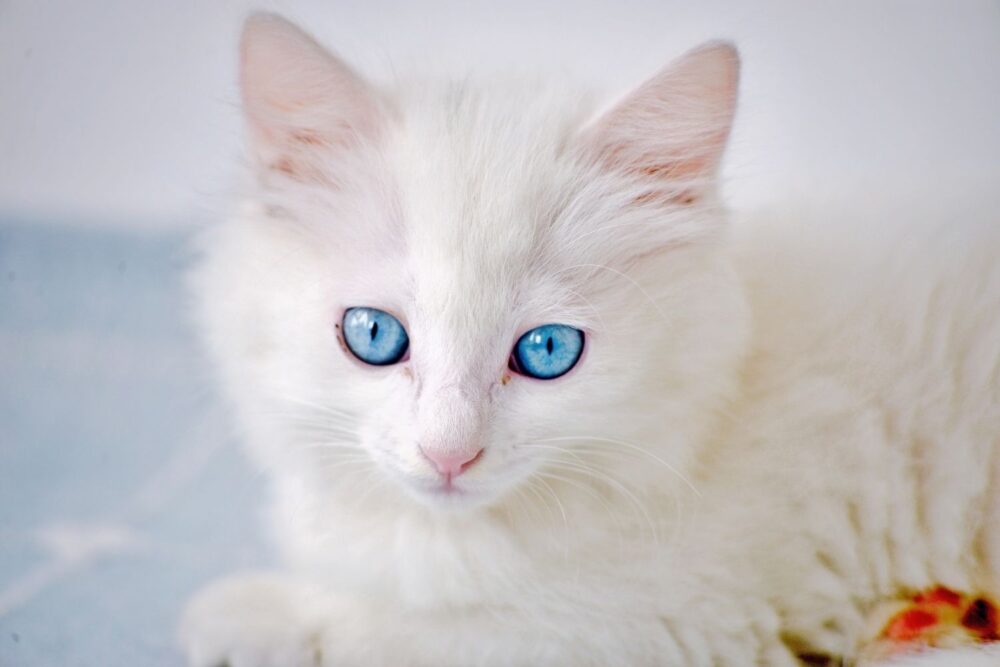
Glowing eyes are a reminder that cats remain shaped by their hunting past, even as household pets. Their visual system is still optimized for survival in low-light environments.
That flash of light in the dark reflects millions of years of evolution. It’s evidence that beneath the calm, familiar exterior, cats retain sensory tools designed for dusk, night, and shadow.