
Satellite images captured an unusual blue feature that researchers are still working to explain.
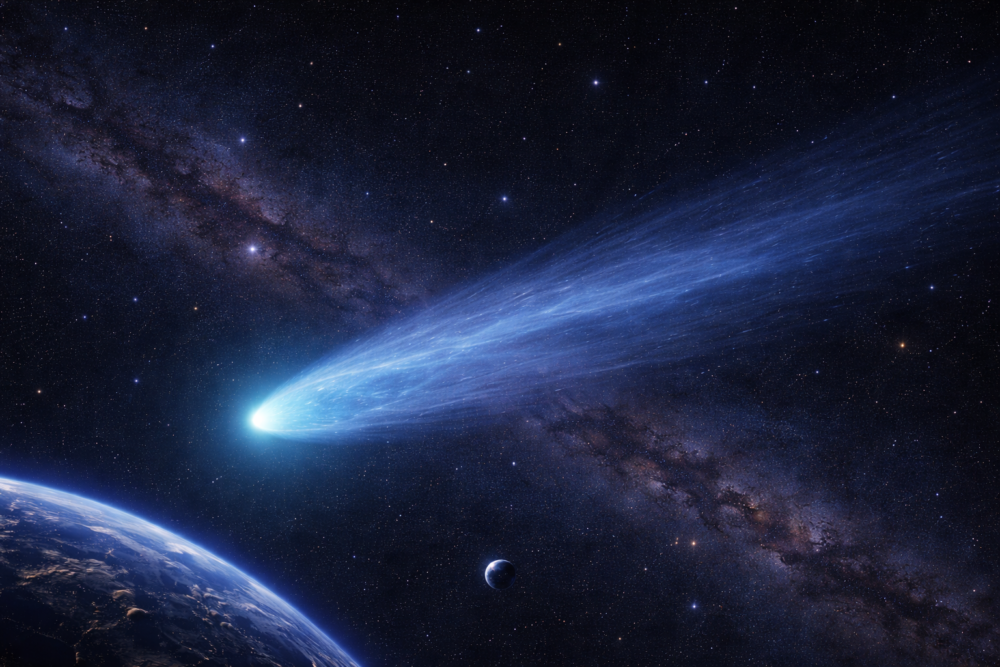
Astronomers have recently spotted something unusual in space: a blue-tinged interstellar comet named 3I/ATLAS that has stood out in telescope and satellite images as it speeds through our solar system.
First detected in July 2025 by the ATLAS survey telescope in Chile, this object is only the third known visitor from outside our star system. Its strange characteristics, including its unexpected blue tint and unusual motion, have prompted scientists to take a closer look and sparked debate about what is driving these features.
1. What Is 3I/ATLAS and Where Did It Come From?
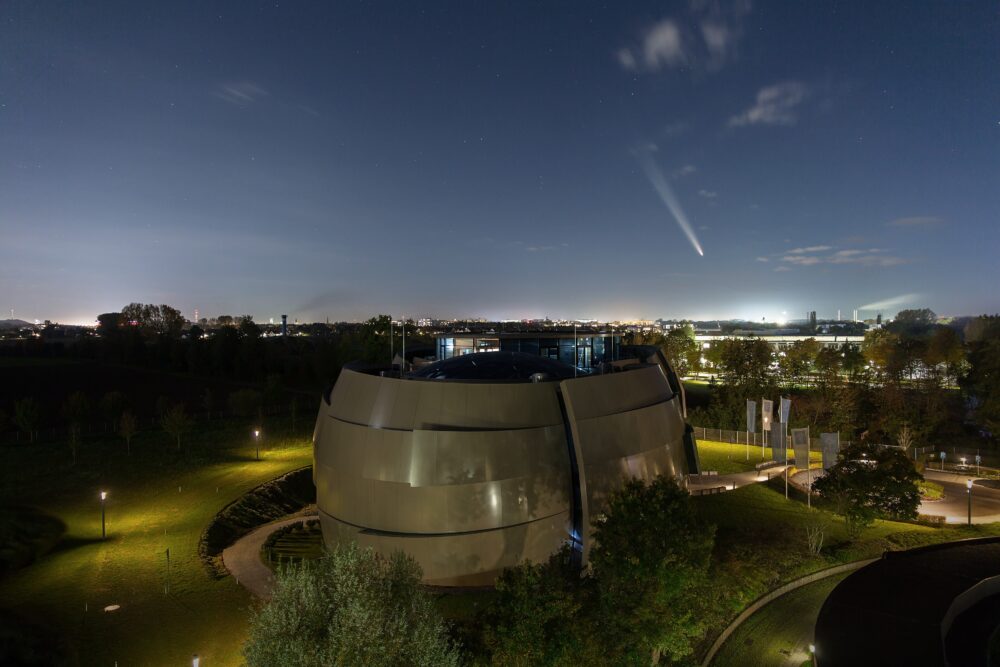
3I/ATLAS is an interstellar object, meaning it originated outside our solar system and is passing through on a hyperbolic trajectory. Astronomers first identified it using the Asteroid Terrestrial-impact Last Alert System network in Chile in July 2025.
Objects like this are extremely rare. It is only the third confirmed interstellar visitor ever observed, following ʻOumuamua in 2017 and Borisov in 2019. Scientists are studying its path and behavior to learn more about where it came from and what it can reveal about other star systems.
2. Why the Blue Color Is Surprising

Images of 3I/ATLAS have shown a distinct blue hue that stands out from typical comet appearances. Most comets tend to look white or slightly yellow due to reflected sunlight and dust.
In this case, the blue coloration caught scientists’ attention because it suggests the presence of certain gases rather than dust alone. One likely explanation involves emissions from ionized gases released as the object heats up.
3. What “Blue” Means in Scientific Imaging
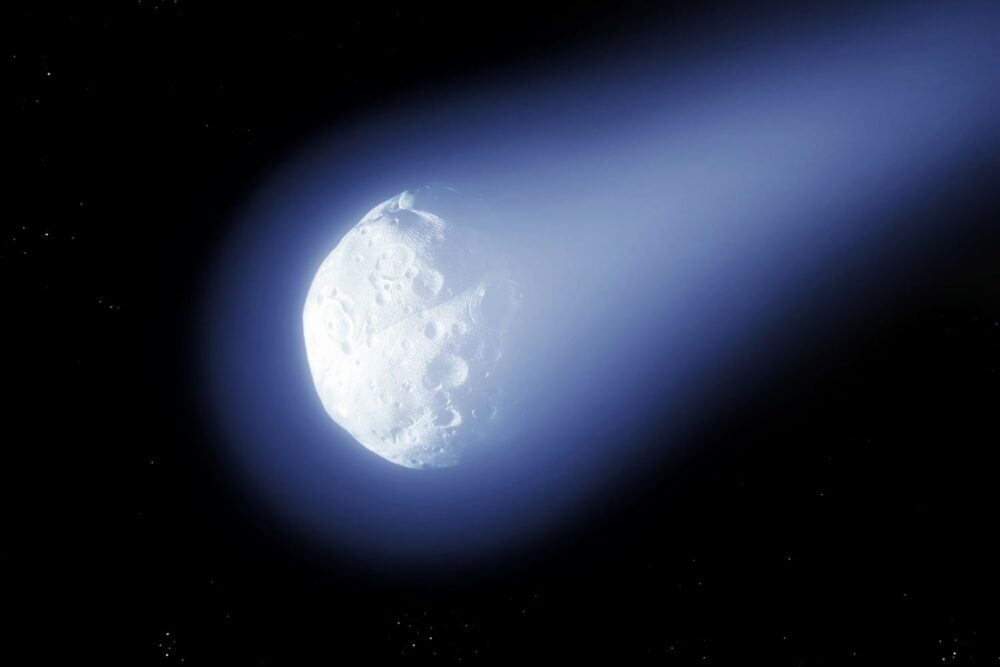
The blue color seen in some images does not necessarily reflect how the object would look to the naked eye. In astronomy, colors are often assigned to represent specific wavelengths or energy signatures detected by instruments.
These false-color images help scientists identify chemical compositions and physical processes. In this context, blue can signal gas activity rather than a solid surface.
4. Unusual Acceleration and Motion

Another puzzling aspect of 3I/ATLAS is how it moves through space. Observations suggest it shows non-gravitational acceleration, meaning its motion cannot be explained by gravity alone.
This behavior is often seen in comets when jets of gas escape from their surface. Uneven outgassing can act like a small thruster, slightly altering the object’s trajectory as it travels.
5. What Experts Mostly Agree On

Despite speculation online, most astronomers agree that 3I/ATLAS is best explained as a natural comet. Observations show a visible coma and tail, both common features of cometary activity.
Multiple instruments have independently recorded these traits, reinforcing the conclusion that the object is behaving in ways consistent with known physical processes rather than anything artificial.
6. Where the Debate Comes In
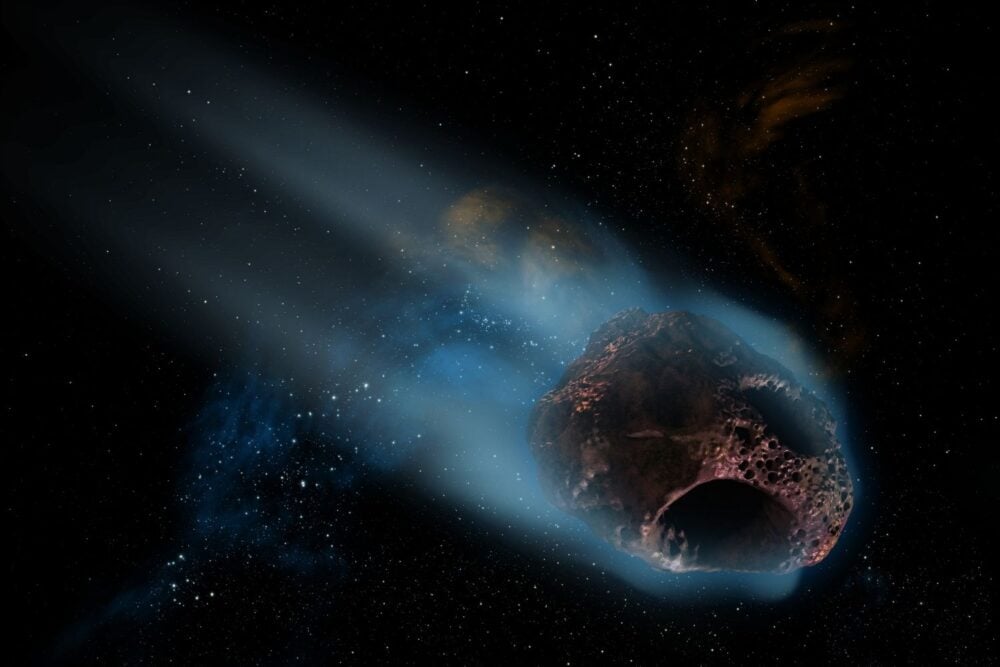
A small number of scientists have suggested that some of the object’s characteristics deserve closer scrutiny. Its color, acceleration, and interstellar origin have made it a subject of discussion beyond typical comet studies.
However, most experts caution that unusual does not mean unnatural. They emphasize that extraordinary explanations require extraordinary evidence, which has not been found.
7. How Close It Came to the Sun

3I/ATLAS reached its closest point to the Sun in late October 2025. This approach increased solar heating, which intensified its activity and made certain features easier to observe.
Close solar passes often cause comets to release more gas and dust, temporarily enhancing color and brightness and giving scientists valuable data during a short observation window.
8. When It Passed by Earth’s Neighborhood
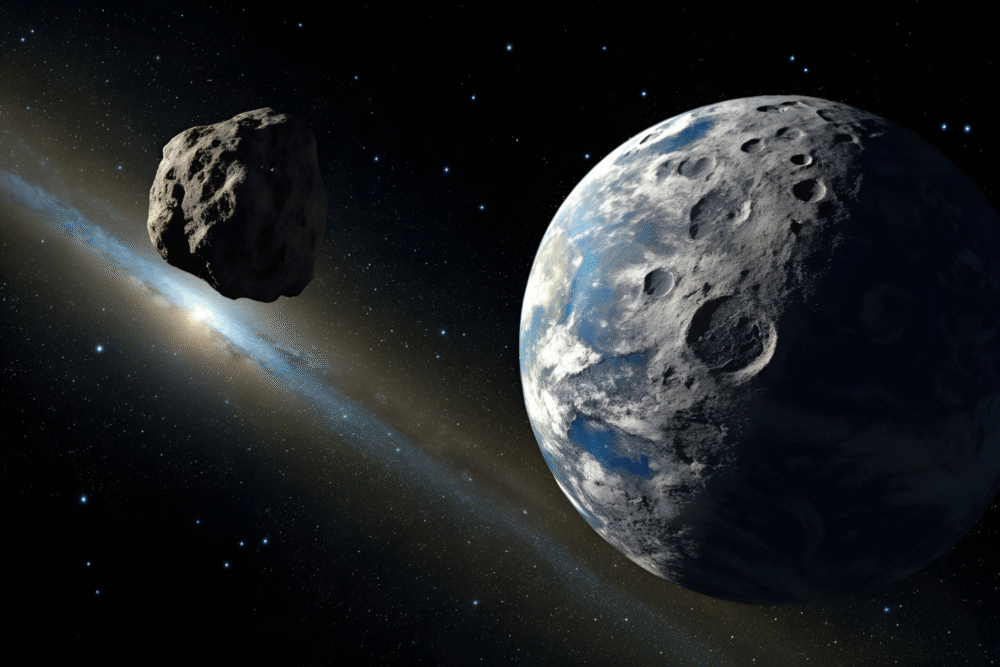
Although detected from Earth, the object never came especially close to our planet. Its closest approach occurred well beyond Earth’s orbit.
Scientists have emphasized that it posed no danger to Earth. The interest in 3I/ATLAS is purely scientific, not related to any potential threat.
9. Why Interstellar Visitors Matter

Interstellar objects carry material formed around other stars, offering rare insight into planetary systems beyond our own. Each visitor provides a natural sample of distant cosmic environments.
By studying objects like 3I/ATLAS, scientists can compare how matter forms and evolves across different star systems, improving our understanding of planetary formation throughout the galaxy.
10. What Scientists Hope to Learn Next

Researchers continue to track 3I/ATLAS as it moves away from the Sun, using telescopes to study its composition and behavior. While it will not return, the data gathered now will be analyzed for years.
Each interstellar visitor helps refine detection methods and prepares scientists for future discoveries that may arrive with little warning.
11. Common Misconceptions About Strange Space Objects

Unusual space images often spark speculation about alien technology or secret probes. Scientists stress that nearly all such cases have eventually been explained by natural phenomena.
Careful observation, repeated measurements, and independent verification remain the foundation of how astronomy separates curiosity from conclusion.
12. Why This Discovery Still Matters

3I/ATLAS highlights how much remains unknown about the material moving between stars. Even with advanced observation tools, unexpected discoveries still happen.
Each new object challenges scientists to refine their models and reminds us that the universe continues to surprise, even in an age of constant observation.