
Ancient cultures turned meteorite iron into tools and treasures long before smelting was possible
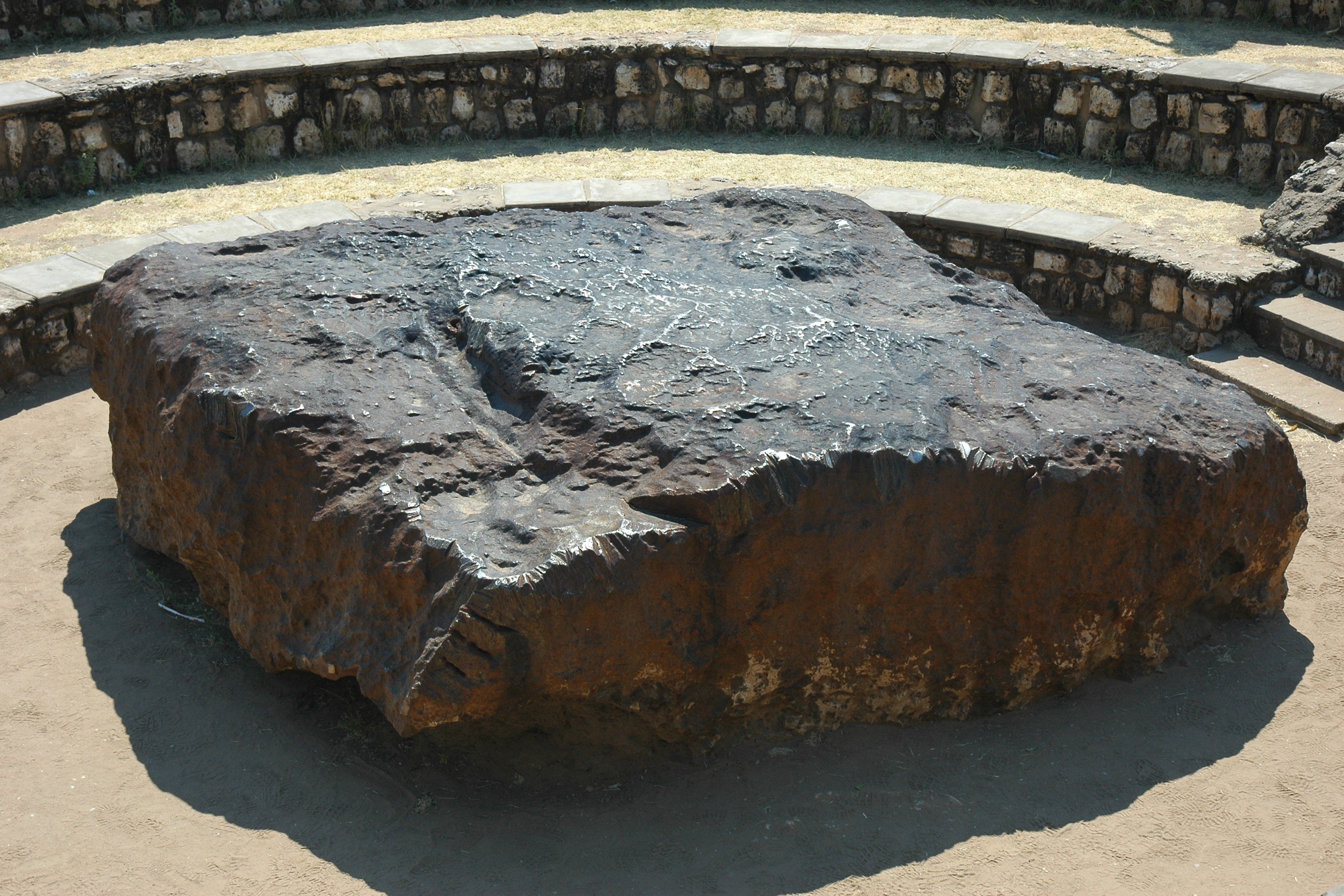
Long before humans mastered smelting, some ancient cultures found another source of working metal—space. Archeological finds show that iron-rich meteorites were sometimes collected, hammered into shape, and preserved in ceremonial objects or jewelry. High nickel content, a trait linked to extraterrestrial origin, is a key clue in identifying these rare artifacts. Experts from institutions like NASA and the Smithsonian use modern testing to trace these cosmic materials in early craftsmanship.
1. Meteorite-forged iron tools found in prehistoric burial sites.

Archaeologists have unearthed prehistoric tools fashioned from iron-rich meteorites buried alongside human remains. Where smelting had not yet spread, communities instead hammered metal from space into shape, working it cold—no furnace needed. A telltale sign is the high nickel concentration, uncommon in earth-mined iron.
In a burial field near Gerzeh, Egypt, a blade made from meteoritic iron rested beside the deceased. The iron’s dense, silvery sheen sets it apart from later forged weapons. Such tools were rare, reserved for the elite or the mystical, suggesting celestial metal held symbolic weight as well as practical function.
2. Bronze Age ornaments crafted with metal from fallen stars.
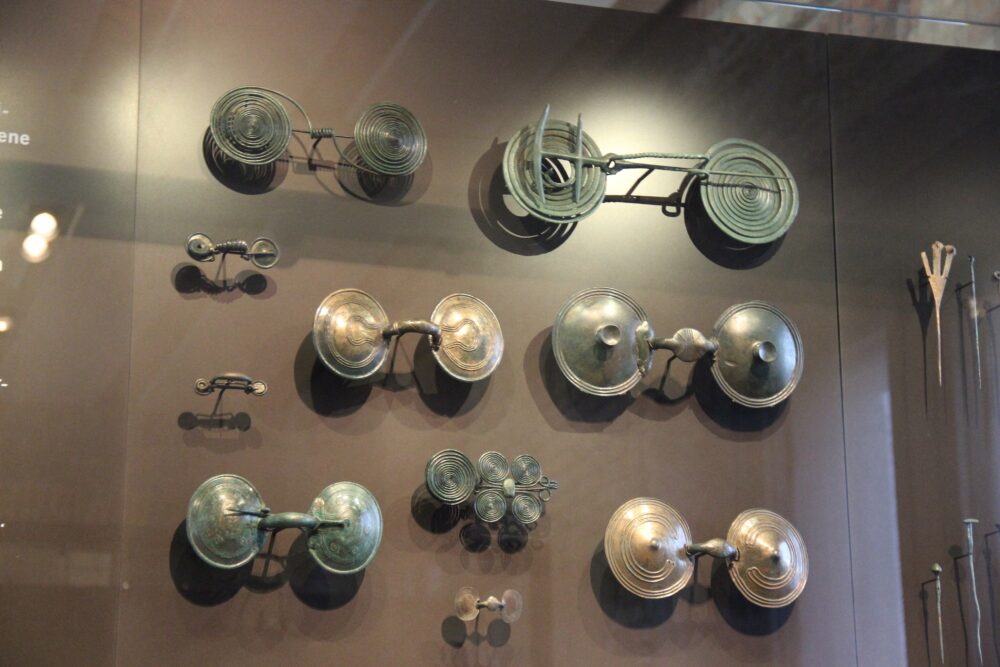
Amulets and beads from the Bronze Age sometimes show elevated nickel and cobalt—a clue they came from meteorite fragments. Jewelry makers would have noticed such metal broke differently or glinted with a curious color once polished. These anomalies survive today under lab testing.
In one unearthed grave, tiny star-forged loops adorned a wrapped skeleton, tucked near the collar where lockets usually sit. They weren’t mass-produced. Meteorites didn’t fall often or evenly, which made each surviving piece both geographically rare and socially meaningful in ceremonies or as heirlooms.
3. Ancient dagger uncovered with blade made of space-born nickel.
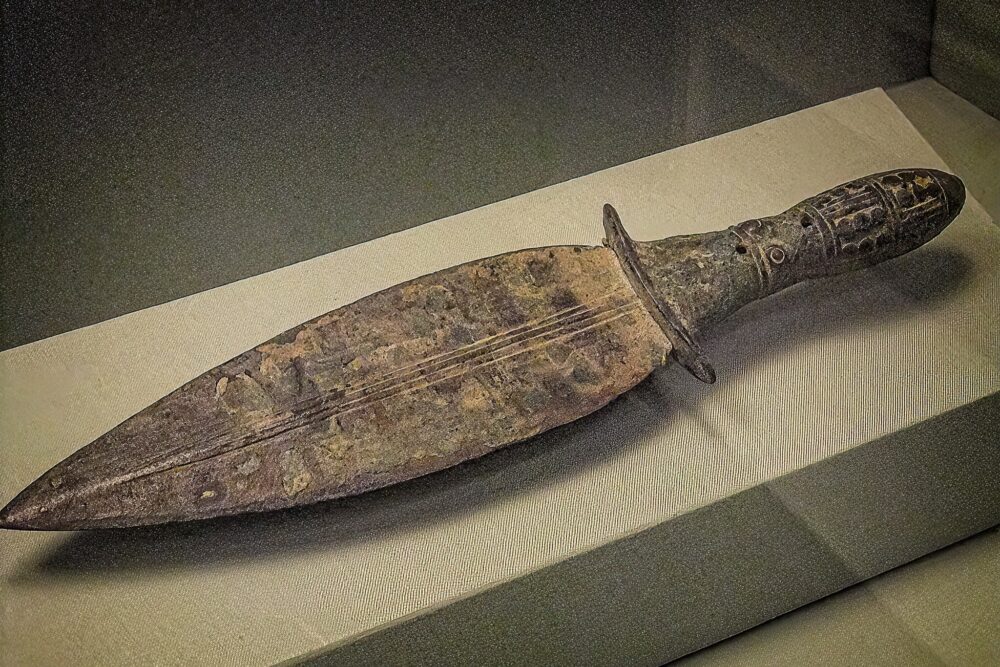
A blade unearthed from Tutankhamun’s tomb surprised scientists: it wasn’t just ornamental gold or lapis lazuli nearby, but an iron dagger with alien origin. Analysis showed unusually high nickel content, a fingerprint of meteorite composition. Ancient smiths likely hammered it to form.
Researchers found no evidence of smelting, which places the blade’s creation before Egypt acquired that skill. The dagger’s finely scored edge suggests intent, not accident—someone chose this rare metal, shaped it carefully, and honored the king in death with a weapon literally forged from a fallen sky.
4. Jewelry traced to meteorite fragments used by early cultures.
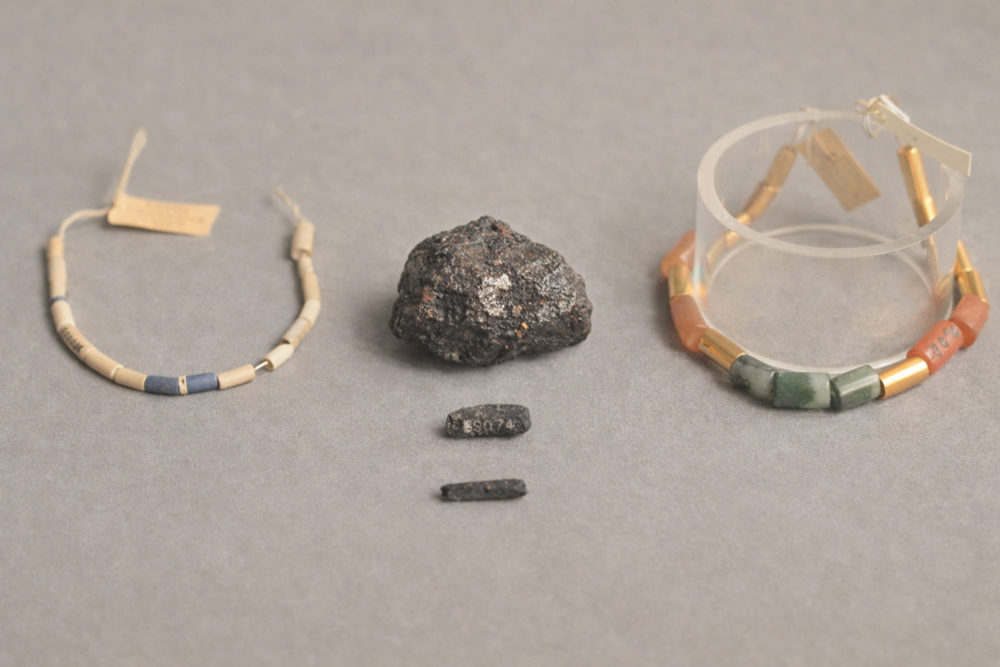
Early cultures prized shiny, unusual stones, and some recognized meteorites as workable metal. Jewelry crafted from these fragments often mixed small iron nodules with gold or shell inlays. Under magnification, meteorite textures resemble etched zebra stripes, known as Widmanstätten patterns.
An Anatolian necklace contained such space-born metal links, smoothed by hand and wrapped in copper thread. The effort wasn’t about strength—it was about meaning. Where these metals came from mattered less than what their strange origin suggested to those who wore them: connections to gods, skyfire, or ancestors.
5. Archaeologists reveal cosmic origins of pharaoh’s ceremonial blade.
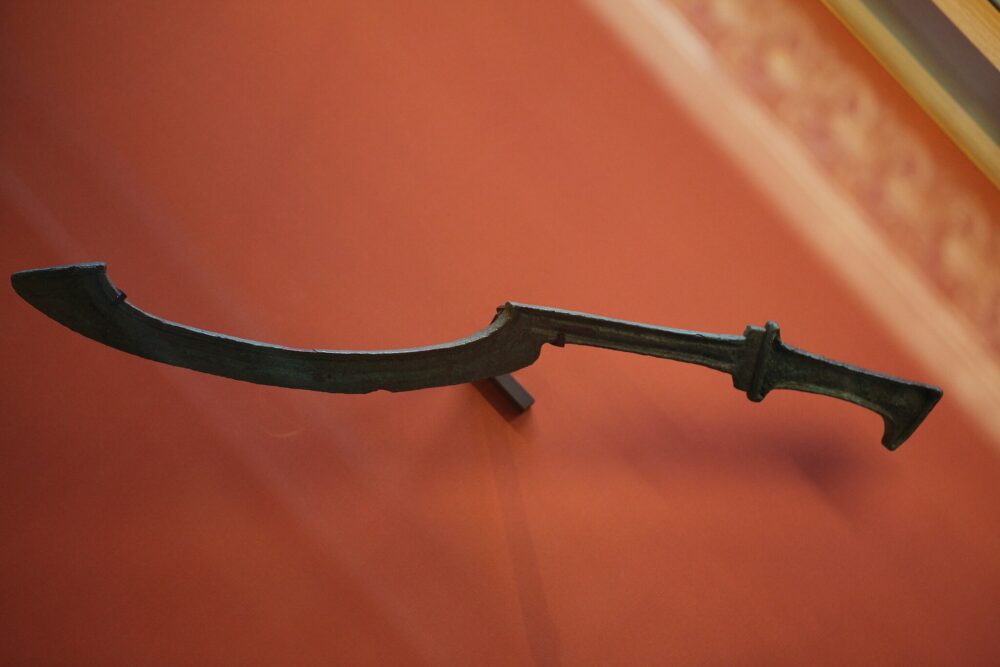
After decades of speculation, X-ray and fluorescence tests confirmed that a ceremonial dagger buried with a pharaoh originated in space. The blade’s iron-nickel makeup matched known meteorite compositions. Unlike ground ore iron, it needed no furnace—only a precise hand and a cold hammer.
Its survival in Egypt’s dry heat preserved the blade’s luster and craftsmanship, showing deliberate shaping. While few people then could explain its alien source, its placement beside royalty speaks to reverence. To the ancient eye, something so rare must have fallen from a divine or mysterious place.
6. Burial treasures show knowledge of space metals before smelting.
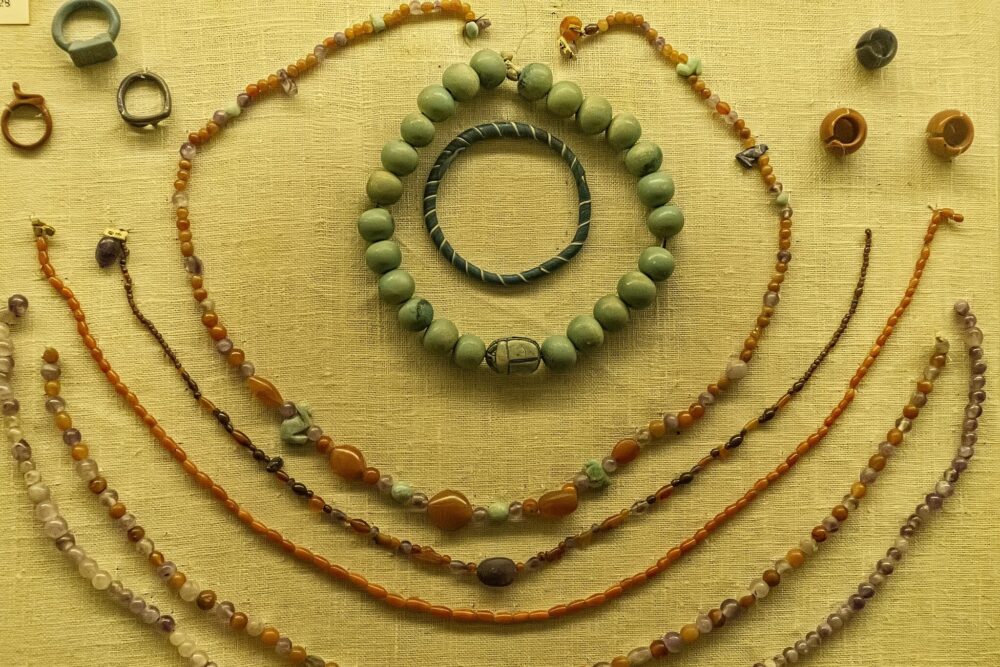
Millennia before smelting spread, people found meteorites and understood their value: the rock didn’t shatter but sliced. Among burial goods, iron beads and small weapons show early knowledge of this shortcut to metal. No kilns or crucibles, just stones from the sky shaped by persistence.
A child’s grave in Egypt held one such bead, intact and dark. It came not from Earth’s crust but an ancient impact crater. Whoever buried that child wove astral material into mourning—choosing not just ornament, but connection. The bead bridged cosmos and community in quiet permanence.
7. Rare artifacts confirm ancient peoples prized extraterrestrial iron.
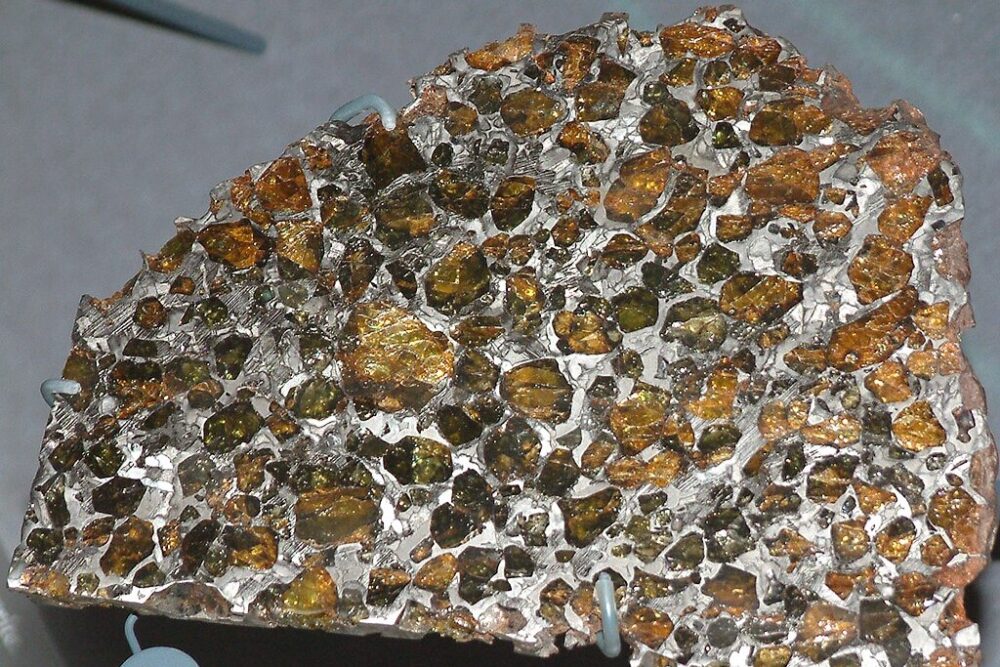
Ancient people didn’t need telescopes to notice magical materials. Some artifacts across Europe and Africa contain meteoritic metal, usually iron with high nickel. Their scarcity alone made them prized. Only a few documented examples exist worldwide, each suggesting social or spiritual importance.
One comb fragment, found in a peat bog, had faint nickel lines running its length—nothing accidental. It wasn’t a tool for everyday grooming. Meteoric metal gave it distinction. Though modern science identified its cosmic fingerprint, the makers treated it with care that outlasted even their wooden homes.
8. Meteoritic beads discovered in early Egyptian tomb assemblages.

In an excavation of tombs predating Egypt’s dynastic period, archaeologists found tiny cylindrical beads made from meteorite fragments. They were rolled and drilled with simple stone tools, which left spiral grooves still visible under inspection. The bright metal hadn’t rusted—another clue to its extraterrestrial roots.
The tombs clustered in uneven rows, dug with care, and the beads sat near the wrists or necks, suggesting wearable tokens. Each piece hints that the makers valued function less than symbolism. Stone tools shaped stardust into something intimate, placing pieces of ancient skies close to living skin.
9. Cosmic metal unearthed in cache of Iron Age relics.

Among a cache of Iron Age objects, scientists discovered fragments of metal with nickel-rich signatures pointing to meteorite origin. Axes, rings, and bracelets showed streaks inconsistent with Earth-processed ore but matched known patterns from fallen meteors scattered across Eurasia.
In one muddy field, a farmer turned up a corroded blade among pottery remains. It looked ordinary until analysis revealed a different story. The object didn’t bear the marks of furnace casting or mold lines—it had been pounded carefully from a rare stone that once lit the night sky before crashing to Earth.
10. Weapons shaped from stardust found in ancient warrior graves.
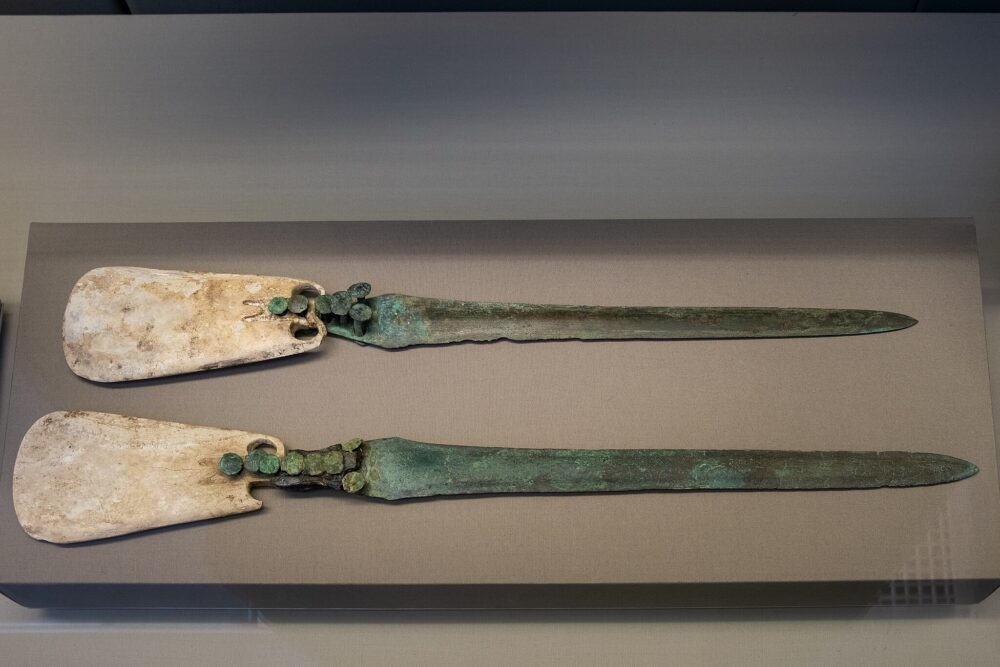
Not every ancient warrior fought with tools from the heavens, but in scattered graves, meteorite-made weapons show up—short blades, arrowpoints, or badges of rank. Sometimes, the iron bears fine striations only visible after gentle polishing under microscope, preserved for centuries.
One such grave found near the edge of a steppes burial mound held a single iron knife. Its hilt had long rotted, but the blade remained, etched with atmospheric pitting. Without forges, smiths shaped skyfall stone into weapons sharp enough for ceremony or swift combat, binding celestial metal to terrestrial fate.
11. Cultural artifacts uncovered with telltale chemical signs of meteorites.

The chemical fingerprint of a meteorite includes high nickel and cobalt, and scientists now trace those telltale elements in certain ancient cultural artifacts. From hairpins to belt fasteners, these objects differ not in shape—often simple—but in unusual alloy hints invisible to the naked eye.
In a dry cave along the Silk Road, archaeologists uncovered small rings packed with burial soot and dated cloth. Their soft gleam under torchlight drew attention, but labs told the deeper story. The metal had never passed through a forge—only through fireball, fall, and human touch.
12. Ancient tools containing high-nickel alloys linked to space rocks.
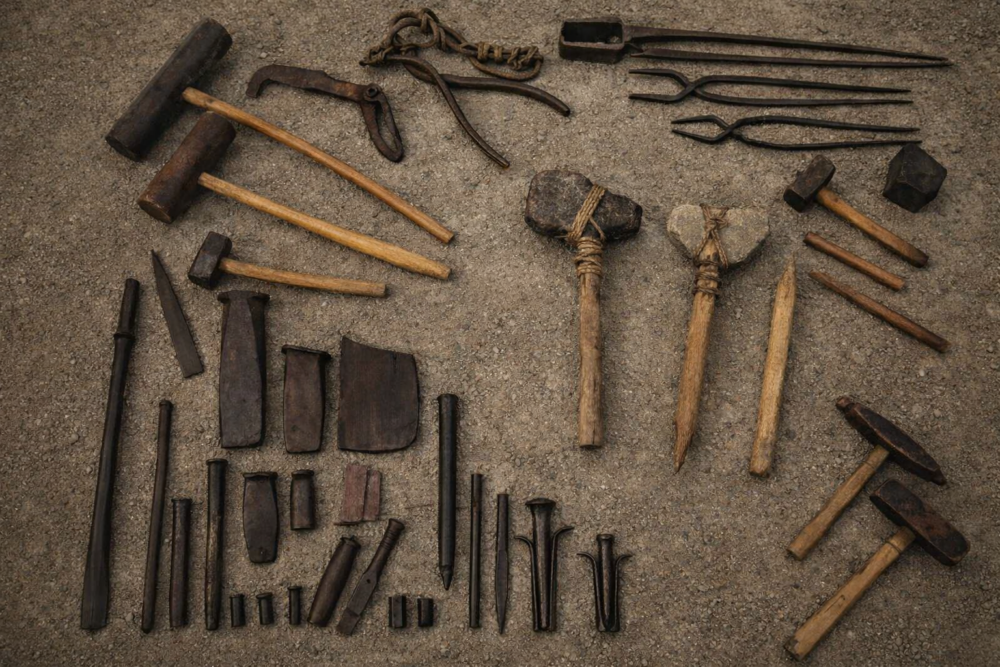
Tools dating back thousands of years sometimes show high-nickel content—unusual before smelting technology. Researchers now link such samples to meteorite sources. Instead of mining and refining, people collected space rocks and reshaped their iron cores into knives or awls by pure mechanical effort.
Discarded near a sheep enclosure in the Sahara, one broken implement bore microscopic pulls and bends consistent with cold working. Its composition matched Libyan Desert Glass meteorite signatures. Whoever made it knew the stone’s limits, and its survivor status as both tool and relic reflects practical curiosity meeting cosmic material.
13. Evidence of interstellar materials found in sacred ritual objects.
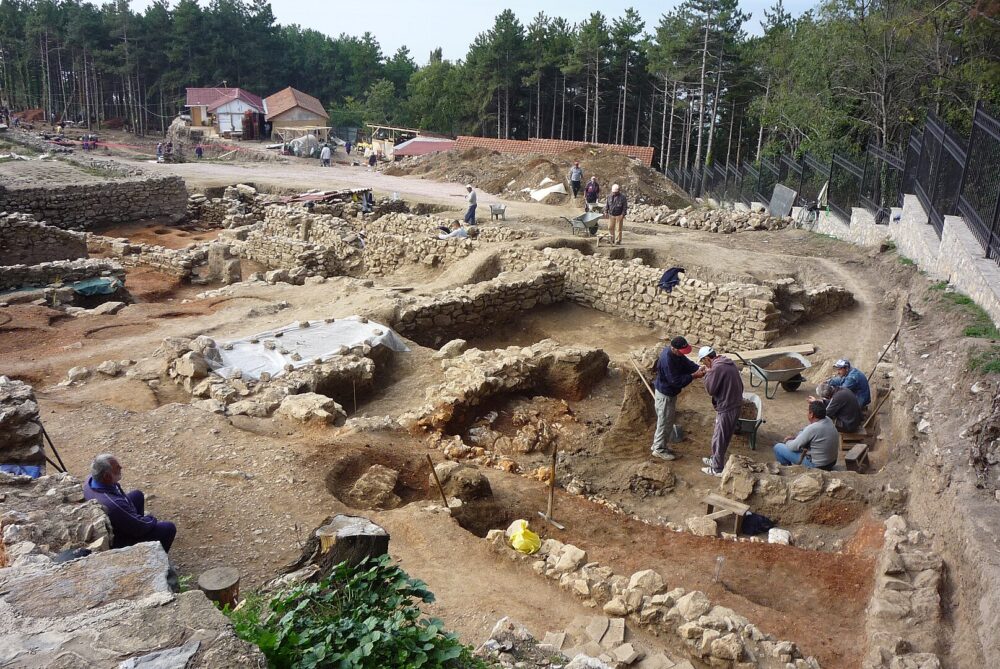
Ritual centers from prehistory often contain oddly composed metal relics with interstellar traces. Rings, dagger hilts, and sculpture fragments sometimes test positive for meteoritic composition—especially where ceremonial use is suspected. Origin analysis often involves radiographic imaging or mass spectrometry.
At a Stone Circle site in northern Europe, a cup fragment revealed chromatic swirls and magnetism that hinted at stardust. Scientists confirmed a high-nickel, low-sulfur alloy traceable to a nearby impact field. The object wasn’t meant to pour—it symbolized. People understood rarity, even if not the science behind the skies.