
What researchers discovered about dogs and faces surprised even them.
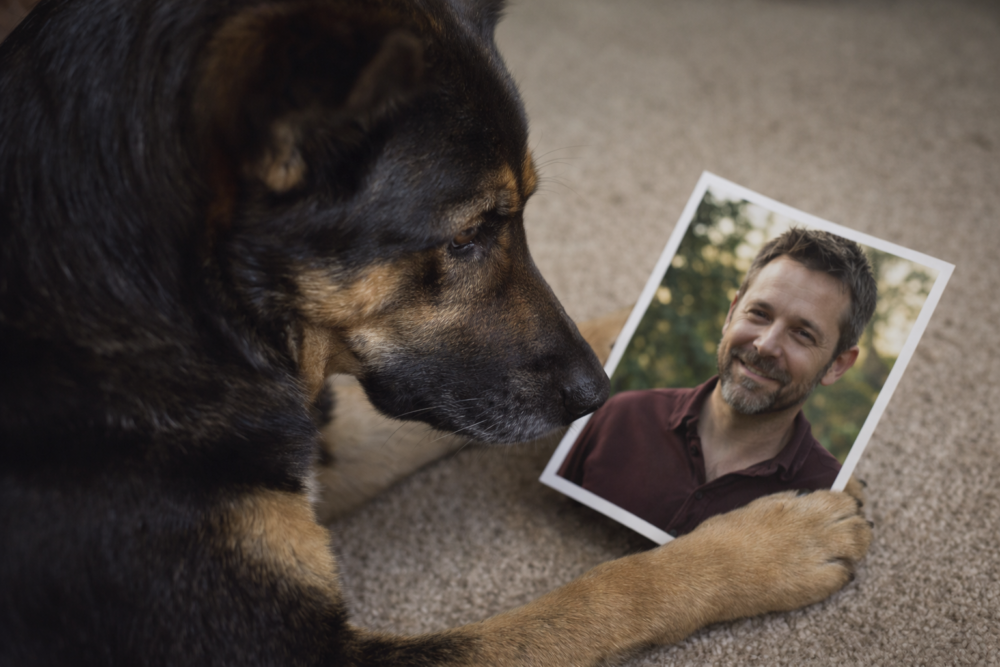
You’ve probably shown your dog a photo and wondered if they understand it. Most of us assume dogs rely on smell, so a flat image should not mean much. Yet many dogs react as if they are seeing someone familiar.
Researchers have put that idea to the test using controlled photo choices and even brain scans. Again and again, dogs show they can use vision to pick out human faces, including the faces they know best.
What is most surprising is what they do not need. Motion, scent, or a real person in the room are not required. That does not mean every dog recognizes photos easily, but it does show that smell alone does not explain everything.
1. A simple question about how dogs recognize people
People often say dogs do not recognize us visually and instead rely on scent, footsteps, and voice. That is true, but it is not the whole picture. Dogs also use sight in daily life, especially during social moments with familiar people.
The real test is whether dogs can identify someone when smell is removed. A photograph is ideal for this. It is flat, silent, and scent free. If dogs still recognize a familiar person, vision is clearly part of the process.
2. Why photographs are challenging for animals
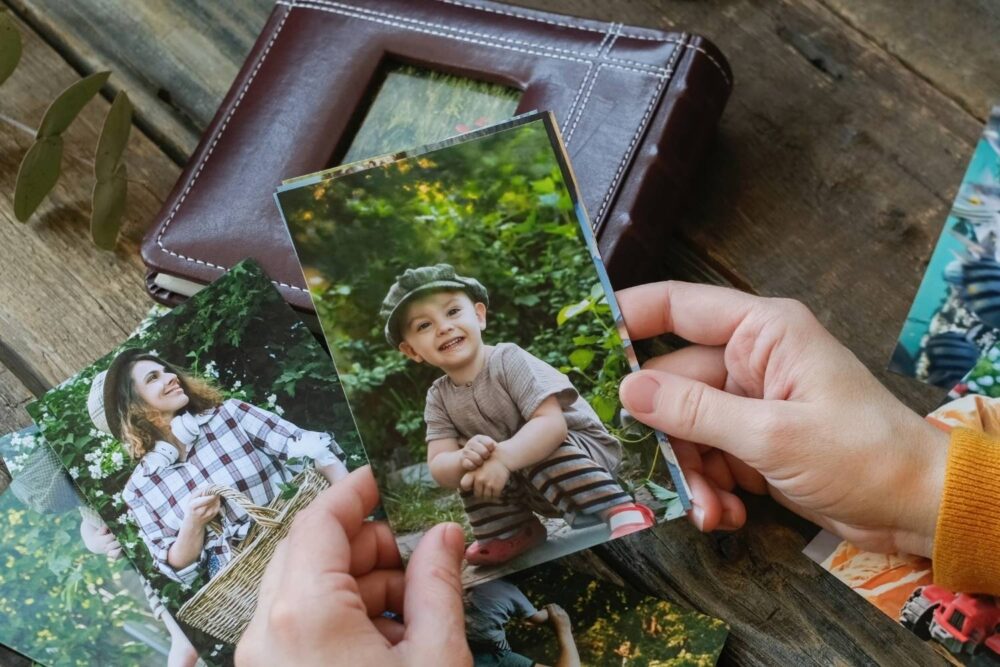
A photo removes many cues dogs normally use. There is no movement, no posture, and no familiar way of walking. The image is also two dimensional, which is not automatically meaningful to every animal.
That is why scientists treat photo recognition as important evidence. If a dog can choose an owner’s photo over a stranger’s, it suggests their visual system can extract identity cues from a face even when information is limited.
3. Testing owner versus stranger photos
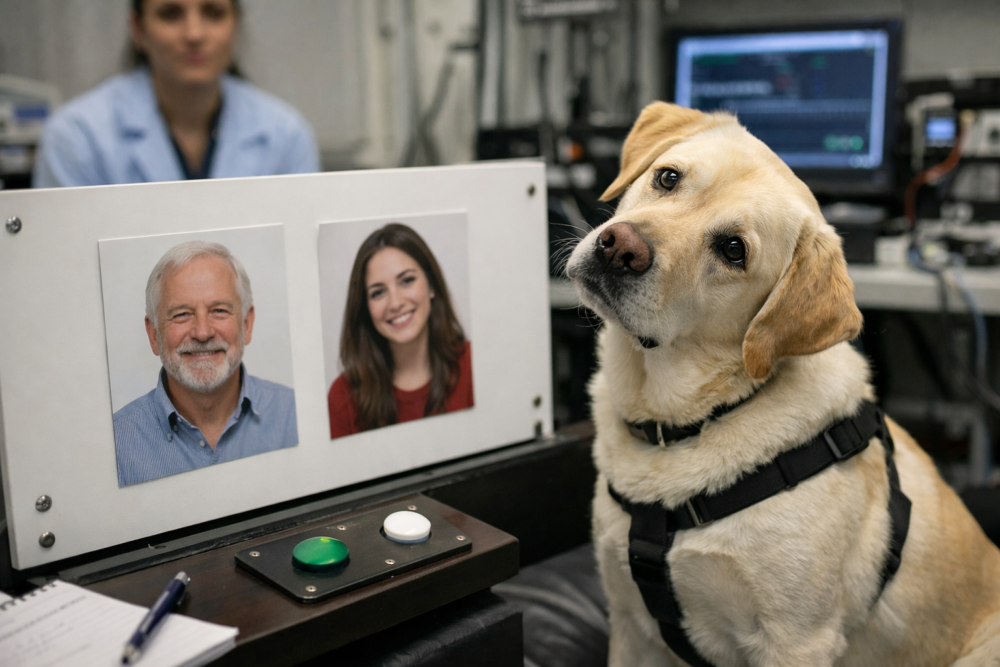
In well known experiments, dogs were shown photographs and asked to choose between them. The key question was whether they could reliably select their owner’s face instead of guessing.
Results showed that many dogs could identify their owner from photos alone. Motion and three dimensional cues were removed, which meant dogs were responding to the image itself rather than a live person nearby.
4. Familiarity improves recognition
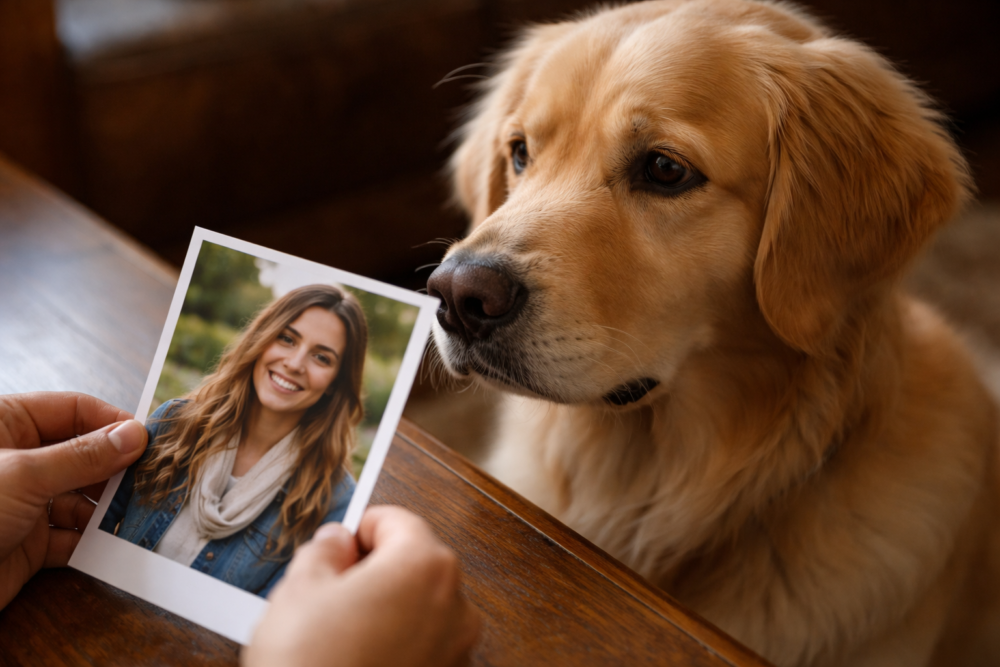
Dogs tend to perform better when the face belongs to someone they know well. That is not surprising. They see their owner’s face thousands of times from different angles, distances, and lighting conditions.
Studies of familiar face recognition suggest dogs can use facial information as a main cue. However, individual dogs vary. Some rely more on general shape or outline, while others respond strongly to subtle visual details.
5. What dogs actually notice in a face

Humans usually focus on eyes, nose, and mouth. Dogs may use a broader approach. Research suggests they can rely on outline, hair, and overall shape, especially when images lack fine detail.
That does not mean dogs ignore eyes or expressions. It means they combine whatever visual cues are most reliable. Different dogs may emphasize different features depending on experience and environment.
6. Brain scans support what behavior shows
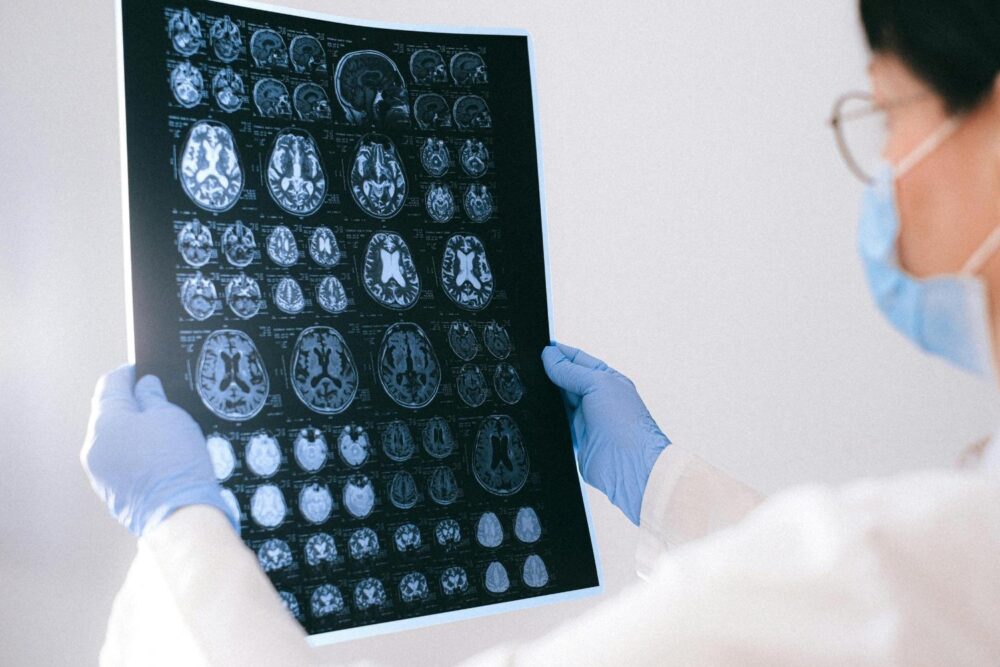
Behavioral tests are convincing, but brain imaging adds more insight. In awake brain scan studies, dogs show stronger responses in specific brain regions when viewing faces compared with objects.
Other research suggests separate areas respond to human faces and dog faces. This means a dog’s brain treats faces as meaningful social information rather than random shapes.
7. Why photos do not always work

Recognizing a photo is not guaranteed. Some research shows dogs do not always generalize easily between real objects and two dimensional images. A dog may recognize you instantly in person but hesitate when shown a picture.
This helps explain why reactions vary. Dogs with more exposure to screens or picture based training may interpret images more easily. Age, attention, and motivation also play a role.
8. Why some dogs react to your picture
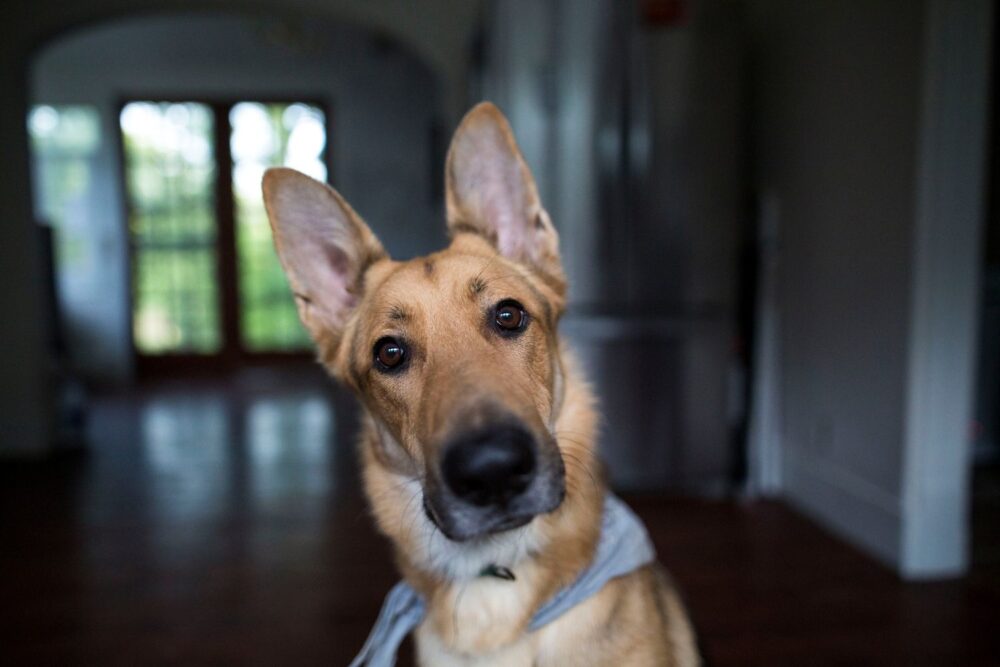
When a dog responds to a photo, it may be because the image matches a mental template built through repeated exposure. Over time, dogs form a visual memory of familiar faces.
Context still matters. Photos with heavy shadows, hats, or unusual angles can reduce recognition. Dogs compare patterns rather than fully understanding images as humans do.
9. Faces are only one cue among many
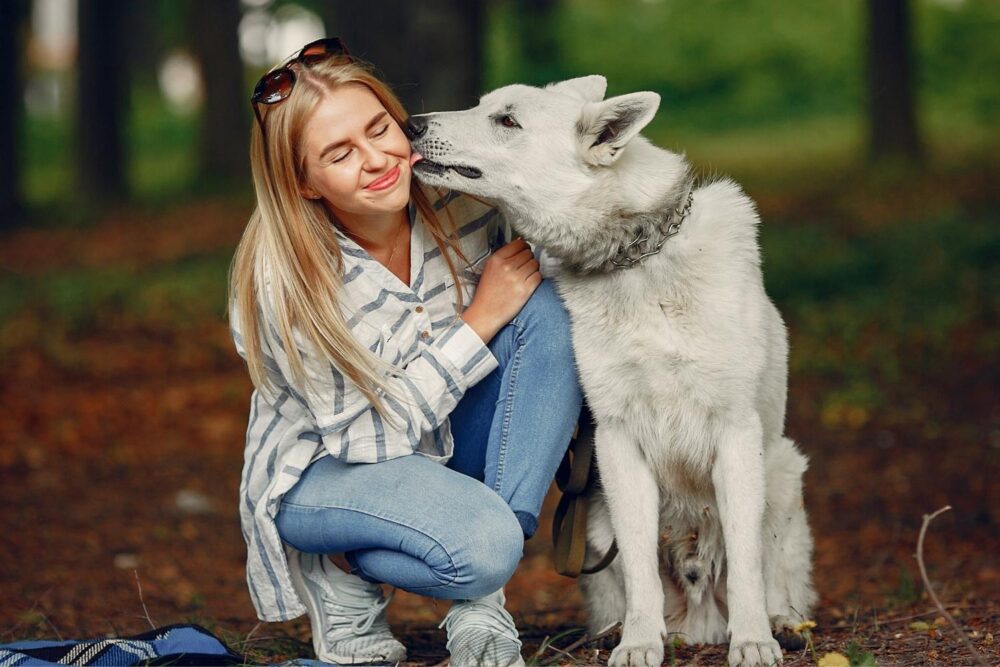
Even if dogs recognize faces, they rarely rely on vision alone. In daily life, they combine scent, voice, movement, and context to identify people.
This is why a dog might ignore a photo but react immediately to your voice. Research shows dogs can use facial information, not that it replaces their other senses.
10. How researchers rule out accidental cues
Good experiments remove unintended signals. Photo positions are randomized, handlers are controlled, and strangers’ faces are used for comparison.
Researchers also look for consistency across trials. Repeated correct choices suggest real recognition rather than chance or subtle cues from people in the room.
11. What this tells us about dogs

Photo recognition fits into a larger understanding of dogs as social thinkers. They track human expressions, follow gaze, and respond to subtle cues in everyday life.
Knowing they can also recognize familiar faces in photos highlights how closely dogs attend to us. Their bond with humans relies on many senses working together, not just smell alone.