
From pay and time off to exemptions, these details can affect how you respond.

Opening a jury summons can immediately raise questions most people were never taught to answer. Do you actually have to go? Will missing work cause problems? What happens if the timing makes service impossible?
Jury duty is a cornerstone of the U.S. legal system, but for many people, the process feels confusing and intimidating. Part of that confusion comes from how much jury procedures vary by location. Federal courts, state courts, and county courts all operate under slightly different rules, and what applies in one place may not apply in another.
Understanding how a jury summons works matters because ignoring one can carry consequences, while responding correctly can save time, protect your rights, and reduce stress.
Click through to learn what a jury summons really requires and what flexibility most courts allow.
1. A jury summons is a legal notice, not a suggestion

A jury summons is an official court document that requires a response. It isn’t optional mail, even if you believe you won’t qualify or won’t be selected. Courts depend on random participation to keep jury pools fair and representative.
Ignoring a summons altogether can lead to fines or court orders, depending on local law. Even if you believe you qualify for an exemption, you still must respond and formally request i
Follow us and access great exclusive content every day
2. Getting a summons doesn’t mean you’ll serve on a jury
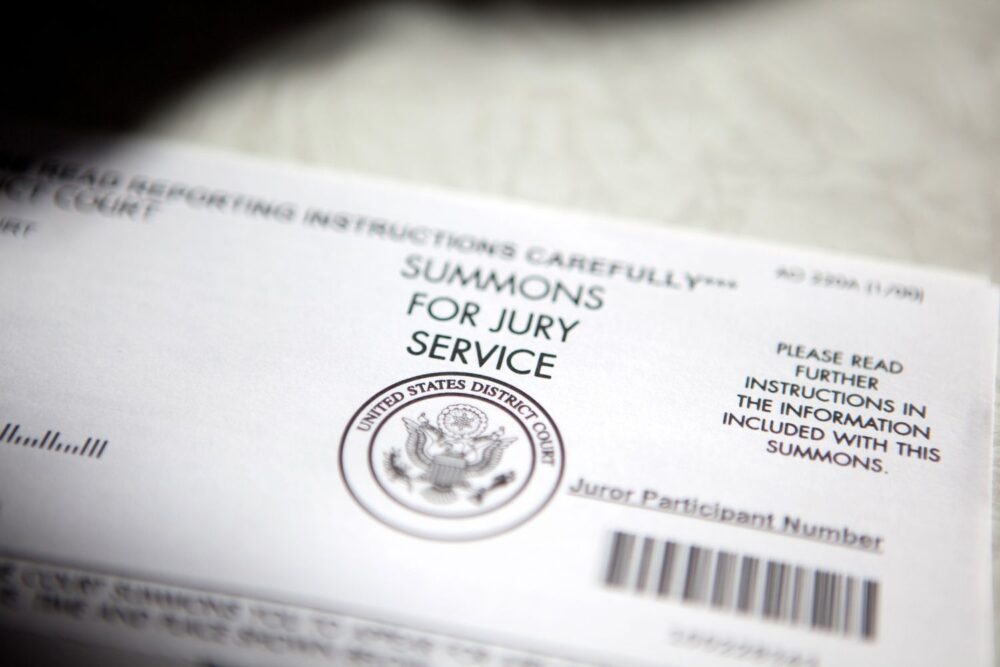
Many people never make it past the initial stages. Courts send out far more summonses than they need because they expect a portion of people to be excused, deferred, or dismissed during jury selection.
You may be placed on standby, dismissed after a short check-in, or told your service is no longer needed. Receiving a summons only means you’re part of the pool, not that you’ll sit on a case.
3. Responding by the deadline is essential

Every summons includes a deadline for responding, often with online and mail-in options. This response confirms whether you’re eligible and available. Missing the deadline is one of the most common issues courts encounter.
Even if you plan to request a deferral or exemption, responding on time protects you from penalties and keeps your options open.
4. Basic eligibility rules are similar across states

Most courts require jurors to be at least 18 years old, U.S. citizens, residents of the jurisdiction, and able to understand English. Some states restrict service for people with certain felony convictions, particularly if civil rights haven’t been restored.
These questions are usually asked during the initial response, and answering honestly is critical. Providing inaccurate information can create problems later.
Follow us and access great exclusive content every day
5. Exemptions exist but are limited

Courts allow exemptions for specific situations, such as active military service, certain public safety roles, or recent prior jury service. Some states allow older adults to opt out, often starting at age 70 or 75, though this varies.
Medical exemptions usually require documentation. Courts generally don’t excuse people simply for inconvenience, so exemption requests must meet stated criteria.
6. Deferrals are common and often easier than exemptions

If your main issue is timing, a deferral is usually the simplest option. Many courts allow at least one postponement without requiring proof, often letting you choose a new date within a set window, such as 90 days or six months.
Deferrals are commonly used for work deadlines, caregiving responsibilities, school obligations, or pre-booked travel. Some courts limit how many times you can defer, while others allow only one automatic postponement before requiring review.
Importantly, deferring does not put you “in trouble” or increase your chances of selection later. It simply moves your availability to a different date. For many people, this option resolves the issue without needing to claim hardship or exemption.
7. Employers cannot punish you for jury service

Federal law and most state laws prohibit employers from firing, disciplining, or retaliating against employees for serving on a jury. This protection applies whether you’re selected or simply required to report.
However, the law does not always require employers to pay your regular wages during jury duty. Pay obligations vary by state and employer policy, which makes it important to check your company handbook.
8. Jury pay usually comes from the court

Courts typically pay jurors a modest daily amount, often ranging from $15 to $50 per day, sometimes starting after the first day. Mileage reimbursement is also common.
This pay is meant to offset expenses, not replace income. Some employers require you to turn over jury pay if they continue your salary, while others allow you to keep it.
Follow us and access great exclusive content every day
9. Hardship requests require explanation

If serving would cause serious financial, medical, or personal hardship, courts may excuse you, but you usually must explain why. This might include loss of critical income, inability to secure childcare, or medical limitations.
Hardship requests are reviewed individually, and approval is not guaranteed. Providing clear, specific information improves your chances.
10. Ignoring a summons can lead to penalties

Failing to respond or skipping jury duty without approval can result in fines, contempt citations, or orders to appear before a judge. Penalties vary by jurisdiction but tend to escalate if notices are repeatedly ignored.
Simply responding, even to request deferral or exemption, avoids these consequences.
11. Jury duty scams are increasingly common

Courts do not call, text, or email demanding immediate payment for missed jury duty. Scammers often impersonate court officials and pressure victims to pay fines using gift cards, wire transfers, or digital payment apps.
Legitimate jury communication comes through official mail or verified court websites. Any demand for instant payment is a red flag.
12. The safest way to handle a jury summons

The most important thing is to read the notice carefully and respond honestly. A summons carries legal responsibility, but it also comes with flexibility through deferrals, exemptions, and hardship requests.
Taking a few minutes to respond correctly can prevent confusion, protect your rights, and make the process far smoother when jury duty appears in your mailbox.