
A routine dig revealed silver hidden since the Viking Age, preserved exactly where it was buried.
At first, the discovery didn’t look like anything unusual to the team from the University of Stavanger’s Archaeological Museum. During a routine survey ahead of farm construction in western Norway, archaeologists noticed thin, twisted lines in the soil that resembled ordinary metal debris.
Fields that have been worked for generations often contain scraps of wire or discarded material from different eras, and most of the time those finds are quickly ruled out as modern. But this time, the archaeologists took a closer look. That pause revealed something far more meaningful: a carefully hidden cache of Viking silver, buried more than a thousand years ago and never recovered.
What began as a standard field survey turned into a rare glimpse of everyday life in the Viking Age, showing how people protected their wealth, responded to uncertainty, and made decisions they believed were temporary.
Click through to see how an ordinary human moment preserved underground until now.
1. What archaeologists expected to find before digging even began
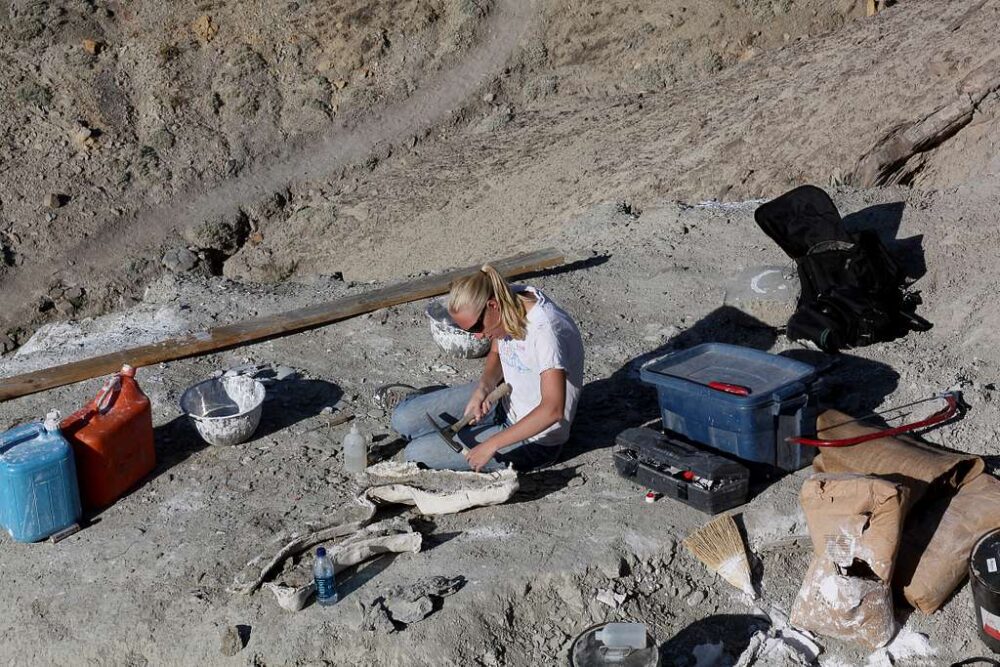
The excavation began as a standard archaeological survey ahead of planned farm construction in western Norway. These surveys are designed to protect cultural heritage by identifying traces of past human activity before the land is altered or built over.
Most surveys like this uncover modest remains, such as postholes from long-gone buildings, fragments of tools, or evidence of everyday work. While the region has known Viking-era activity, intact valuables are rarely found. The goal was careful documentation, not the discovery of hidden wealth.
Follow us and access great exclusive content every day
2. Why twisted metal in the soil initially raised no alarms
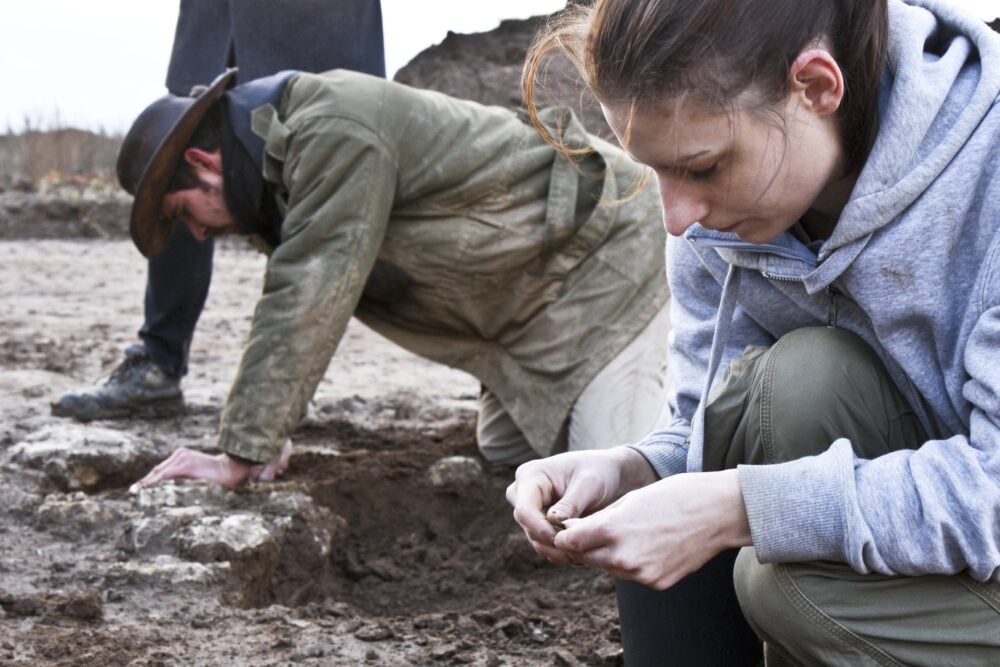
When archaeologists first noticed thin, coiled metal shapes beneath the surface, their reaction was cautious but unexcited. Old farmland frequently contains modern debris, including wire, nails, and scraps of copper from repairs, fencing, or discarded equipment.
At a glance, the metal lacked obvious decoration. Its shape and placement didn’t immediately suggest jewelry or ritual objects. In many excavations, similar finds turn out to be relatively recent and historically insignificant.
3. The moment scrap metal was identified as Viking silver
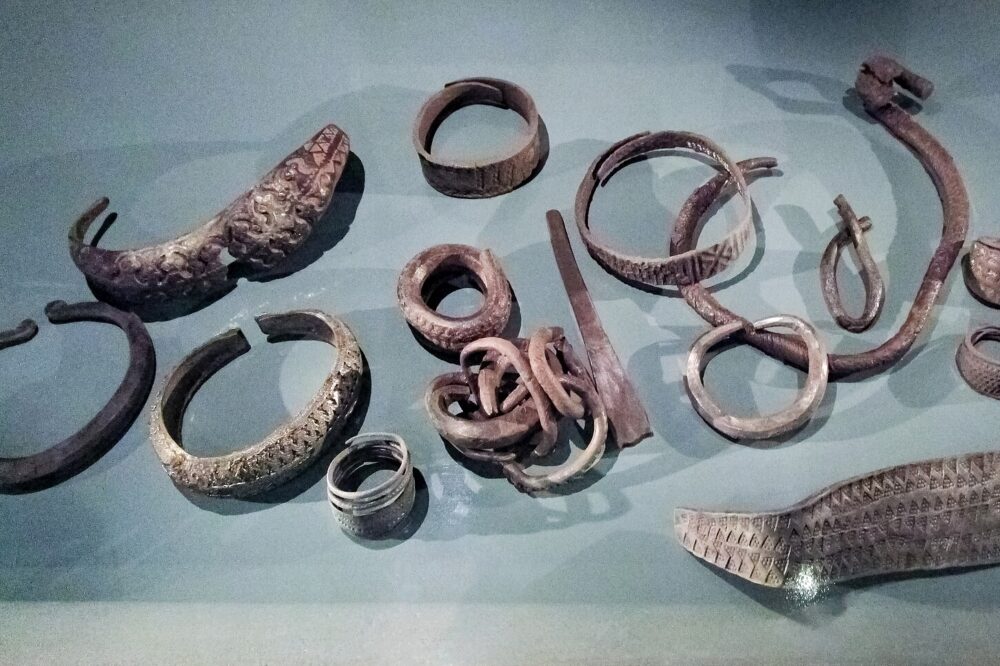
As the metal was examined more carefully, doubts began to surface. The weight and density didn’t match modern wire, and the material responded differently during cleaning. What had looked like scraps slowly revealed itself as silver.
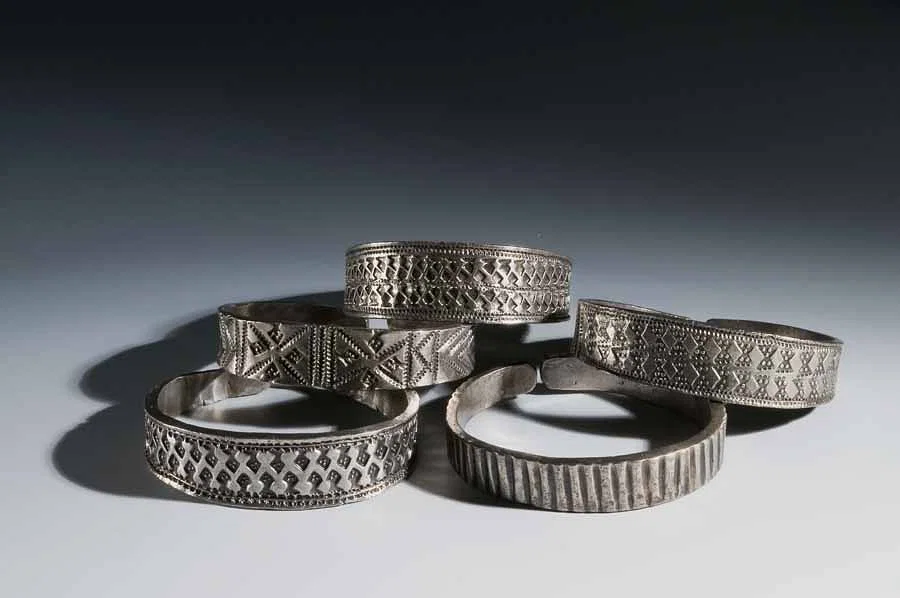
Further inspection confirmed the objects were heavy silver bracelets dating to the Viking Age, likely from the 9th century. The realization transformed the excavation, shifting it from routine documentation to a rare opportunity to study a Viking hoard exactly where it had been buried.
Follow us and access great exclusive content every day
4. Why finding the hoard intact matters so much
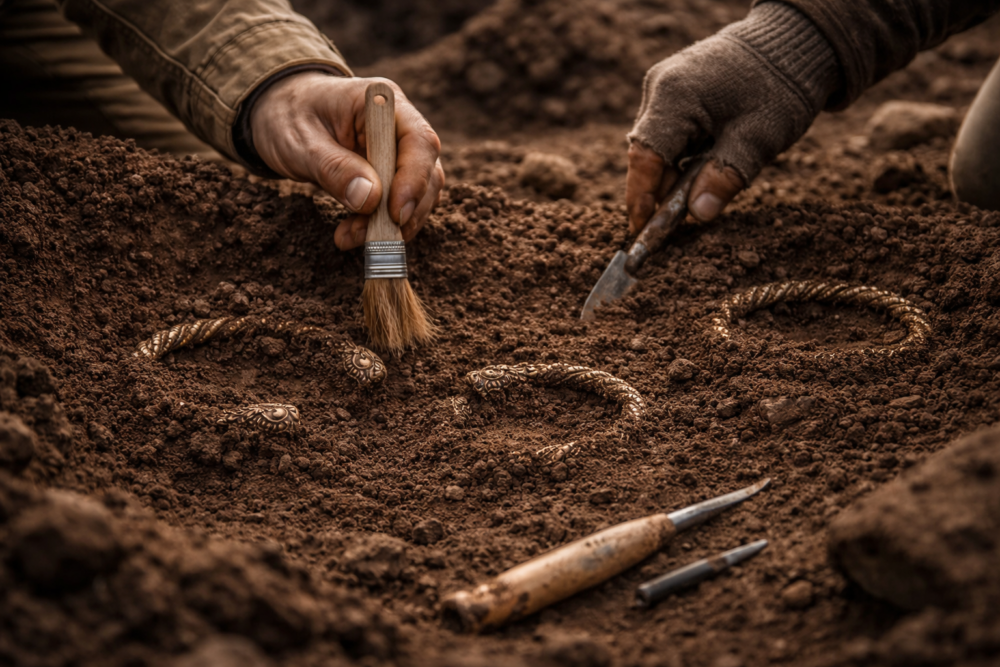
Many Viking silver hoards are discovered after being disturbed by farming, construction, or earlier digging. Objects are often scattered, moved, or removed from their original context, limiting what archaeologists can learn.
In this case, the silver was found precisely where it had been hidden. That intact placement allows researchers to study not just the objects themselves, but the intent behind how they were arranged and concealed. Those details provide valuable clues about human behavior rather than just material wealth.
5. What the silver bracelets reveal about everyday Viking life
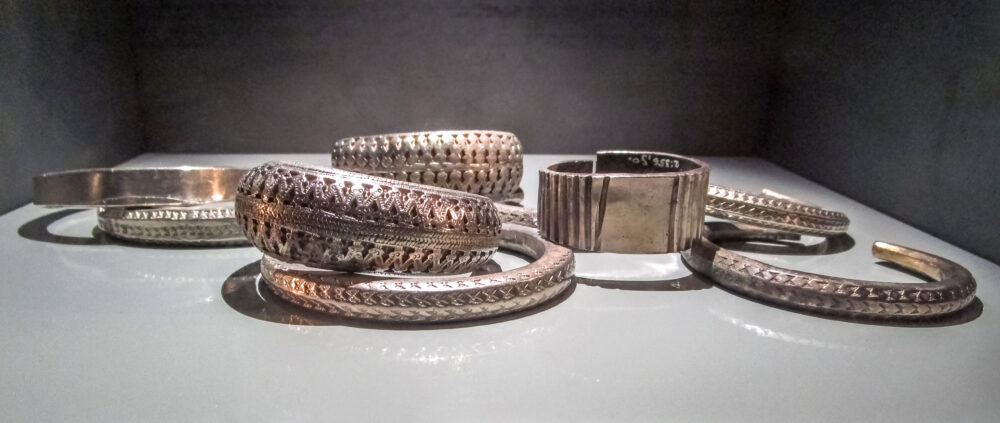
The four silver bracelets were not decorative ornaments meant only for display. In the Viking Age, silver functioned as both jewelry and currency. Items like these could be worn, traded, or cut into pieces to pay for goods and services.
This practical role makes the hoard especially personal. The bracelets represent stored value meant to be used again, not ceremonial offerings or symbolic items. They reflect a world where wealth was portable, flexible, and closely tied to daily survival.
6. Why archaeologists believe the silver was hidden but never recovered

The way the silver was buried suggests it was hidden deliberately and possibly in haste. Viking-era communities lived with frequent uncertainty, including local conflicts, raids, and shifting power structures. Hiding valuables was a practical response to risk.
What makes this hoard especially haunting is that it was never retrieved. Archaeologists consider several possibilities: the owner may have been forced to flee, killed, or prevented from returning by circumstances beyond their control. The land itself continued to be used for centuries, yet the silver remained untouched.
This suggests the act of burial was meant to be temporary. Someone believed they would come back. That expectation connects the present directly to a moment of urgency and hope from more than a thousand years ago, turning the silver into a record of an interrupted life rather than just a collection of objects.
Follow us and access great exclusive content every day
7. What nearby finds say about the settlement itself
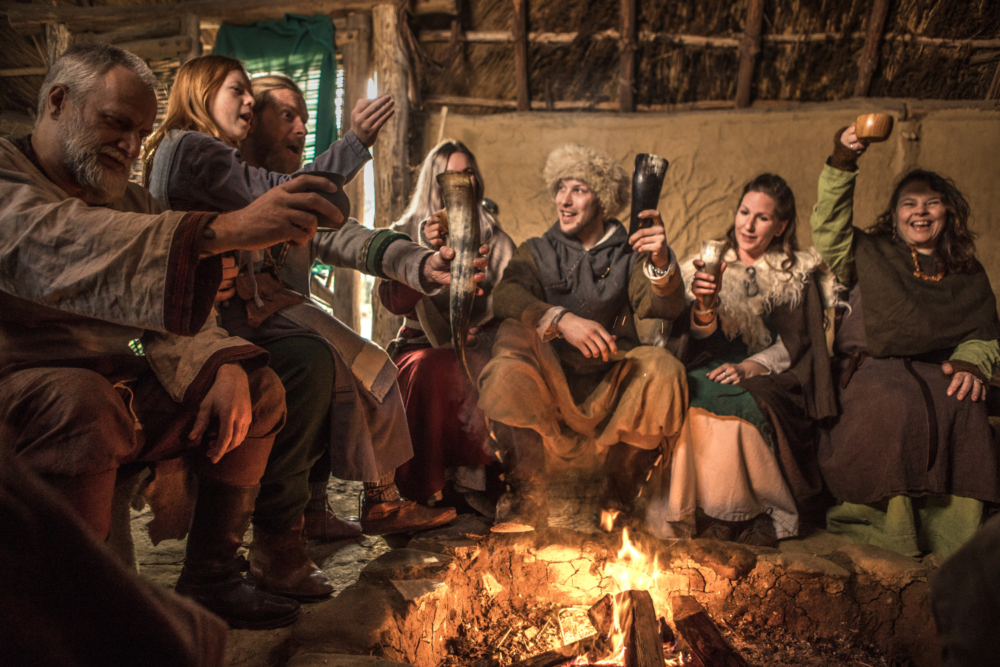
The silver was not discovered in isolation. Other artifacts from the site include everyday tools, rivets, and soapstone fragments, indicating long-term settlement rather than a temporary camp.
These surrounding finds suggest the farm was part of a stable community with access to trade and resources. Its location near a fjord would have been especially valuable, offering transportation routes and economic opportunity during the Viking Age.
8. How the discovery is being preserved and studied
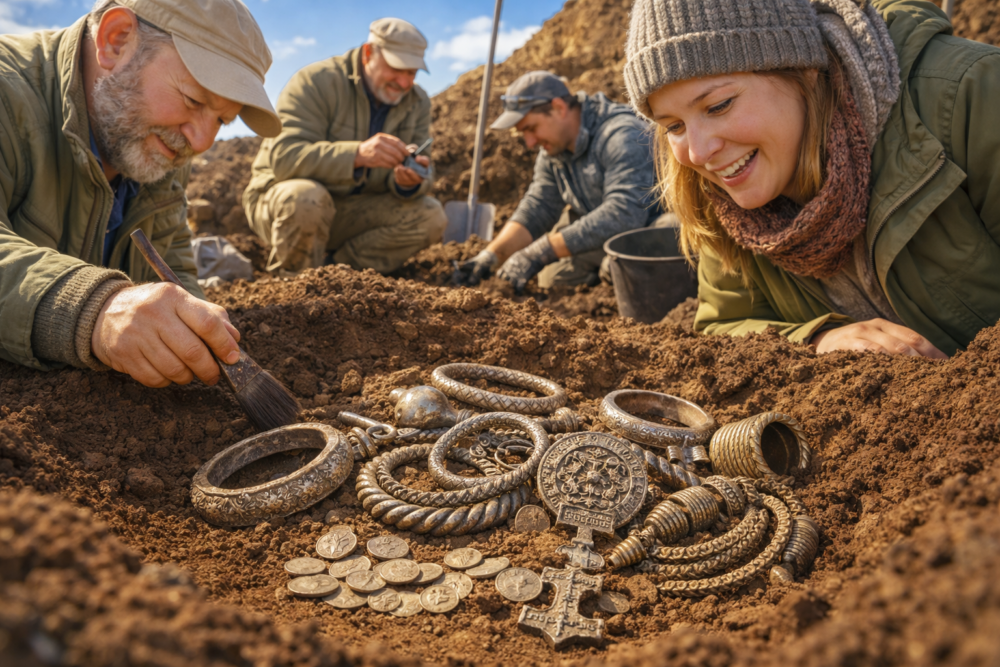
To protect the bracelets and their context, archaeologists removed the surrounding soil as a single block rather than separating the objects immediately. This method preserves subtle details that could be lost through rapid excavation.
In a controlled laboratory setting, specialists can analyze corrosion, soil layers, and placement patterns. Even the surrounding dirt can provide information about burial depth, timing, and environmental conditions over centuries.
9. What this find adds to our understanding of Viking society

Popular images of Vikings often focus on raids, ships, and warfare. Discoveries like this highlight quieter realities: risk management, personal wealth, and everyday decision-making.
The hoard reinforces the idea that Viking society was economically complex. Silver circulated locally and was carefully managed, reflecting systems of trust, trade, and survival that extended far beyond violence or conquest.
Follow us and access great exclusive content every day
10. Why discoveries like this are still being made today
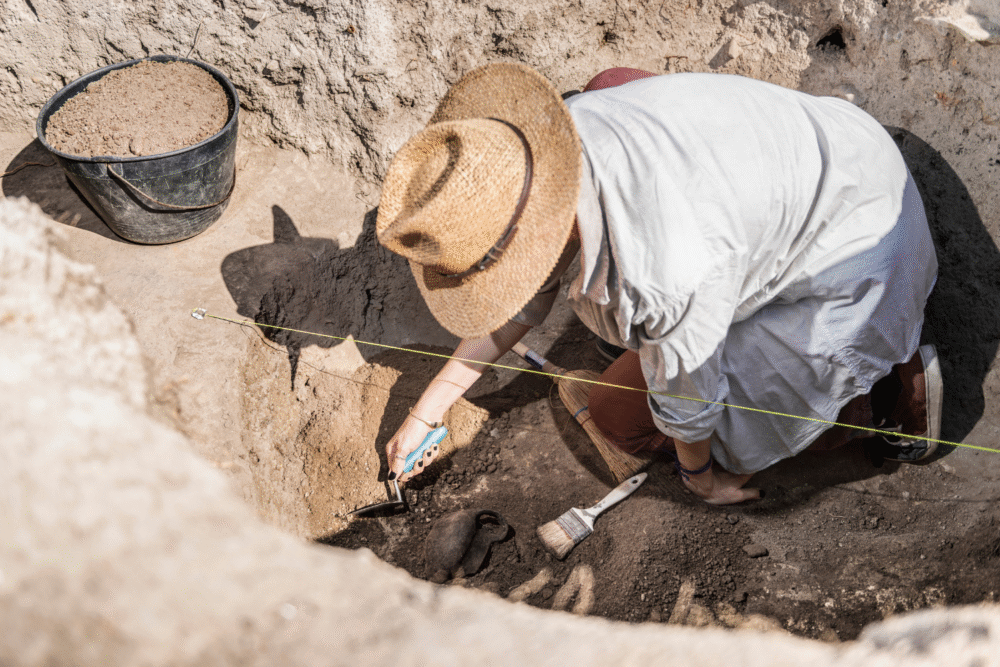
It’s easy to assume the past has already been uncovered, but much of history remains underground, especially in landscapes that have been continuously used. Routine surveys often reveal the most meaningful finds because they examine familiar places closely.
This discovery shows that history doesn’t always announce itself dramatically. Sometimes it waits just below the surface, hidden in plain sight until someone slows down enough to look again.
11. What the buried silver ultimately represents
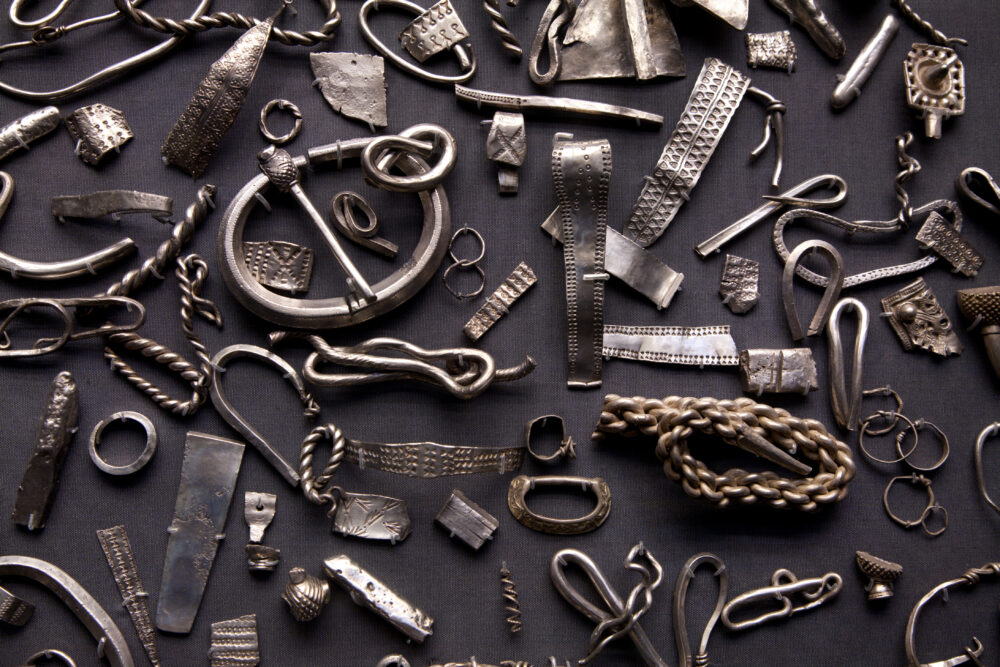
More than treasure, the silver bracelets represent a moment of belief. Someone trusted that the future would allow them to return and reclaim what they buried.
By uncovering the hoard now, archaeologists recovered more than silver. They recovered a quiet human story about uncertainty, planning, and unfinished intentions, preserved beneath a Norwegian field for over a thousand years.