
A newly discovered ring of prehistoric pits is reshaping what researchers understand about Stonehenge’s ancient landscape.
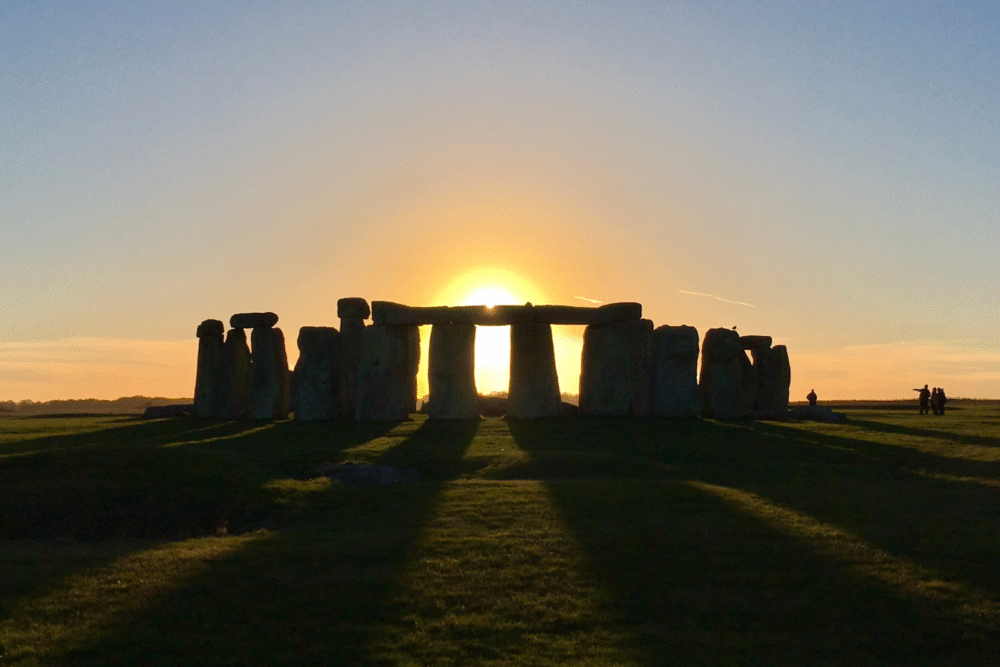
A newly uncovered ring of ancient pits is transforming archaeologists’ understanding of the vast ceremonial landscape surrounding Stonehenge. Researchers believe the pits once formed a “sacred boundary” that marked off an important ritual zone thousands of years ago. Hidden for millennia beneath the fields of Wiltshire, the massive circular arrangement suggests that Stonehenge was only one feature within a far larger and more complex ceremonial network. The discovery offers rare insight into how Neolithic communities organized sacred space, navigated ritual pathways, and shaped their environment long before written history.
1. A Hidden Ring of Pits Emerges Beneath the Landscape
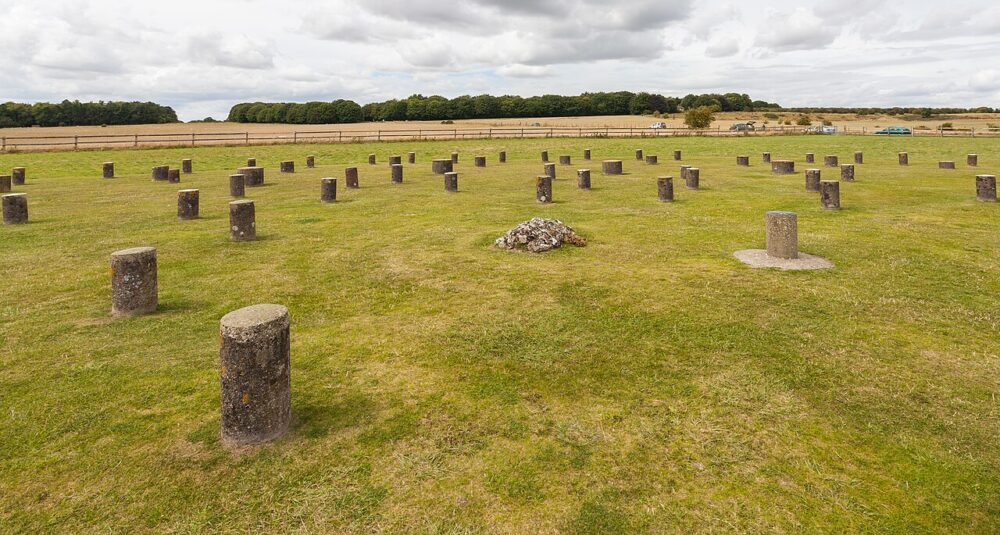
Archaeologists discovered the boundary while surveying land near Durrington Walls, a major Neolithic site about two miles from Stonehenge. Using ground-penetrating radar and soil analysis, researchers identified large, regularly spaced pits forming a near-perfect circle.
These pits had remained unnoticed beneath farmland for thousands of years. Their clear geometric pattern and sheer size immediately signaled that they were part of a deliberate and significant construction project carried out by ancient builders.
2. The Pits Form a Circular Boundary Several Kilometers Wide
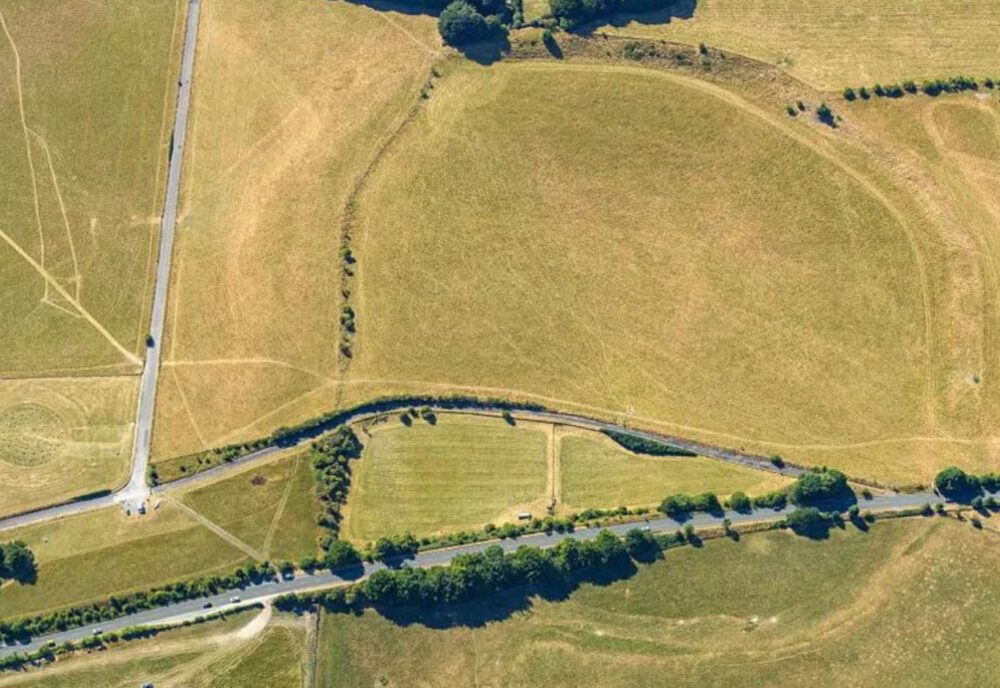
The newly identified ring spans roughly two kilometers in diameter, enclosing both Durrington Walls and surrounding areas. Each pit is placed with remarkable consistency along the circular path, suggesting a coordinated design rather than random placement.
This boundary appears to have delineated a specific ritual zone, marking the limits of a sacred area connected to Stonehenge’s broader ceremonial landscape. Its placement and scale indicate a level of planning far beyond what researchers once assumed for the period.
3. Each Pit Measures Several Meters Across and Deep
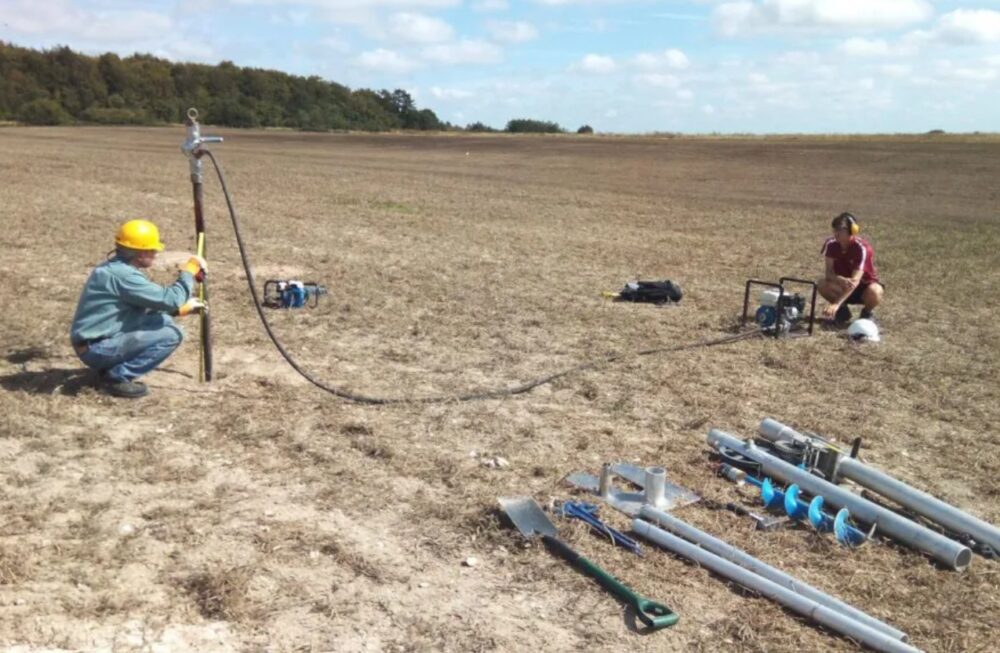
The pits are exceptionally large—typically over five meters wide and nearly as deep. Their size suggests they required considerable labor, tools, and coordination to excavate. Such massive earthworks would have taken a substantial workforce to build.
Their depth and consistency also rule out natural processes as the cause. Archaeologists believe the pits served as markers or symbolic features rather than storage or habitation structures.
4. The Boundary Likely Served a Ritual or Ceremonial Purpose
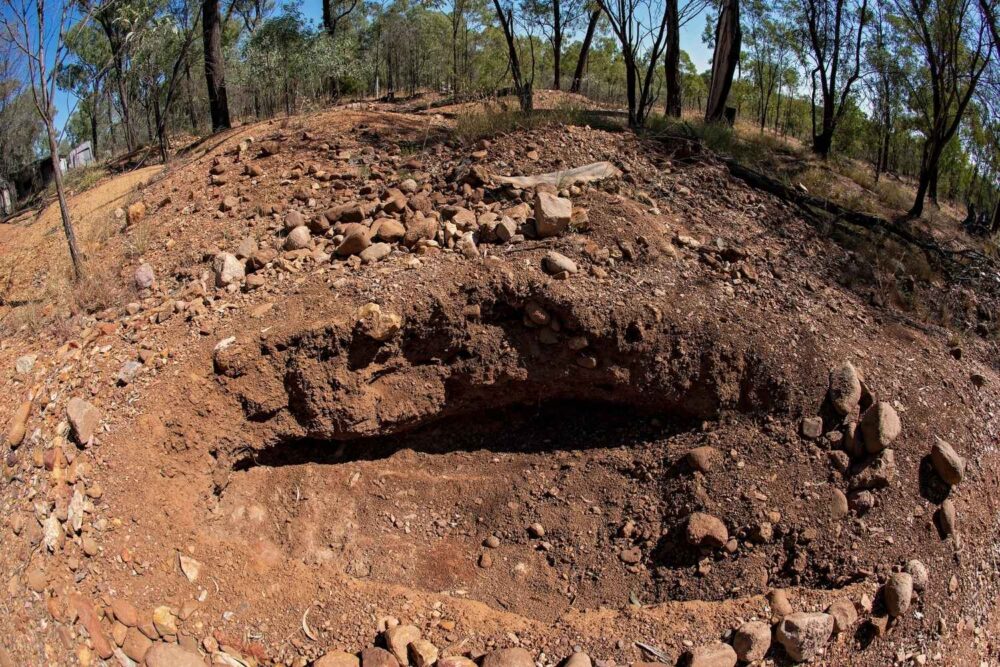
Evidence suggests the pit circle was not used for farming, settlement, or defense. Instead, its position connected key ceremonial sites, forming a sacred perimeter that may have guided or restricted movement during rituals.
Researchers propose that people approaching the central monuments would cross this symbolic threshold, marking entry into a spiritually significant zone. This use of boundaries reflects broader Neolithic traditions of controlling sacred space.
5. The Boundary Connects Stonehenge and Durrington Walls
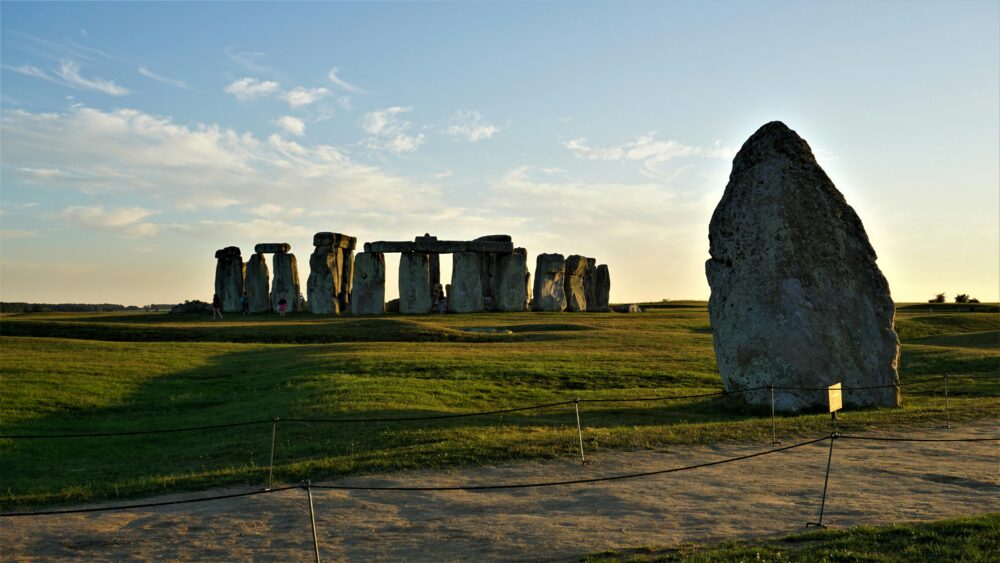
The pit circle surrounds Durrington Walls, a large Neolithic settlement thought to be linked to the builders of Stonehenge. Processional routes likely connected the two sites, with the boundary marking the transition between everyday life and ceremonial activity.
This spatial relationship reinforces the idea that Stonehenge was part of a vast interconnected complex rather than an isolated monument. The discovery helps clarify how different structures functioned together during rituals.
6. Dating Suggests the Pits Were Dug Around 2500 BC

Radiocarbon dating places the pits in the same era as the construction of Stonehenge’s large sarsen stones. This alignment strengthens the theory that both features were part of the same cultural and ceremonial system.
The timeframe corresponds to a period of intense monument-building across Britain, when communities invested significant resources into constructing ritual landscapes that still inspire awe today.
7. The Discovery Shows Neolithic Societies Had Advanced Planning Skills
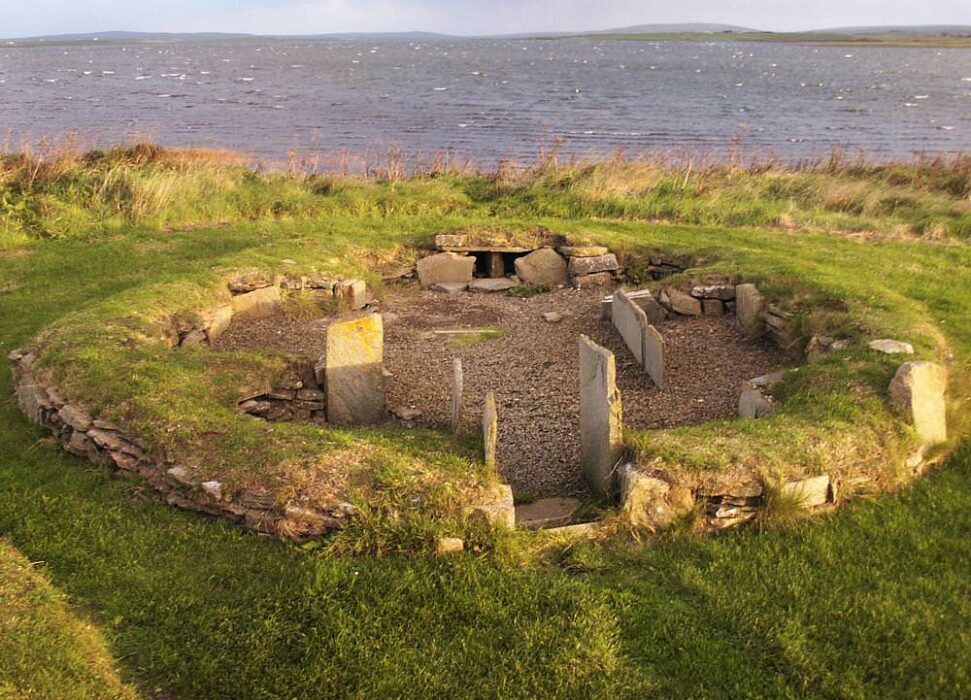
The size and geometric precision of the boundary required detailed planning and surveying techniques. Creating such a large circle without modern tools would have demanded a sophisticated understanding of distance, alignment, and organization.
This new evidence challenges outdated assumptions that Neolithic societies lacked complex engineering skills. Instead, it highlights their ability to execute large-scale ceremonial projects with remarkable accuracy.
8. Researchers Used Cutting-Edge Technology to Locate the Pits
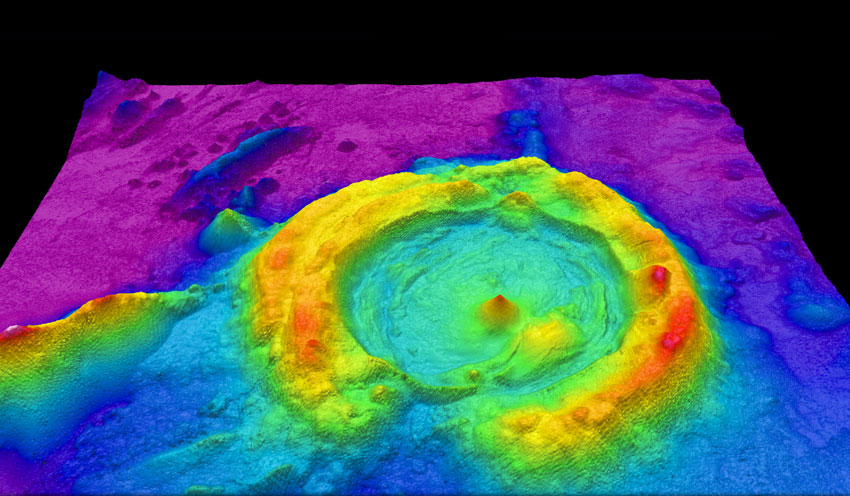
Modern archaeological tools such as geophysical imaging, magnetometry, and lidar allowed researchers to detect the pits without excavation. These methods revealed differences in soil composition that indicated human activity.
Only limited digging was needed to confirm the pits’ age and purpose. The project demonstrates how non-invasive technologies are revolutionizing the study of ancient landscapes.
9. The Boundary May Have Served as a Protective or Spiritual Marker
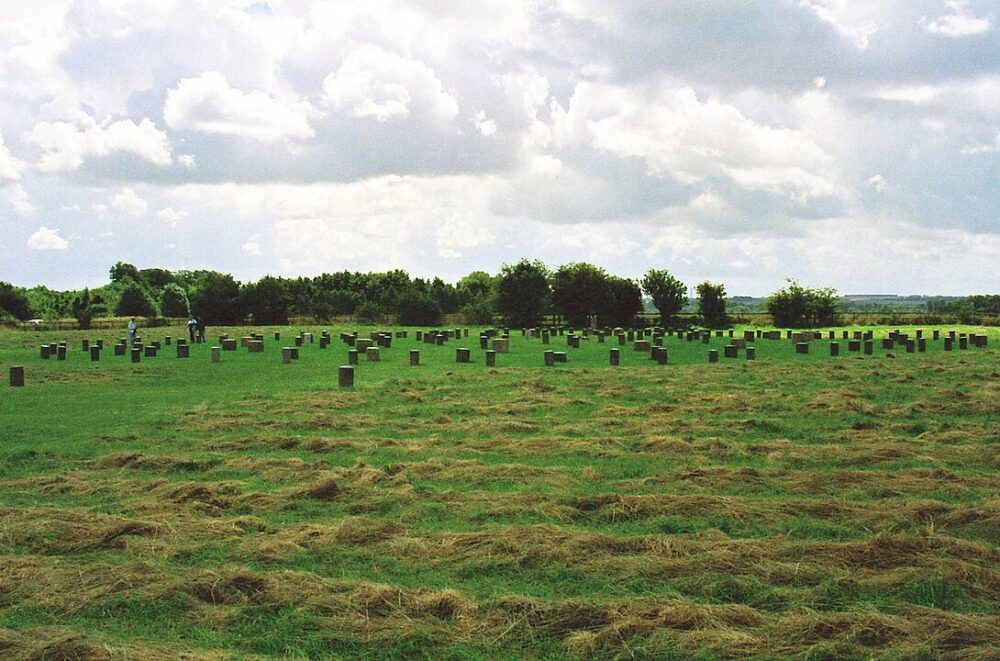
Archaeologists believe the pits may have marked a threshold that defined who could enter the sacred area and under what circumstances. This could have been connected to rituals, seasonal ceremonies, or the movement of people between living and ceremonial spaces.
Such boundaries appear in other prehistoric cultures, where crossing into sacred ground was tightly controlled. The pit circle may represent a similar form of spiritual demarcation.
10. The Discovery Suggests Stonehenge Was Only One Part of a Larger Complex
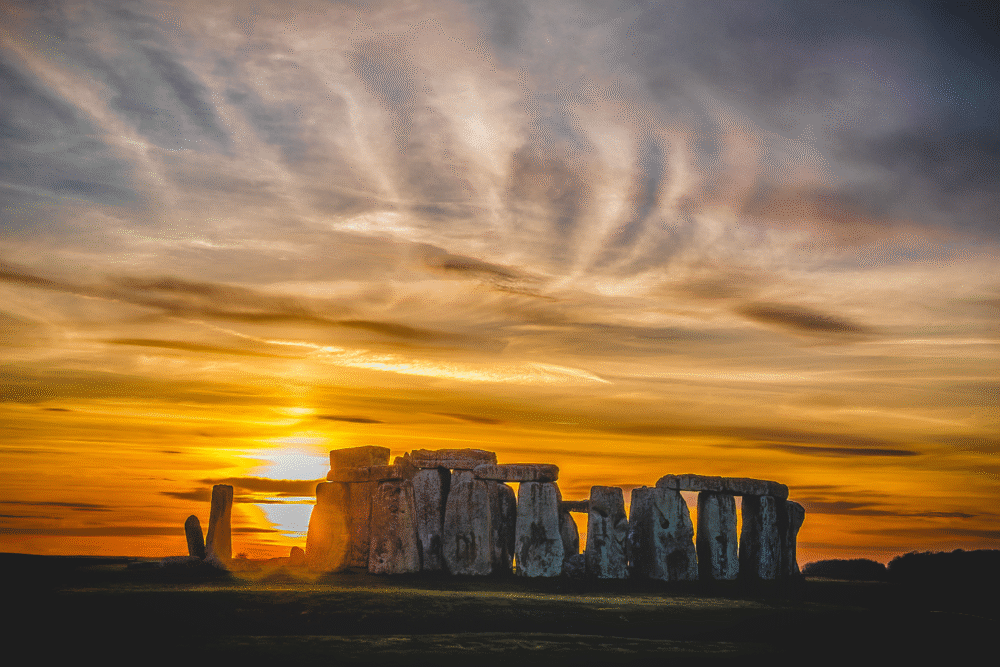
For decades, researchers suspected that Stonehenge was not an isolated monument. The pit circle offers strong evidence that the surrounding landscape contained multiple coordinated ceremonial features.
This insight reframes Stonehenge as the centerpiece of a sprawling ritual environment, with boundaries, settlements, and pathways working together to structure ancient religious life.
11. Ongoing Research Will Continue to Uncover the Boundary’s Full Meaning
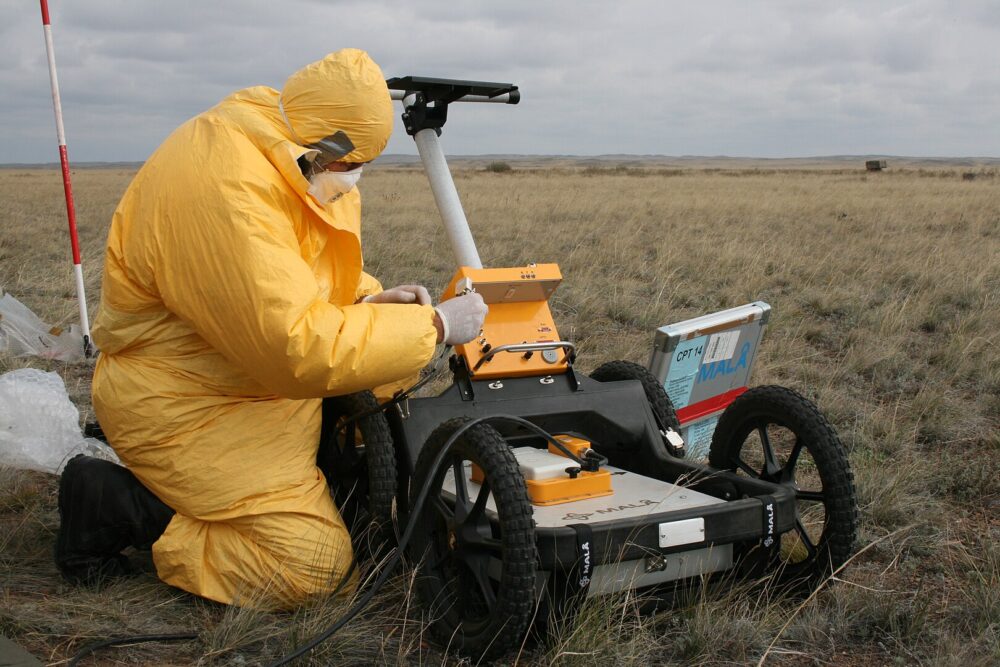
Archaeologists plan to conduct further surveys and limited excavations to determine whether the pits contained markers, posts, or offerings. These details could reveal how the boundary was used and why it held such importance.
As researchers analyze soil samples and map additional features, they hope to clarify the boundary’s role within the Neolithic ceremonial landscape. Each new discovery brings a clearer picture of how ancient communities shaped one of the world’s most iconic prehistoric sites.