
A bold claim from a high-tech company promises city-sized power in a single pulse.

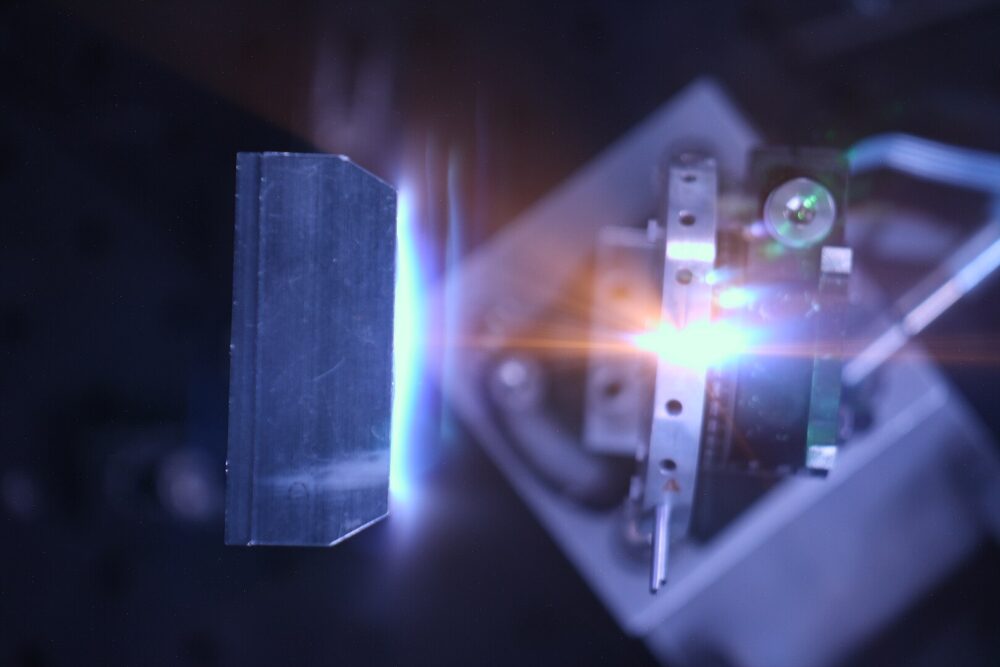
California-based Fuse Energy Technologies says its prototype fusion driver produced a burst of power in a laboratory setting equivalent to the combined electrical output of Tokyo and New York. The device, called TITAN, uses ultra-high-voltage pulses to compress plasma and generate extreme temperatures and pressures. While the company emphasizes this was a peak power output measured over nanoseconds—not continuous energy production—the scale of the test suggests a new approach to fusion research.
1. The Startup Claims a Record-Breaking Fusion Pulse

Fuse Energy reports that its TITAN machine achieved a single pulse with instantaneous power surpassing the average hourly consumption of Tokyo and New York combined. Because the burst lasted around a hundred nanoseconds, the total energy delivered was small, even if the momentary power was high.
The company says the achievement demonstrates progress in plasma compression using high-voltage discharges—techniques typically limited to national laboratories. If confirmed, it would represent one of the most powerful pulsed-fusion experiments ever produced by a private firm.
2. Why the Comparison to Tokyo and New York Matters

Tokyo and New York rank among the world’s largest electricity consumers, each relying on substantial gigawatt-scale power systems. Comparing a laboratory pulse to these cities’ output highlights the dramatic scale of TITAN’s peak power.
Experts note, however, that such comparisons must be interpreted carefully. Fusion research often distinguishes between instantaneous power and sustained energy production. TITAN’s test represents the former—a valuable milestone, but not yet a step toward powering a grid for hours or days.
3. The TITAN Device Uses Pulsed Power, Not Continuous Electricity

TITAN relies on stored electrical energy discharged in extremely rapid bursts, creating the high pressures and temperatures needed for fusion conditions. These pulses last only nanoseconds, meaning the system does not produce usable electricity in a continuous stream.
While pulsed-power approaches are valuable for studying plasma behavior, major engineering advances would be required to convert such bursts into steady power. Future fusion plants must achieve long-duration, net-positive operation, a hurdle still far beyond any private startup.
4. The Science Behind Fusion Power Remains Challenging
Fusion requires extraordinary conditions, including temperatures hotter than the Sun and stable confinement of plasma long enough for atomic nuclei to merge. Achieving all three components of the “triple product” has challenged scientists for decades.
Although TITAN’s powerful pulses help explore one part of the fusion process, no private company has demonstrated net energy gain over sustained periods. Materials limitations, confinement challenges, and energy-capture issues remain key obstacles to commercial fusion.
5. The Company Has Military and Commercial Connections

Fuse Energy Technologies was founded in 2019 and previously worked on pulsed-radiation systems for defense applications. Headquartered in San Leandro, California, the company uses its pulsed-power expertise to pursue fusion research.
This dual-use background highlights how fusion development often overlaps with national security technologies. By leveraging experience from defense markets, Fuse Energy follows a different trajectory than traditional clean-energy or utility-focused firms.
6. Independent Experts Remain Skeptical of the Big Claim

Fusion scientists welcome innovation, but many note that Fuse’s results have not yet been peer-reviewed or independently reproduced. Claims involving extreme instantaneous power require rigorous validation to confirm measurements and eliminate experimental error.
Because peak power can be framed in dramatic ways, experts stress the need to examine total energy produced, efficiency, and repeatability. Until independent labs verify TITAN’s output, most researchers view the announcement as promising but unproven.
7. If Verified, the Device Could Change the Energy Landscape

Fusion is appealing because it could provide abundant, carbon-free power without long-lived radioactive waste. A device capable of scaling TITAN’s high-power pulses into continuous operation would represent a major step toward that goal.
If Fuse’s technology can be replicated and expanded, it might open new pathways to safer, cheaper fusion systems. However, achieving commercial output from pulsed-fusion devices remains a long-term challenge even with promising early results.
8. The Startup Faces Major Engineering and Commercial Hurdles

To transition from high-power pulses to a usable power plant, Fuse would need to address heat extraction, materials durability, and methods for converting short bursts into steady electrical output. Each of these problems is a significant engineering challenge.
Commercializing fusion also requires massive investment, regulatory approval, and reliable supply chains. While the TITAN result is eye-catching, transforming it into a market-ready system will take years of development and large-scale funding.
9. Competitors in the Fusion Space Intensify the Race

Dozens of fusion startups worldwide are racing to achieve net-positive energy and demonstrate scalable reactor designs. Some use magnetic confinement, others laser-driven approaches, and a few employ alternative concepts like pulsed compression similar to Fuse’s design.
The competitive landscape pushes companies to produce measurable progress quickly. Any independently verified breakthrough could shift investment patterns and accelerate the industry—making claims like TITAN’s subject to intense scrutiny.
10. The Claim Highlights the Importance of Transparent Data

Fusion progress often suffers from exaggerated announcements, making transparency vital. Peer-reviewed publications, third-party testing, and reproducible results are the standards researchers rely on to validate breakthroughs.
Fuse has stated that it welcomes external scrutiny, but until detailed data and review processes are released, the scientific community will reserve judgment. Transparent methodology is essential for building trust around claims of unprecedented power output.
11. What the Public Should Know—and What It Should Question

TITAN’s reported pulse demonstrates an intriguing development in fusion research, showing how innovative approaches can push the limits of plasma physics. It highlights the creative solutions emerging outside traditional national laboratories.
At the same time, consumers should understand the difference between momentary peak power and practical electricity generation. Until TITAN’s results are independently confirmed and extended into sustained operation, the achievement remains an experimental milestone—not yet a revolution in energy production.