
A new study reveals how tiny atmospheric ripples may power the planet’s runaway jet streams.
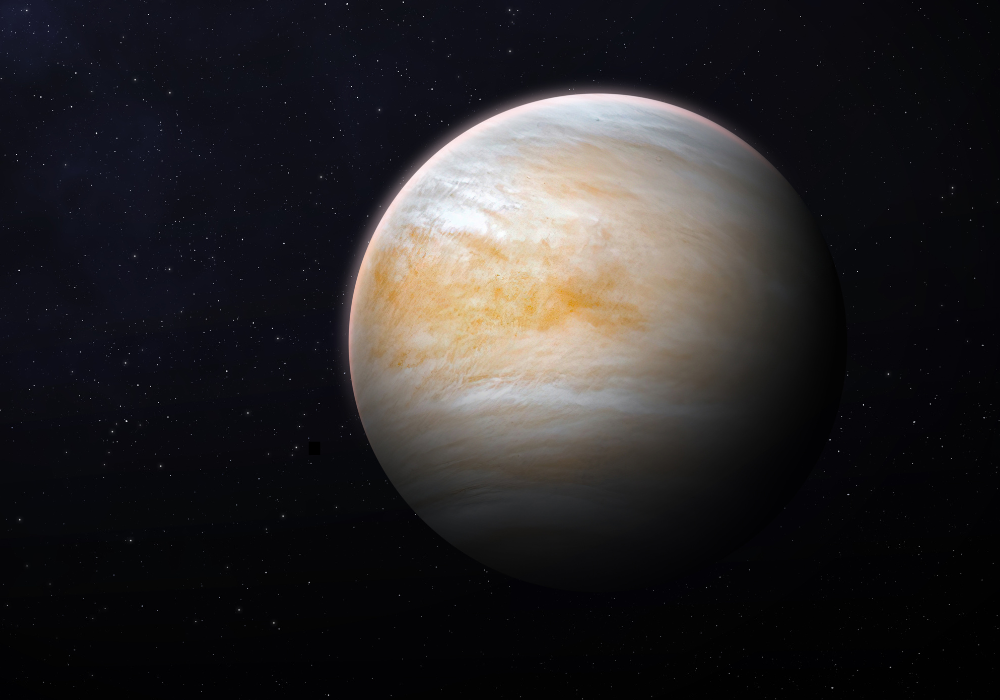
Venus has baffled scientists for decades with its monstrous 220-mph winds—fast enough to circle the entire planet in just four days. These super-rotating winds move far faster than Venus itself spins, raising a long-standing question: what keeps them going? According to new research, the answer may lie in small, previously overlooked atmospheric waves that transfer energy upward and help sustain these extreme jet streams. The findings bring scientists closer to understanding not only Venus’s chaotic weather, but also how atmospheric physics works on other planets, including Earth.
1. Venus’s Atmosphere Spins 60 Times Faster Than the Planet

Venus rotates very slowly, taking about 243 Earth days to turn once. Yet its atmosphere whips around the planet in only four days, a phenomenon known as super-rotation. This extreme mismatch has puzzled researchers for years because the winds require a huge and continuous source of energy.
Scientists have long suspected that something within Venus’s thick atmosphere must be feeding momentum into these winds. Understanding how this energy transfer works is key to solving the broader mystery of Venus’s climate.
2. Researchers Identified Tiny Atmospheric Waves as the Missing Link

The new study points to small-scale atmospheric waves—ripples too subtle to detect with older instruments—as a major contributor to Venus’s wild winds. These waves transfer momentum upward, gradually accelerating the upper atmosphere and sustaining the super-rotating flow.
Although individually weak, the waves are constant and widespread, giving them an outsized cumulative effect. Their steady push may explain how Venus maintains wind speeds that once seemed impossible for such a slowly rotating planet.
3. These Waves Are Similar to Ripples in Earth’s Atmosphere
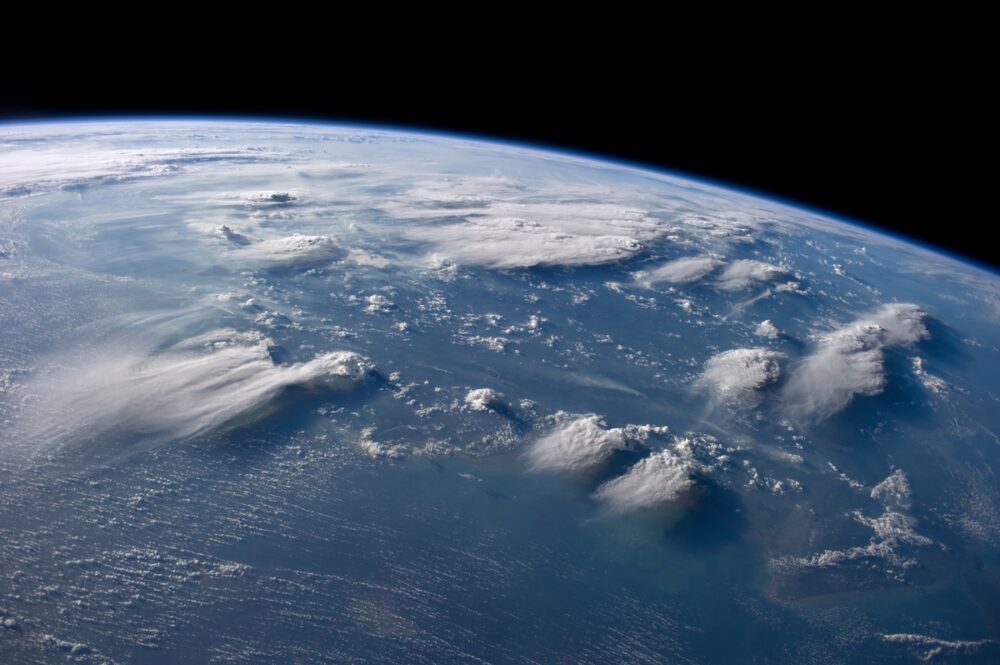
Small-scale atmospheric waves also exist on Earth, where they help shape jet streams, storm patterns, and energy distribution across different layers of the atmosphere. The Venusian waves appear to function in a broadly similar way.
This comparison helps researchers use Earth-based atmospheric models to better understand Venus. If the two systems share the same underlying physics, scientists can apply familiar tools to decode Venus’s more extreme conditions.
4. Venus’s Thick Cloud Layers Play a Huge Role

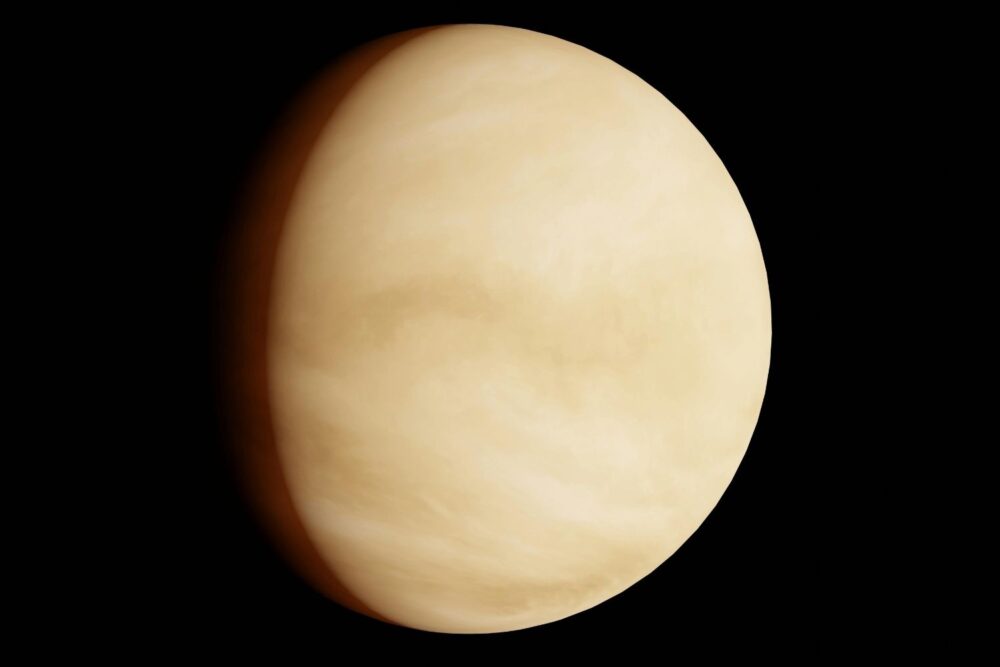
Venus is shrouded in a dense, sulfuric cloud layer that traps heat and creates powerful temperature differences across the atmosphere. These temperature gradients contribute to atmospheric instability and help generate the waves that accelerate the winds.
The planet’s thick cloud deck also reflects sunlight differently across its surface, adding another layer of complexity. These combined effects create conditions ripe for intense atmospheric motion, unlike anything seen on Earth.
5. The Waves Provide Energy Without Breaking Apart
One surprising discovery is that many of these waves seem to persist rather than quickly dissipate. Their stability allows them to carry momentum upward more efficiently, feeding the planet’s upper winds without losing strength.
This sustained energy transfer helps explain why Venus’s winds remain fast over long periods. The upper atmosphere receives a constant “push,” preventing the jet streams from slowing down despite friction and turbulence.
6. Venus’s Slow Rotation Makes Its Winds Even More Extreme

Because Venus rotates so slowly, even small amounts of added momentum have a dramatic effect on its atmosphere. The planet’s weak rotational forces make it easier for waves to accelerate the winds beyond what would be possible on a faster-spinning world.
This unique combination—slow rotation and continuous wave-driven momentum—creates a perfect environment for super-rotation. The new study helps confirm that Venus’s unusual spin rate is a major factor in its extreme climate.
7. Past Models Could Not Explain the Wind Speeds
Before this research, scientists struggled to model Venus’s atmosphere accurately because earlier models missed the contributions of small-scale waves. Without these inputs, simulations consistently produced winds far weaker than those observed.
By incorporating the newly identified wave effects, researchers can now match real-world data much more closely. This improvement brings Venusian climate models to a new level of accuracy and reliability.
8. The Findings Help Explain Sudden Wind Shifts Observed by Probes
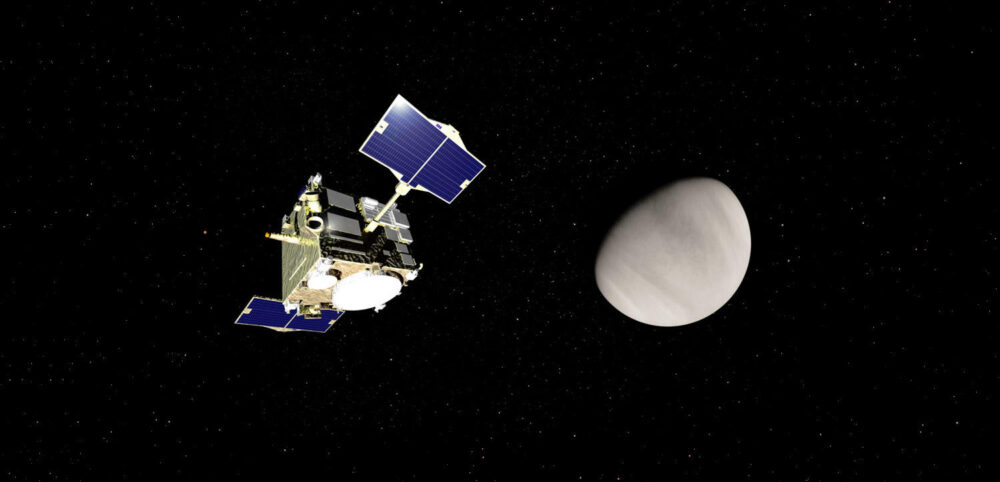
Spacecraft such as JAXA’s Akatsuki have recorded rapid changes in Venusian wind speeds. The presence of small atmospheric waves offers a compelling explanation for these fluctuations, since waves can amplify or weaken winds depending on their direction and strength.
This insight helps scientists interpret past mission data and better predict how Venus’s winds evolve over time. It also strengthens confidence in future atmospheric measurements.
9. The Research Could Improve Understanding of Exoplanet Atmospheres

Many exoplanets have thick atmospheres and slow rotations similar to Venus. If small-scale waves drive super-rotation on Venus, they may also play a role in shaping weather on distant worlds.
That means Venus could serve as a valuable analog for studying exoplanet climates. Understanding its atmosphere helps scientists better interpret data from telescopes and models of planets far beyond our solar system.
10. The Study Brings Scientists Closer to Solving a Long-Standing Mystery

For decades, the source of Venus’s extreme winds has been one of planetary science’s biggest unanswered questions. The discovery that small-scale waves supply the needed momentum offers the strongest explanation to date.
While additional research is needed to fully confirm the mechanism, the findings represent a major step forward. Scientists now have a clearer idea of how Venus’s atmosphere works and a new framework for investigating similar phenomena across the solar system.