
A powerful unseen force may be shaping the universe in ways physicists never expected.
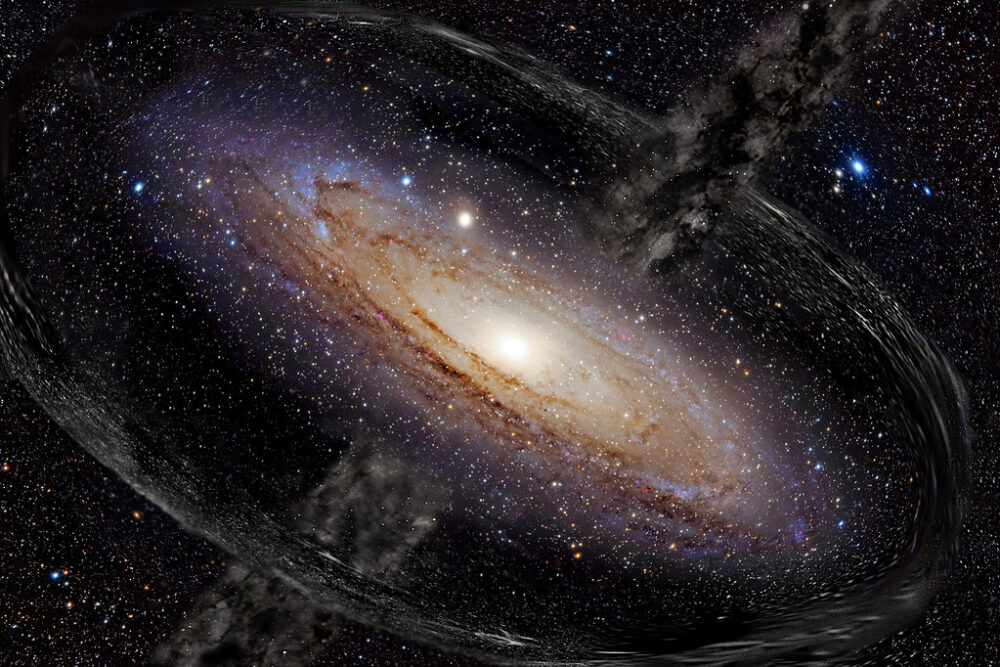
Dark matter has long been one of the biggest mysteries in cosmology, but new research suggests it might interact through an undiscovered “fifth force” beyond gravity, electromagnetism, and the two nuclear forces. Scientists are detecting puzzling motions and patterns in galaxies that don’t match existing physics, raising the possibility that dark matter is governed by something entirely new—something influencing the cosmos from the shadows.
1. Dark Matter Makes Up Most of the Universe—but We Still Can’t See It

Dark matter accounts for roughly 85% of all matter in the universe, yet it emits no light and doesn’t interact with electromagnetic energy. Scientists only know it exists because its gravity affects how galaxies move and rotate. Without dark matter, galaxies would simply fly apart.
Researchers have spent decades trying to understand what dark matter is made of. Every experiment so far has failed to detect it directly, suggesting it may behave in ways unlike anything in the known universe.
2. Galaxies Move in Ways That Standard Physics Can’t Explain

Astronomers noticed that stars at the outer edges of galaxies move far faster than gravity alone should allow. This strange behavior led to the discovery of dark matter in the 1970s. It was clear something invisible was holding galaxies together.
But newer observations show even more puzzling motions—patterns and speeds that don’t align with current dark matter theories. These anomalies are what led scientists to consider a yet-undiscovered force acting behind the scenes.
3. A Hidden Fifth Force Could Link Dark Matter Particles

In modern physics, four fundamental forces shape the universe: gravity, electromagnetism, the strong nuclear force, and the weak nuclear force. But some theoretical physicists now propose a fifth force that acts only on dark matter.
This hidden force could explain why dark matter sometimes appears to “clump,” drift, or move differently than models predict. If true, it would be the first new fundamental force discovered in a century—and it could radically change our understanding of the universe.
4. Dark Matter Doesn’t Behave the Same Everywhere

Astronomers studying galaxy clusters have found that dark matter sometimes spreads out smoothly and other times forms tight, unexpected concentrations. These differences suggest dark matter may interact with itself, rather than remaining completely passive.
Such “self-interacting dark matter” is one of the strongest pieces of evidence for a possible fifth force. It would mean dark matter particles push or pull on each other in ways we cannot see, revealing hidden physics at work.
5. Colliding Galaxy Clusters Reveal Strange Dark Matter Movements
One of the most important clues comes from clusters like the Bullet Cluster, where visible matter and dark matter became separated after a massive collision. In some similar collisions, dark matter lags behind or moves ahead of expectations.
These unusual patterns hint that dark matter might experience drag, attraction, or repulsion—behaviors that a fifth force could produce. Scientists continue to study these rare cosmic events to learn how dark matter behaves under extreme conditions.
6. Particle Physicists Are Searching for “Dark Photons”

A leading theory suggests a fifth force could involve a new particle called a dark photon—a kind of messenger particle similar to a photon but interacting only with dark matter. Dark photons would let dark matter particles communicate or influence one another.
Experiments in Europe, the U.S., and Japan are actively searching for signs of these particles. Although none have been confirmed, several experiments have found faint signals that researchers are still analyzing.
7. The Fifth Force Could Help Explain Dark Matter “Cores”
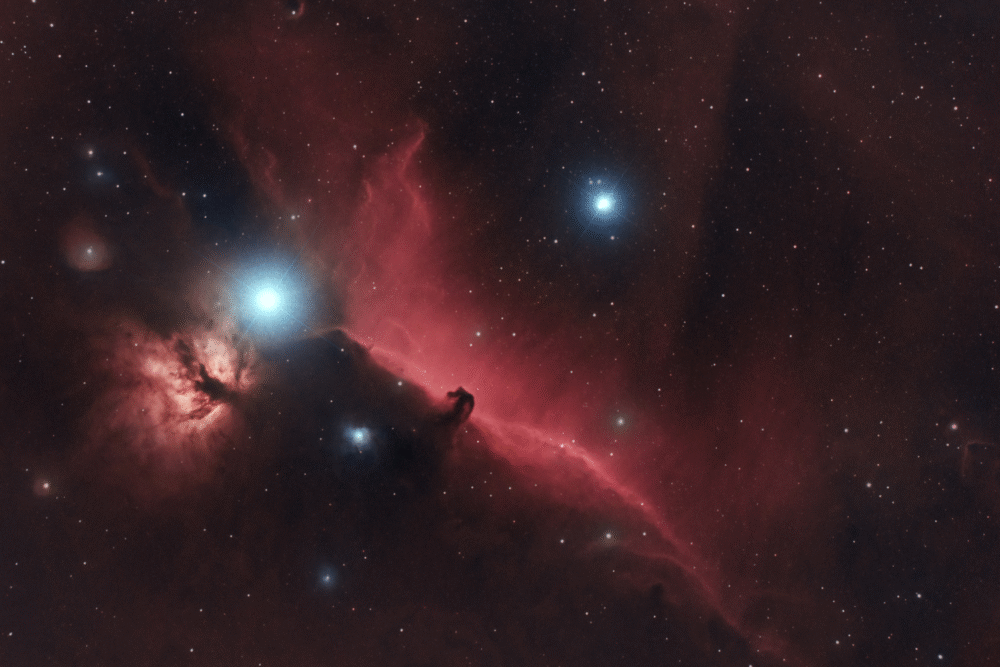
Some galaxies have dense central “cores” of dark matter, while others have large, empty-looking centers. Standard dark matter models can’t easily explain this variation. A hidden force could make dark matter either cluster tightly or spread out.
If dark matter particles repel each other through this new force, it could create the low-density cores astronomers observe. Conversely, attraction could produce unusually dense regions found in certain galaxies.
8. The Theory Helps Fix Problems in Cosmology

Dark matter models have long struggled to explain why small galaxies and dwarf galaxies form the way they do. They often contain less dark matter than expected or move in bizarre patterns.
Introducing a fifth force makes simulations match real galaxies more closely. This suggests the theory may be solving long-standing inconsistencies in cosmology—one reason why more scientists are beginning to take it seriously.
9. Some Experiments Have Reported Possible Fifth-Force Signals

In recent years, teams have detected tiny anomalies in nuclear decay experiments and particle interactions. While none are confirmed evidence of a new force, they add to the growing list of unexplained findings in physics.
These experiments often hint at interactions that don’t match the four known forces. If even one of these signals turns out to involve dark matter, it could be the first direct clue that a new force truly exists.
10. If a Fifth Force Exists, It Could Rewrite Physics

Discovering a new force would be one of the biggest scientific breakthroughs in modern history. It would expand the Standard Model of particle physics, which has remained unchanged for decades despite evidence that something is missing.
Such a discovery would also reshape cosmology, helping scientists build better models of how our universe formed, evolved, and continues to change. It would open the door to entirely new physics.
11. The Vera Rubin Observatory May Provide Breakthrough Evidence
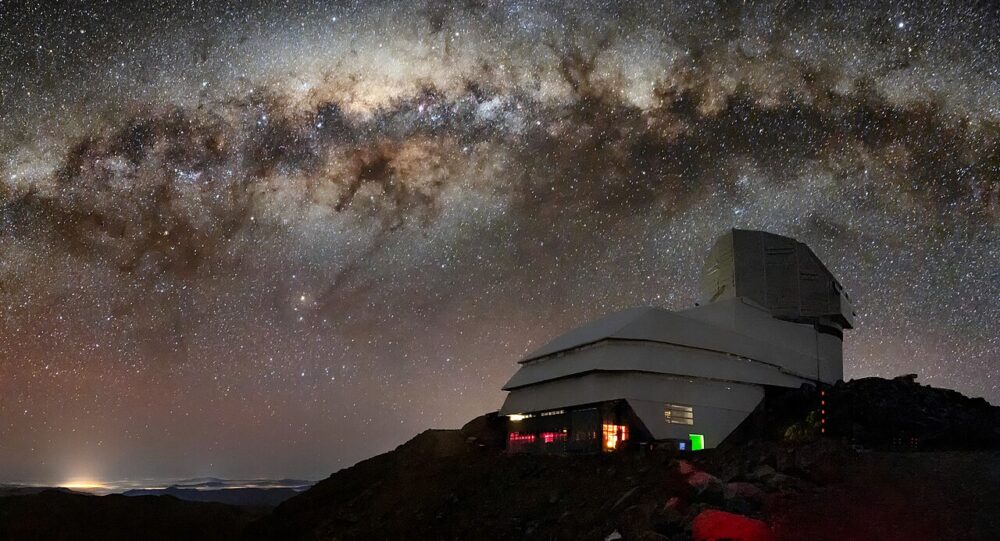
Set to begin full operations soon, the Vera C. Rubin Observatory will map the sky in unprecedented detail. Its ability to track faint galaxies, dark matter structures, and unexplained cosmic motions could reveal whether a fifth force is truly at work.
By gathering massive amounts of data, the observatory will test dark matter theories more rigorously than ever before. Many scientists believe it may provide the clearest evidence yet that dark matter interacts through a mysterious, hidden force.