
Astronomers believe the powerful space telescope may have captured light from the universe’s earliest generation of stars—nearly 13 billion years old.
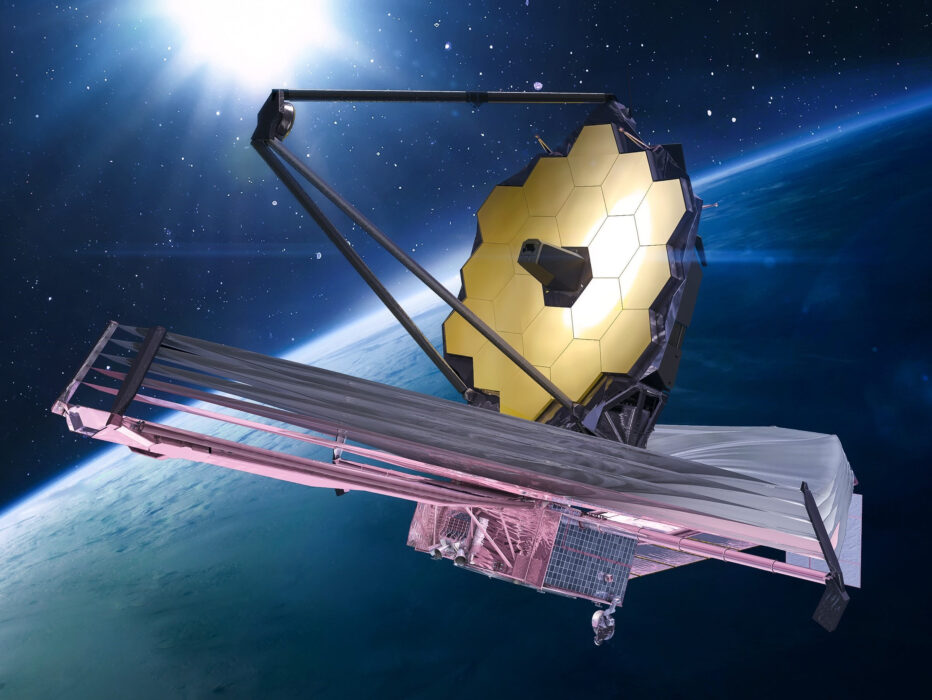
The James Webb Space Telescope may have achieved what astronomers have dreamed of for decades: spotting the universe’s very first stars. These so-called Population III stars are thought to have formed from pure hydrogen and helium just a few hundred million years after the Big Bang. Now, scientists analyzing Webb’s deep-space images have found evidence of their possible glow—ancient light that could reveal how the first elements, galaxies, and cosmic structures were born at the dawn of time.
1. The Search for the Universe’s First Light
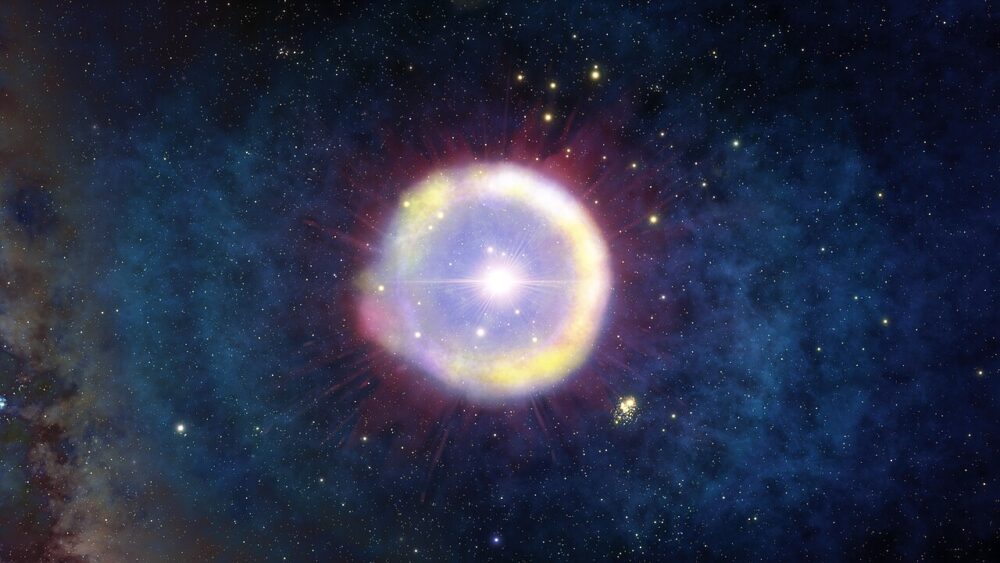
For decades, astronomers have searched for the first stars ever formed—ancient suns known as Population III stars. These stars are believed to have appeared over 13 billion years ago, only a few hundred million years after the Big Bang. They were composed almost entirely of hydrogen and helium, the simplest elements in existence.
Until recently, these stars remained purely theoretical. They were too distant, too faint, and too short-lived for even the Hubble Space Telescope to detect. That changed when the James Webb Space Telescope (JWST) began scanning the distant cosmos in infrared light, allowing scientists to see farther back in time than ever before.
2. Webb’s Power Lies in Its Infrared Vision
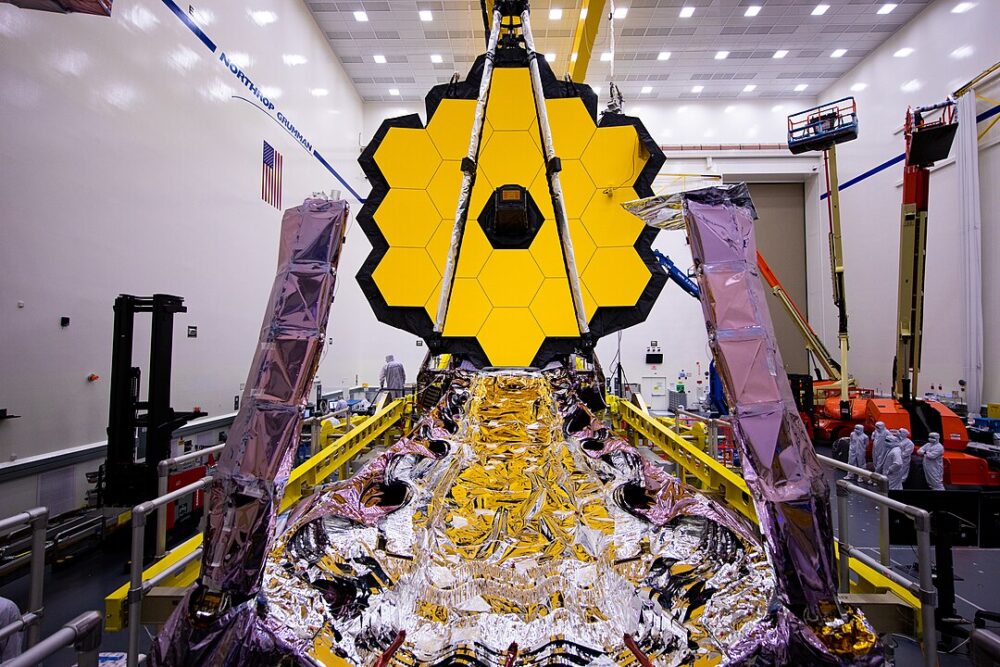
Unlike Hubble, which observes visible light, the James Webb Telescope detects infrared radiation—light stretched by the expansion of the universe over billions of years. This capability allows Webb to look at galaxies and stars that formed only a few hundred million years after the Big Bang.
Infrared light is essential because the universe’s oldest objects are no longer visible in ordinary wavelengths. By studying this faint glow, astronomers can uncover what the early universe looked like during the so-called “cosmic dawn,” when the first stars and galaxies illuminated the darkness.
3. A Discovery Hidden in a Distant Galaxy Cluster

In a recent analysis, astronomers examined several distant galaxies captured by Webb’s powerful instruments. One galaxy in particular, called GN-z11, displayed unusual radiation signatures that didn’t match typical star-forming galaxies. Its light had traveled for more than 13 billion years before reaching Webb’s sensors.
The data showed intense ultraviolet radiation—far higher than what normal stars produce. That kind of extreme light output hints at a population of massive, metal-free stars, precisely what scientists have theorized the first generation of stars would look like.
4. What Makes Population III Stars So Special

Population III stars would have been the universe’s very first stellar pioneers. Unlike all stars that came after, they formed from pure hydrogen and helium created in the Big Bang, without heavier elements like carbon or oxygen.
Because they lacked those cooling elements, these stars were enormous—sometimes hundreds of times more massive than the Sun—and burned with intense heat. Their short lives ended in massive explosions or direct collapse into black holes, seeding the cosmos with the first heavy elements essential for planets and life.
5. A Cosmic Clue Hidden in Webb’s Data

When astronomers examined the spectra of several early galaxies, they discovered an unusual ultraviolet “bump” that fit theoretical models for Population III star clusters. This distinct energy pattern is the fingerprint of very hot, metal-free stars burning at extraordinary temperatures.
While Webb cannot yet resolve individual stars from that era, the combined light from these galaxies matches what scientists predicted for the universe’s first stellar generation. If confirmed, these data could represent humanity’s first direct glimpse of the moment stars began to shine.
6. How Webb Looks Back in Time
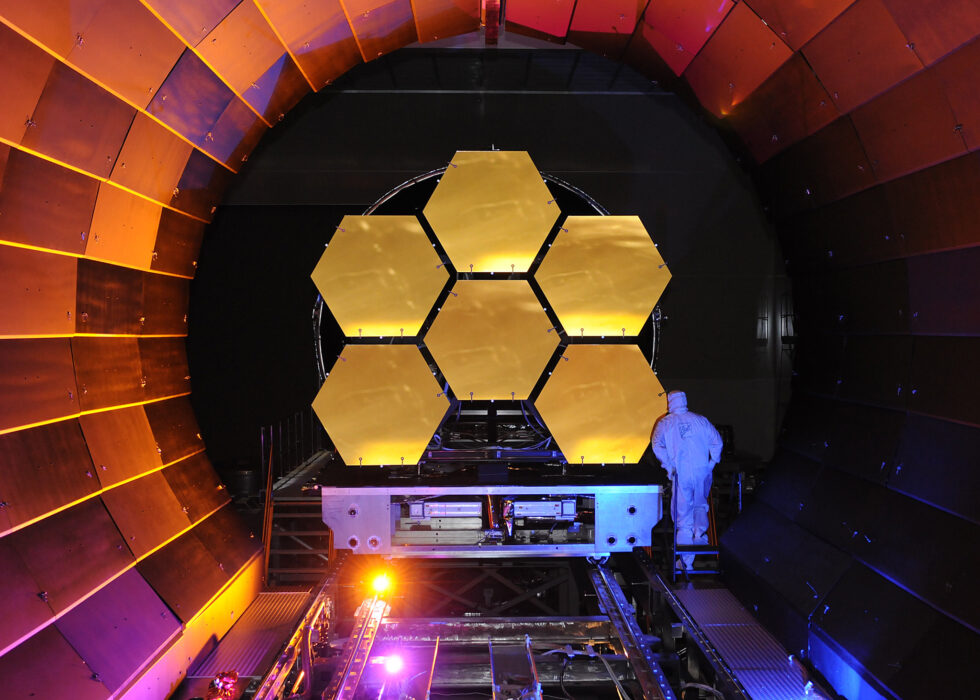
Every image captured by Webb is also a journey through time. Because light moves at a finite speed—186,000 miles per second—the telescope observes galaxies not as they are today but as they appeared billions of years ago.
The light from these distant objects began traveling across space when the universe was still forming its first structures. By capturing and analyzing it, Webb effectively allows scientists to reconstruct the earliest chapters of cosmic history and understand how darkness gave way to light.
7. The First Stars Forged the Building Blocks of Life
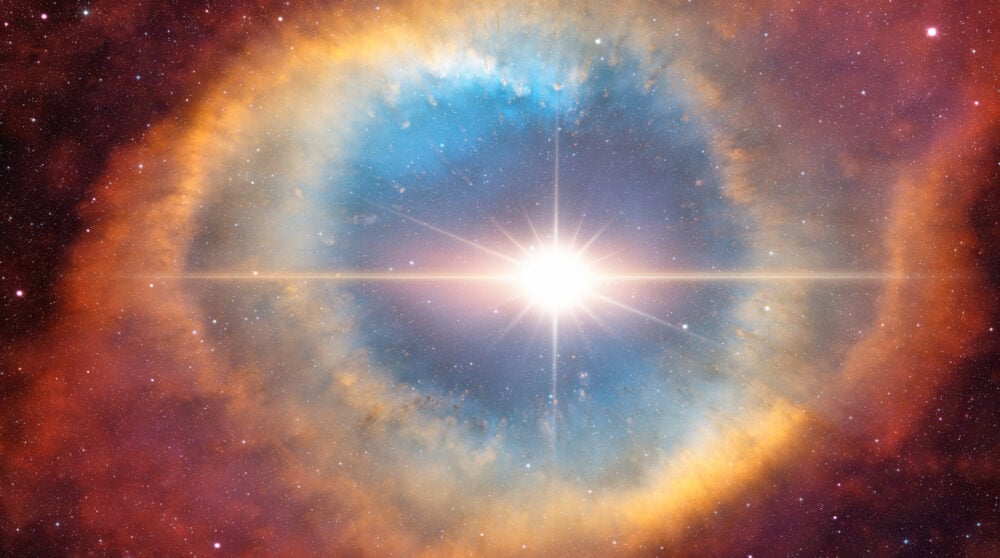
The first generation of stars didn’t just illuminate the universe—they transformed it. When these massive stars exploded as supernovae, they created heavier elements like carbon, iron, and oxygen for the first time.
Those elements became the raw materials for everything that followed: planets, oceans, and even living cells. In essence, the first stars were the universe’s original factories of life’s ingredients, spreading the chemical foundation of existence throughout the cosmos.
8. Webb’s Findings Match Long-Standing Theories

For decades, computer simulations have predicted when and how the first stars would form—roughly 100 to 300 million years after the Big Bang, inside dense hydrogen clouds that cooled and collapsed under gravity.
The timing of Webb’s new observations fits almost perfectly with those predictions. This alignment has given scientists growing confidence that they are finally observing the light of the first true stars, confirming models that had existed only in theory for generations.
9. Confirming the Discovery Won’t Be Easy

Despite the excitement, astronomers remain cautious. Because Webb cannot yet isolate individual stars at such extreme distances, scientists must rely on indirect evidence—such as light patterns and elemental ratios—to support their conclusions.
Future instruments and more detailed spectroscopy will be needed to prove beyond doubt that these galaxies contain Population III stars. Until then, the findings remain the strongest—and most tantalizing—evidence yet that we are glimpsing the universe’s first stellar generation.
10. The Search Is Now a Global Effort
Teams from NASA, the European Space Agency, and observatories worldwide are now collaborating to analyze Webb’s deep-field data. Every new dataset could reveal another ancient galaxy glowing with the fingerprints of primordial starlight.
These coordinated efforts combine the telescope’s infrared data with observations from ground-based instruments like the Very Large Telescope in Chile. Together, they are piecing together the story of how the first stars and galaxies transformed a dark universe into one filled with light.
11. The Findings Could Rewrite Cosmic History

If confirmed, Webb’s discovery would be one of the most important in modern astronomy. Finding the first stars would redefine our understanding of how the universe evolved from a sea of hydrogen gas into the structured cosmos we see today.
It would also shed light on the origins of early black holes, galaxy formation, and the rapid enrichment of the universe with heavier elements. This breakthrough could rewrite textbooks on how—and when—the cosmos first came alive with light.
12. A Glimpse of Our Own Origins

Every atom in our bodies can trace its lineage back to those ancient stars. The carbon in our cells, the oxygen we breathe, and the calcium in our bones all began as stardust forged in their fiery cores.
By capturing the faint glow of the first stars, Webb isn’t just studying distant galaxies—it’s uncovering the story of how we came to exist. Each new discovery brings us closer to understanding our place in the vast, luminous chain of cosmic creation.