
Scientists have detected a faint gravitational “hum” echoing across the cosmos, and it could change how we understand space-time.
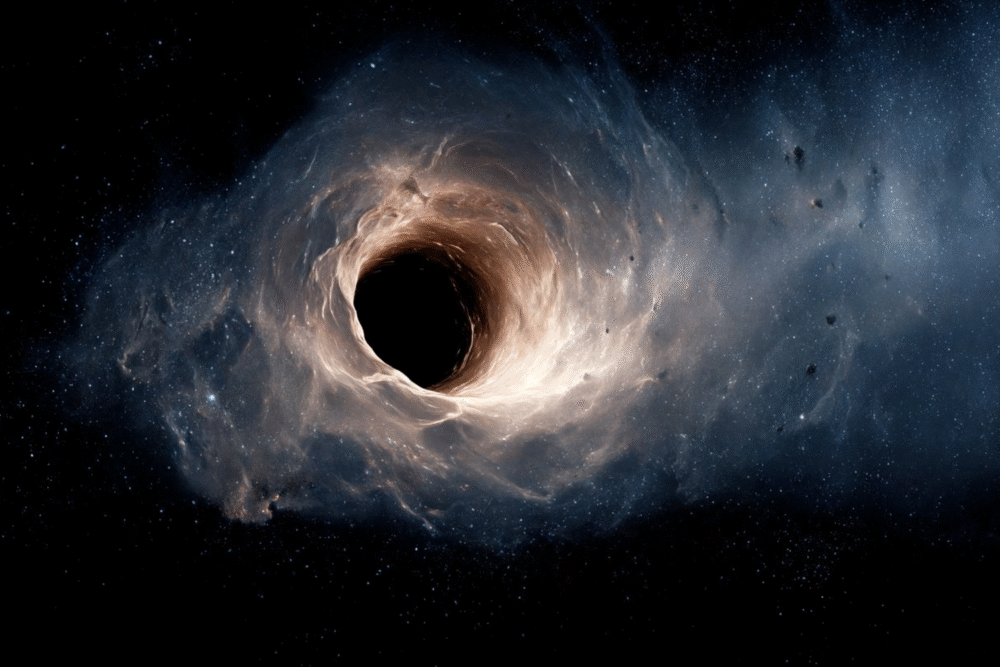
For the first time, astronomers have confirmed the existence of a low-frequency “hum” vibrating through the fabric of space-time itself. This faint cosmic signal, detected by pulsar-monitoring networks around the world, is thought to come from supermassive black holes colliding and merging in distant galaxies. The discovery offers a new way to “listen” to the universe—revealing hidden activity across billions of light-years and opening a fresh chapter in the study of gravitational waves and cosmic evolution.
1. Scientists Detected a “Cosmic Hum” Across the Universe

Astronomers recently confirmed the existence of a faint, continuous vibration rippling through space-time. The discovery was made by multiple international research teams studying pulsars—rapidly spinning neutron stars that act like cosmic clocks.
By measuring tiny irregularities in the timing of these pulsars, scientists detected gravitational waves—subtle ripples caused by massive cosmic events. Unlike the short bursts recorded by LIGO in 2015, this “hum” is a constant background signal resonating across the universe.
2. The Discovery Was Decades in the Making

Researchers have been searching for this signal for more than 15 years. Teams from North America, Europe, Australia, India, and China collaborated through what’s known as the International Pulsar Timing Array.
They spent years collecting data from radio telescopes to spot patterns too faint for conventional instruments to detect. Only after comparing independent datasets did the scientists realize they were all seeing the same universal pattern—a synchronized “hum” in the cosmos.
3. What Exactly Is a Gravitational Wave?

Gravitational waves are ripples in the fabric of space-time, predicted by Albert Einstein in 1916. They form whenever extremely massive objects—like black holes or neutron stars—move or collide.
These waves stretch and squeeze space itself as they travel, but they’re incredibly subtle. The newly detected background hum represents many overlapping gravitational waves, produced by black holes merging across the universe over billions of years.
4. The Culprits: Merging Supermassive Black Holes
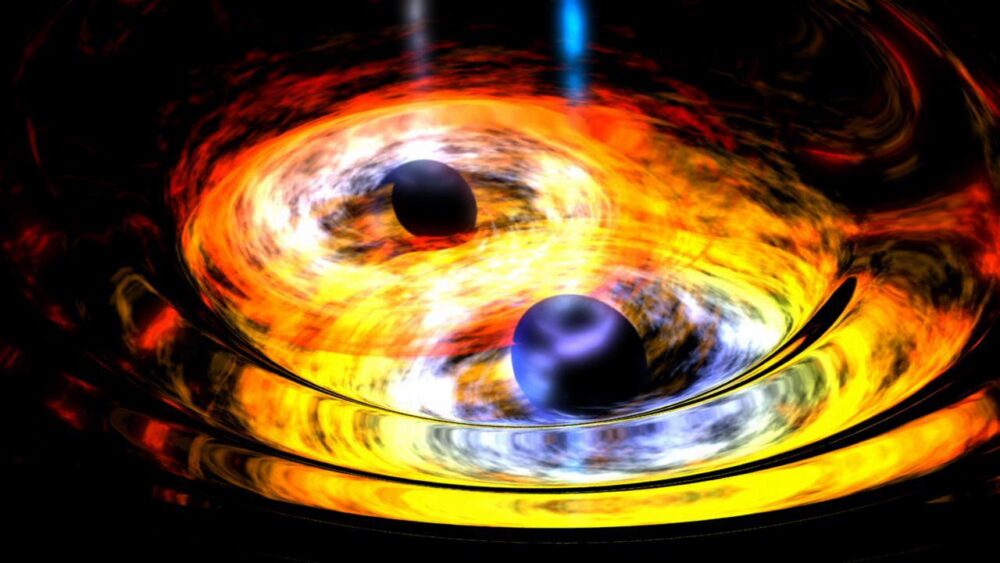
The most likely source of this cosmic vibration is pairs of supermassive black holes—each containing millions or even billions of suns’ worth of mass—slowly spiraling toward each other at the centers of merging galaxies.
As these giants orbit, they send out gravitational waves that ripple through space-time. The combined effect of countless black hole pairs creates the steady, low-frequency hum now being detected on Earth.
5. Pulsars: The Universe’s Most Precise Clocks
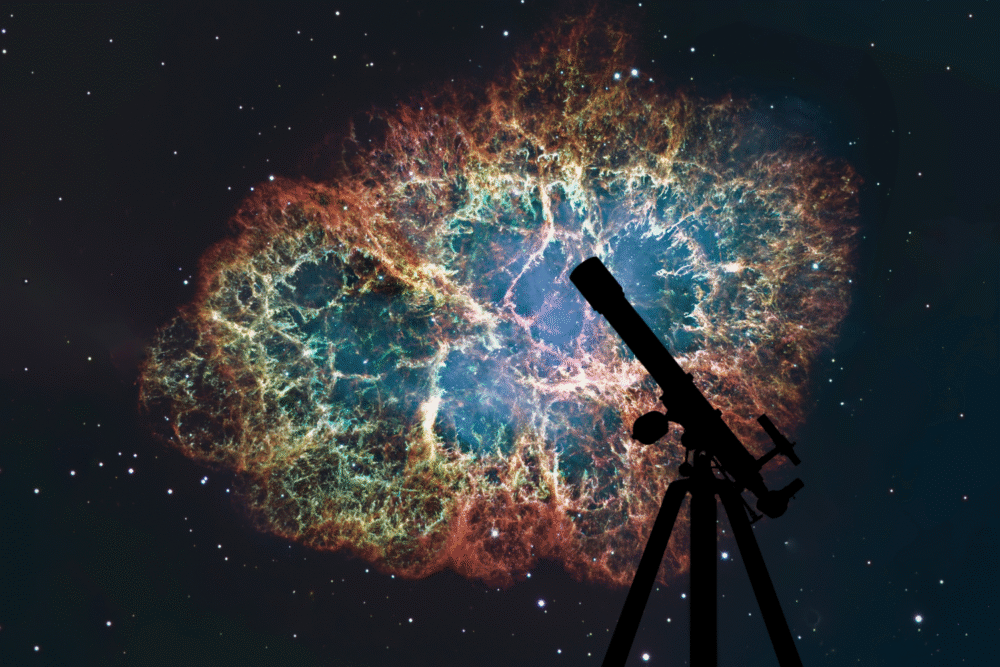
To detect the hum, scientists rely on pulsars—dead stars that emit beams of radio waves in regular intervals as they spin. They’re so precise that even microsecond variations in their timing can signal distortions in space-time.
By monitoring dozens of these pulsars scattered across the Milky Way, researchers can detect the faint stretching of space caused by gravitational waves passing between Earth and those distant stars.
6. A Global Effort That Spanned Continents

The breakthrough was confirmed by collaborations including the North American Nanohertz Observatory for Gravitational Waves (NANOGrav), the European Pulsar Timing Array, and similar projects in India, China, and Australia.
Each group worked independently but detected nearly identical timing shifts. When combined, their findings formed a clear pattern—strong evidence that humanity is now hearing the background “music” of the universe for the first time.
7. Why It’s Different From Previous Gravitational Discoveries

The LIGO and Virgo observatories first detected gravitational waves in 2015, but those came from short-lived, high-frequency bursts—like the moment two smaller black holes collide. The new discovery reveals a much lower-frequency signal that has been resonating continuously for billions of years.
This is the first detection of the universe’s gravitational background, a kind of cosmic bassline produced by countless massive mergers throughout deep time.
8. Einstein’s Theory Proved Right—Again

Einstein predicted gravitational waves more than a century ago, but even he doubted they could ever be measured. Each new detection reinforces his general theory of relativity and expands our understanding of how mass, gravity, and time interact.
The discovery of a gravitational-wave background confirms that Einstein’s equations hold true even on the grandest cosmic scales—across billions of galaxies and light-years of space-time.
9. A New Way to “Listen” to the Universe
Astronomers call this approach gravitational-wave astronomy, a method that complements optical and radio telescopes. Instead of seeing light, scientists are now listening to the universe’s deepest structures.
This technique allows researchers to detect objects and events invisible to traditional telescopes—such as black hole mergers hidden behind dust, or galaxies colliding on timescales too long for direct observation.
10. What It Could Reveal About Cosmic Evolution

By mapping these gravitational waves, scientists hope to learn how galaxies and black holes have evolved together over cosmic history. Since nearly every large galaxy has a supermassive black hole at its center, their mergers may help explain how galaxies grow.
Future detections could even reveal early-universe phenomena, including gravitational echoes from the Big Bang itself—a possibility that excites cosmologists worldwide.
11. A Hum That May Lead to the Universe’s Deepest Secrets

The discovery marks only the beginning of a new era in astronomy. As observatories gather more data, scientists expect to pinpoint individual black hole pairs within the universal hum and trace their origins.
Ultimately, these faint ripples could unlock answers to some of humanity’s biggest questions—how the universe formed, how it evolved, and what invisible forces still shape its rhythm today. What we’re hearing now, scientists say, may be the quiet heartbeat of the cosmos itself.