
A futurist suggests humanity may gain years back—effectively moving backwards in time—within just four years.

Prominent futurist Ray Kurzweil claims that by 2029 humans could reach what he calls “longevity escape velocity,” meaning life expectancy increases at a rate faster than aging itself. In this scenario, for every year lived, more than a year could be added—a twist on the idea of going “backwards in time.” While grounded in medical and technological speculation, experts caution this remains a bold projection, with major challenges like global access and disease still standing in the way.
1. The Futurist Behind the Bold Prediction
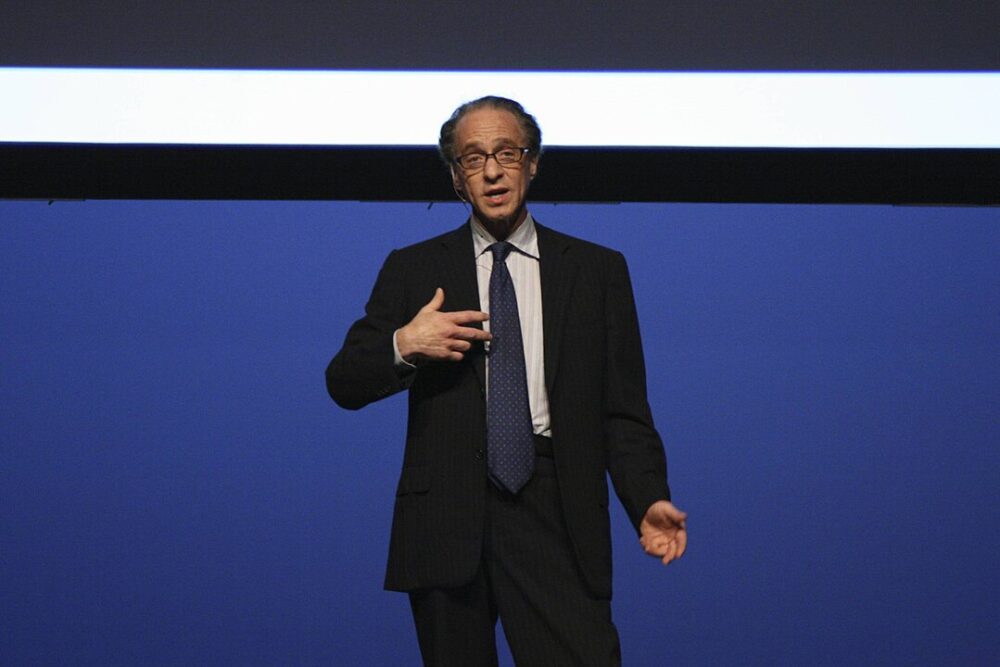
Ray Kurzweil, a computer scientist, inventor, and author known for his accurate tech forecasts, believes humanity is approaching a scientific tipping point. His claim isn’t about building a time machine—it’s about extending human life so radically that people effectively begin to “move backward in time.”
Kurzweil argues that by 2029, medical and biotechnological progress will accelerate faster than human aging itself. If true, each year lived could add more than a year of expected lifespan, halting biological decline altogether.
2. What “Going Backward in Time” Really Means

Kurzweil’s phrase isn’t literal time travel—it’s metaphorical. He envisions a moment when advances in health and longevity mean a person could remain biologically younger with every passing year.
The concept is based on exponential growth in medicine and technology. If humans can repair cellular damage faster than it accumulates, aging effectively reverses. In this sense, time moves forward, but our biology begins to rewind.
3. The 2029 “Longevity Escape Velocity” Prediction

Kurzweil predicts humanity will reach “longevity escape velocity” by 2029. This term refers to the point at which life expectancy increases faster than time passes—so a person living in 2029 gains more than one year of life for each year they live.
It’s a threshold that, once crossed, could theoretically make aging optional. People who reach that milestone might live long enough to benefit from future medical breakthroughs, potentially extending lifespan indefinitely.
4. The Science Driving His Theory
Kurzweil’s optimism is rooted in real scientific trends. Breakthroughs in genetic editing, stem cell therapy, nanotechnology, and artificial intelligence are already transforming healthcare.
He believes that AI-assisted drug design, precision medicine, and microscopic nanobots capable of repairing cells will soon allow the body to heal itself at unprecedented speeds. While these technologies are still developing, the pace of innovation continues to outstrip most historical predictions.
5. Artificial Intelligence Could Be the Key

Kurzweil argues that AI will act as the catalyst for radical life extension. Machine learning is already helping scientists identify new treatments faster and predict genetic diseases before they appear.
By the 2030s, Kurzweil expects AI to integrate with biotechnology, designing therapies far beyond human capability. This, he says, will make it possible to “reprogram” the body’s aging process—something researchers at places like Harvard and Altos Labs are already exploring.
6. The Role of Nanobots in Future Medicine
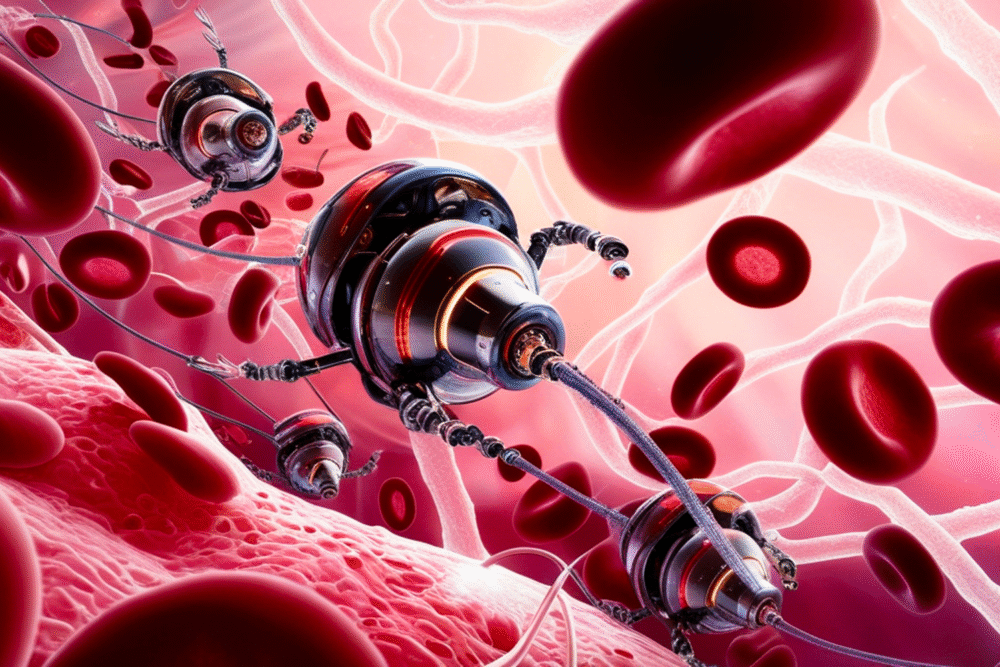
Kurzweil has long predicted that nanobots—microscopic robots that operate inside the human body—will revolutionize health. These devices could patrol the bloodstream, repair damaged tissue, remove toxins, and even prevent diseases before symptoms appear.
While true medical nanobots are still in early experimental stages, research in targeted drug delivery and molecular-scale robotics is rapidly advancing. Kurzweil envisions a near future where nanobots act like an internal maintenance crew, extending health and vitality for decades.
7. Genetic Engineering May Extend Human Lifespan

Another key factor in his prediction is the rise of gene editing tools like CRISPR. Scientists can now correct or disable faulty genes that cause diseases, and research into aging-related genes is accelerating.
Kurzweil suggests that genetic reprogramming could restore cells to a youthful state, effectively reversing biological age. Recent studies in mice have shown promising results, including improved organ function and longer lifespans—indications that genetic repair might one day apply to humans.
8. The Influence of Exponential Technology Growth
Kurzweil’s ideas stem from what he calls the “law of accelerating returns,” which suggests that technology advances exponentially, not linearly. Each breakthrough accelerates the next, compressing decades of progress into just a few years.
He argues that the same principle will apply to medicine. Technologies like AI, robotics, and gene editing will converge, producing compounding improvements that make life extension not just possible—but inevitable.
9. Skeptics Say It’s Still Far From Reality

Not all experts share Kurzweil’s optimism. Many biologists caution that human biology is more complex than his timelines suggest. While it’s true that medical advances are accelerating, translating breakthroughs in mice or lab settings into safe human therapies often takes decades.
Aging involves thousands of interconnected cellular processes, and even small missteps could lead to cancer or other complications. Critics argue that achieving “biological reversal” within four years is extremely ambitious, if not unrealistic.
10. The Ethical and Social Questions Ahead

If Kurzweil’s prediction comes true, humanity would face unprecedented ethical challenges. Who would have access to anti-aging technology? How would societies manage vastly longer lifespans?
Critics warn that such advances could deepen global inequality, creating a class of people able to afford extended youth while others continue to age normally. The potential societal and environmental impacts of life extension could reshape everything from healthcare to economics.
11. A Vision That Keeps Humanity Looking Forward

Whether or not 2029 marks the dawn of “reverse aging,” Kurzweil’s prediction has sparked renewed interest in longevity science and the role of technology in redefining human potential.
He envisions a future where biology and computing merge, allowing people to live not just longer, but healthier and more fulfilling lives. While time travel remains science fiction, the idea that humanity could one day outrun time itself continues to capture imaginations—and drive research that pushes the limits of what it means to be human.