
Archaeologists are still trying to understand how a thriving desert culture emerged — and why it vanished.
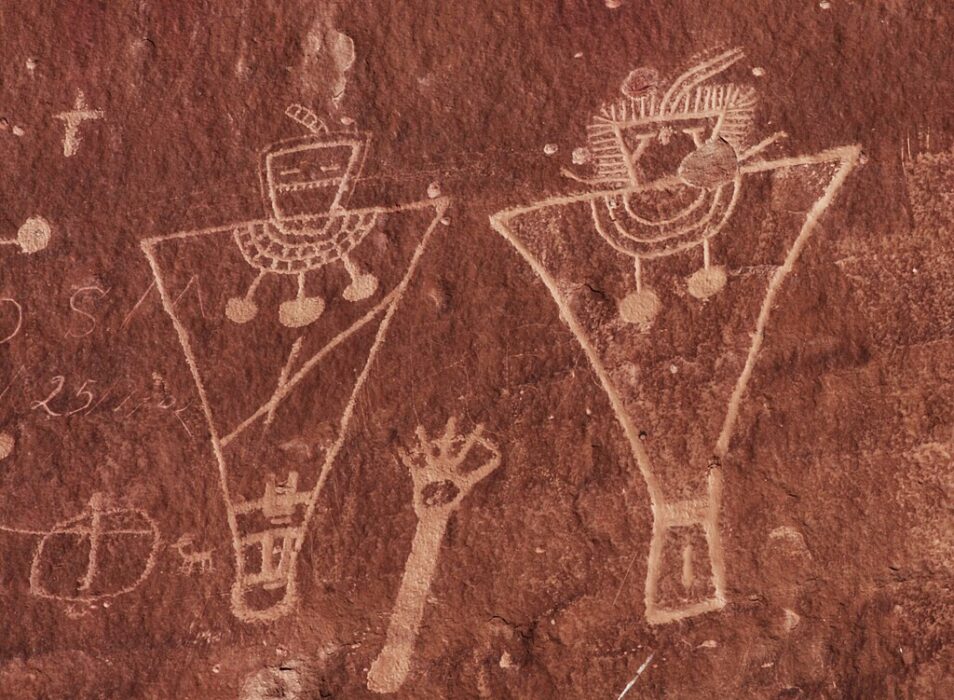
Long before European settlers reached the American West, a mysterious people thrived across Utah’s deserts and canyonlands. Known today as the Fremont culture, they built semi-underground pit houses, left behind haunting rock art, and lived between two worlds — hunting wild game while cultivating crops like corn and beans. Yet by around A.D. 1300, they were gone, their villages abandoned and their way of life erased. Archaeologists have unearthed thousands of clues but no definitive answers. Who were the Fremont, and what caused one of North America’s strangest prehistoric disappearances?
1. A Vanished People of the American Desert

The Fremont culture flourished for over a thousand years across the high deserts of Utah and parts of Idaho, Nevada, and Colorado. Archaeologists believe they emerged around A.D. 1 and disappeared by A.D. 1300, leaving behind pit houses, tools, and art carved into canyon walls.
Unlike the massive cities of the Maya or the cliff dwellings of the Ancestral Puebloans, the Fremont lived in small, scattered hamlets. Yet their way of life was uniquely adaptive, blending farming and foraging in one of North America’s harshest environments — and that mystery still fascinates scientists today.
2. The Discovery That Sparked a Century of Debate
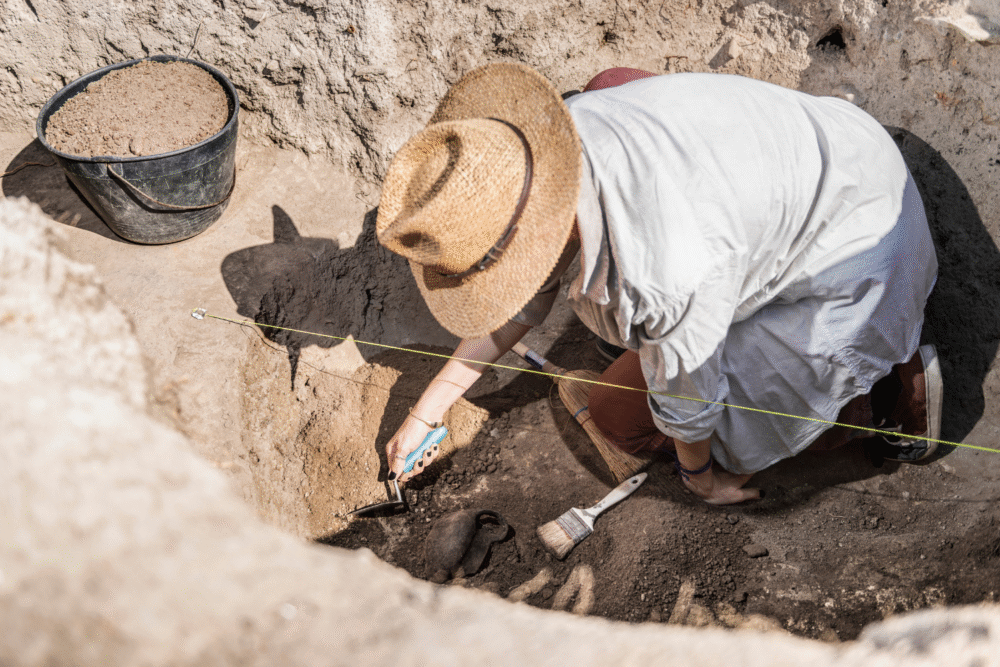
Archaeologists first identified the Fremont culture in the early 20th century when unusual pottery and stone tools began surfacing near Utah’s Fremont River. These artifacts didn’t match those of neighboring Indigenous groups, leading researchers to define an entirely new cultural classification.
Since then, thousands of Fremont sites have been uncovered — from pit houses and granaries to pictographs and burial sites. But despite over a century of excavation, the Fremont remain one of the least understood ancient cultures in North America, their origins and decline still under intense study.
3. The Life Between Hunter and Farmer
The Fremont occupied a unique space in prehistory — not quite nomadic hunter-gatherers, but not fully agricultural farmers either. They cultivated maize, beans, and squash in floodplains, yet still depended heavily on wild foods like deer, bison, and edible plants.
This hybrid lifestyle gave them resilience in an unpredictable climate. Archaeologists believe their flexibility allowed them to thrive for centuries where other groups could not. But it may have also made them vulnerable to environmental shifts, forcing them to constantly adapt — until one day, they couldn’t anymore.
4. Living Underground in Pit Houses
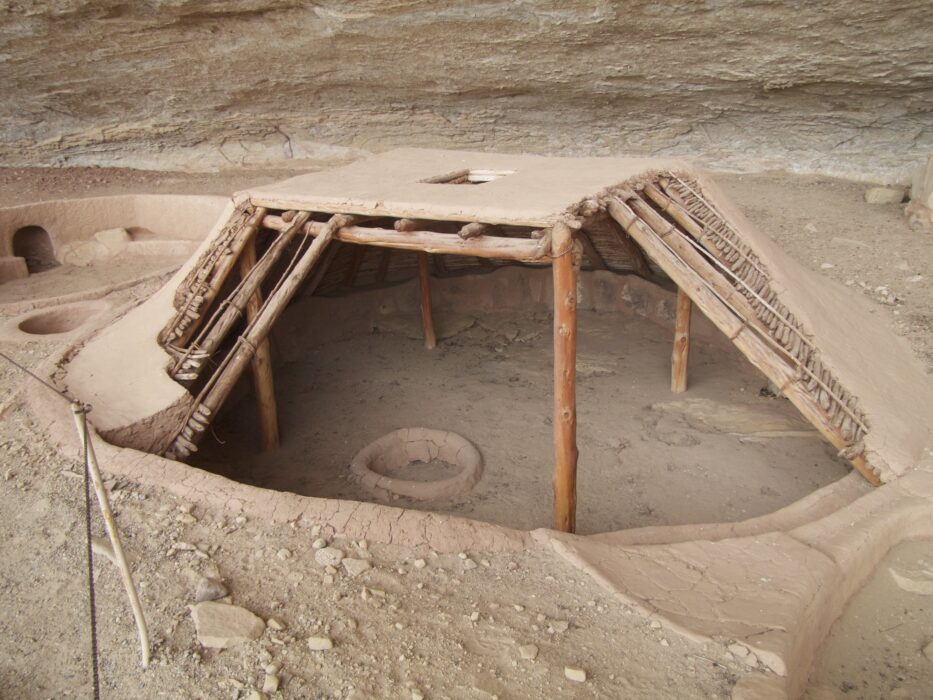
One of the most distinctive features of Fremont life was their semi-subterranean homes. These pit houses were dug several feet into the ground, then covered with timber roofs and earth insulation to protect against Utah’s scorching summers and freezing winters.
Inside, the spaces were dark and efficient — with storage pits, fire hearths, and woven mats. Archaeologists have found entire neighborhoods of these sunken dwellings, sometimes accompanied by surface granaries for drying corn and seeds. Their construction shows remarkable ingenuity, blending practicality with an understanding of desert survival.
5. The Art That Still Speaks Across Millennia
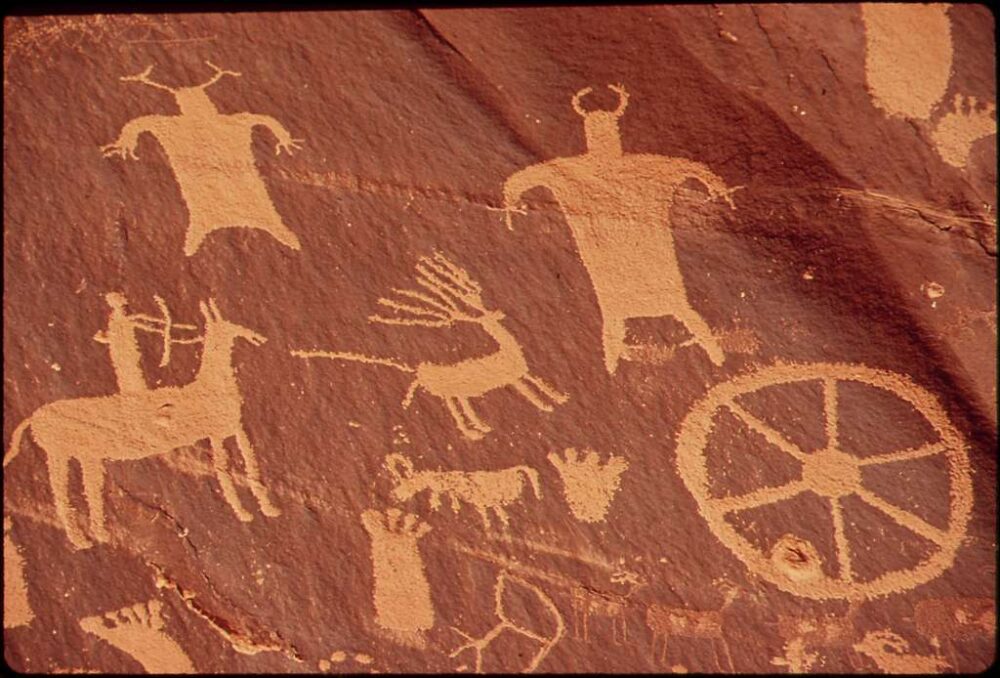
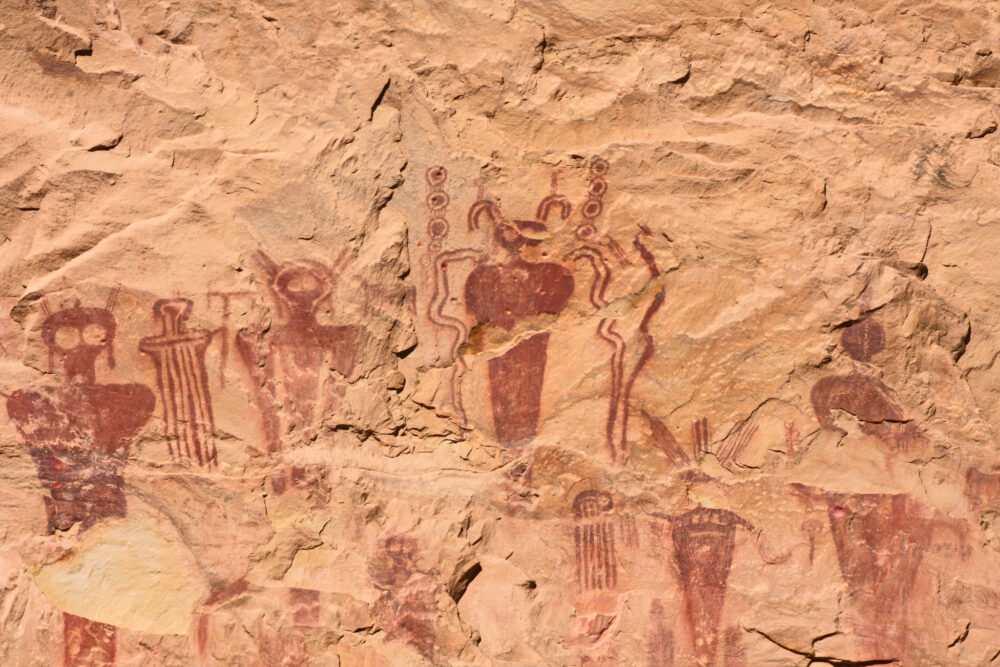
The Fremont left behind striking rock art — abstract figures, horned deities, and human-like shapes carved or painted in ochre on canyon walls. These images, found across Utah and western Colorado, are among the most haunting and enigmatic artworks in North America.
Some depict life-sized humanoid forms with triangular bodies and intricate jewelry, while others show hunting scenes and mysterious symbols. Scholars debate their meaning: were they spiritual icons, storytelling devices, or maps of the landscape? Whatever their purpose, the artwork remains one of the Fremont culture’s most enduring legacies.
6. Signs of a Complex Society
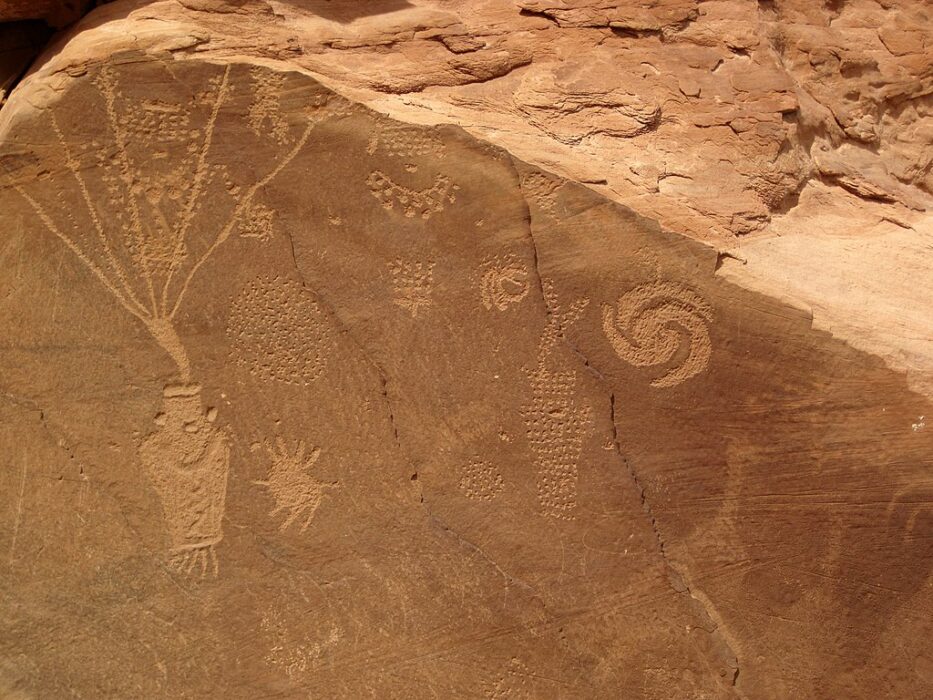
Though the Fremont lived in small groups, their artifacts suggest a surprisingly organized social system. Evidence of shared granaries, regional trade networks, and communal hunting efforts indicates cooperation across vast distances.
Distinctive moccasins, pottery, and jewelry styles hint at regional identities within the culture. Yet despite their complexity, there’s little sign of rigid hierarchy or warfare. Archaeologists describe the Fremont as pragmatic rather than monumental — people who valued survival over spectacle, and cooperation over conquest. Their quiet sophistication continues to challenge assumptions about early North American societies.
7. The Mystery of Their Disappearance
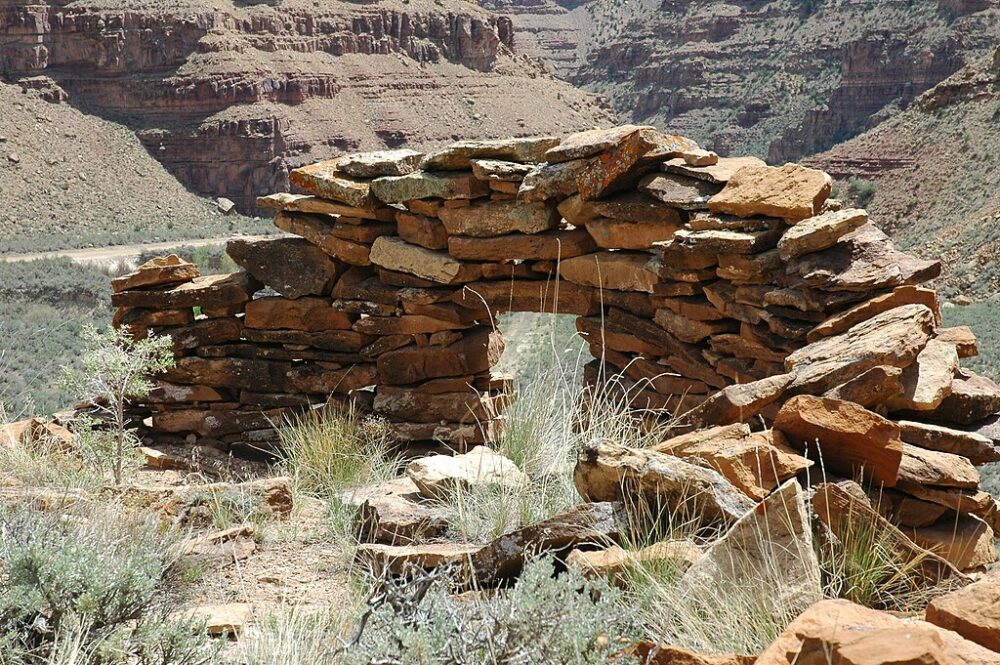
By around A.D. 1300, the Fremont culture vanished. Villages were abandoned, tools left behind, and rock art ceased. Archaeologists still debate why. One theory blames prolonged droughts that devastated crops and water sources. Others point to cultural absorption — that the Fremont merged with neighboring tribes like the Shoshone or Ute.
Still others suggest social breakdown or migration northward as climates cooled. Whatever the cause, the Fremont didn’t collapse overnight — they faded gradually, their way of life dissolving into the shifting sands of prehistory. Their disappearance remains one of archaeology’s great puzzles.
8. The Clues Left Behind
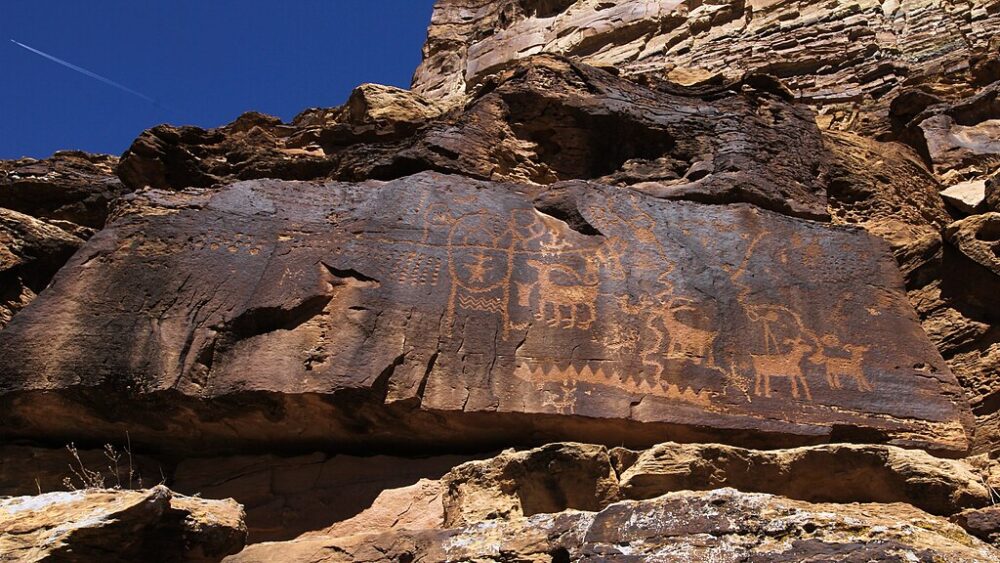
From worn moccasins to bone needles, every Fremont artifact tells a story. Excavations have uncovered storage pits filled with corn, stone tools shaped from local quartzite, and even game traps designed with remarkable precision.
One discovery in Range Creek Canyon revealed untouched Fremont granaries sealed for nearly a thousand years, with dried corn still intact inside. These relics offer rare, direct glimpses into daily life — proof of how skillfully these people balanced farming, foraging, and craftsmanship in an unforgiving landscape. Each new find adds another fragment to their unfinished story.
9. How They Differed from Their Neighbors

The Fremont lived alongside the Ancestral Puebloans to the south but developed in very different ways. While Pueblo cultures built stone villages and elaborate kivas, the Fremont remained mobile and modest, adapting to the Great Basin’s scattered resources.
They also crafted distinct gray pottery, unlike the colorful ceramics of the Southwest. Their art, too, was abstract and geometric rather than narrative. These differences show that the Fremont were not a branch of another civilization but an independent culture — one that evolved its own identity amid the vast deserts of ancient North America.
10. What Modern Science Is Revealing

Advances in genetics, radiocarbon dating, and soil analysis are giving archaeologists new tools to study the Fremont. Recent DNA evidence suggests they shared ancestry with other early Southwestern peoples, yet developed unique cultural traits through isolation and adaptation.
Climate models show that a long drought around A.D. 1150 may have triggered food shortages, pushing them toward migration. Still, no single factor explains their disappearance. Scientists continue to revisit old excavation sites with new technology, hoping to finally piece together how such a resilient culture vanished.
11. The Legacy Hidden in the Desert
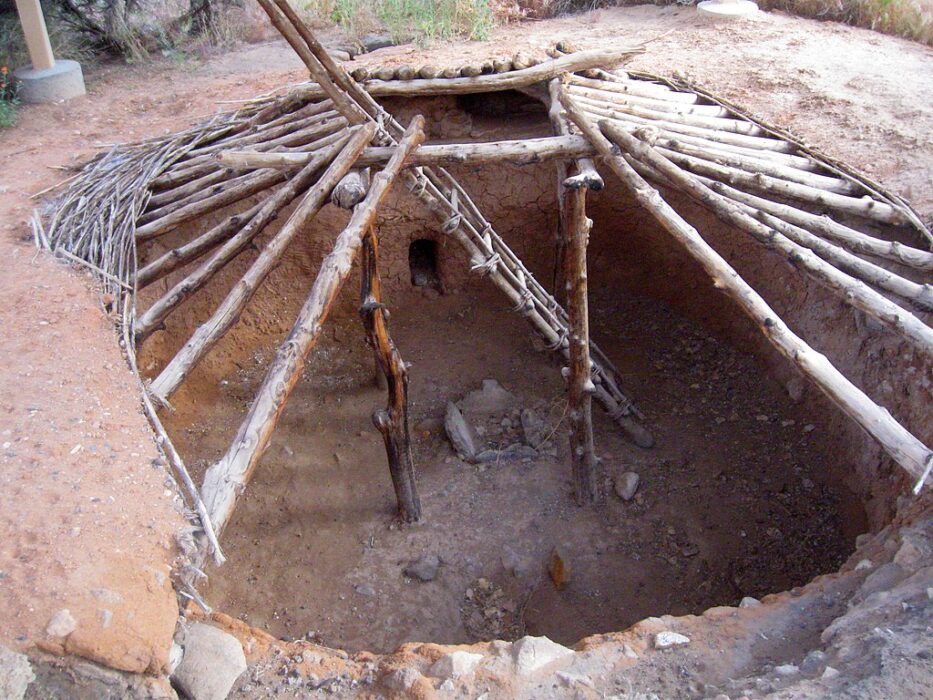
Though the Fremont people disappeared centuries ago, their presence still echoes across Utah’s canyons and plateaus. Their pit houses, stone tools, and rock art offer a haunting reminder of human ingenuity in extreme environments.
For archaeologists, the Fremont represent more than a mystery — they embody the adaptability that defines human survival. They lived between worlds, balancing nature, community, and creativity in ways we’re only beginning to understand. And until the final pieces of their story are found, the desert still whispers their name in wind and stone.