
New research brings scientists closer to a unified theory explaining how the brain creates conscious experience.
For centuries, philosophers and scientists have struggled to explain how subjective awareness arises from the physical brain. Now, advances in neuroscience and physics are edging researchers closer to what some call a “unified theory of consciousness.” Competing frameworks—like Integrated Information Theory and Global Workspace Theory—are beginning to converge in surprising ways. Though the mystery isn’t solved yet, new findings suggest we may be approaching the first testable model that explains how the mind becomes aware of itself.
1. Scientists Have Pursued This Question for Centuries
The mystery of consciousness—how subjective experience arises from brain activity—has challenged thinkers since the time of Descartes and Aristotle. For most of scientific history, consciousness was considered too elusive to study objectively.
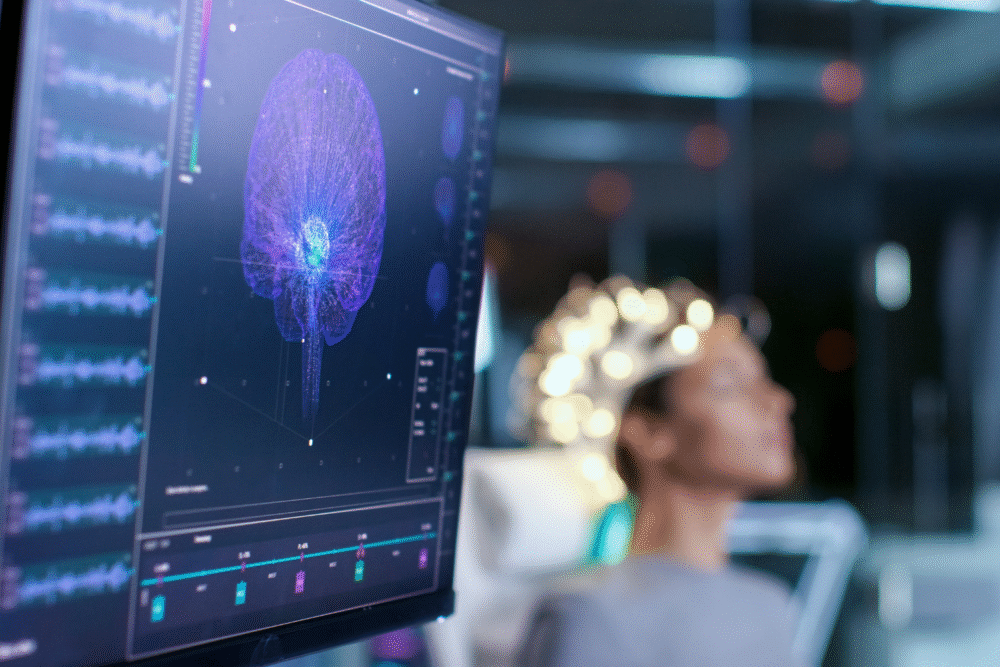
In recent decades, however, neuroscientists have developed tools that can map brain activity with remarkable precision. Using neuroimaging, electrophysiology, and computational modeling, researchers are now able to connect patterns of neural activity to specific conscious states, offering measurable ways to explore what was once a purely philosophical topic.
2. The Challenge Lies in Explaining Subjective Experience
One of the biggest hurdles in understanding consciousness is explaining qualia—the personal, subjective experience of perception. Scientists can observe which brain areas activate when someone sees red or feels pain, but understanding why those processes produce inner awareness remains difficult.
This “hard problem,” a term popularized by philosopher David Chalmers, separates consciousness research from other brain science. It asks not just how information is processed, but how those signals translate into experience—the fundamental question behind any unified theory.
3. Integrated Information Theory Offers One Major Framework

Integrated Information Theory (IIT), developed by neuroscientist Giulio Tononi, proposes that consciousness arises from how information is integrated within a system. The more interconnected and unified the processing, the higher the level of consciousness.
IIT attempts to quantify this integration through a mathematical measure known as Φ (phi). Systems with higher phi values—such as a functioning brain—would, in theory, experience more consciousness than isolated or disconnected systems. Though still debated, IIT remains one of the most influential models in modern neuroscience.
4. Global Workspace Theory Provides a Competing View

Global Workspace Theory (GWT), proposed by cognitive scientist Bernard Baars and expanded by Stanislas Dehaene, takes a different approach. It suggests that consciousness occurs when information becomes globally available across the brain—essentially, when various neural networks share data simultaneously.
This model likens the brain to a theater, where nonconscious processes work backstage, and consciousness arises when certain information is spotlighted on the mental “stage.” GWT has been supported by experiments showing that widespread neural connectivity corresponds with conscious awareness.
5. Researchers Are Beginning to See Overlap Between Theories
Although IIT and GWT were long viewed as rivals, recent studies suggest they may not be mutually exclusive. Both emphasize the role of large-scale communication across the brain, just described through different mechanisms.
Some neuroscientists now propose that a unified theory could incorporate elements of both. Integration may describe the structure of consciousness, while the global workspace could explain how that structure is used to broadcast information—offering a more complete model of awareness.
6. Modern Tools Are Making Consciousness Measurable
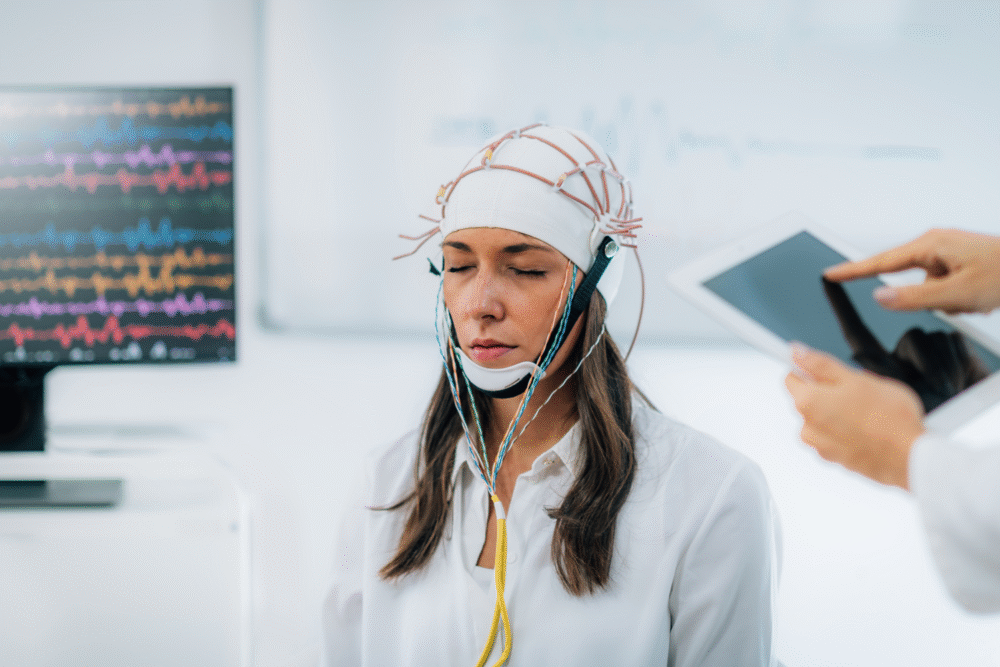
Technological advances are helping scientists move from theory to data. Functional MRI, magnetoencephalography (MEG), and high-density EEG now allow researchers to visualize brain activity in real time as people perceive, imagine, or lose awareness.
These tools have revealed distinct neural signatures of consciousness—especially synchronized activity across the cortex. By comparing awake, dreaming, and anesthetized states, researchers can pinpoint how certain patterns of communication correspond to conscious versus unconscious processing.
7. Studies on Sleep and Anesthesia Offer Key Clues

Sleep and anesthesia provide natural laboratories for studying the brain’s transitions in and out of consciousness. During deep sleep or surgical anesthesia, communication between brain regions breaks down, leading to loss of awareness.
When subjects awaken or dream, this connectivity is restored. These findings support the idea that consciousness depends on the brain’s ability to integrate and share information widely, a cornerstone of both IIT and GWT. Such results are helping scientists identify neural “switches” that determine when consciousness flickers on or off.
8. The Role of the Thalamus Is Gaining Attention

The thalamus, a small structure deep within the brain, acts as a relay center for sensory and cortical information. Recent studies show it may play a central role in coordinating the neural networks necessary for conscious experience.
Damage to the thalamus often results in comas or persistent vegetative states, suggesting its importance in maintaining awareness. Researchers now believe the thalamus may serve as a hub that synchronizes brain-wide communication—linking sensory input, attention, and cognition into a unified conscious field.
9. Artificial Intelligence Is Adding a New Dimension

Advances in artificial intelligence have sparked debate about whether machines could one day achieve consciousness—or at least simulate it. AI models now process information in ways that superficially resemble neural networks, but scientists emphasize that complexity alone doesn’t equal awareness.
Some researchers use AI as a tool to test theories of consciousness, building computational models that mimic integration and global accessibility. By observing where artificial systems succeed or fail, scientists can refine their understanding of the mechanisms that underlie real consciousness.
10. A Unified Theory Could Bridge Philosophy and Neuroscience

A comprehensive model of consciousness wouldn’t just explain brain activity—it could bridge centuries of philosophical debate. By combining measurable neuroscience with questions of perception, identity, and free will, a unified theory would connect mind and matter in new ways.
Such progress could reshape medicine, ethics, and technology, influencing everything from coma recovery to AI design. The search for this theory isn’t just scientific—it’s an attempt to understand the nature of experience itself and what it means to be aware.
11. The Mystery Isn’t Solved—But It’s Getting Closer

Despite major advances, no single theory fully explains consciousness. Yet the field is advancing rapidly, with more cooperation between neuroscientists, physicists, and philosophers than ever before.
Where consciousness once seemed beyond the reach of science, it’s now the focus of rigorous experimentation. Each new discovery adds another piece to the puzzle, suggesting that what was once a purely philosophical mystery may soon become one of neuroscience’s greatest breakthroughs.