
Scientists are exploring whether linking the human brain to quantum computers could temporarily expand conscious awareness.

A new study published in the journal Entropy proposes a bold experiment: entangle a human brain with a quantum computer to test whether consciousness is rooted in quantum processes. Lead author Hartmut Neven of Google Quantum AI Lab and co-author Christof Koch suggest that if successful, the experiment could produce an “expanded quantum superposition,” resulting in heightened awareness or creative cognition. While the theory remains far from practical, it marks a provocative step in the quest to understand and potentially alter human consciousness.
1. Scientists Are Exploring the Quantum Nature of Consciousness
A new proposal published in the journal Entropy suggests that consciousness might involve quantum processes—phenomena typically seen only in subatomic particles. Researchers believe that by interacting with these quantum systems, the human brain could enter a state of “expanded awareness.”
The idea challenges the traditional view that consciousness arises purely from neurons firing in the brain. Instead, it hints that our minds may operate on levels of physics that science is only beginning to understand.
2. The Theory Comes From Leading Minds in Quantum Research

The concept was developed by physicist Hartmut Neven of Google’s Quantum AI Lab and neuroscientist Christof Koch, chief scientist at the Allen Institute for Brain Science. Both are respected experts in their fields.
Their hypothesis suggests that if a human brain could be entangled—connected at a quantum level—with a quantum computer, the interaction might reveal whether consciousness has quantum origins. It’s a bold and highly theoretical idea that combines neuroscience and quantum physics in a way never attempted before.
3. The Experiment Would Entangle a Brain With a Quantum Computer
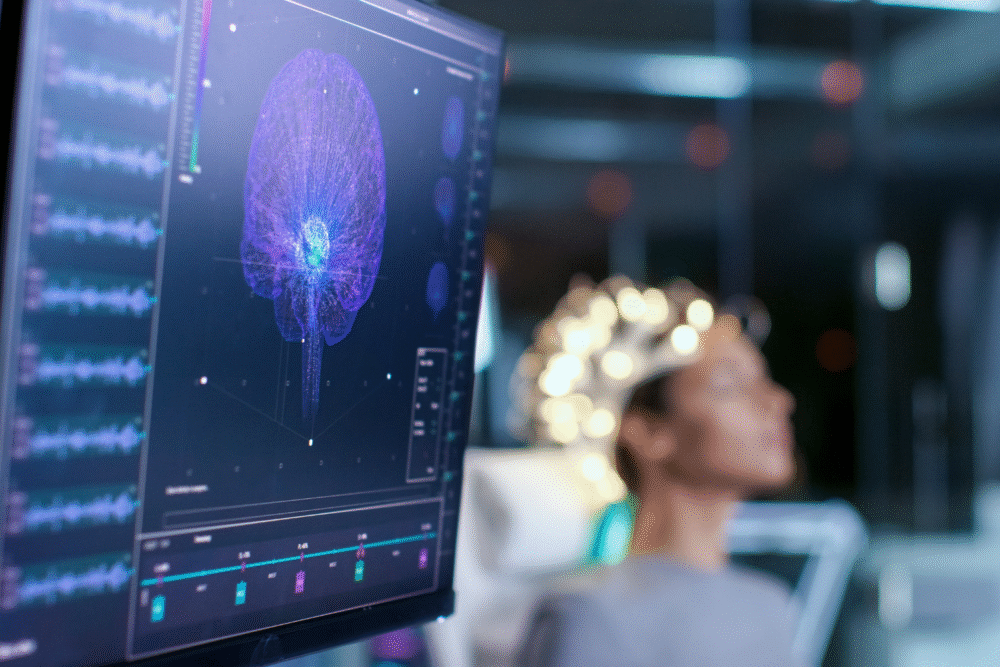
The researchers propose placing a participant’s brain in close quantum connection with a highly stable quantum computer. In theory, both systems could share entangled particles, creating a merged quantum state.
This would allow scientists to study how information flows between human consciousness and a quantum system. If the brain truly processes information quantum-mechanically, researchers expect to observe measurable changes in awareness, cognition, or perception during the entanglement process.
4. Consciousness Could Expand in a “Superposition”
Quantum superposition allows particles to exist in multiple states simultaneously. If the brain participates in such a process, the researchers theorize that consciousness itself could temporarily broaden—allowing access to more mental states or creative connections.
This expanded awareness might not feel supernatural but could manifest as heightened clarity, intuition, or problem-solving ability. However, scientists stress that this is purely hypothetical and has not been demonstrated in any human subject.
5. The Proposal Builds on the Orch-OR Hypothesis

The idea of quantum consciousness isn’t entirely new. In the 1990s, physicist Roger Penrose and anesthesiologist Stuart Hameroff proposed the Orch-OR model, which suggested that quantum processes in microtubules inside neurons could contribute to consciousness.
Neven and Koch’s version takes the concept further by suggesting a practical way to test it. By creating real-time entanglement between human neural activity and a quantum system, researchers could finally determine if the brain exhibits measurable quantum behavior.
6. Quantum Computers Can Simulate Conscious-Like Processes

Quantum computers already process information in ways similar to the brain’s probabilistic thinking. They can make parallel computations, weigh probabilities, and learn patterns faster than classical machines.
This similarity makes them ideal partners for consciousness research. If quantum systems and human minds share functional parallels, scientists could use entanglement as a bridge to observe how awareness forms, changes, and perhaps expands during interaction with a quantum state.
7. Ethical and Technical Barriers Remain Enormous
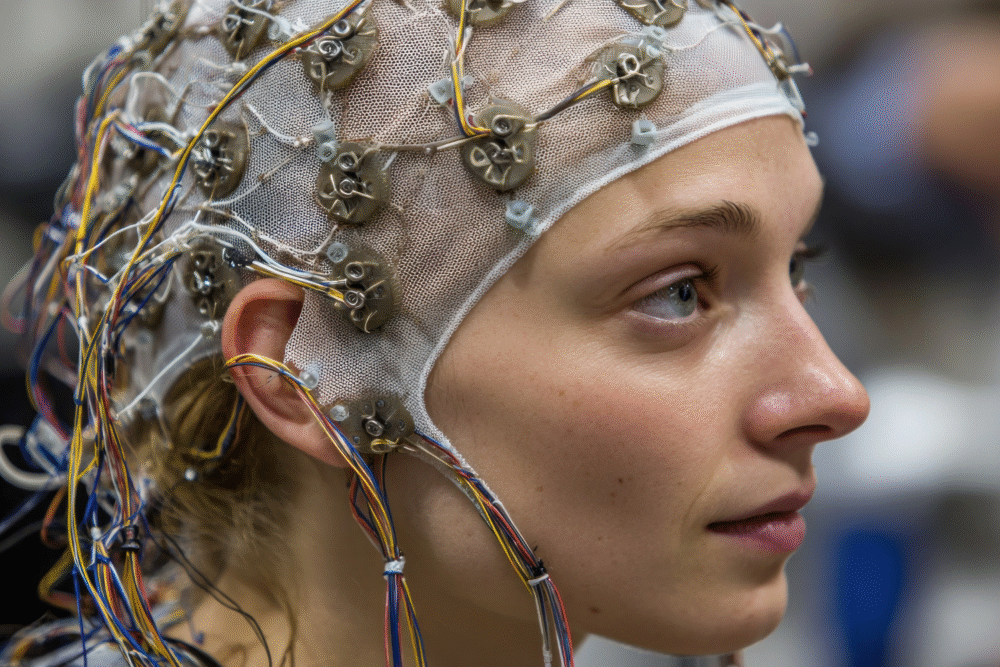
While intriguing, this experiment faces major scientific and ethical challenges. Quantum systems are fragile and can lose entanglement from even minor environmental interference. Meanwhile, directly linking a brain to a quantum computer raises concerns about safety, privacy, and the unknown effects of deep neural stimulation.
Experts emphasize that the proposal is not a plan for human testing but a thought experiment—one designed to provoke discussion about how far neuroscience and quantum physics might intersect in the future.
8. The Study Opens New Avenues in Consciousness Research

Even if entangling a brain with a quantum system never becomes practical, the research invites new ways of thinking about awareness. It encourages scientists to consider whether consciousness could depend on more than just neural activity.
Such questions could reshape fields like artificial intelligence and cognitive science, where understanding the roots of consciousness remains one of the most elusive goals in modern science.
9. Critics Say the Theory Is Highly Speculative

Many neuroscientists argue there’s no evidence that the brain relies on quantum effects. They point out that neurons operate at temperatures too warm for delicate quantum states to survive.
Supporters counter that some biological systems—like photosynthesis and bird navigation—already appear to exploit quantum mechanics. Until experiments prove otherwise, the possibility that consciousness has a quantum foundation remains an open, if controversial, question.
10. A Glimpse Into the Future of Mind-Machine Connection

If this concept ever moves from theory to experiment, it could redefine the boundary between humans and technology. Instead of simply using computers, we could one day interact with them at the level of thought and quantum information.
Such breakthroughs could transform fields like mental health, creativity research, and artificial intelligence. For now, the idea remains speculative—but it offers a fascinating vision of how physics and consciousness might one day meet in the same experimental space.