
Astronomers have decoded a 200-million-year-old radio burst that reveals new clues about deep-space physics.
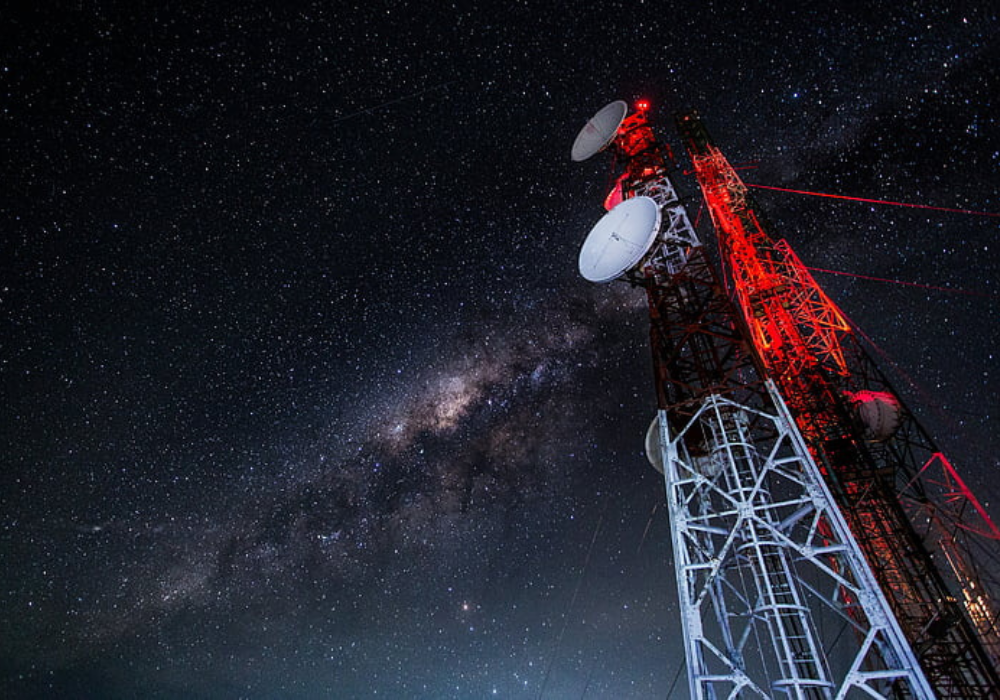
After traveling across 200 million years of space, a mysterious cosmic radio signal has finally been decoded. The burst, known as a fast radio burst or FRB, originated from a magnetized neutron star—one of the universe’s densest and most extreme objects. Using data from the Very Large Array and other telescopes, scientists determined the signal’s unique structure offers new insight into how these high-energy pulses form, helping researchers better understand the violent forces shaping distant galaxies.
1. A Signal That Began Its Journey 200 Million Years Ago
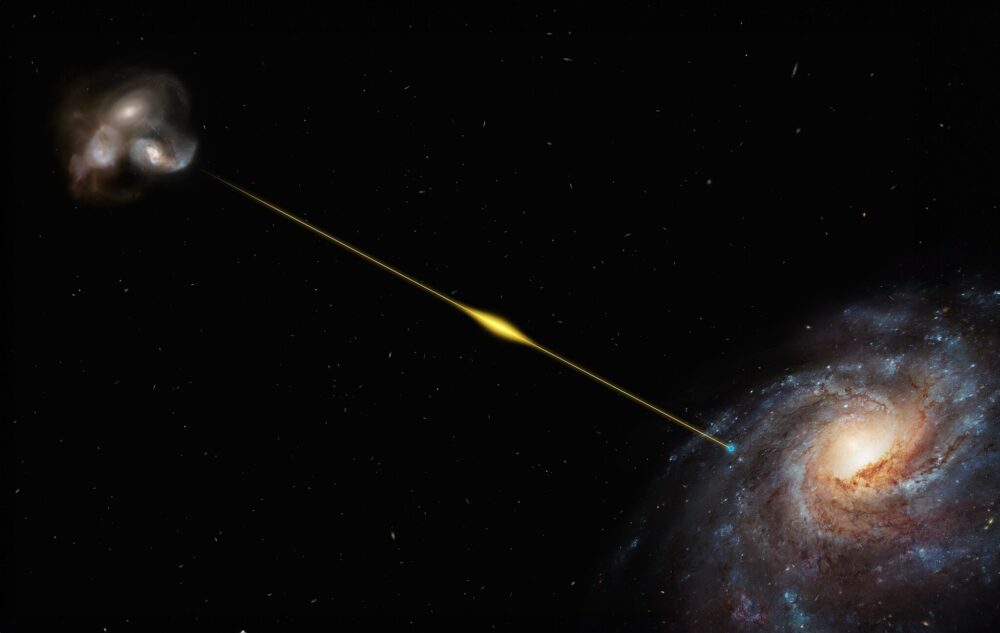
The newly decoded fast radio burst, or FRB, began its journey toward Earth roughly 200 million years ago—when dinosaurs still roamed the planet. FRBs are incredibly brief but powerful flashes of radio waves that last just milliseconds.
This particular burst was first detected by radio telescopes years ago, but its complex structure made it difficult to interpret. After years of analysis, scientists have finally decoded its signature, revealing vital details about the cosmic environment where it originated.
2. Fast Radio Bursts Remain One of Astronomy’s Biggest Mysteries
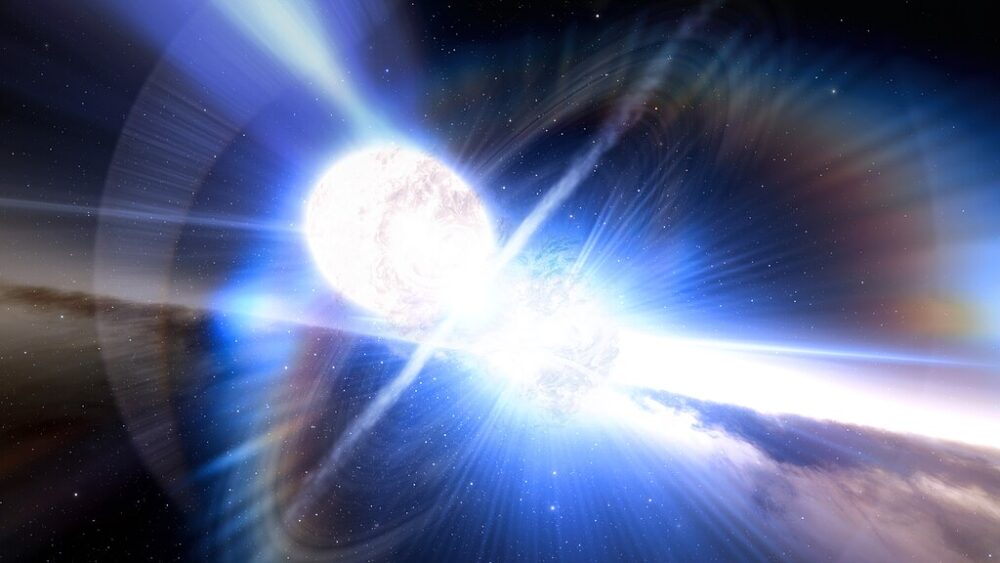
FRBs were first discovered in 2007, and their causes have puzzled scientists ever since. They emit more energy in a fraction of a second than the Sun produces in days.
Some FRBs repeat, while others are one-time cosmic flashes. The newly decoded burst belongs to the repeating category, which allows astronomers to pinpoint its source with far greater precision—providing crucial clues about the exotic objects that create these bursts.
3. The Signal Originated From a Distant Neutron Star
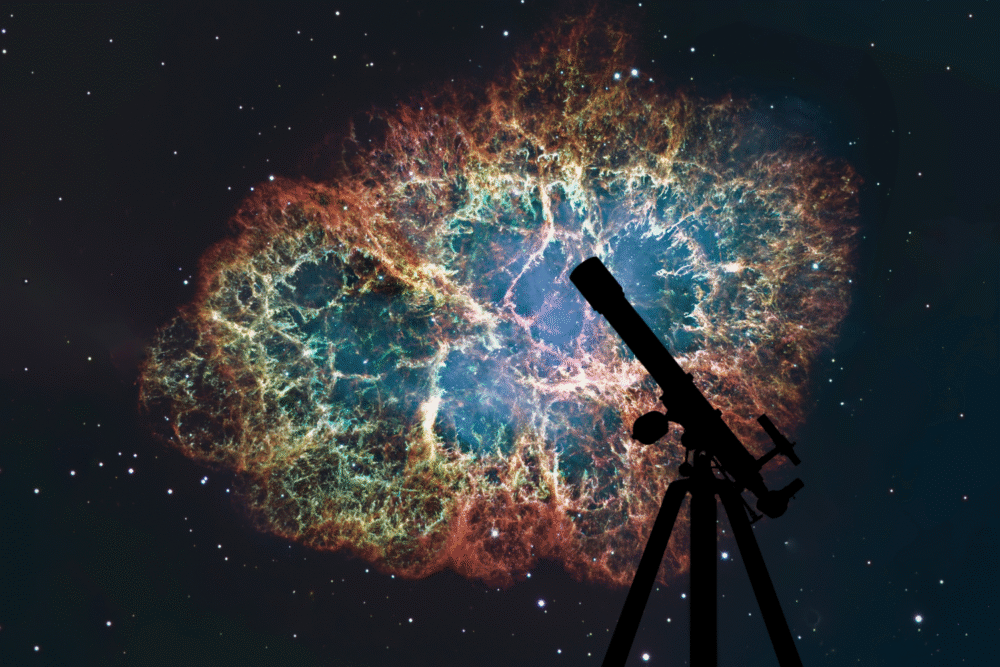
After carefully modeling the data, astronomers traced the FRB to a neutron star—a collapsed stellar core left behind after a massive star exploded as a supernova. Neutron stars are incredibly dense, packing more mass than the Sun into a sphere only about 12 miles across.
The specific neutron star identified lies within a small galaxy roughly 200 million light-years away. Its strong magnetic field appears to play a major role in producing the radio waves detected from Earth.
4. Magnetars May Be Behind the Most Powerful Bursts

Many researchers believe that a special kind of neutron star called a magnetar—a star with an extraordinarily strong magnetic field—is responsible for most fast radio bursts. Magnetars can release enormous amounts of energy as their magnetic fields twist and snap.
The decoded signal’s properties match what scientists would expect from a magnetar flare. The pattern of the radio waves suggests an extremely energetic event, likely caused by shifting magnetic fields near the star’s surface.
5. Decoding the Signal Took Years of Analysis

The burst’s structure contained multiple overlapping peaks and subtle variations in frequency, making it difficult to interpret with standard methods. Scientists combined data from several telescopes, including the Very Large Array in New Mexico and China’s FAST radio telescope, to reconstruct its details.
By comparing data across instruments, they determined the exact timing and frequency drift of the radio waves. This revealed a repeating pattern consistent with the rotation of a neutron star—effectively decoding the signal’s celestial fingerprint.
6. The Discovery Confirms Theories About Repeating FRBs
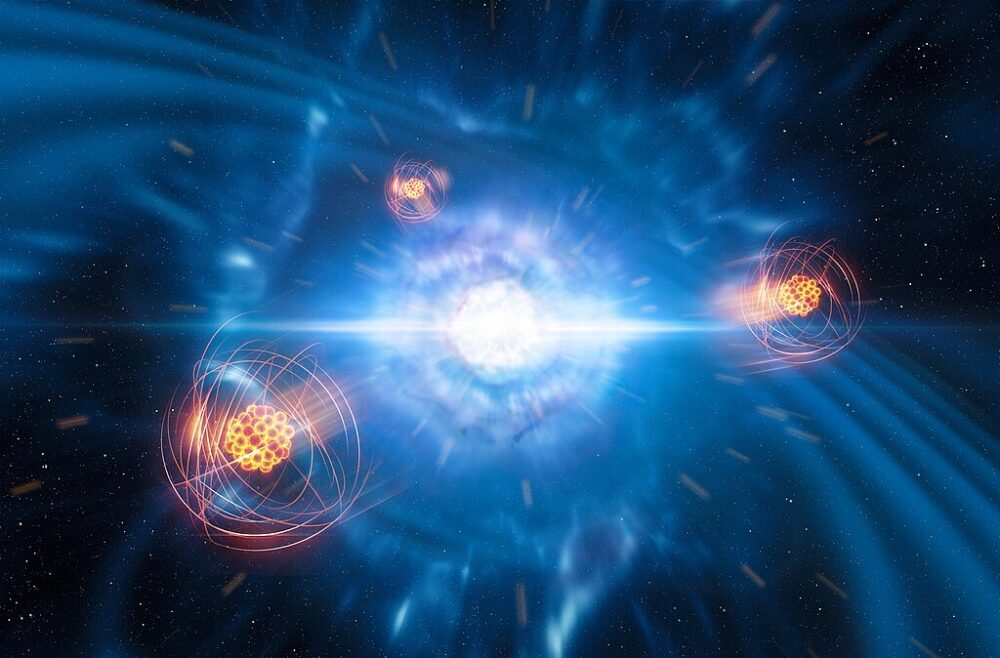
Astronomers have long suspected that repeating fast radio bursts originate from compact objects in highly magnetized environments. This newly decoded FRB strengthens that theory.
Unlike single bursts, repeating signals allow scientists to measure changes over time, such as how the surrounding plasma affects radio waves. The consistent rhythm of this signal confirmed that it was not caused by a random cosmic event, but by a stable, rotating source such as a magnetar.
7. It Traveled Through Billions of Miles of Cosmic Dust

As the radio signal made its 200-million-year journey, it passed through vast regions of intergalactic plasma and dust. Each layer slightly distorted and delayed parts of the signal—a process scientists call dispersion.
By measuring how the radio waves slowed down at different frequencies, researchers could estimate the density of matter between galaxies. This gives astronomers valuable data about otherwise invisible material filling the space between stars.
8. FRBs Help Map the Structure of the Universe

Fast radio bursts don’t just tell us about their origins—they also help scientists map the large-scale structure of the universe. Each burst acts as a kind of “cosmic flashlight,” illuminating the space it passes through.
The way these signals are dispersed reveals how much matter lies along their path. By analyzing many FRBs from different directions, astronomers can estimate the amount of normal matter—gas and plasma—that makes up the universe, including parts previously unaccounted for.
9. The Signal Was Detected Using the Power of Collaboration

This discovery was possible only through international cooperation. The decoding relied on data from observatories across several continents, including North America, Europe, and Asia.
Advanced algorithms helped process petabytes of information gathered over several years. The collaborative effort reflects a growing trend in astronomy, where decoding complex cosmic phenomena often requires global teamwork and shared computing power.
10. Future Telescopes Will Find Thousands More Signals
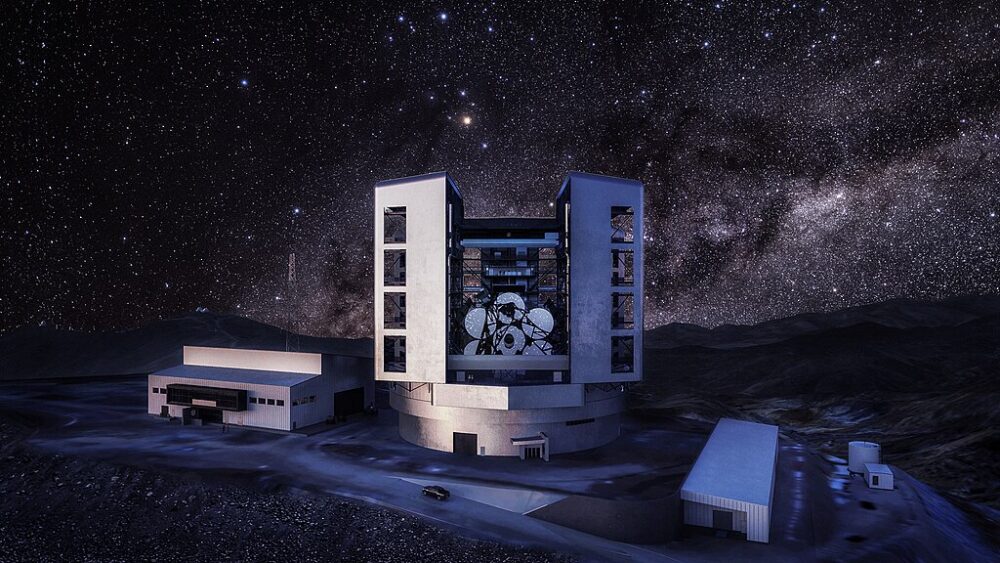
Upcoming observatories, such as the Square Kilometre Array (SKA), are expected to detect thousands of new fast radio bursts each year. These next-generation telescopes will allow astronomers to trace FRBs to their precise galaxies and even individual stars.
With more data, scientists hope to uncover whether all FRBs come from magnetars or if some have completely different origins—such as black holes, collapsing stars, or even exotic physics not yet understood.