
Scientists say the asteroid behaved in unexpected ways after NASA’s direct-hit experiment.

When NASA’s DART spacecraft slammed into the asteroid Dimorphos in 2022, the mission was declared a groundbreaking success—it proved that humanity could alter the path of a celestial body. But new data have revealed a surprising twist: the impact caused a series of puzzling effects scientists didn’t anticipate. Published in Nature Astronomy, the findings suggest the asteroid’s response was far more chaotic than models predicted, raising new questions about what would happen if Earth ever needed to deflect a real threat.
1. The DART Mission Was a Historic First
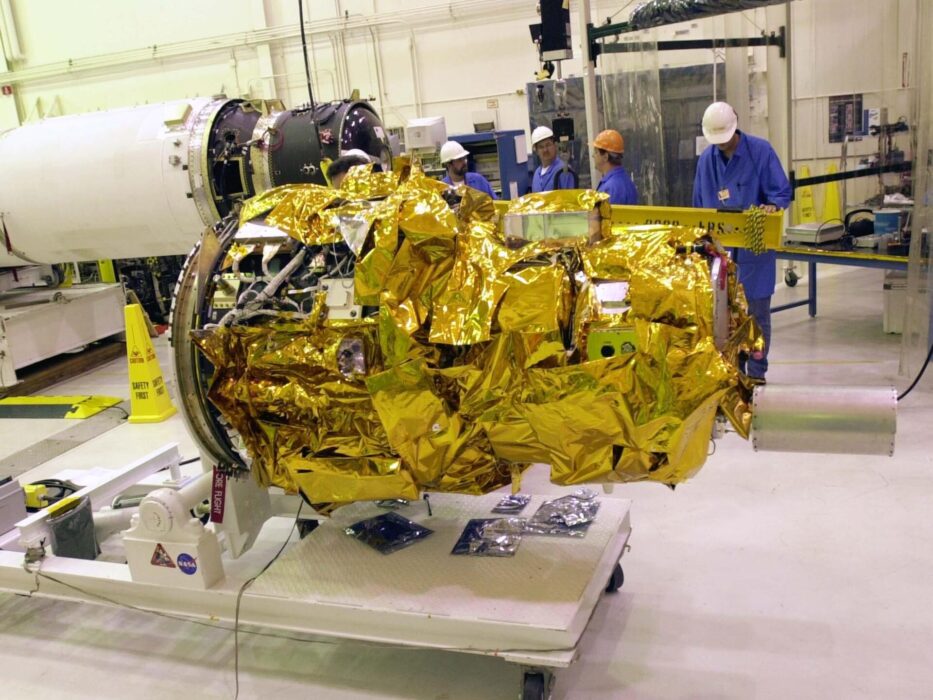
NASA’s Double Asteroid Redirection Test (DART) marked the first time humans deliberately changed the motion of a celestial object. The spacecraft struck Dimorphos, a small moonlet orbiting the larger asteroid Didymos, at more than 14,000 miles per hour.
Initial analysis confirmed success: the impact shortened Dimorphos’s orbit by 33 minutes—far more than expected. The test demonstrated that kinetic impactors could indeed nudge an asteroid off course, a crucial defense concept for planetary safety.
2. But the Asteroid’s Behavior Wasn’t What Scientists Expected
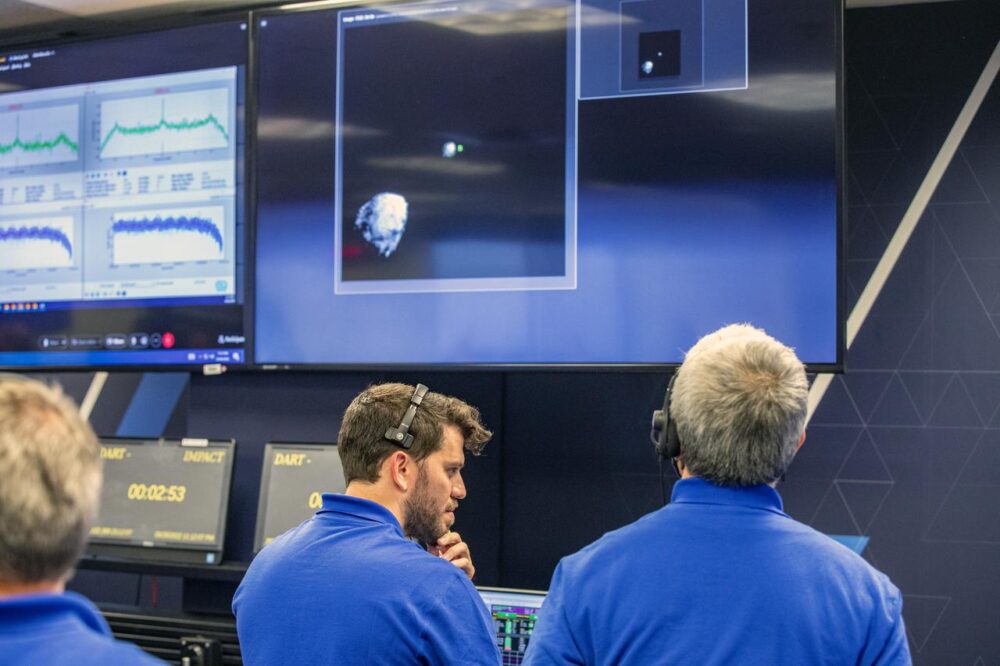
In the months following impact, telescopes around the world tracked Dimorphos’s movements and debris cloud. What they found was astonishing: the asteroid didn’t settle into a stable new orbit as predicted.
Instead, its path continued to change erratically, suggesting that debris from the collision may have altered the system’s center of mass. The result implies the physics of asteroid deflection are far more complex than early computer models assumed.
3. The Impact May Have Reshaped the Asteroid Entirely
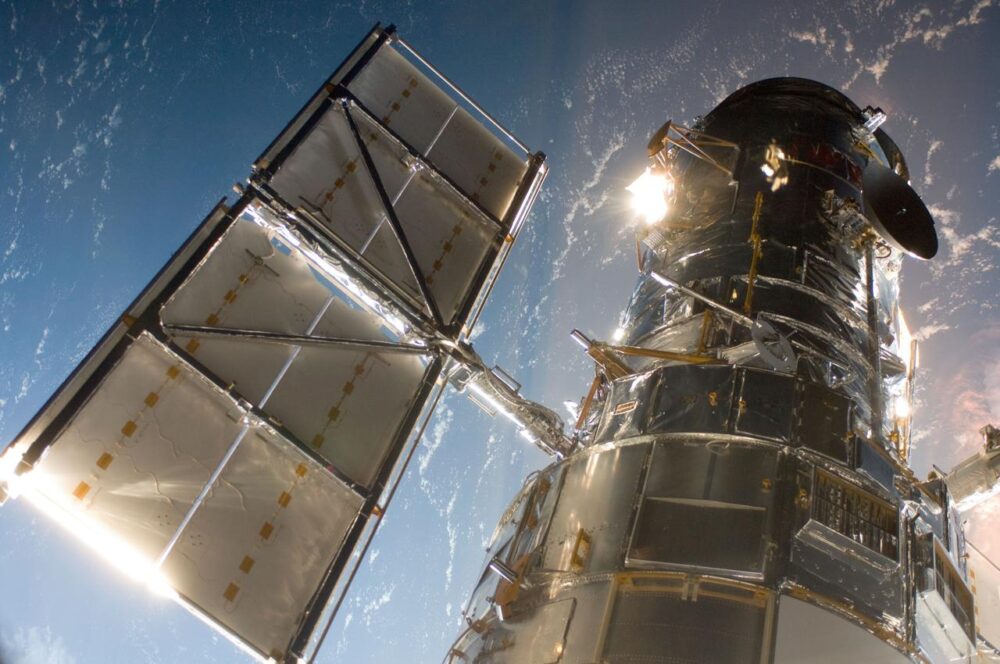
Images from the Hubble Space Telescope and other observatories revealed that Dimorphos wasn’t just dented—it was dramatically reshaped. The collision ejected enormous amounts of material, forming a long, comet-like tail stretching thousands of miles.
Scientists now believe the asteroid lost so much mass that its structure and density were permanently altered. This means the “push” DART delivered may have been amplified by recoil effects from flying debris, explaining why the orbital change was greater than expected.
4. Dimorphos’s Orbit Is Still Shifting
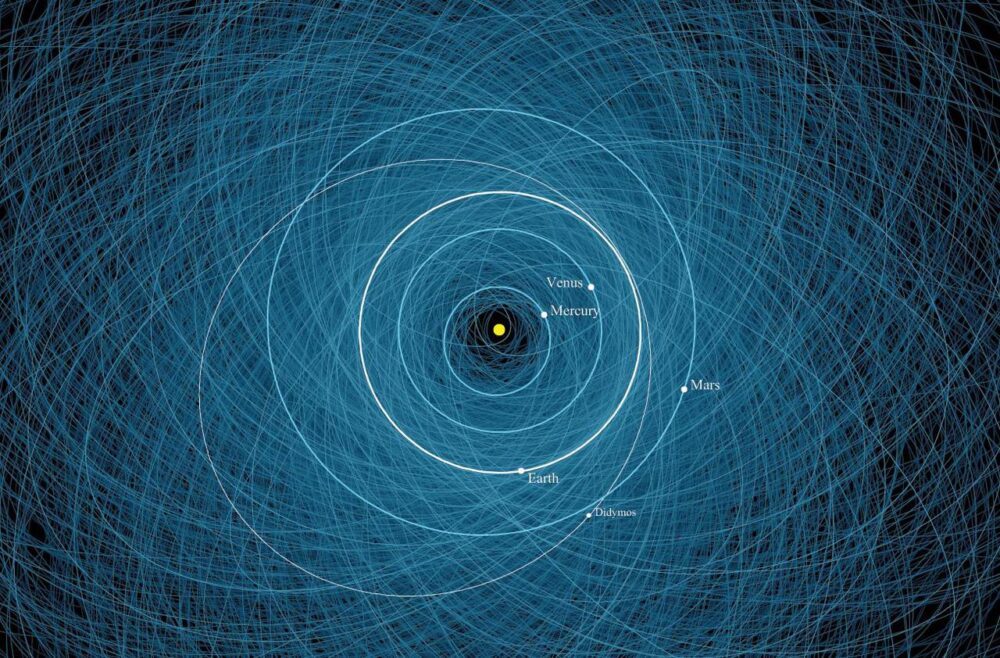
Follow-up radar observations show Dimorphos’s orbit around Didymos is continuing to drift months after impact. Researchers say the debris cloud may still be interacting with both bodies, slightly tugging them through gravitational feedback.
This ongoing motion has surprised scientists who expected the system to stabilize quickly. The prolonged changes hint that real asteroid impacts could trigger unpredictable secondary effects long after the initial strike.
5. The Asteroid May Be Loosely Bound “Rubble”
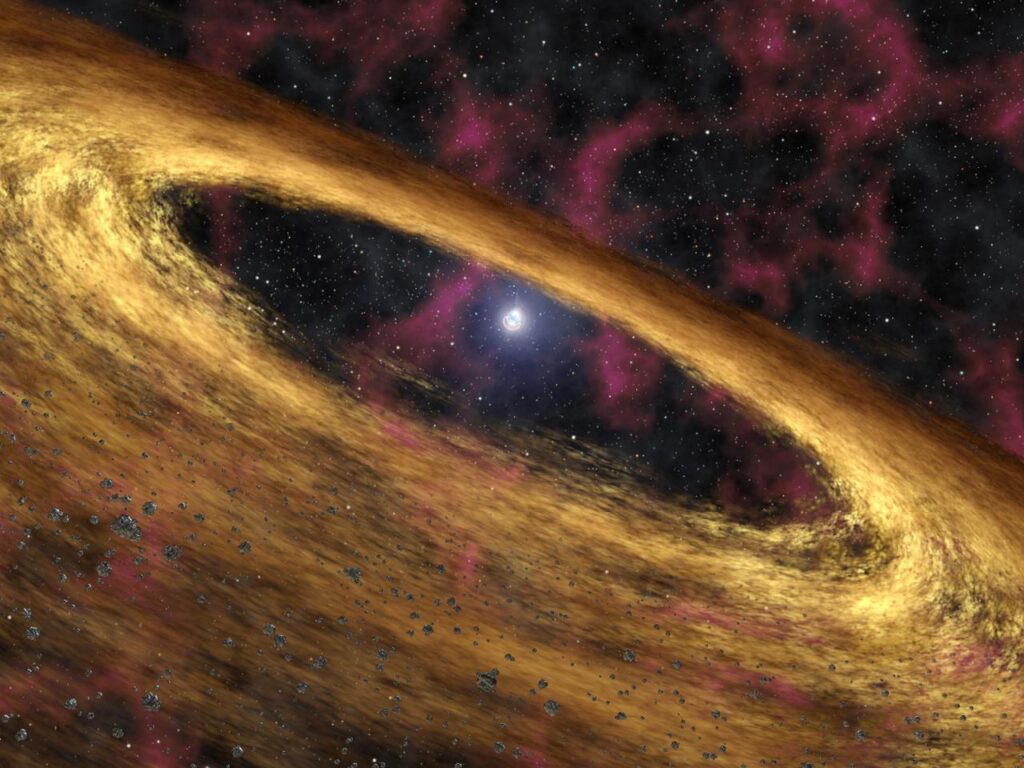
Before DART, astronomers suspected Dimorphos was a loose “rubble pile” held together by weak gravity rather than solid rock. The violent aftermath of the impact strongly supports that theory.
The explosion of debris indicates the asteroid’s interior was fragile and porous, more like a cosmic gravel heap than a monolithic boulder. That structure helps explain why the collision produced such a dramatic outcome—and why future deflection efforts may need to account for wildly different asteroid compositions.
6. The Debris Cloud Created Its Own Mysteries

In the days after the impact, the debris plume spread out and evolved in unexpected ways. Observations showed it split into complex, spiraling filaments, shaped by sunlight and solar wind pressure.
The debris behaved more dynamically than anticipated, suggesting that even small particles can influence momentum transfer in ways not fully understood. These findings could help refine impact models for future missions.
7. The Force of Impact Was Greater Than Predicted
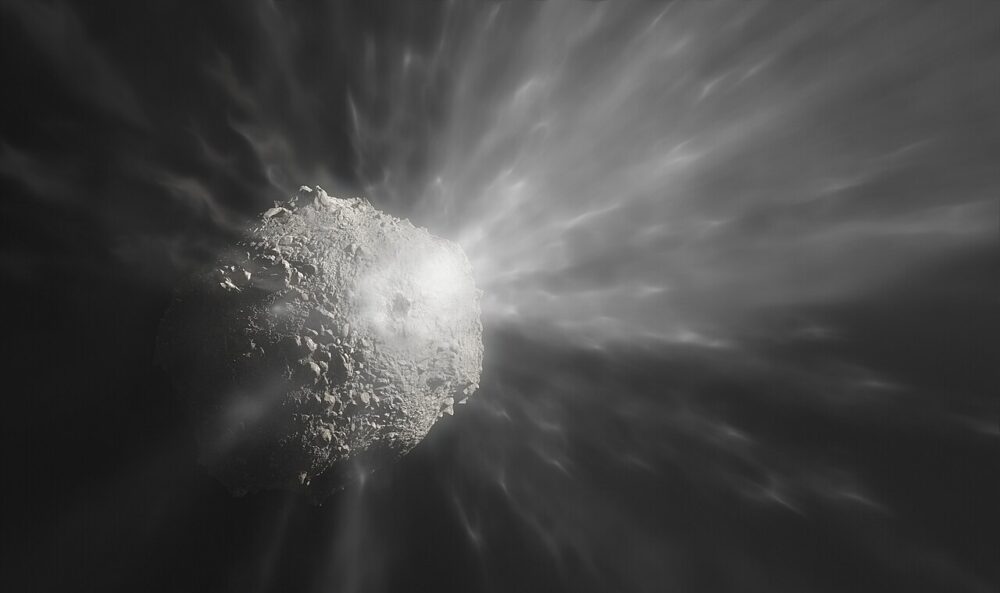
DART’s kinetic energy exceeded expectations due to a phenomenon known as “momentum enhancement.” When the spacecraft struck, the escaping debris added extra thrust, amplifying the total force delivered.
This means DART didn’t just hit the asteroid—it effectively pushed it harder than its own mass and speed would suggest. While good news for planetary defense, it complicates future planning since different surface materials could produce wildly different outcomes.
8. NASA and ESA Are Sending a Follow-Up Mission
To better understand what happened, the European Space Agency is launching Hera, a follow-up mission set to arrive at Didymos and Dimorphos in 2026. Hera will map the crater, measure the asteroids’ masses, and study their new orbits in detail.
These on-site observations will reveal exactly how much energy was absorbed, how much was lost as debris, and whether the binary system remains gravitationally stable. It’s a crucial next step toward developing reliable planetary defense strategies.
9. The Findings Could Rewrite Planetary Defense Models
The chaotic aftermath of the DART test suggests that asteroid impacts can produce cascading physical effects. Dust, recoil, and spin changes all influence how an asteroid moves after being struck.
NASA scientists say these new results will help refine models for any future mission designed to protect Earth. The next generation of impact simulations will need to account for structural weakness, shape changes, and debris-driven forces that weren’t fully considered before.
10. What It Means for Future Earth Defense

Despite the surprises, the DART mission remains a major milestone. It proved that humans can alter an asteroid’s trajectory—and that we now have a practical foundation for planetary defense.
But it also revealed just how much we still don’t know. The “shocked scientists” now face the task of understanding the complexities behind that success. As one NASA researcher put it, “We moved an asteroid—but the universe reminded us that it never gives up its secrets easily.”