
Each of these incredible artifacts offers a glimpse into humanity’s forgotten past.

Historical artifacts offer invaluable glimpses into ancient civilizations and cultures across the globe. These remarkable discoveries, ranging from intricate artworks to sophisticated technological devices, have shaped our understanding of human history. By examining their context and significance, we gain deeper appreciation for the craftsmanship, beliefs, and daily lives of past peoples. Preserving these treasures ensures their stories continue to inform and inspire future generations.
1. The Rosetta Stone unlocked the mystery of ancient Egyptian hieroglyphs.
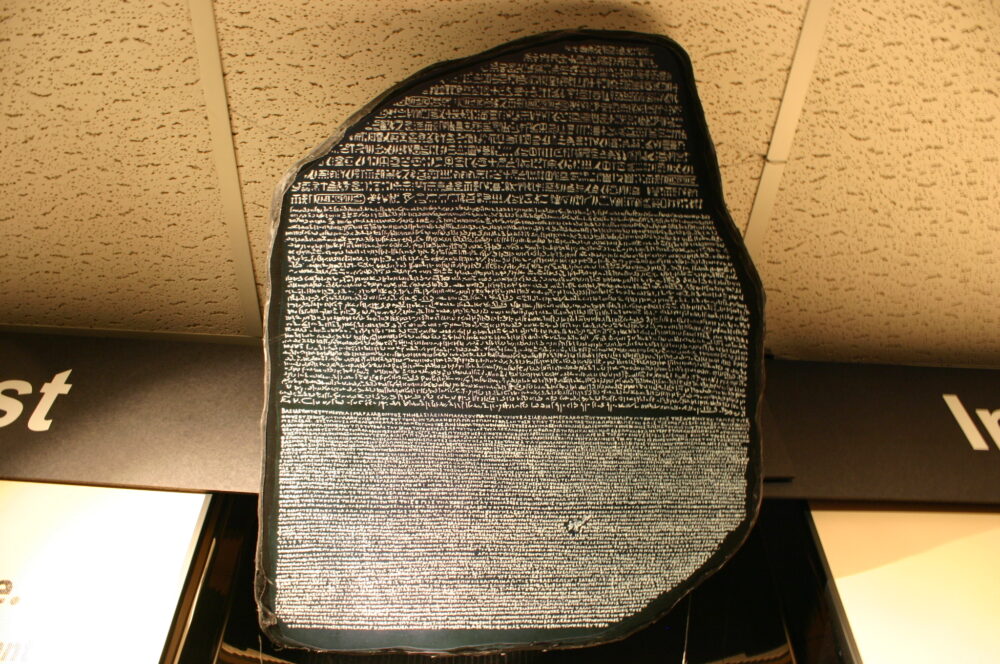
Carved from granodiorite, the Rosetta Stone contains inscriptions in Greek, Demotic, and ancient Egyptian hieroglyphs. Discovered in 1799 near the Nile Delta, it became a pivotal breakthrough in understanding the written language of ancient Egypt. A linguistic triumph took place with its decipherment.
Jean-François Champollion, a French scholar, cracked its code in the 1820s, laying the groundwork for Egyptology. Without it, the expressive world of hieroglyphs might remain locked away, hidden like the intricacies of a complex puzzle. Today, it rests in the British Museum, a bridge to another era.
2. The Dead Sea Scrolls revealed sacred texts from the Second Temple period.

Hidden in caves near the Dead Sea, the Scrolls surfaced first in 1947. These ancient manuscripts, over 2,000 years old, include fragments of the Hebrew Bible. Their discovery in the harsh, sun-baked terrain reshaped scholarly understanding of religious texts from that period.
Having emerged from the parched Judean Desert, they illuminate Jewish life and beliefs during the Second Temple period. Today, their fragments lie under dim lights in controlled environments, intricately piecing together a past woven with religious and cultural threads in the Israel Museum.
3. Tutankhamun’s golden mask symbolizes the opulence of ancient Egyptian royalty.

Crafted around 1323 BCE, Tutankhamun’s golden mask, weighing over 20 pounds, reflects the brilliance and artistry of the 18th Dynasty. Howard Carter unearthed it in 1922 from the Valley of the Kings. Each embossed detail illustrates ancient Egypt’s regal allure and craftsmanship.
Intricate inlays of semi-precious stones glow against polished gold, lined with panels of hieroglyphic inscriptions. When it first emerged from within the sands, it dazzled the world. Today, the mysterious King Tut’s likeness continues drawing countless admirers at the Egyptian Museum in Cairo.
4. The Terracotta Army showcases the remarkable funerary art of Qin dynasty China.
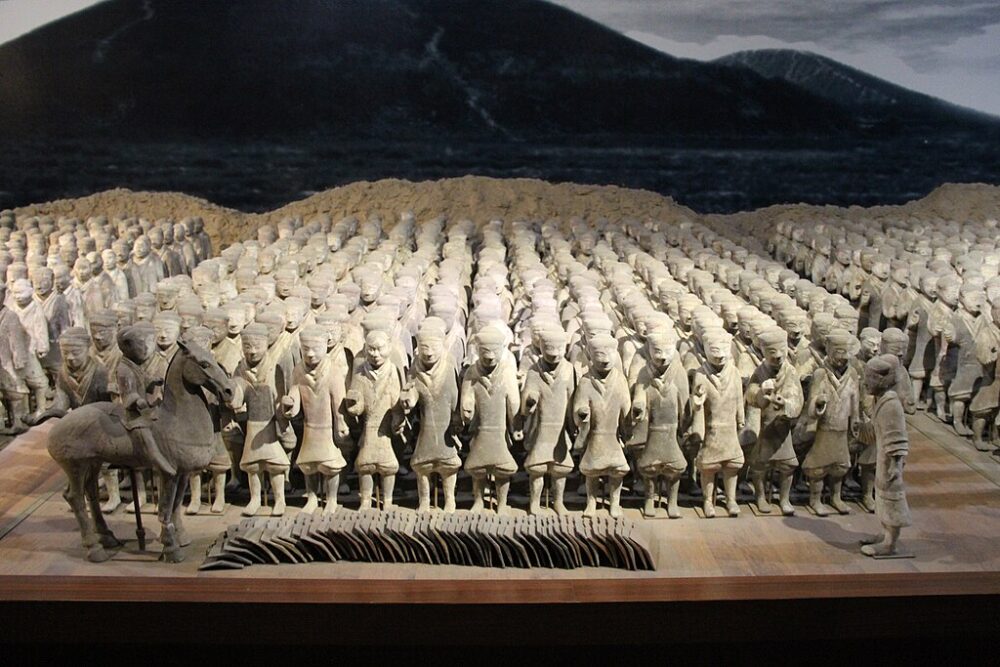
Buried with Emperor Qin Shi Huang, the Terracotta Army stands as a silent legion of over 8,000 life-sized figures. Discovered by farmers in 1974 near Xi’an, these warriors reflect ancient Chinese funerary practices aimed at ensuring the emperor’s protection in the afterlife.
Crafted with astonishing detail, each soldier wears distinct expressions and hairstyles. The labor-intensive process involved numerous artisans, turning clay into a stone-guarded legacy. Preserved within the cavernous pits, the army invites curiosity about China’s richly layered history and its first emperor’s grand ambitions.
5. The Vinland Map challenges assumptions about early European exploration in America.

Once a contentious piece, the Vinland Map sketches part of North America, suggesting Norse explorations predating Columbus. Allegedly dating back to the 15th century, its discovery stirred scholarly debate about pre-Columbian transatlantic exploration.
Though initial studies questioned its authenticity, leading to decades of controversy, advanced analysis in 2021 suggested its medieval origin legitimacy. The map remains a symbol of potential Norse voyages reaching far shores, highlighting the complexities of historical narratives influencing our perception of early exploration.
6. The Antikythera Mechanism demonstrates ancient Greek advances in astronomical technology.
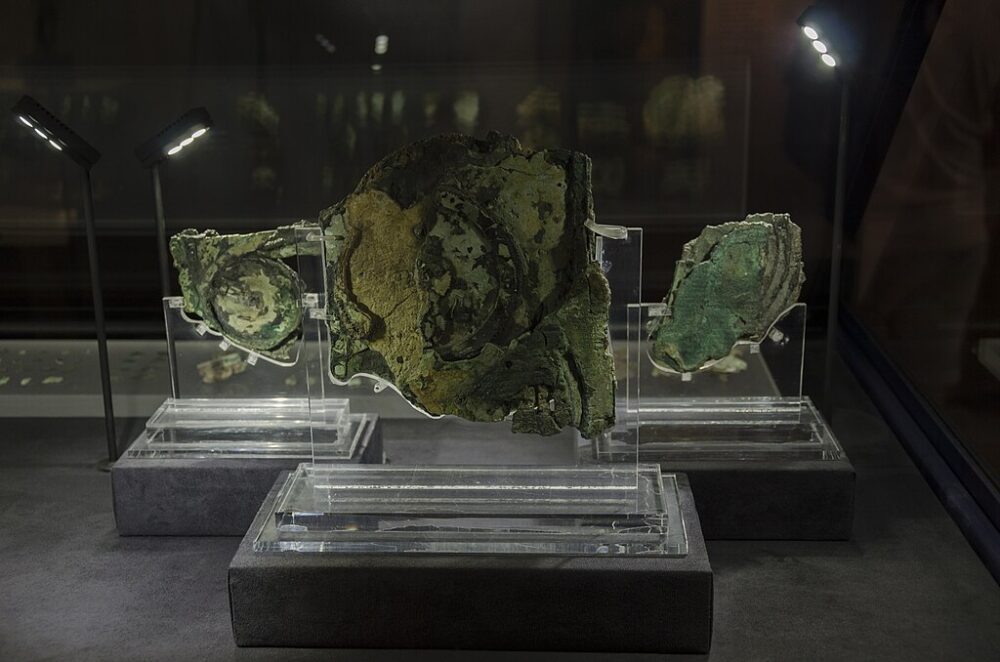
Unearthed in 1901 from a shipwreck off Greece, the Antikythera Mechanism is a marvel of ancient engineering. This intricate device, featuring gears and dials, could predict celestial events, showcasing sophisticated astronomical understanding from around 200 BCE.
As researchers painstakingly reconstructed its fragments, they grasped its full capabilities, akin to an early analog computer. It calculated astronomical positions and eclipses with remarkable accuracy. Resting within the National Archaeological Museum in Athens, it exemplifies the far-reaching intellect of Greek civilization’s thinkers.
7. The Sutton Hoo helmet provides insight into early medieval Anglo-Saxon craftsmanship.
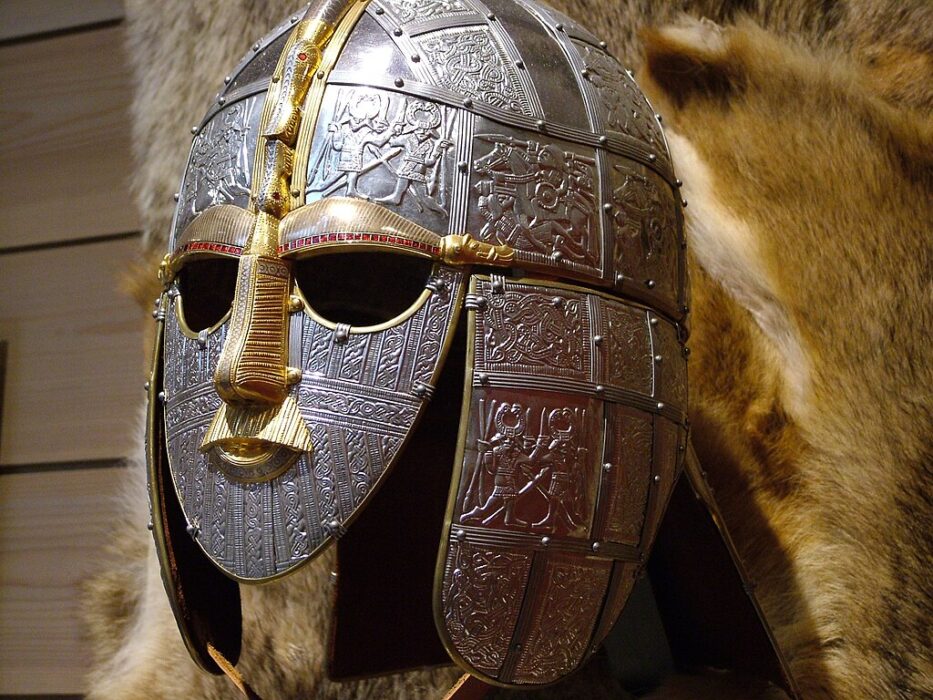
Discovered in Suffolk, England, the Sutton Hoo helmet dates back to the 7th century and offers a glimpse into Anglo-Saxon society. Excavated in 1939, it lay within a ship burial, beautifully crafted with ornate metalwork depicting mythic tales.
With its intriguing animal motifs and intricate reliefs, the helmet reflects both martial prowess and the sophisticated artistry of its makers. Currently exhibited at the British Museum, it stands as a testament to a bygone era’s fusion of power and craftsmanship, preserved for all time.
8. The Lascaux cave paintings reveal prehistoric human creativity and storytelling.
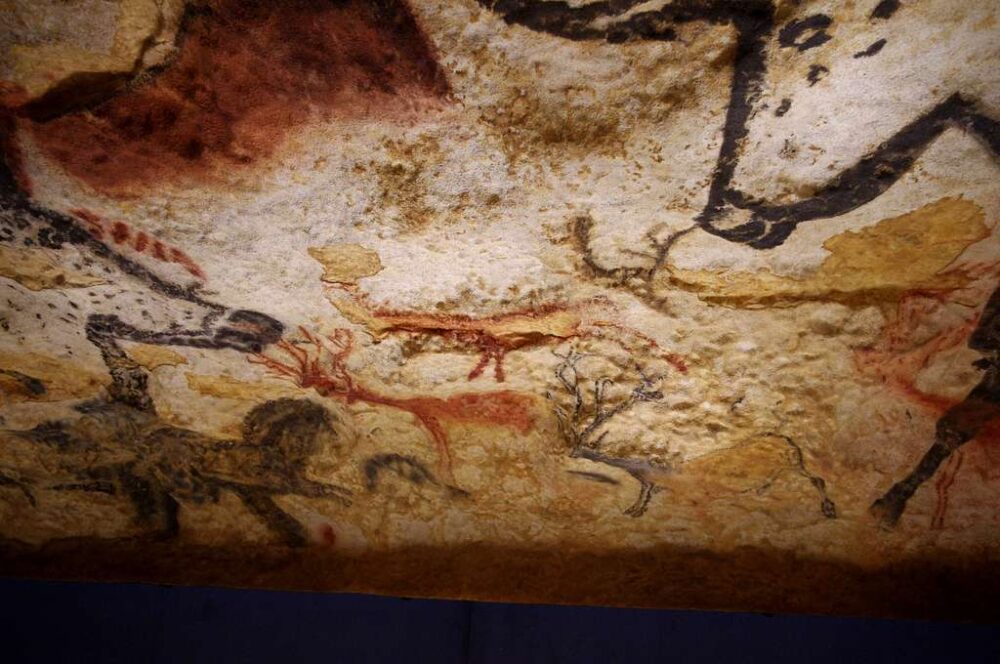
Nestled in southwestern France, the Lascaux cave paintings burst with vibrant depictions of animals, dating back over 17,000 years. Discovered in 1940 by curious teenagers and their dog, the beautifully preserved artwork captures prehistoric life’s energy and mystery.
Bison, horses, and deer dance across walls in organic ochres and blacks, exhibiting early humans’ expressive communication. These vivid scenes not only illuminate their creators’ deft hands but also their rich oral traditions. Since closed to the public, replicas invite present-day visitors near Montignac.
9. The Bayeux Tapestry narrates a detailed visual account of the Norman conquest.

Measuring about 230 feet long, the Bayeux Tapestry weaves a vivid narrative of the 1066 Norman conquest of England. Embroidered in England a few years after the battle, it remains a masterpiece of medieval storytelling and craftsmanship.
Its colorful panels brim with soldiers, horses, and ships, chronicling events like a fascinating comic strip. Each stitch and detail reflects both historical accuracy and medieval artisans’ skill. Now housed in Bayeux, France, it provides insight into the conquerors’ perspectives and societies’ past.
10. The Nebra Sky Disc represents one of the oldest known depictions of the cosmos.
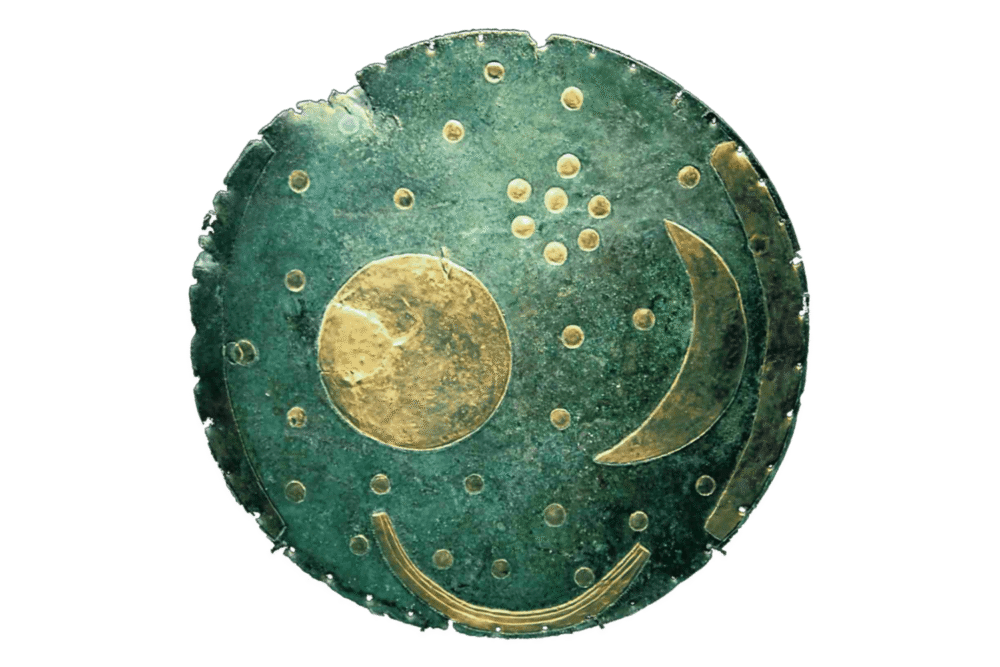
Fashioned by Bronze Age people, the Nebra Sky Disc, found in Germany in 1999, offers one of the earliest known depictions of the cosmos. Crafted from bronze with gold embossments, it reveals ancient humanity’s sophisticated understanding of astronomy.
Inlaid with celestial bodies, it represents the Sun, Moon, and stars. Its aesthetic allure is matched by its scientific significance. Archived at the State Museum of Prehistory, Halle, it’s a remarkable artifact that expands our comprehension of early European astronomical knowledge.
11. The Cyrus Cylinder is often regarded as the world’s first declaration of human rights.

King Cyrus of Persia’s 2,600-year-old clay cylinder bears an inscription widely considered the first human rights declaration. Unearthed in Babylon in 1879, it records Cyrus’s policies granting freedom and repatriation to diverse peoples.
Stipulating norms of tolerance and governance, it showcases the Achaemenid Empire’s managerial foresight. Revered within the British Museum, the cylinder continues inspiring discussions around cultural and legal legacies. It underscores the enduring power of historical words in shaping notions of justice and equality.