
Physicists and philosophers debate whether time is a fundamental reality or an illusion.
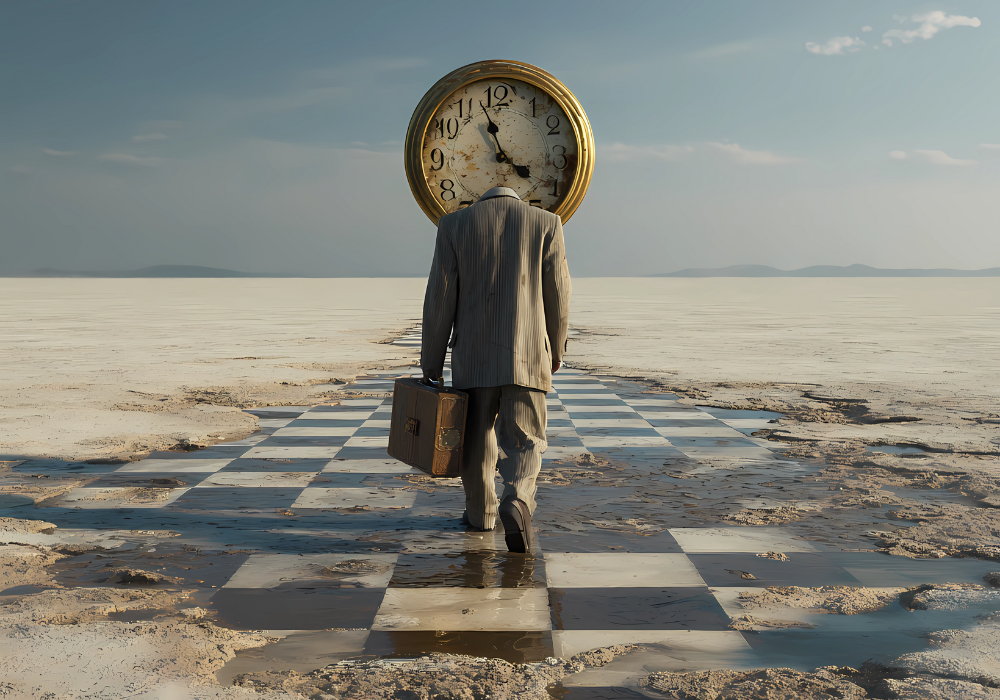
Time shapes nearly every part of our daily lives, yet scientists and philosophers still debate whether it truly exists as a fundamental feature of the universe. Einstein’s theory of relativity showed that time is not constant but stretches and compresses depending on speed and gravity. Some physicists argue that at the deepest level, time may be an emergent property—something that arises from more basic physical laws rather than existing on its own. Others maintain it is a real dimension of the cosmos. The mystery remains unresolved.
1. Einstein Showed That Time Is Not Absolute
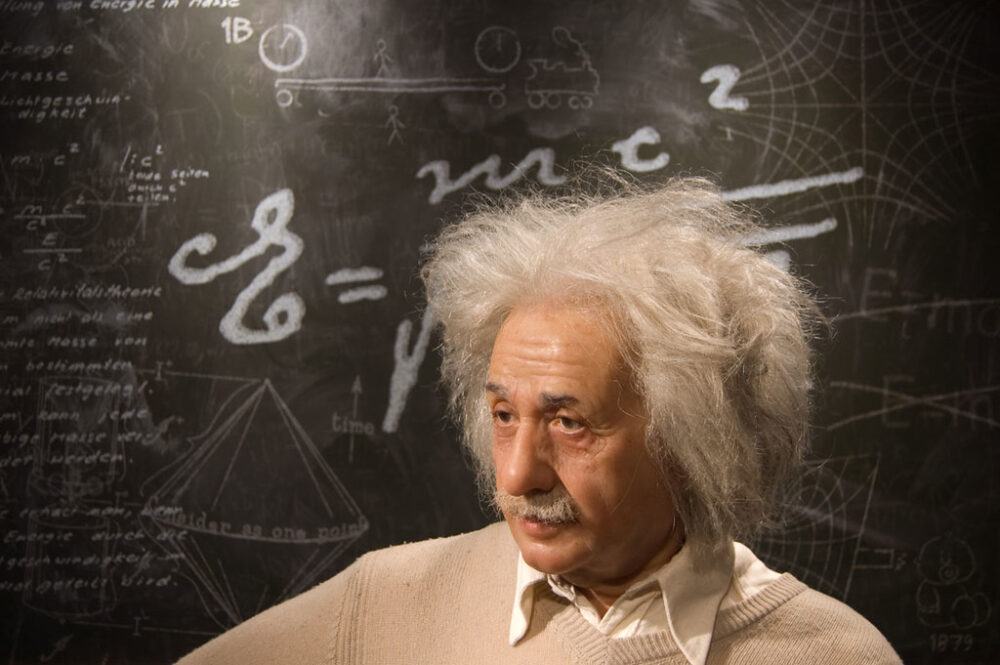
Before Einstein, most people thought of time as a universal clock, ticking the same everywhere. But his theory of relativity revealed that time is linked to space, forming the fabric of spacetime. In this framework, time slows down for objects moving at high speeds or experiencing strong gravity.
This effect, called time dilation, has been measured with atomic clocks and even observed in astronauts aboard the International Space Station. It shows that time is not fixed and universal but can shift depending on motion and environment, challenging the traditional idea of time as absolute.
2. Gravity Can Bend Time

Einstein also showed that gravity doesn’t just pull on objects—it warps time itself. Massive objects like stars and black holes bend spacetime, causing time to run slower near them. This is known as gravitational time dilation.
Practical examples prove this effect. Satellites in orbit, like those used for GPS, must adjust their onboard clocks because they experience weaker gravity and thus run slightly faster than clocks on Earth. Without these corrections, navigation systems would quickly become inaccurate, highlighting how deeply gravity influences the flow of time.
3. Quantum Physics Adds More Mysteries
While relativity describes time on large scales, quantum mechanics governs the microscopic world. The two frameworks don’t fully agree on how time works. In quantum theory, events often appear probabilistic, and time isn’t always treated as a fundamental element.
Some interpretations suggest that time could emerge from interactions between particles rather than existing independently. Reconciling quantum mechanics with relativity into a unified theory of quantum gravity remains one of the biggest challenges in modern physics—and time may be the key puzzle piece.
4. The Arrow of Time Comes From Entropy
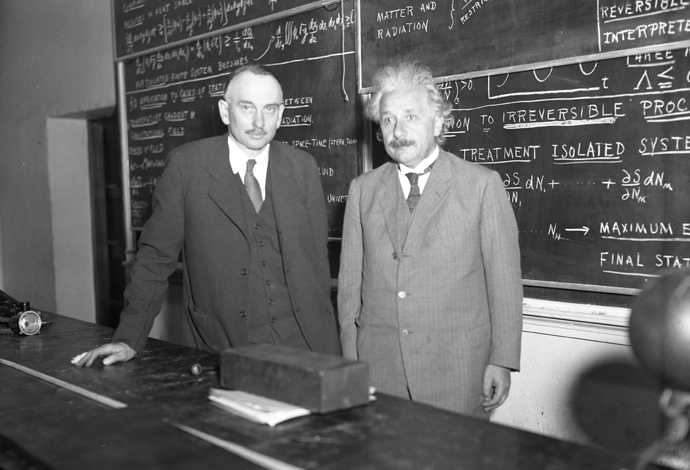
One of the strangest aspects of time is that it appears to flow in only one direction—from past to future. Physicists link this “arrow of time” to the second law of thermodynamics, which states that entropy, or disorder, always increases in closed systems.
For example, ice melts into water, but water doesn’t spontaneously freeze without outside energy. This increase in disorder creates the sense of time moving forward. Yet on the smallest scales, the laws of physics don’t actually forbid time from flowing backward, raising deep questions about why the arrow exists.
5. Time Slows Down at High Speeds
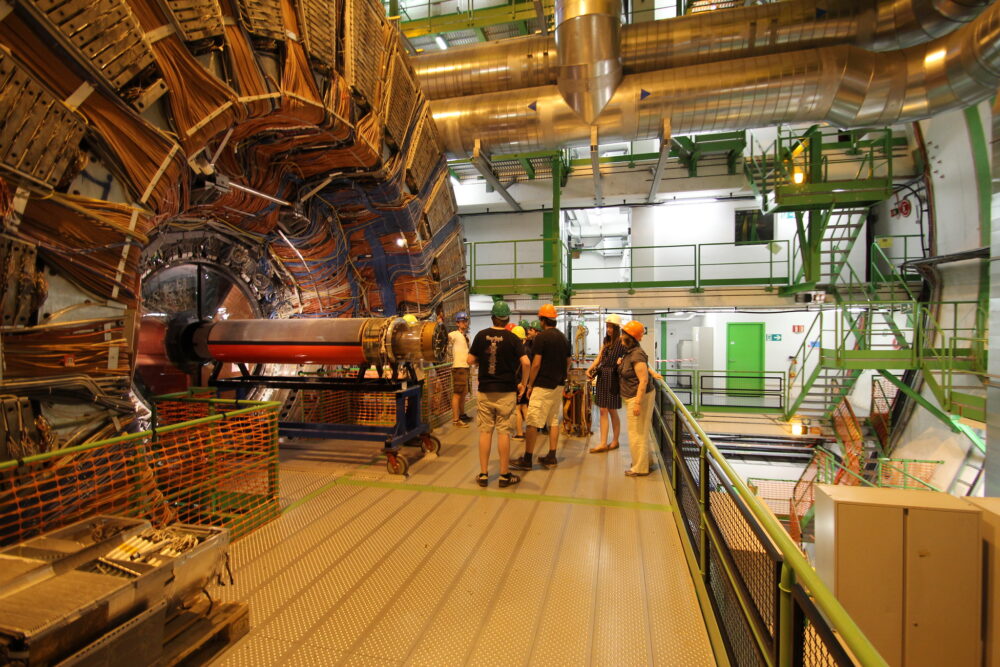
Experiments with high-speed particles have shown that time really does slow down the faster something moves. In particle accelerators, unstable particles called muons last longer than expected because their internal “clocks” tick more slowly at near-light speeds.
This effect isn’t theoretical—it’s been measured repeatedly and confirmed Einstein’s predictions. For humans, traveling at such speeds would mean experiencing far less time than those left behind. Known as relativistic time dilation, this concept fuels ideas about space travel and even science fiction scenarios involving astronauts aging slower than people on Earth.
6. Some Physicists Argue Time May Be an Illusion

Certain theories suggest that time is not fundamental but instead a construct that emerges from deeper physical laws. In this view, the universe may be better described as a collection of states, with time being a way to order them.
This idea challenges everyday experience, where time feels real and constant. Yet if physics equations can describe reality without explicitly including time, some argue it may not exist at the deepest level. Instead, what we perceive as time could simply be the brain’s way of organizing change.
7. The Block Universe Suggests Past and Future Already Exist

One interpretation of relativity is the “block universe” model, which sees past, present, and future as equally real. In this view, time doesn’t flow but is instead laid out like a map, with all events existing simultaneously.
Our perception of the present would then be a matter of perspective, similar to how space doesn’t privilege one location. While this theory is controversial, it’s consistent with relativity and suggests that the flow of time may be an illusion created by human consciousness rather than a physical reality.
8. Black Holes Push Time to Extremes
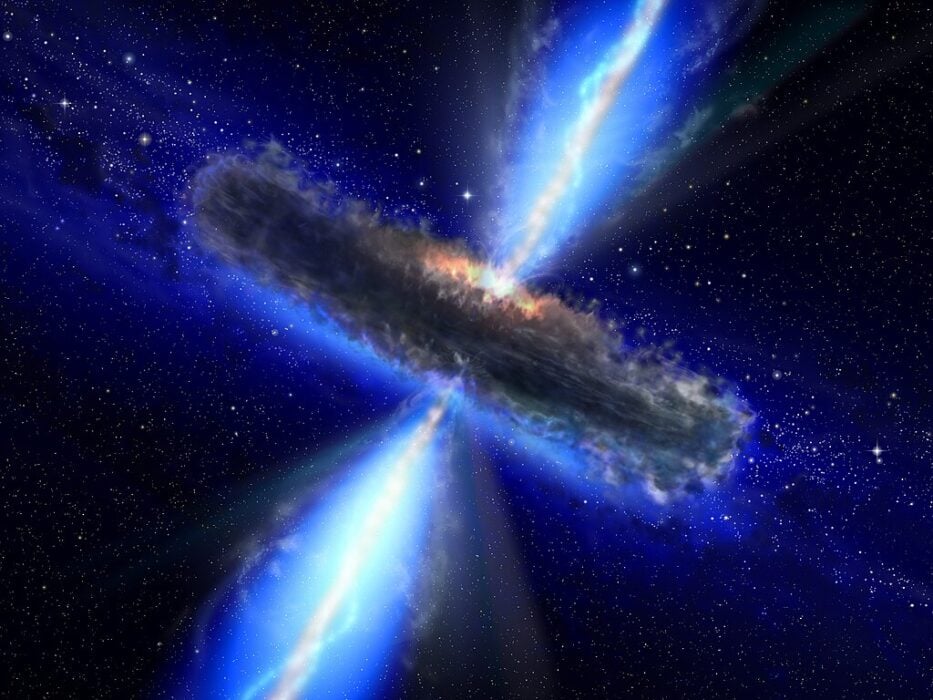
Near black holes, time behaves in extraordinary ways. The intense gravitational pull slows time so much that an outside observer would see events near the horizon unfold at a crawl. At the edge, called the event horizon, time appears to stand still.
For someone falling in, time would feel normal, but they would never appear to cross the horizon from an outside perspective. These paradoxes highlight how incomplete our understanding of time remains, especially in extreme environments where relativity and quantum mechanics collide.
9. Time Travel Remains Theoretical
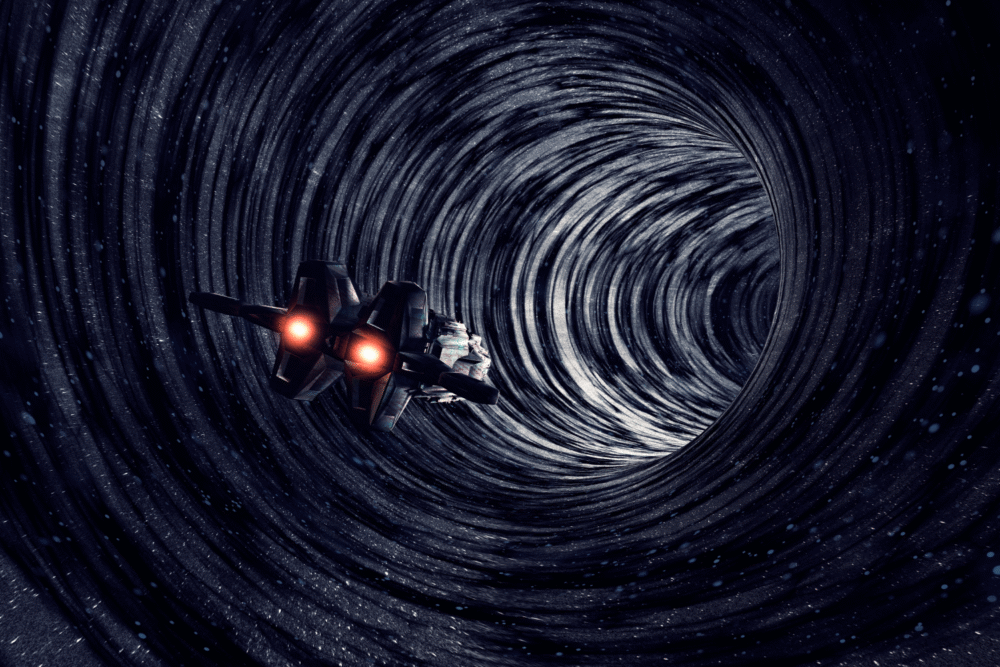
Relativity allows for the possibility of traveling into the future by moving close to light speed or orbiting near a black hole. In these cases, time would pass differently for the traveler and those left behind.
Traveling into the past, however, creates paradoxes that make most physicists skeptical it could ever be possible. Wormholes and closed time-like curves exist in theory but have never been observed. While time travel is a popular concept in science fiction, it remains firmly speculative in science.
10. Human Perception Shapes Our Experience of Time

Beyond physics, neuroscience shows that the brain plays a major role in how we experience time. Our perception of time can stretch or shrink depending on attention, emotion, and memory.
Moments of fear or excitement often feel longer, while routine events may pass quickly. This subjective experience adds another layer of complexity to the question of time’s reality. Even if time is fundamental in physics, how humans sense it is shaped by biology and psychology, making the mystery even richer.
11. Time in Cosmology May Be Different

Cosmologists studying the early universe face another puzzle: time itself may have emerged after the Big Bang. Theories suggest that during the first fractions of a second, known as the Planck era, normal concepts of space and time may not have applied.
If time had a beginning, then asking “what happened before?” may not even make sense. This challenges human intuition and raises profound questions about the nature of existence. The idea that time could itself be a product of cosmic evolution reshapes how we think about the universe.
12. The Mystery of Time Remains Unsolved

Despite centuries of study, scientists and philosophers still cannot fully explain what time is or why it exists. Evidence shows it is flexible, relative, and possibly emergent rather than fundamental.
Yet time remains central to human life and science, governing everything from clocks to cosmic events. Whether it is a real dimension of the universe or a human construct, time is one of the deepest mysteries still facing physics. The search for answers continues to reshape our understanding of reality itself.