
Discover common animals with hidden dangers that can cause serious harm or death unexpectedly.
Many animals that appear harmless at first glance carry hidden threats that can pose real dangers to humans. From venomous bites to toxic secretions, these creatures use their defenses to protect themselves, often surprising those who underestimate them. Understanding how to identify and avoid these seemingly benign animals is essential for staying safe in both familiar and wild environments.
1. The slow loris looks cute but delivers a venomous bite.
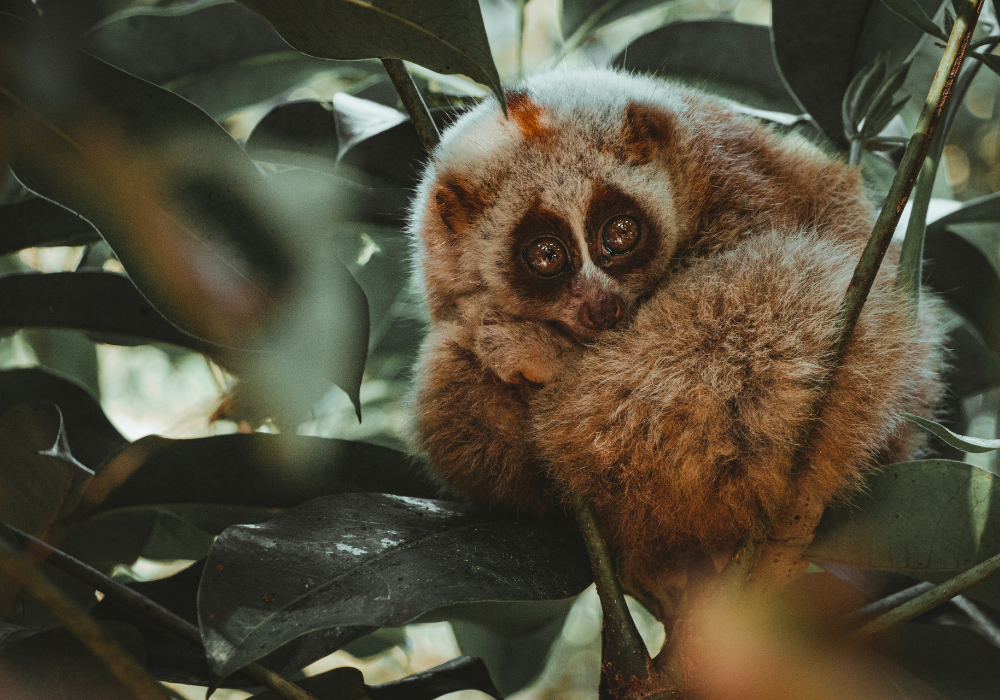
The slow loris captivates with its wide, endearing eyes and gentle hands. Despite its innocent look, it produces a venomous bite from glands on its elbows, which it transfers to its mouth. One surprise bite can trigger an allergic reaction in its unsuspecting target.
Unknown to many, its bite can cause painful swelling or even anaphylactic shock in severe cases. Although small and appealing, such encounters can become hazardous quickly, especially if the reaction escalates without timely medical attention. Caution around these nocturnal mammals can prevent unexpected complications.
2. Blue-ringed octopuses appear small and harmless yet carry deadly venom.

With brilliant blue circles on its body, the blue-ringed octopus is mesmerizing and often overlooked at a glance. Its venom is a potent neurotoxin capable of paralyzing its victim silently and swiftly, leaving minimal time to respond.
Despite its petite size, merely the size of a golf ball, its venom can cause complete respiratory failure in humans. Though natively dwelling in shallow reefs, such potent toxins mean achieving safety requires alertness while exploring oceanic waters where these octopuses reside.
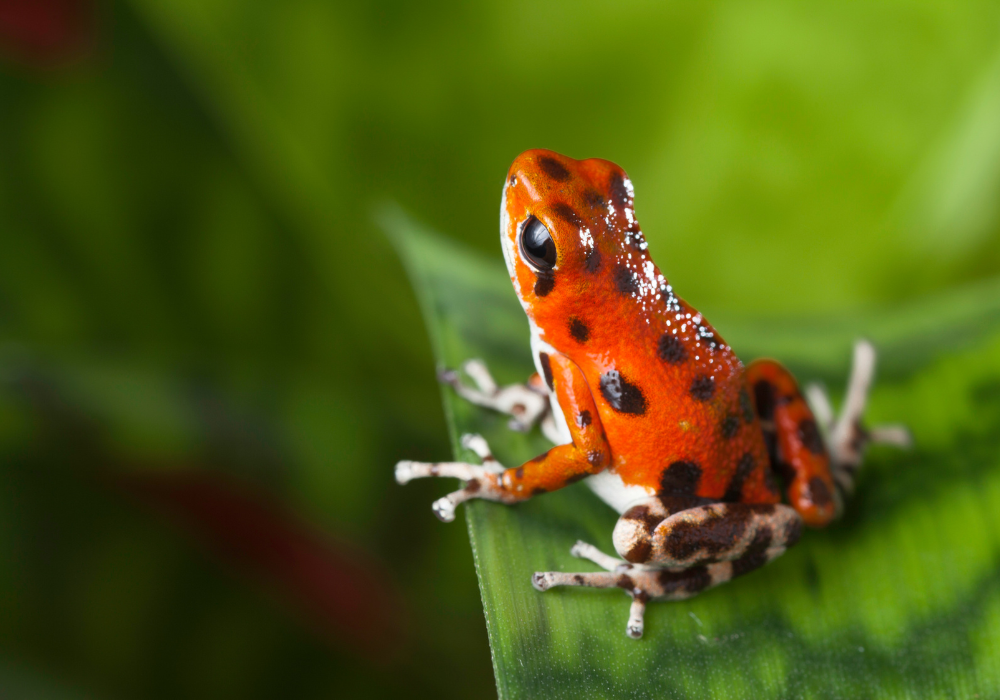
3. Poison dart frogs display bright colors signaling their toxic secretions.

Their vibrant hues tell a story. Poison dart frogs, native to Central and South America, flaunt unmistakable bright colors as a natural warning of lethal substances in their skin. Just touching these amphibians can transfer potent toxins, capable of deterring predators.
Locals and scientists have long been aware of these properties, using poison from these frogs historically to coat hunting arrows. A vibrant forest floor conceals these bright warning signs, requiring vigilance to identify these toxic inhabitants amidst lush jungle landscapes.
4. Stonefish use camouflage to blend in while poised to inject venom.
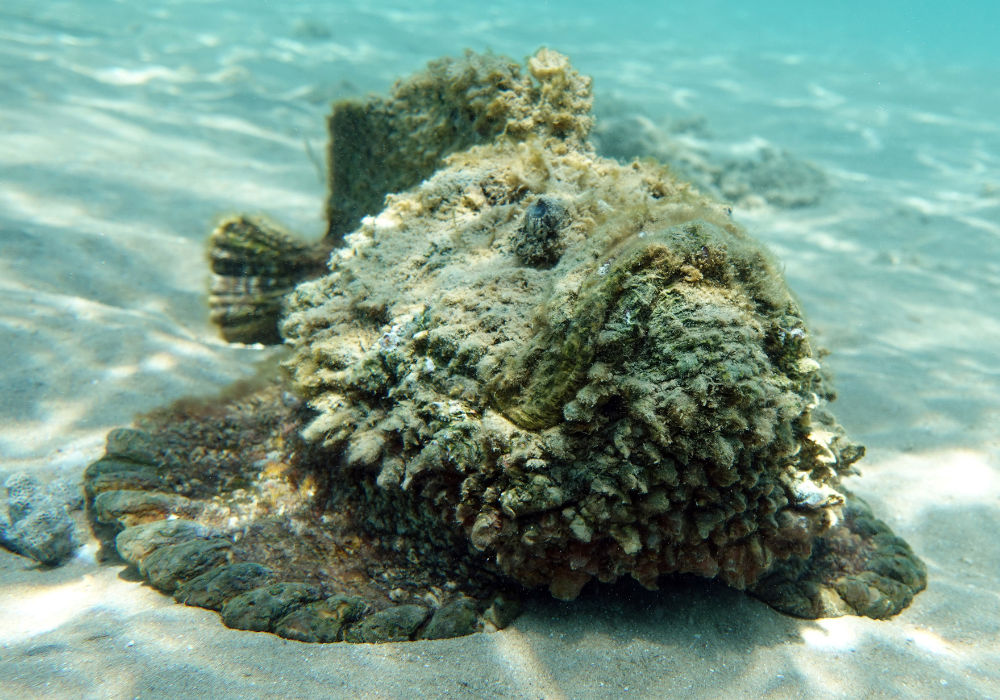
The stonefish plays a quiet game of hide and harm. Blending seamlessly with rocky ocean floors, they pack a venomous punch delivered from needle-like dorsal spines. Those stepping on them can experience immediate sharp pain and swelling.
For snorkelers and swimmers, the stonefish’s inert-looking appearance belies its sudden defensive capability. Venom punctures can escalate quickly, posing serious health risks like tissue damage if not treated swiftly. In its natural habitat, a gentle rock may reveal hidden danger beneath.
5. Pufferfish inflate to appear harmless but contain lethal toxins inside.
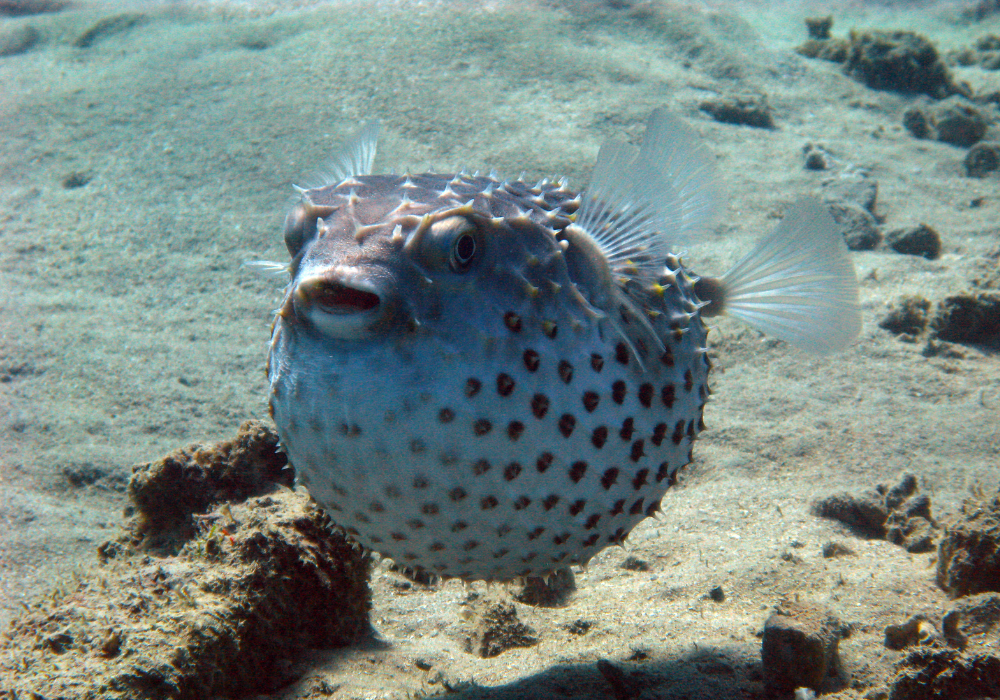
A swollen pufferfish may seem comical, but its real danger lies within. This well-known tropical fish contains tetrodotoxin, a deadly substance far more toxic than cyanide, threading a hidden threat beneath its prickled exterior.
Known to dissuade predators with its intimidating appearance, it sometimes translates its peril to unaware humans who consume its delicacy form. Missteps in preparation have fatal consequences, emphasizing the need for expert culinary handling in regions where it’s considered a treat.
6. Box jellyfish may be transparent but their sting is extremely dangerous.
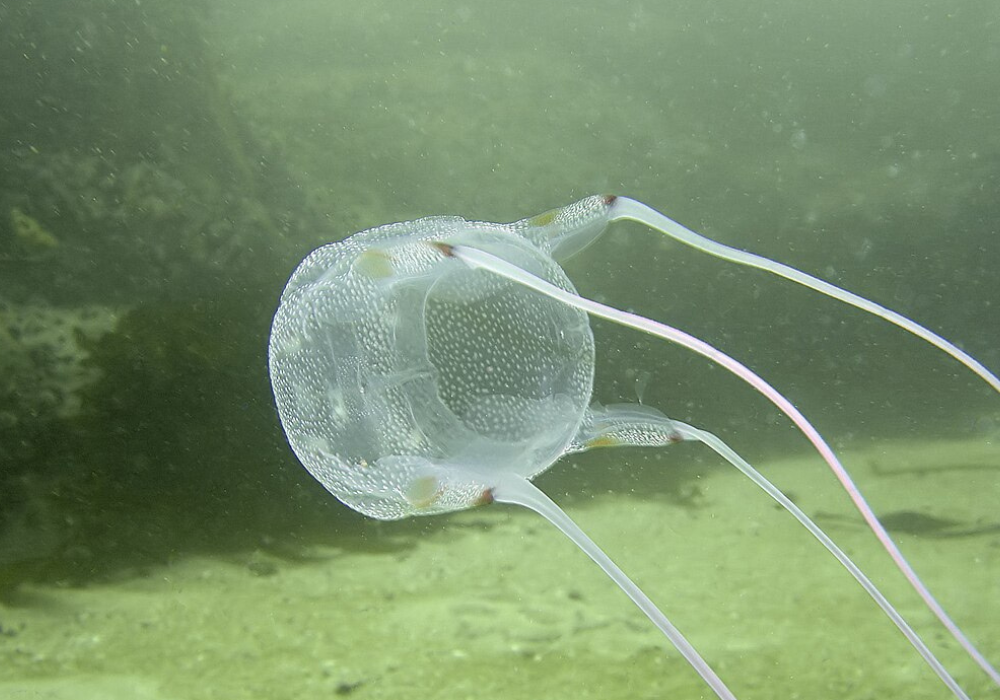
Delicate and nearly invisible, box jellyfish glide through ocean currents, carrying a formidable weapon—their tentacles. The nematocysts entwined along these transparent appendages can deliver venom inducing severe pain and, occasionally, cardiovascular collapse in victims.
Though known colloquially as ‘sucker punch’ stingers, swimmers often discover them through accidental encounters. Their near-transparency makes them difficult to detect in seawater, turning an ordinary swim into a potentially dangerous event that requires immediate care.
7. Cone snails shoot venomous harpoons despite their slow-moving nature.
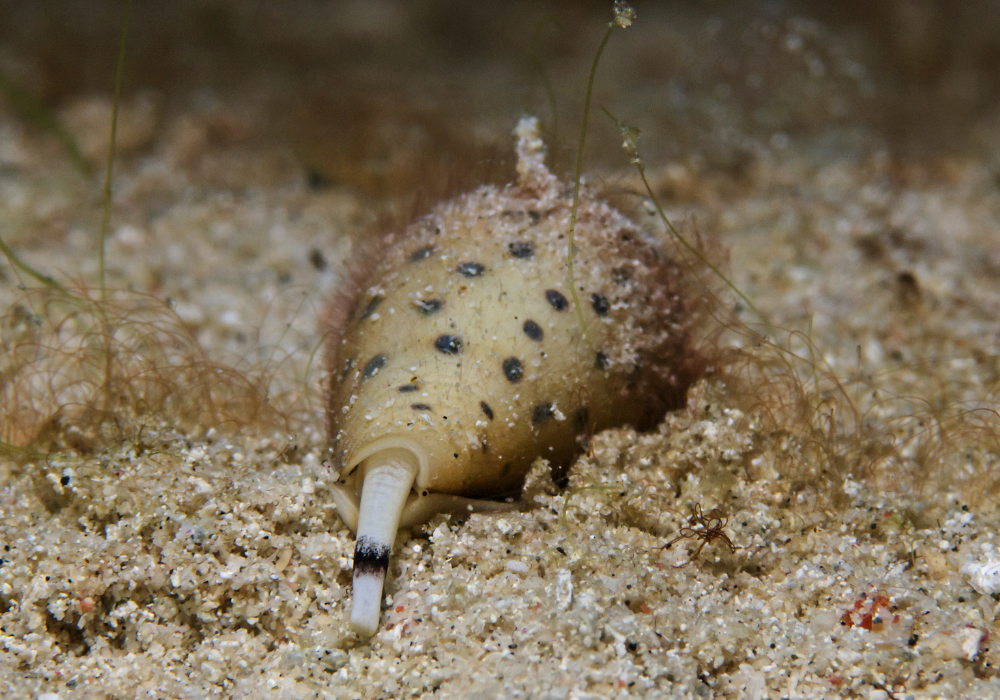
Cone snails meander slowly but hide rapid and potent danger beneath their beautiful shells. Equipped with a venomous harpoon, they strike swiftly, delivering a pain akin to a bee sting that may advance to life-threatening paralysis or organ failure.
The deceptive beauty of their shells entices collectors, yet caution is paramount, as even minimal contact can cause significant harm. Their complex venom—a bioactive cocktail—demands professional attention to avoid severe outcomes related to paralysis and respiratory issues.
8. The cane toad secretes toxins that can be fatal if ingested.
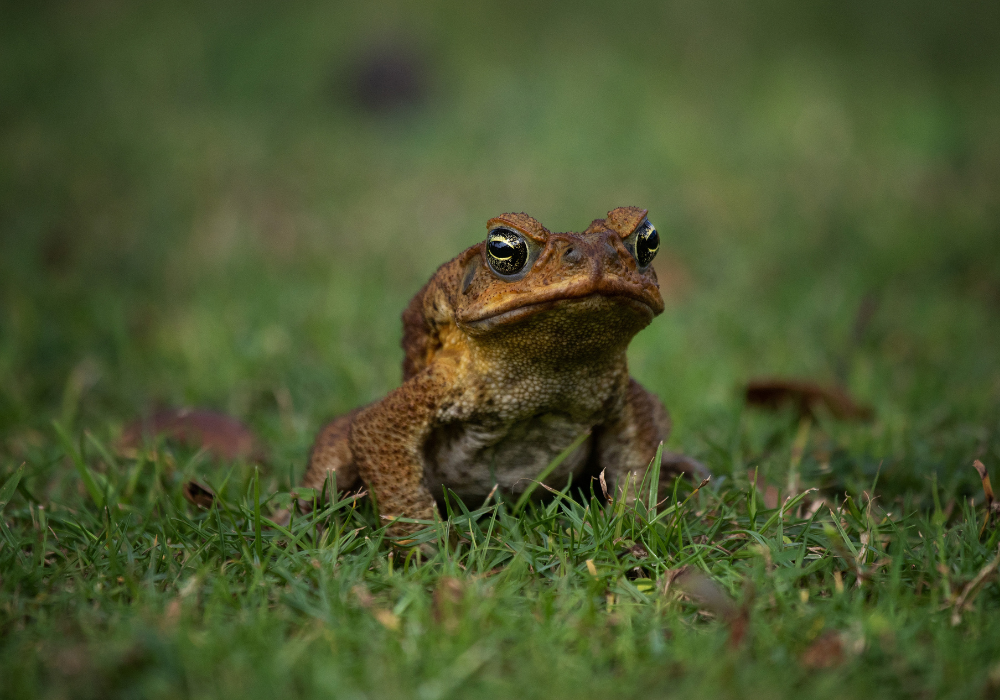
Cane toads secrete harmful substances from their skin. Native to Central and South America, these adaptable amphibians release toxins known as bufotoxins, which can cause severe poisoning if consumed by unwary predators or curious pets.
In regions where they’ve been introduced, their rapid spread and environmental impact complicate ecosystems, displacing native species. While their presence can subtly influence biodiversity, recognizing their distinct warty skin and bellowing call helps mitigate unintentional contact and resultant threats.
9. Inland taipans are reclusive snakes packing the deadliest venom known.
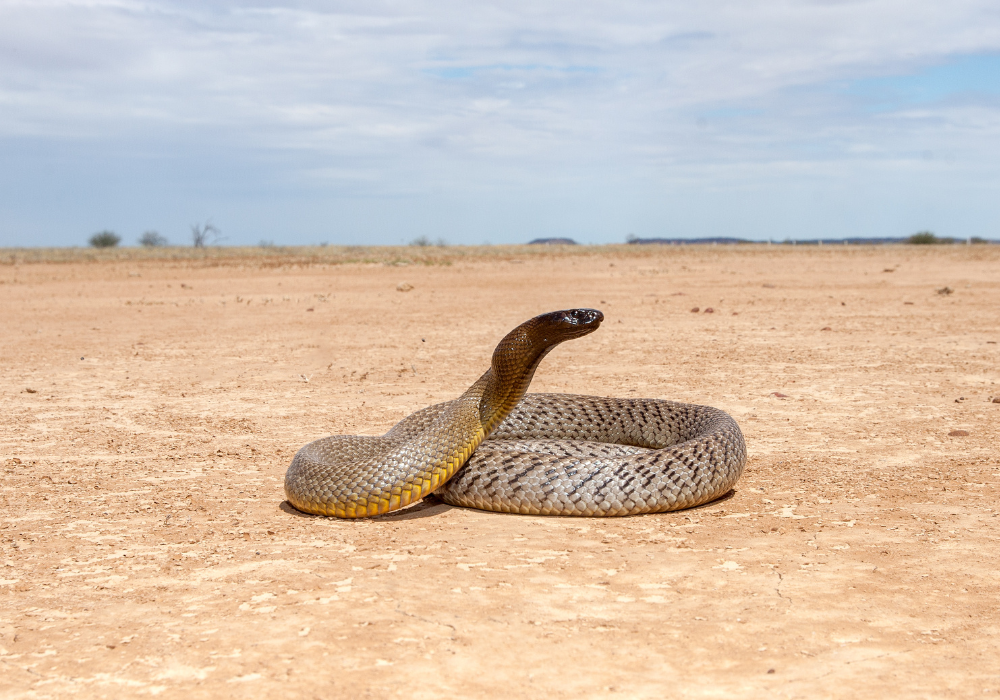
The relatively low-profile inland taipan rarely shares space with humans but possesses the world’s most toxic venom, delivered via precise fangs. While not aggressive, their venom can incapacitate even the largest prey swiftly—a testament to their perfect adaptation for survival.
Scientific study of these reclusive reptiles reveals that, despite their highly concentrated venom, fatalities remain rare due to their remote location. Awareness of their habitats ensures less potential for risky encounters, particularly in arid Australian outbacks they inhabit.
10. Brazilian wandering spiders look intimidating and can deliver potent venom.
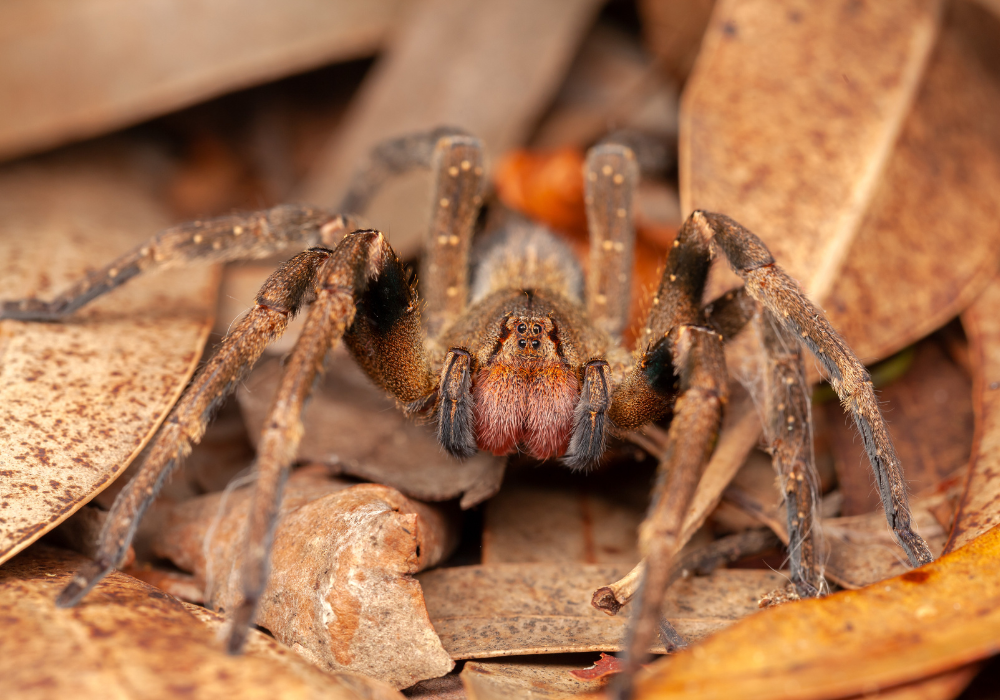
Brazilian wandering spiders seldom rest, favoring an active hunt that may lead to unintentional run-ins with humans. Their venom contains toxins at once painful and potentially fatal, demanding immediate medical attention if envenomation occurs.
Despite its intimidating name, this arachnid’s nocturnal nature and affinity for jungle floors naturally limit contact. Yet, knowing their identification markers, such as hairy legs and defensive posture, can be crucial in avoiding heightened danger when camping or exploring tropical rainforests.
11. Deathstalker scorpions appear unassuming but carry powerful neurotoxins.
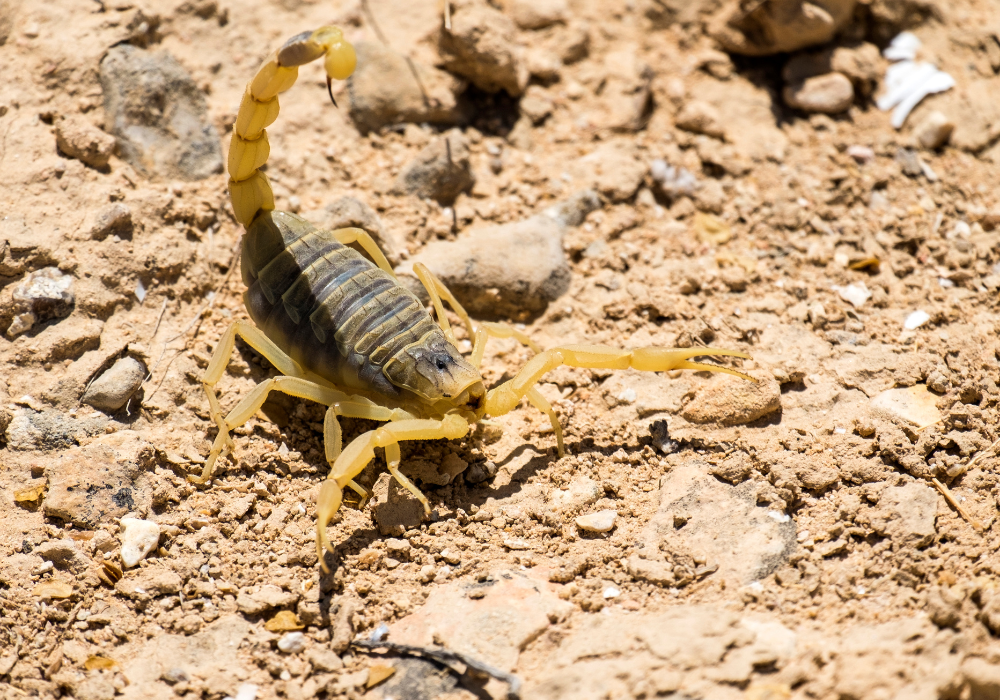
Cloaked by desert lands, deathstalker scorpions belong to a family of formidable hunters. These nocturnal creatures wield venom capable of delivering potent neurotoxins, triggering severe pain, muscular twitching, and possible death without prompt intervention.
In arid regions, their slender, yellow bodies facilitate surprise stings to feet and hands. Despite their name, understanding—or avoiding—is critical in handling such encounters. Pathways crossing scrub landscapes can suddenly become treacherous without due diligence.