
New dating suggests humans reached unexpected places far earlier than established timelines assumed.
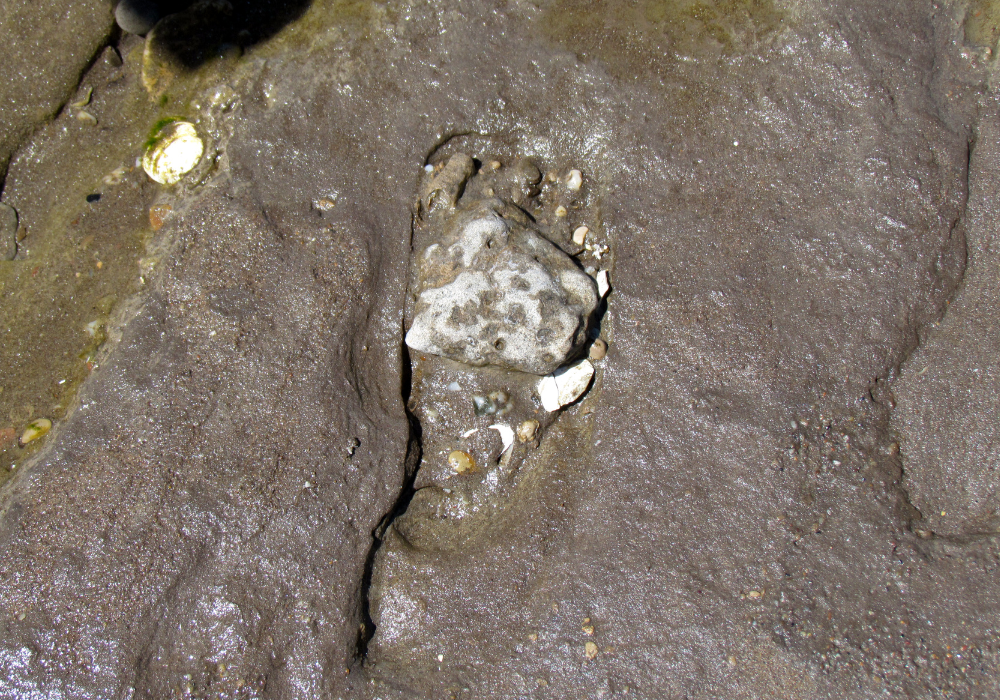
Archaeologists have uncovered something astonishing in Saudi Arabia’s Nefud Desert: 115,000-year-old human footprints preserved in the mud of a long-vanished lake. The discovery challenges long-held beliefs that this harsh, arid region was uninhabitable for early humans.
According to research published in Science Advances in 2020, the prints are the oldest known human footprints on the Arabian Peninsula. Alongside them were tracks from elephants, camels, and other animals, revealing that the desert was once a vital watering hole. Scientists say the find could rewrite humanity’s migration timeline and show just how adaptable our ancestors truly were.
1. A discovery that stunned archaeologists
Finding 115,000-year-old human footprints is extraordinary anywhere, but uncovering them in Saudi Arabia’s Nefud Desert left scientists stunned. This desert has long been considered too dry and inhospitable for ancient survival.
Yet preserved in the mud of an extinct lake, the prints prove humans crossed this landscape much earlier than expected. They are the oldest known footprints on the Arabian Peninsula, reshaping what we know about migration. Instead of bypassing Arabia, humans used it as a vital corridor during their journeys out of Africa.
2. Why footprints reveal more than fossils
Fossils and tools tell us who humans were and what they created, but footprints capture how they lived. Each step offers a glimpse into behavior, movement, and even group structure in ways artifacts cannot.
The Nefud tracks show varying sizes and depths, suggesting adults and possibly children traveled together. Some prints reveal changes in speed or direction, hinting at families on the move. These impressions are intimate snapshots of life, preserved for over 100,000 years, giving scientists a view of people in motion rather than static remains.
3. Dating confirmed their astonishing age
To determine when the tracks were made, researchers analyzed sediments from the ancient lakebed where the prints were preserved. Using advanced techniques, they confirmed the age at roughly 115,000 years old.
This discovery pushes back the timeline for human presence in Arabia. Previously, scientists believed humans entered this region tens of thousands of years later. The prints prove our ancestors ventured into the desert much earlier than assumed, challenging long-held theories about migration and human adaptability.
4. The last place anyone expected humans to be
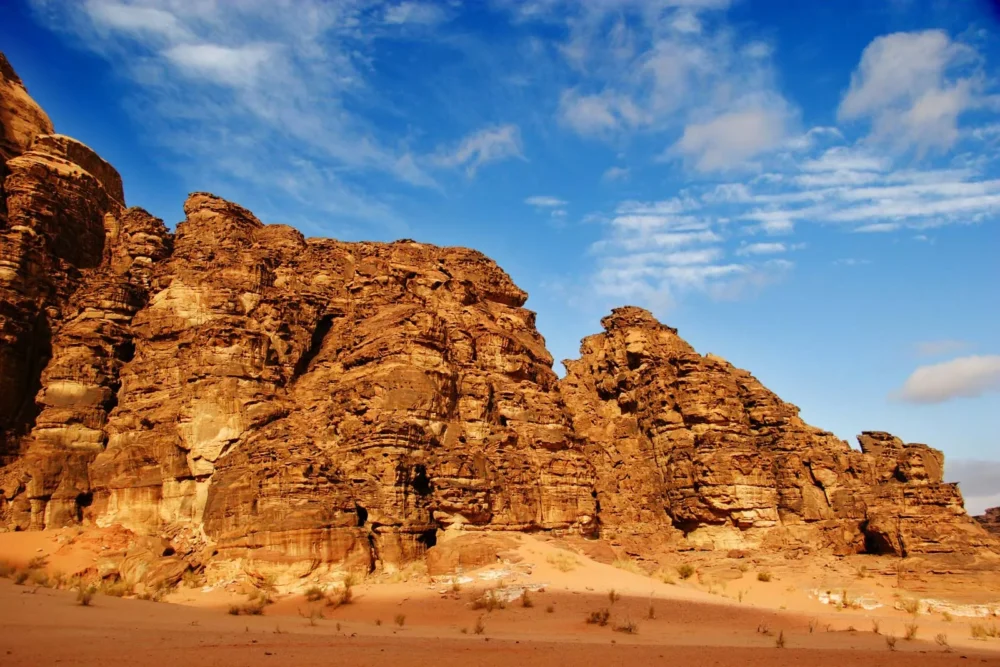
The Nefud Desert stretches across northern Arabia as one of the harshest environments on Earth. For decades, archaeologists assumed it was uninhabitable during early human history due to limited resources.
But the footprints prove people passed through during a wetter climatic period. Ancient lakes and vegetation may have transformed the region into a temporary refuge. The discovery shows that early humans weren’t deterred by difficult landscapes—they adapted to them, venturing into environments once considered impossible for survival.
5. A watering hole for humans and animals
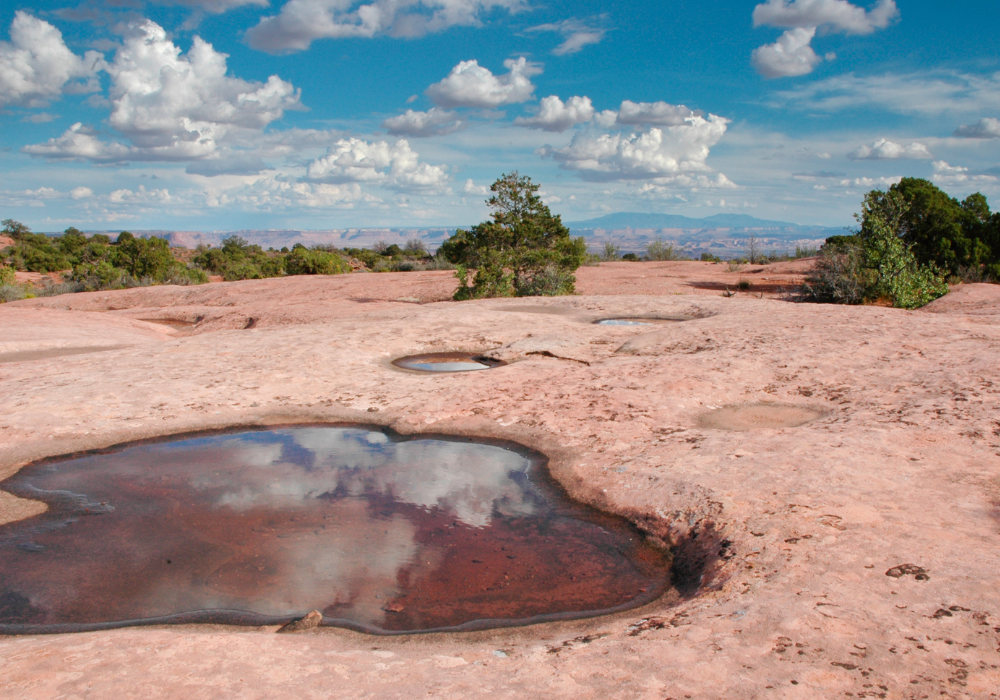
The site wasn’t just marked by human activity. Alongside the footprints, scientists found tracks from elephants, camels, and other animals that once roamed the desert.
Together, the prints suggest the area was once a bustling watering hole. Humans and wildlife likely gathered around the same shrinking resources, creating a vivid snapshot of life in the ancient desert. This ecosystem, long vanished, highlights how different Arabia looked during wetter periods.
6. What the tracks reveal about daily life
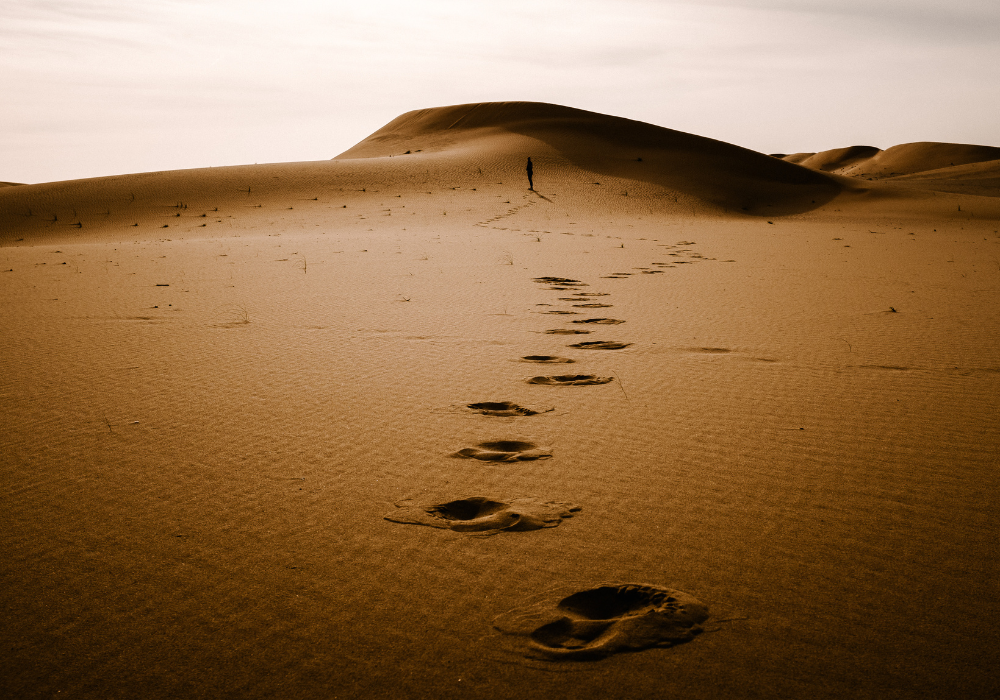
Beyond proving presence, the prints hint at what life was like. The size and spacing suggest small groups, possibly families, moving across soft ground together.
Some footprints show deeper impressions from heavier steps, while others appear lighter, possibly from children. These details paint a rare, personal picture of ancient people in motion—families adapting to their environment rather than isolated wanderers.
7. How climate shifts shaped human survival
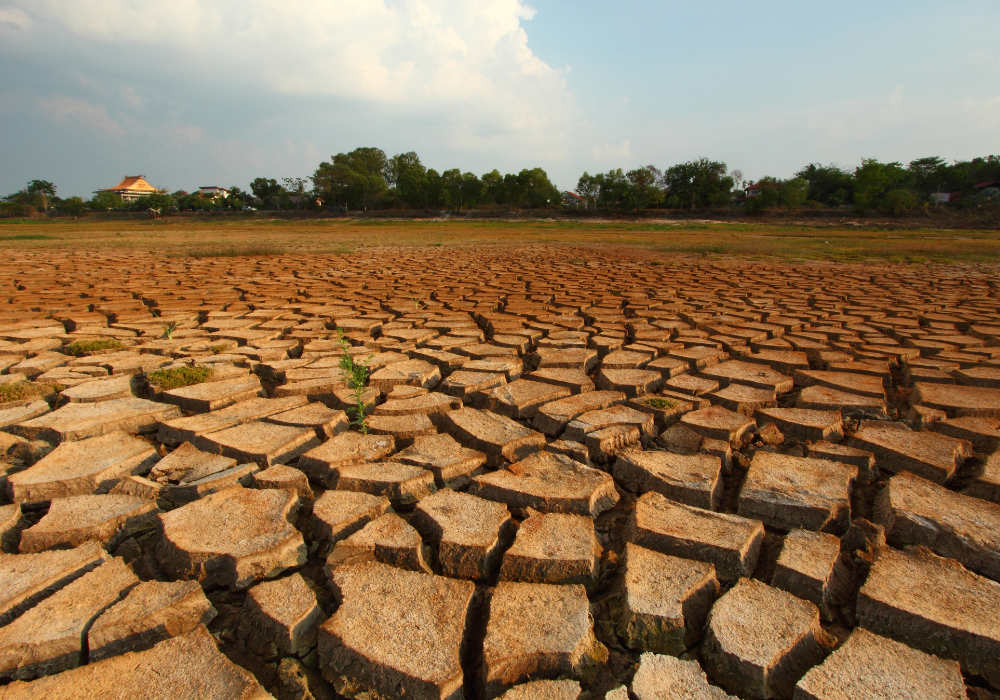
The Nefud Desert looks barren today, but climate records show it experienced wetter phases thousands of years ago. Seasonal lakes and vegetation would have supported both people and wildlife.
This evidence suggests humans were closely tied to environmental shifts, moving into regions only when conditions allowed. The footprints are a reminder that climate change has always shaped migration, influencing where humans could survive and thrive.
8. Comparisons to other ancient footprints
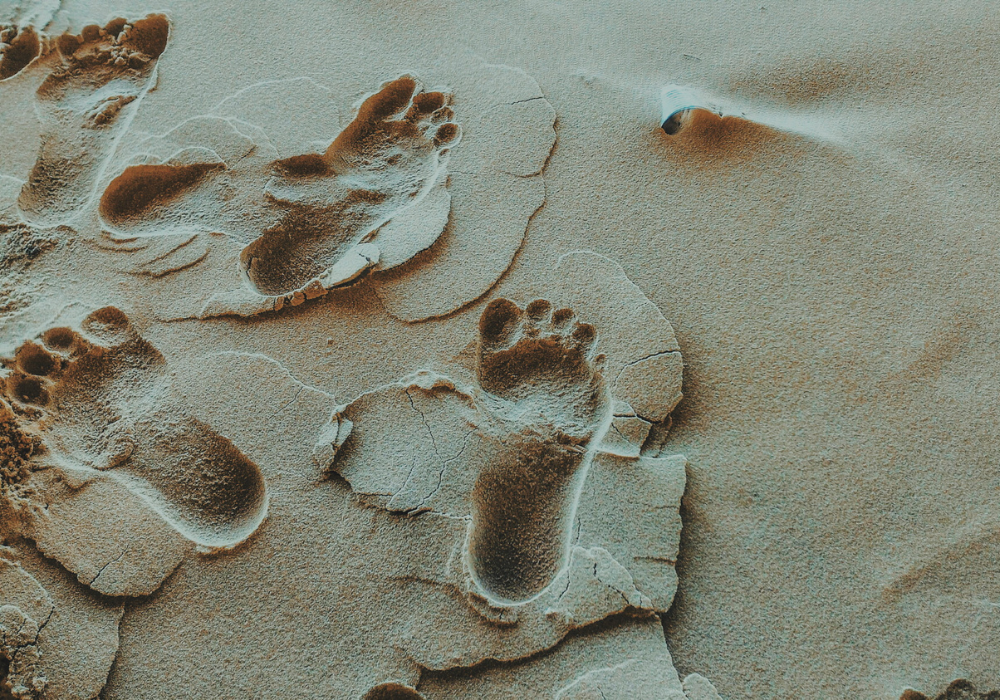
The Nefud site now joins a global record of groundbreaking footprint discoveries. Laetoli in Tanzania revealed 3.6-million-year-old prints of early bipedal ancestors. White Sands in New Mexico preserved Ice Age humans walking beside mammoths.
Each find has transformed science, and Saudi Arabia now adds its own chapter. Together, these sites highlight the universality of footprints as living snapshots, giving us windows into behavior and movement across vastly different times and places.
9. Technology preserved the evidence

Footprints are fragile and can vanish under erosion or shifting sands. To save them, scientists used 3D scanning and high-resolution imaging to capture the impressions in exact detail. These digital models allow researchers worldwide to study the prints long after the originals fade.
Without this technology, one of humanity’s oldest stories might have been lost. Instead, the tracks are preserved forever as evidence of our ancestors’ resilience.
10. The global significance of the find

This isn’t just a regional discovery—it reshapes migration history worldwide. The footprints prove humans spread into Arabia far earlier than expected, suggesting multiple migration waves instead of a single path out of Africa.
By venturing into the desert, humans demonstrated adaptability that challenges older, linear models of expansion. Arabia, once seen as a barrier, may have been a critical bridge in humanity’s global journey.
11. Challenging old scientific assumptions

For decades, textbooks portrayed human migration as slow and limited. But the Nefud prints reveal explorers willing to test harsh frontiers. The possibility that children walked alongside adults makes the story even more compelling.
It wasn’t only hunters or scouts, but families forging ahead together. This suggests exploration and adaptability are deeply ingrained human traits, stretching back more than 100,000 years.
12. Why this discovery matters today

Beyond scientific importance, the footprints connect us to people who walked across Arabia long before recorded history. Their presence reminds us that survival has always meant adapting to shifting environments.
They also inspire reflection about resilience in our own age of change. Just as early humans adjusted to evolving climates, we face similar challenges today. These ancient steps are not only a window into the past—they are part of humanity’s timeless story of endurance.