
Rising climate risks mean your “guaranteed” coverage might not be so guaranteed.

You pay your insurance premiums faithfully, trusting your provider will have your back when disaster strikes. But here’s the harsh truth—some insurance companies are already planning their exit before the next storm even forms. With wildfires, floods, hurricanes, and other natural disasters on the rise, insurers are scrambling to protect their bottom line—and that often means dropping you. Fast.
Homeowners across the country are waking up to cancellation notices or steep rate hikes right when they need protection the most. These red flags can help you spot the warning signs early—before you’re left uninsured when you need it most.
1. You suddenly receive a notice about “changing coverage terms.”

When an insurance company starts tinkering with your policy language out of nowhere, pay attention. These so-called “coverage updates” often mask a quiet retreat from risk. They might reduce wind damage protection, increase your deductible for specific perils like wildfires, or shift from replacement cost to actual cash value (which pays far less). It’s a strategic move to limit how much they’ll owe if disaster hits.
Sometimes it’s the first warning that they’re preparing to dump higher-risk customers altogether. It’s not illegal—it’s just shady and profit-driven. Don’t toss these notices aside thinking they’re routine.
Read them closely, call your agent, and ask bluntly: “Are you planning to drop me?” If they dance around the answer or sound cagey, you’ve got your first sign that loyalty won’t protect you when Mother Nature makes her next move.
2. Your renewal premium spikes even though you didn’t file a claim.

You’ve been a model customer—no claims, no late payments, just steady loyalty. Then your renewal shows up and BAM—your premium jumps by 40%. What gives? Insurers use premium hikes to price people out without officially canceling them.
It’s a legal nudge toward the exit, hoping you’ll be the one to walk away. And the spike often has nothing to do with you—it’s based on your ZIP code, climate risk maps, and rising claim costs in your area. If you call to ask why and the answer is vague (“market shifts” or “underwriting review”), that’s code for “we’re nervous about insuring you.”
One hike might be survivable. Two in a row? Start shopping. Because by the time they officially drop you, you’ll be scrambling—and competing with your neighbors for fewer options at sky-high prices.
3. Your insurer pulls out of your state—or your ZIP code.

This one’s hard to miss. Suddenly, your insurance provider announces they’re no longer writing new policies in your area. That sounds like a new customer issue—but don’t relax. When insurers abandon a region, they often follow with non-renewals for existing customers.
Why? Because once their data shows a ZIP code is “unprofitable,” they quietly sever ties—even if you’ve never filed a claim. We’ve seen this in California, Florida, Louisiana, and even parts of Colorado and Texas. Insurers blame rising climate risks, but the effect is the same: they’re out, and you’re left scrambling.
The non-renewal might not come this year, but it’s probably already scheduled. If your insurer is exiting your state or your ZIP code is mentioned in news stories or letters, don’t wait to get caught off guard. Start exploring new carriers before the rest of your neighbors flood the market.
4. They demand a surprise home inspection with vague reasoning.
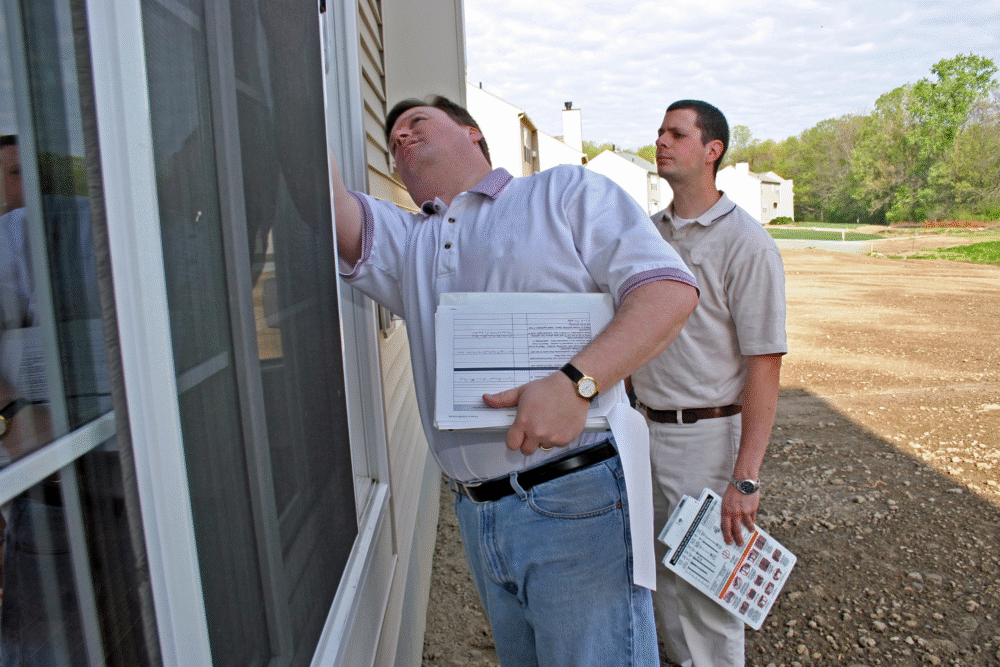
You’ve been in your house for years, and now—out of the blue—your insurer wants to do a home inspection? That’s not random. It’s usually a tactic to find a reason to drop you. These inspections often zero in on small issues: peeling paint, missing shingles, an old deck.
While they say it’s about “risk mitigation,” what they’re really doing is preparing a file in case they need to justify a cancellation or non-renewal. Even minor wear and tear can be flagged. If the inspection request is sudden or feels oddly timed (especially after a major disaster season), that’s a red flag.
Don’t ignore it. Prepare your home, document its condition, and keep copies of everything. If they’re digging for a reason to push you off their books, don’t make it easy.
5. You get a non-renewal notice shortly after a natural disaster hits nearby.

Here’s a sneaky but common move: a major disaster strikes near you—maybe not even your home—and a few weeks or months later, your insurance company sends a polite letter saying they won’t be renewing your policy. It’s no coincidence.
Even if you didn’t file a claim, the storm revealed just how risky your region is. Insurers crunch the numbers and realize it’s cheaper to bow out than risk another round of payouts. It’s cold and calculated.
These non-renewals often fly under the radar because they’re wrapped in bureaucratic lingo. If you notice neighbors getting similar notices, don’t brush it off as bad luck. It’s likely a coordinated exit strategy. When the winds die down and the waters recede, your coverage might go with them.
6. They start requiring you to make expensive “upgrades” to keep your policy.

Suddenly, your insurer demands you replace your roof, install hurricane shutters, or trim every tree on your lot—just to keep your coverage. These “mandatory improvements” aren’t always about safety. They’re often used as a tactic to push you out without having to cancel you directly. They know the upgrades are pricey, especially for retirees or fixed-income homeowners.
It’s a quiet pressure campaign. If you can’t afford the changes or miss their deadline, they can deny renewal with a clean conscience. And the upgrades often go far beyond basic maintenance—they’re trying to future-proof their risk, not protect your property.
If these demands come in rapid succession or seem excessive, they might be hoping you’ll just give up and leave. It’s not always about making your home safer—it’s about making their job easier and their bottom line fatter.
7. Your neighbors’ policies are getting dropped—one by one.

You might feel safe because your mail hasn’t brought a dreaded letter yet. But what’s happening on your street? If your neighbors are suddenly losing coverage or getting insane premium hikes, pay attention.
Insurance companies often evaluate risk by area, not individual home. If wildfires, floods, or high wind events are increasing locally, they’ll reassess whole neighborhoods. It might start with one or two homes, but the ripple effect can spread quickly.
And sometimes, they’ll start by trimming the “higher risk” properties—older roofs, big trees, flood-prone yards—before moving on to everyone else. So if you start seeing signs—neighbors grumbling, switching carriers, or posting angry rants online—don’t assume you’re immune. That wave could hit your doorstep next. The earlier you prepare, the better your chances of locking in a replacement policy before things get tight.
8. You notice your deductible keeps creeping higher each year.

It starts with a $500 deductible. Then it jumps to $1,000. Suddenly, it’s $2,500 just for wind or hail damage. High deductibles are a warning sign. They’re a way for insurers to quietly limit their exposure in disaster-prone areas without dropping coverage outright. If your out-of-pocket costs keep increasing, even when you haven’t made claims, it’s not personal—it’s about your location’s risk.
They’re betting that if something bad happens, you’ll shoulder more of the cost. And it can become a slippery slope. The next step after a series of deductible hikes? Non-renewal. If your policy keeps shifting to make coverage less generous while the premium rises, that’s not “normal market adjustment.”
That’s your insurer trying to hang on as little as possible—until they decide it’s not worth it anymore. That’s when you get the boot.
9. You get dropped by your home insurer and no one else will take you.

This is the nightmare scenario: your longtime provider drops you, and when you start calling around, every other company gives you the same answer—“Sorry, we’re not writing new policies in your area.”
Suddenly, you’re stuck with a state-run insurer of last resort, like Citizens in Florida or FAIR Plans in California. These plans are better than nothing, but they often cost more and cover less. And just like that, you’re now labeled “uninsurable” by private carriers through no fault of your own. Why? Because of your ZIP code.
Once insurers flee an area due to climate risks, they don’t come back easily. If you’ve already been dropped and can’t find a replacement outside government-backed programs, it’s a clear sign: your region is on the insurance industry’s blacklist. Don’t wait for it to happen. If you’re still covered, treat that policy like gold.
10. The company rebrands, merges, or sells—and then your coverage changes.

You might not think much when your insurance company suddenly changes names, merges with a bigger firm, or gets bought by an unfamiliar corporation. But mergers often signal major changes in risk appetite. The new company may want to clean house—fast. And that could mean non-renewing thousands of policies that don’t fit their updated profile.
If your area has seen big storms, fires, or floods recently, you could be on the chopping block—even if you’ve been a “perfect” customer. Some companies use a merger to quietly exit regions, cut costs, or reassign risk to barebones policies with less protection. Pay close attention to any communications that follow the rebrand.
New logos often mean new terms, higher premiums, or stricter inspections. And if something feels off, start shopping early. Because when your insurer changes hands, their loyalty to you may vanish with the old name.
11. Your property is flagged by AI as a high-risk location.

Here’s the behind-the-scenes reality: insurers are increasingly using artificial intelligence and satellite data to evaluate your property—sometimes without ever stepping foot on it. AI can flag homes with overgrown vegetation, proximity to wildfire zones, roof damage, or even how close you are to rising floodplains.
If you live in a high-risk region, a computer model might decide you’re not worth covering anymore. You’ll just get a form letter saying your policy won’t be renewed. And when you ask why? The answers will sound vague—something about “updated risk models.” That’s your clue that you’ve been algorithmically dumped. It’s frustrating because there’s no appeal.
No one ever walked your property. You were a line on a spreadsheet. If this happens, demand specifics. And when you search for new insurance, ask if they use the same methods—because you might be flagged again.