
If you think the solar system is predictable, these jaw-dropping events will prove you wrong.
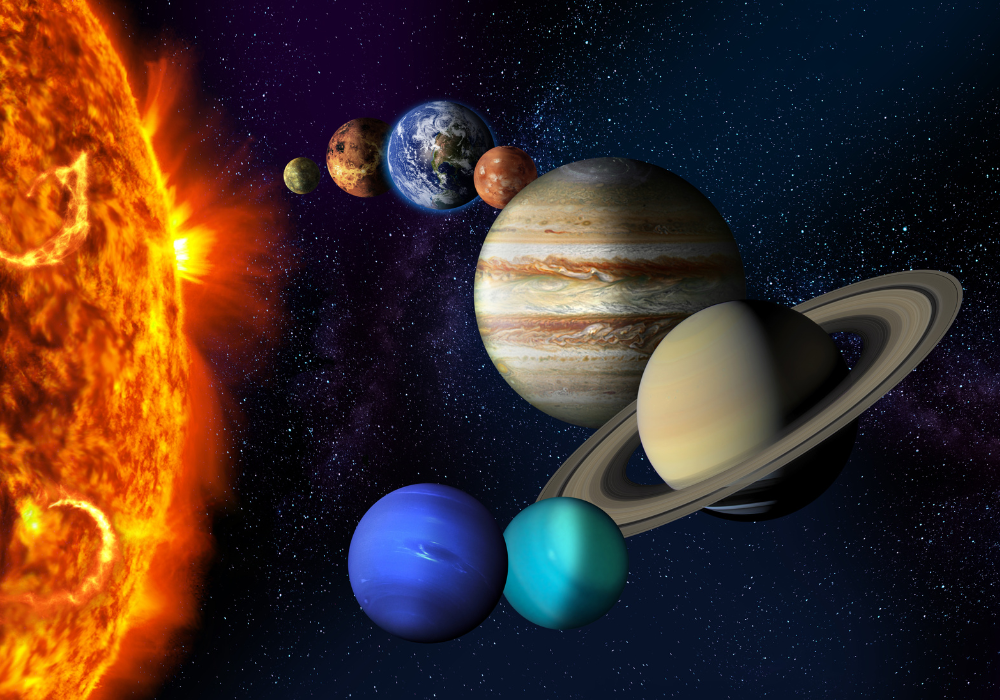
Space is weird—and sometimes, it’s downright jaw-dropping. Over the years, our solar system has pulled off some truly bizarre stunts that left scientists stunned, scrambling for answers, or completely rethinking what they thought they knew. We’re not just talking about strange orbits or odd craters. We’re talking about massive explosions, vanishing atmospheres, and planetary behavior so wild it sounds made up.
These aren’t science fiction—they’re real events observed by actual space missions and telescopes. Some still have no clear explanation. If you thought our little corner of the galaxy was calm and predictable, think again. The solar system is full of surprises—and these twelve moments prove that the cosmos is far stranger than anyone ever expected.
1. Jupiter got slammed by something so huge it left a scar the size of Earth.
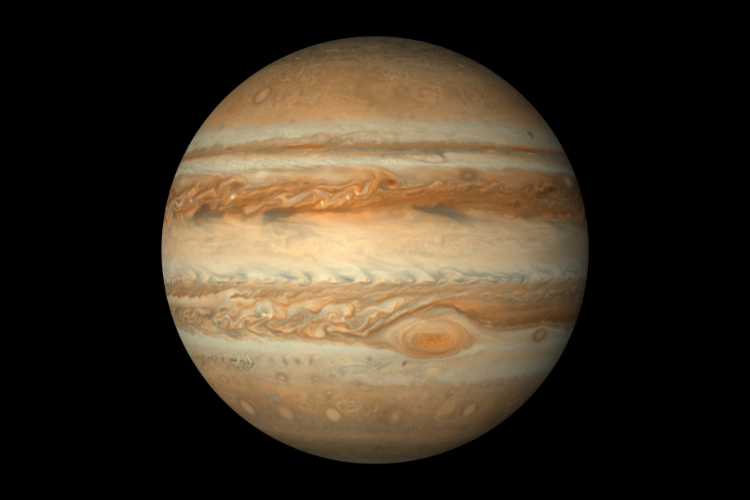
In 2009, amateur astronomers were casually observing Jupiter when they noticed a strange dark spot that hadn’t been there before. Turns out, the gas giant had just been smacked by something massive—likely a rogue comet or asteroid—and the impact left a gaping black mark big enough to swallow Earth whole.
Scientists scrambled to point the Hubble Space Telescope at it and were blown away. The sheer size of the explosion and the fact that no one saw it coming raised a lot of eyebrows.
It reminded everyone that space is far from quiet—and even giant planets like Jupiter can take a cosmic punch without warning.
2. Neptune suddenly grew a storm that appeared and vanished like magic.

Back in 2018, astronomers spotted a massive storm brewing on Neptune—something they’d seen before but never quite like this. It was a dark vortex the size of the Atlantic Ocean, spinning wildly near the planet’s equator.
Then, without much warning, it started drifting backward and completely vanished within months. Scientists were baffled.
Normally, Neptune’s storms behave more predictably, lingering for years. This one defied all expectations, breaking every known model of how weather works on that icy planet. What made it weirder? No one knows why it appeared so quickly or why it faded so fast. Neptune doesn’t give up its secrets easily—and this storm left everyone scratching their heads.
3. The Sun just stopped spinning evenly—and scientists still aren’t sure why.

You’d think the Sun, being a giant ball of burning plasma, would rotate uniformly. But nope. In 2020, scientists discovered something strange: the Sun’s outer layer had mysteriously slowed down compared to its inner layers.
It’s like the solar equivalent of your skin lagging behind your muscles. This behavior completely contradicted decades of solar modeling, and no one saw it coming.
What’s behind it? Some theories point to magnetic braking or hidden solar waves, but no one’s certain. The Sun, our supposedly well-understood star, reminded us that it still has secrets buried deep beneath its surface—secrets we didn’t even know to look for.
4. Saturn’s rings are vanishing faster than anyone expected.

For centuries, Saturn’s rings have been one of the most iconic sights in the night sky. But now, they’re disappearing—literally. NASA’s Cassini mission revealed that the rings are raining down onto the planet, with icy particles falling into Saturn’s atmosphere at a shocking rate.
Scientists expected a slow fade over millions of years, but the current data suggests the rings could be gone in less than 100 million years—a cosmic blink of an eye.
That’s got researchers scrambling to understand how the rings formed in the first place and why they’re disappearing so fast. One thing’s clear: we’re lucky to be alive at a time when we can still see them.
5. Mars had a methane spike—and then it just vanished.
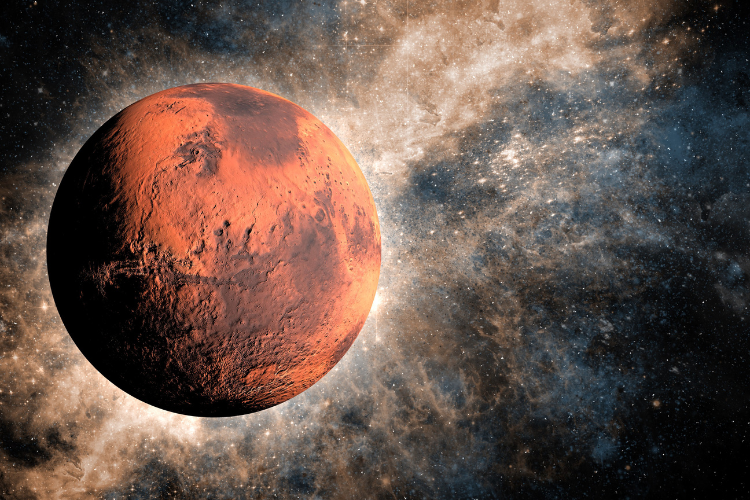
Methane is a big deal on Mars because it might point to microbial life. So when NASA’s Curiosity rover detected a sudden spike in methane levels in 2019, the science world lit up with excitement. But then—poof—it was gone.
The gas levels dropped back down like nothing ever happened. Even stranger, Europe’s ExoMars orbiter flying overhead didn’t detect any methane at all.
So who’s right? Was it a glitch, a burp of buried gas, or something even weirder? No one knows. But that fleeting sniff of methane left scientists both thrilled and deeply confused. Whatever caused it, Mars isn’t giving up its secrets easily.
6. Pluto’s atmosphere collapsed—and no one saw it coming.

After the New Horizons flyby in 2015, Pluto was having a bit of a glow-up. It had mountains, glaciers, and even a thin atmosphere. But in 2021, ground-based telescopes observed something shocking: Pluto’s atmosphere was shrinking—and fast. That’s not what scientists expected.
As Pluto drifts farther from the Sun in its long orbit, they thought the atmosphere would stay stable for a while. Instead, it seemed to be freezing and falling back onto the surface.
This collapse defied predictions and forced researchers to rethink everything they assumed about Pluto’s seasonal changes. Apparently, even a dwarf planet can surprise the entire astronomical community overnight.
7. Mercury has a tail—and it’s made of freaking sodium.

Tiny, scorched Mercury, baking in the Sun’s glare, doesn’t seem like it has much going on. But then astronomers discovered something totally wild: Mercury has a tail. Not a comet-style tail made of ice and dust—but a glowing, sodium vapor tail that trails millions of miles behind it.
The Sun’s intense radiation blasts sodium off Mercury’s surface, and solar wind carries it away, creating this strange ghostly glow.
You can’t see it with the naked eye, but special filters pick it up clearly. It’s the kind of discovery that makes you realize even the quietest planet in the solar system is doing something completely bizarre behind the scenes.
8. A mysterious object crashed into the Moon—and no one claimed it.
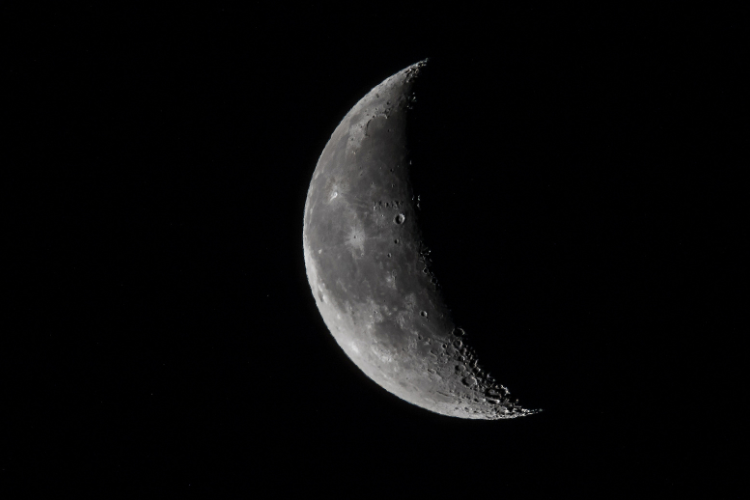
In March 2022, something slammed into the far side of the Moon, creating not one but two overlapping craters. That’s weird enough—but here’s the kicker: no country, agency, or company has stepped up to claim responsibility.
At first, people thought it might be part of a SpaceX rocket, but further tracking pointed to an old Chinese booster. China denied it. So now, there’s this massive double crater with an unknown origin, and scientists still can’t figure out exactly what hit the Moon.
The lack of answers makes this one especially eerie. Space is crowded, and apparently, it’s also full of secrets.
9. Venus’s atmosphere might contain signs of life—and no one saw that coming.

In 2020, astronomers detected phosphine gas in Venus’s upper atmosphere—a chemical that, on Earth, is almost always linked to living organisms. Cue the freakout.
Venus, with its hellish temperatures and crushing pressure, wasn’t exactly on the shortlist for life-friendly worlds. Yet, this chemical shouldn’t exist there unless something very strange is going on.
While the discovery is still debated and other studies have questioned the results, the fact that anything resembling a life marker showed up in Venus’s skies has completely reignited interest in the planet. Turns out, Earth’s evil twin might be hiding more than just violent storms and volcanoes.
10. Uranus rolls sideways—and no one knows exactly why.

Uranus is the oddball of the solar system. While other planets rotate more or less upright, Uranus spins almost completely on its side, like it’s doing a lazy cosmic barrel roll.
Its axis is tilted at about 98 degrees, which means one pole faces the Sun for years while the other is plunged into darkness.
Scientists think a massive collision early in its history knocked it over, but no one knows for sure. The sideways spin affects its seasons, magnetic field, and even the way its moons orbit. It’s like Uranus decided the rules didn’t apply—and just went full rebel mode.
11. Comet 67P started singing—and it wasn’t even near the Sun yet.
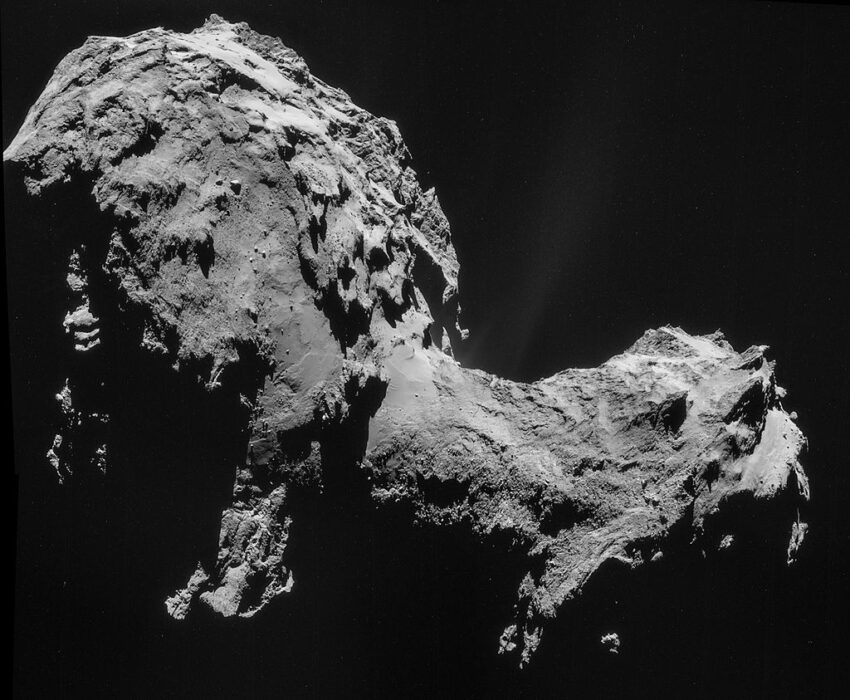
In 2014, before the Rosetta spacecraft even touched down on Comet 67P, its instruments picked up something bizarre: the comet was “singing.” Not in a human way, of course, but it was emitting a rhythmic magnetic oscillation at 40-50 millihertz.
Scientists had no idea what to make of it. The comet wasn’t even close enough to the Sun to start off-gassing, so what was creating this weird noise?
The theory is that charged particles interacting with the comet’s magnetic field were the culprits—but even that feels like a partial explanation. It’s one of those haunting, unexplained moments in space exploration that still sends chills.
12. The Sun fired a solar flare so intense, it blasted Mars’s atmosphere away.
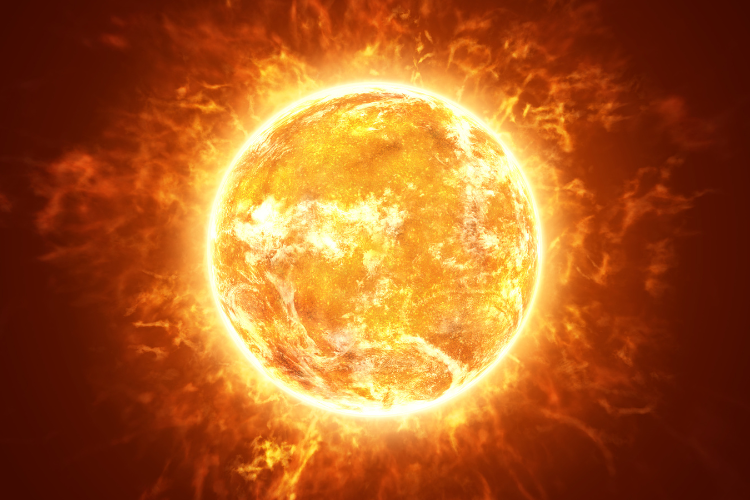
We know solar flares can be intense, but one particular blast—observed indirectly through NASA’s MAVEN spacecraft orbiting Mars—was downright terrifying.
The flare sent a tsunami of charged particles toward the Red Planet, and it stripped huge portions of Mars’s already thin atmosphere right into space. Scientists were stunned at how fast and violent the effect was.
If that kind of event hit Earth without warning, it could cripple satellites, fry power grids, and cause massive communication blackouts. Mars may not have had the magnetic protection Earth does, but the scale of destruction showed just how powerful—and unpredictable—our star can be.