
If nothing changes, these animals could be museum displays by 2040.

We are living through a mass extinction, and most people don’t even realize it. Species that once thrived in the millions are now reduced to a handful of individuals, clinging to survival in shrinking pockets of habitat. The crisis is quiet, but it’s global—and it’s accelerating.
From mountaintops to coral reefs, animals are vanishing because of deforestation, pollution, climate change, and poaching. Their ecosystems are collapsing. Some are already functionally extinct, while others could slip away in the next decade unless something changes—fast.
This isn’t theoretical. These are real creatures—intelligent, iconic, and incredibly vulnerable. You’ve seen them in storybooks, nature documentaries, or maybe even the wild. But for many, time is running out. Most of these species are disappearing right in front of us, without fanfare or headlines. They’re slipping away quietly, while the world scrolls past—distracted, busy, and unaware of what we’re losing.
1. Vaquitas are vanishing from the sea faster than we can save them.
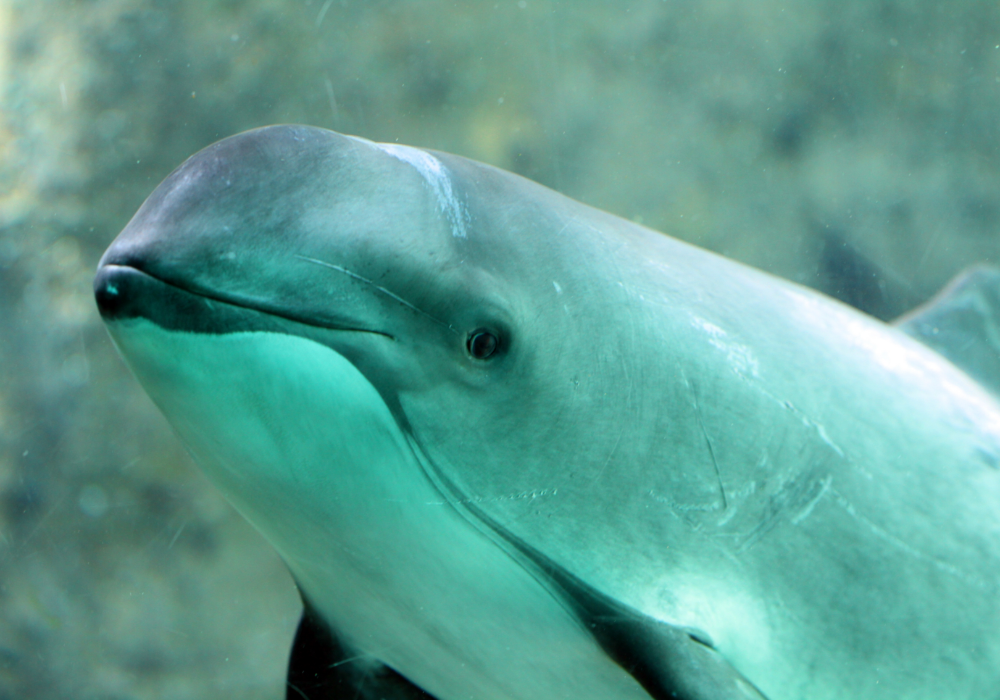
With fewer than 10 individuals left in the wild, the vaquita is considered the most endangered marine mammal on Earth. These tiny, shy porpoises live only in the northern Gulf of California and are frequently caught and drowned in illegal gillnets set for totoaba fish—whose swim bladders are highly prized in black markets. As reported by Sea Shepherd, the vaquita population is now estimated to be between 6 and 8 individuals, a sharp decline from previous numbers.
Despite international pressure and increased patrolling, the nets keep going back into the water. Locals risk it for profit, and enforcement can’t keep up. Conservationists are running out of options. Without a dramatic shift in both policy and enforcement, vaquitas could vanish entirely within the next few years, let alone by 2040.
2. Javan rhinos have nowhere left to run—and barely room to survive.

Once widespread across Southeast Asia, Javan rhinos are now confined to just one location: Ujung Kulon National Park in Indonesia. According to activists for Save the Rhino, recent estimates suggest the population has increased to approximately 74 individuals, but this small population is still confined to a vulnerable area prone to tsunamis, disease outbreaks, and invasive species.
Poaching has decreased, but their biggest threat is lack of space and genetic diversity. No second population exists. That means any single catastrophe could wipe them out overnight. Plans are underway to create a new habitat and expand the population, but progress is slow and funding is scarce. Time is running out for this gentle, elusive giant.
3. Northern bald ibises are making a shaky comeback—but it might not last.
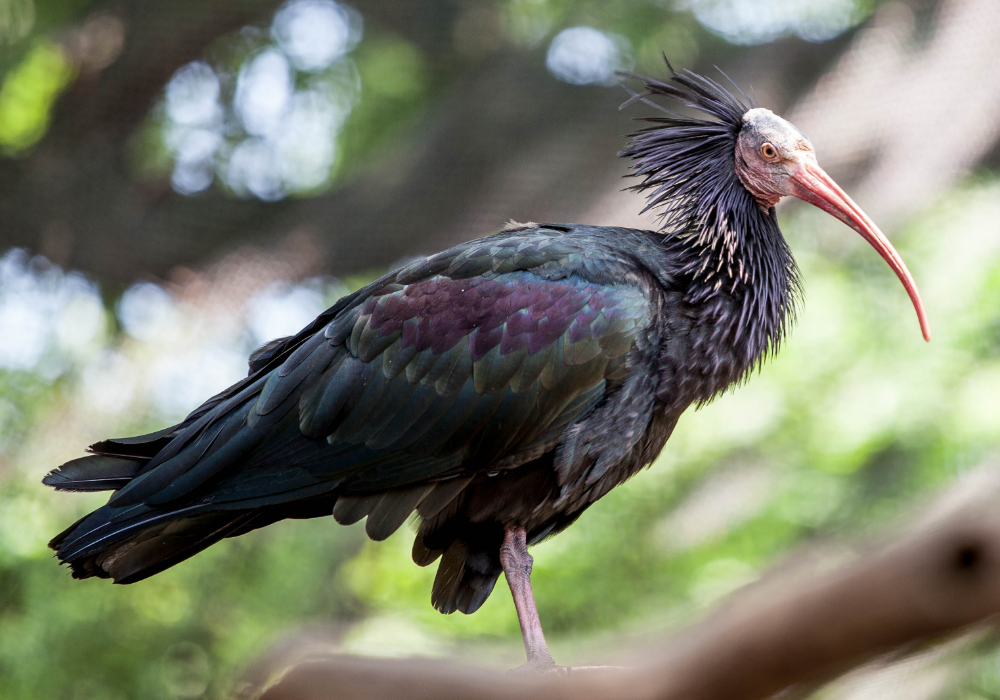
With their featherless heads and curving beaks, northern bald ibises look like something out of a medieval painting—and they nearly became one. Per writers for Rewilding Europe, these birds were once widespread across Europe, the Middle East, and Africa, but their numbers dwindled due to hunting, habitat loss, and cultural myths portraying them as bad omens.
Today, only a few hundred wild individuals exist, mostly in Morocco, and some carefully reintroduced groups in Europe. Conservationists have even trained them to migrate using microlight aircraft. But power lines, changing weather patterns, and human development remain major threats. Without continued, intensive intervention, this quirky bird could once again disappear from the skies.
4. Sumatran orangutans are watching their rainforest disappear branch by branch.

Fewer than 14,000 Sumatran orangutans remain in the wild, and their numbers are dropping fast. These brilliant, solitary apes spend their lives in trees—trees that are rapidly being destroyed for palm oil plantations, mining, and logging. With every acre lost, their world shrinks.
Orangutans pushed closer to human settlements face capture, injury, or death. Mothers are often killed so their babies can be sold in the illegal pet trade. Even in protected zones, enforcement is inconsistent. While some reforestation efforts are underway, the damage is outpacing the repair. If we don’t protect what’s left, these great apes could be gone within a generation.
5. Axolotls are disappearing in the very city they once thrived in.
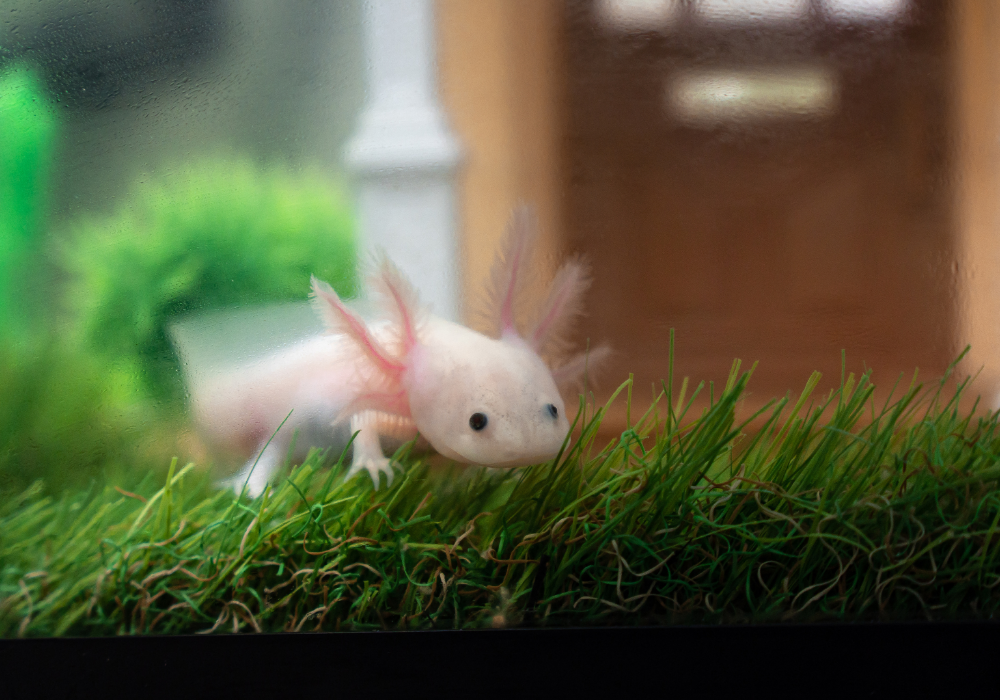
Once common in Mexico City’s ancient lake systems, axolotls are now nearly extinct in the wild. These strange amphibians, famous for their ability to regrow limbs and stay “forever young,” have been pushed out by urbanization, pollution, and invasive fish that eat their eggs and young.
They survive mainly in labs, classrooms, and aquariums—but not in the natural canals where they evolved. While efforts to clean and restore the Xochimilco wetlands are ongoing, progress is slow and the threats are relentless. Without significant and sustained habitat restoration, axolotls may be remembered more as science mascots than wild animals.
6. Amur leopards are running out of forest—and time.
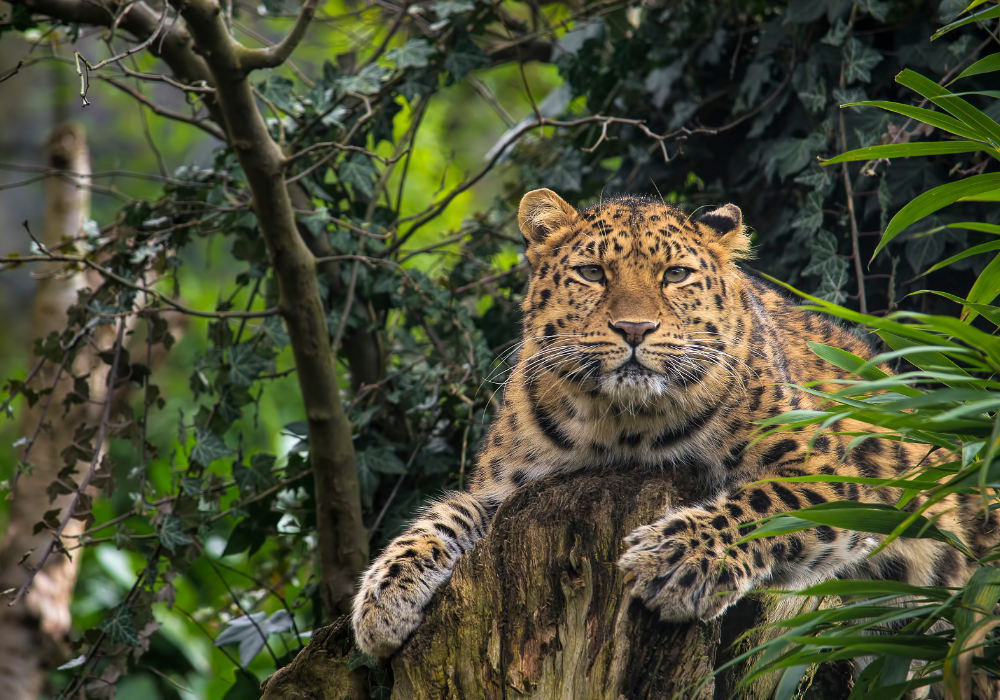
The Amur leopard is a master of survival in cold, rugged landscapes, but even it can’t outrun extinction. With fewer than 100 individuals remaining, these cats inhabit a shrinking patch of forest in Russia’s Far East. Poaching and deforestation have taken a huge toll, and the gene pool is dangerously shallow.
Russia has created protected reserves, and anti-poaching efforts have improved. Still, climate change, logging, and infrastructure projects threaten their limited habitat. Without stronger international collaboration and expanded protected areas, these rare cats may disappear—taking one of the most beautiful and endangered big cats with them.
7. Only three Yangtze giant softshell turtles remain, and time is running out.
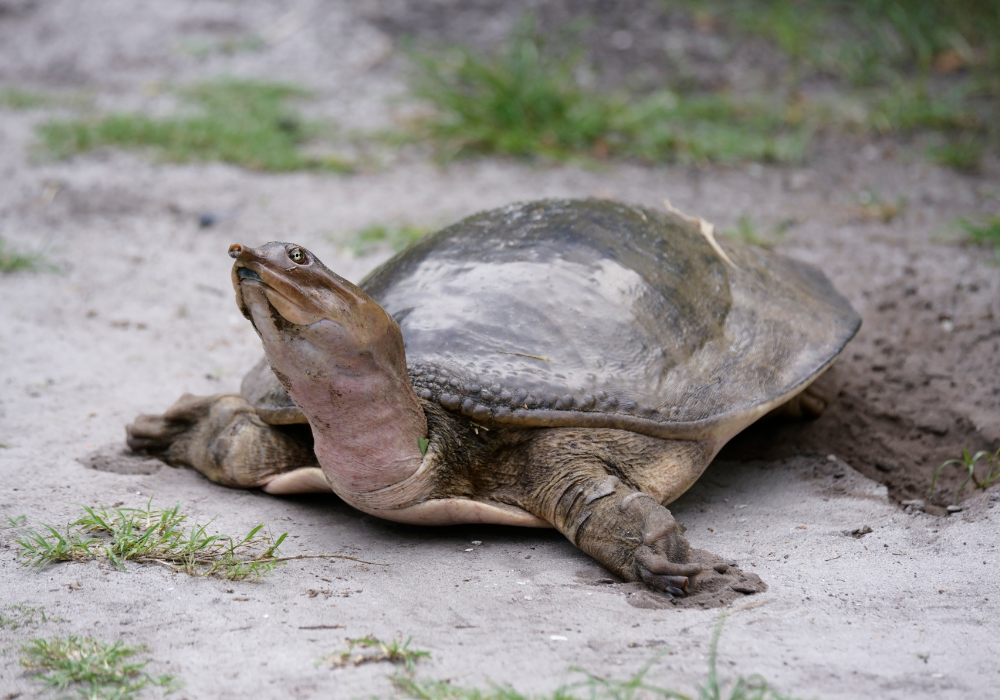
This massive, ancient freshwater turtle once glided through rivers across China and Vietnam. Now, just three individuals are known to exist—two males and one female. Years of poaching, pollution, and dam construction devastated their numbers, and every breeding attempt so far has failed.
Scientists are resorting to artificial insemination, but even that has produced no viable offspring. The species’ slow reproductive cycle, combined with its vanishing habitat, makes recovery incredibly difficult. If these last individuals die without reproducing, the Yangtze giant softshell turtle will disappear forever, taking with it millions of years of evolutionary history.
8. Saola sightings are so rare, some scientists fear it’s already gone.

Often called the “Asian unicorn,” the saola was only discovered in 1992—and we’ve barely seen it since. Native to the Annamite Mountains between Laos and Vietnam, this elusive antelope-like creature is one of the most mysterious mammals on Earth. It’s so rarely spotted in the wild that researchers can go years without a confirmed sighting.
Habitat destruction and poaching are driving it toward extinction, even though it’s not directly hunted—snares meant for other animals still trap and kill saolas. There are no saolas in captivity, no breeding programs, and no second chances. Without urgent protection and anti-snare patrols, this ghost of the forest may disappear before most people even know it existed.
9. Gharials are losing their river homes to dams and sand mining.
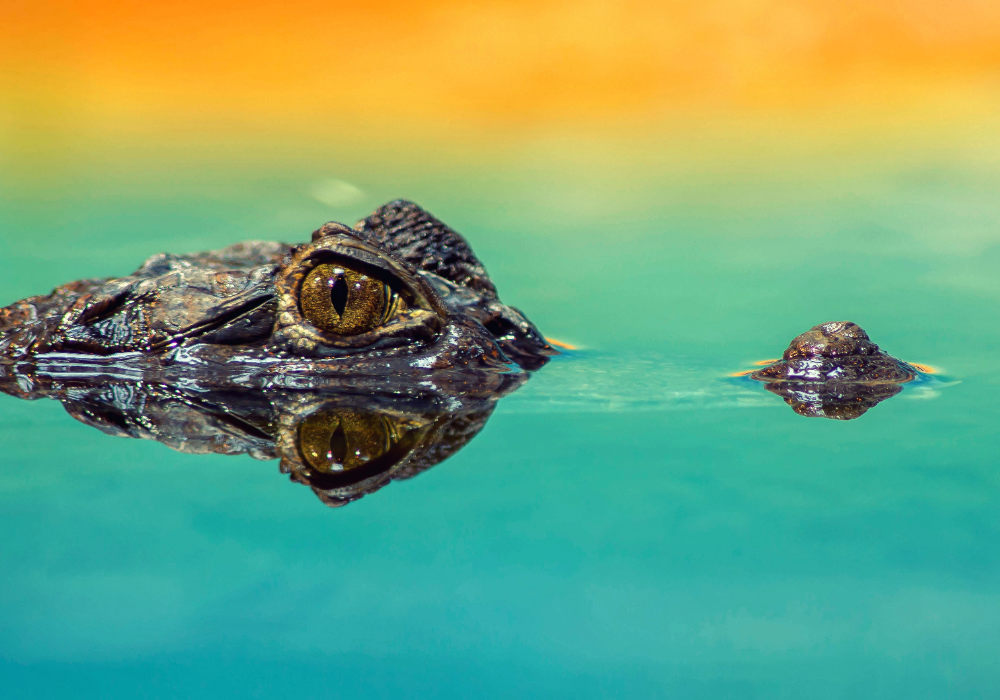
With their long, narrow snouts and rows of sharp teeth, gharials look like prehistoric throwbacks—and they’re just as endangered. Native to the rivers of the Indian subcontinent, these gentle fish-eaters have lost over 90% of their historic range. Only a few hundred breeding adults remain.
Habitat destruction is the biggest threat. Dams, river pollution, sand mining, and human encroachment have made it nearly impossible for gharials to nest and reproduce. Conservation programs are working to reintroduce hatchlings into the wild, but if their rivers continue to disappear, so will the species. Without safe, flowing water, the gharial doesn’t stand a chance.
10. African forest elephants are being wiped out faster than they can reproduce.
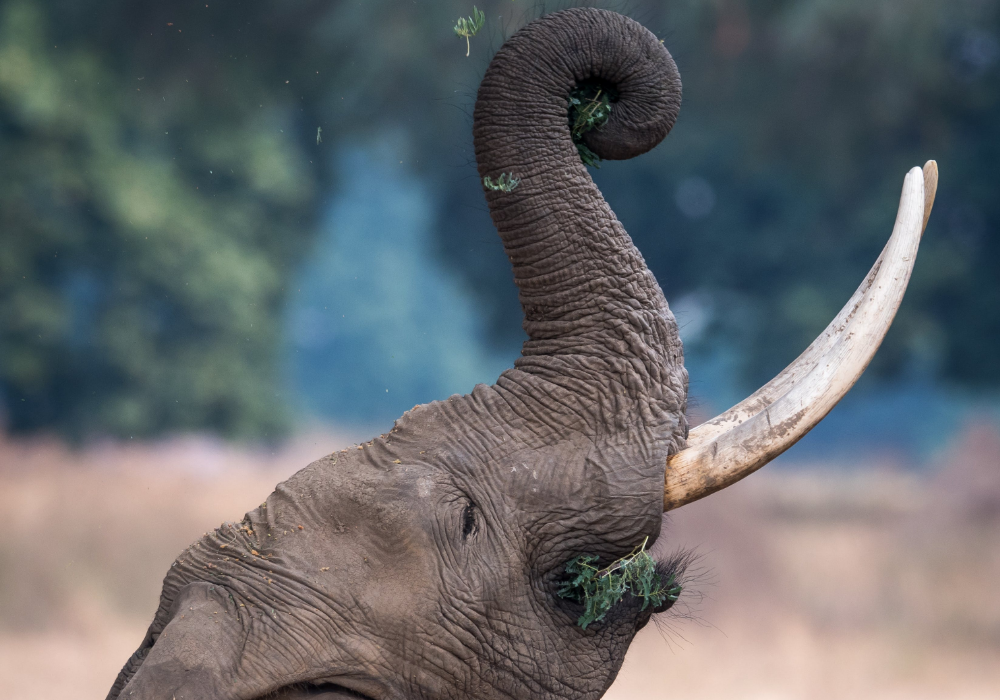
Smaller and more elusive than their savanna cousins, African forest elephants are crucial to their ecosystems—spreading seeds, clearing vegetation, and keeping forests healthy. But their populations have dropped by over 80% in just the last few decades.
Poaching for ivory is the main culprit, but logging, farming, and infrastructure development are also destroying their habitat. Forest elephants reproduce slowly, with long gestation periods and years between calves. That means even with full protection today, it would take decades for their numbers to bounce back. And at the current rate of loss, they may not get the chance.
11. Northern river terrapins are barely hanging on in the mangroves.

Once common across Southeast Asia, northern river terrapins are now critically endangered, with just a few breeding populations in captivity and the wild. These freshwater turtles live in estuaries and mangrove swamps—habitats that are rapidly disappearing due to coastal development and pollution.
Hunted for meat and traditional medicine, terrapins have been pushed to the brink. Captive breeding programs are trying to help, but wild nesting sites are rare and unprotected. Without strong habitat restoration and better enforcement, this ancient species could vanish quietly in the next decade or two—another piece of the coastal ecosystem gone without fanfare.
12. Hawksbill sea turtles are running out of time—and safe beaches.

These brilliantly patterned turtles are vital to coral reef health, feeding on sponges and helping reefs thrive. But hawksbills are critically endangered, and their numbers continue to fall. The beautiful shells that help identify them also make them a target for illegal trade.
Coastal development, climate change, and poaching have devastated their nesting sites. Rising temperatures are even skewing sex ratios in hatchlings, leading to fewer males. Conservationists are working to protect nesting beaches, but many are already degraded or lost to tourism. Without safer shores and stronger protections, these reef guardians could disappear entirely.
13. Pangolins are the most trafficked mammals in the world—and it’s killing them.
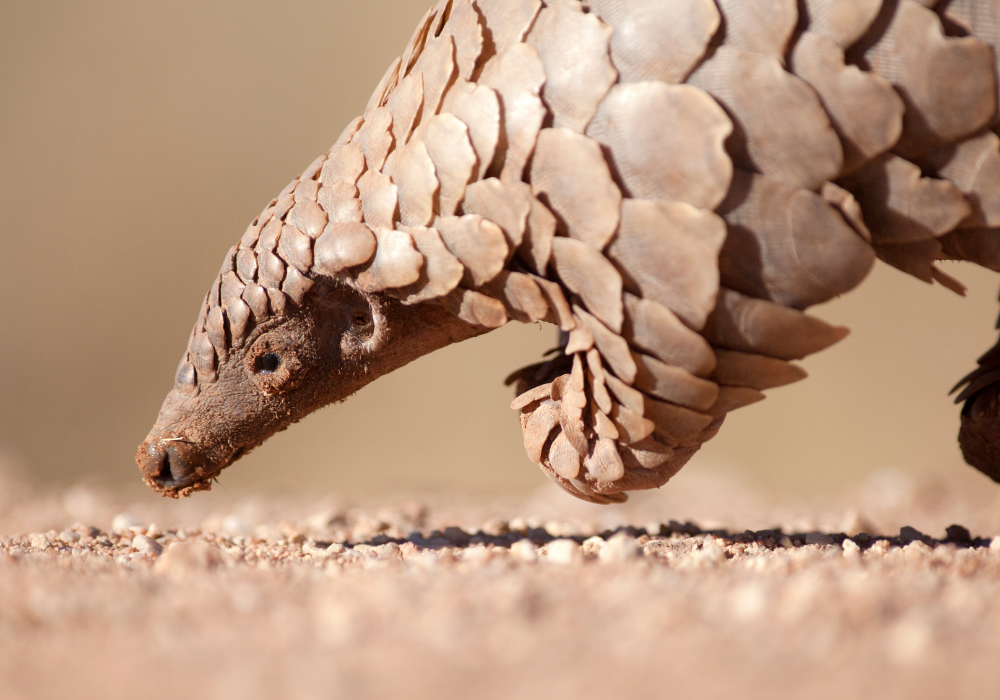
Covered in armor-like scales, pangolins are often mistaken for reptiles—but they’re actually shy, nocturnal mammals. Found in Asia and Africa, they’ve become a top target for illegal wildlife trade. Their scales are falsely believed to have medicinal properties, and their meat is considered a delicacy in some markets.
Millions have been poached in the last two decades, driving some species to the edge. Despite international bans, demand continues underground. Conservation groups are scrambling to protect pangolins, but awareness is low and enforcement is weak. If this continues, we could lose one of nature’s most unique creatures simply because people refuse to leave it alone.