
Their fight to survive offers a blueprint for resilience.
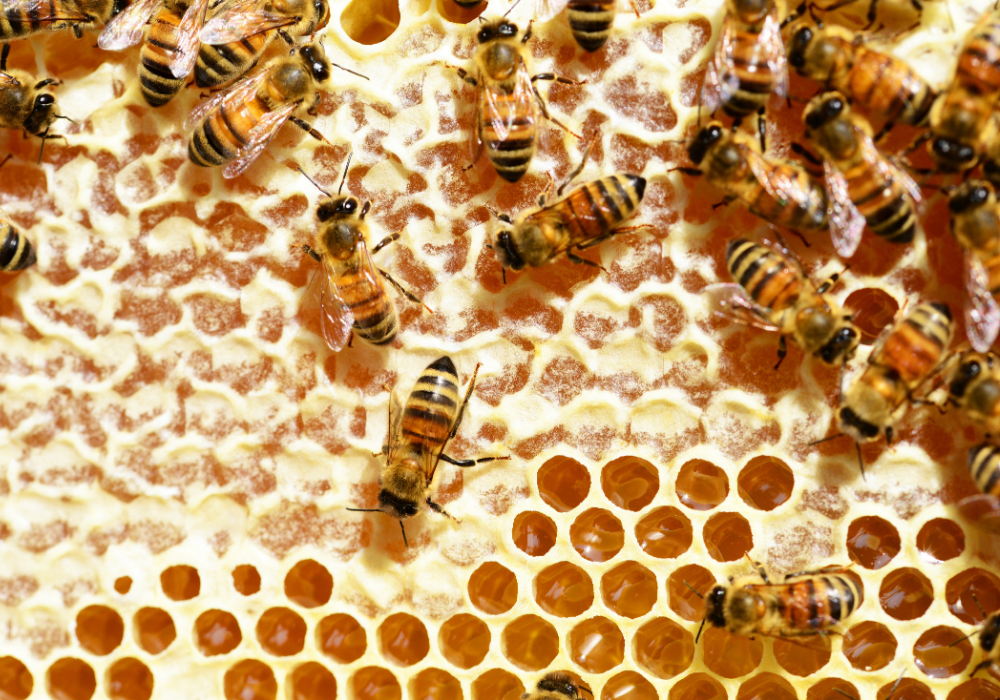
Bees have been sending distress signals for years. Colony collapse, habitat loss, and toxic pesticides have pushed them to the brink, but even as their numbers fall, they keep working tirelessly to hold their fragile world together. It’s easy to think their crisis is separate from ours, tucked away in fields and forests. But pay closer attention, and you’ll see they’re not just fighting for themselves—they’re a living warning about what happens when ecosystems unravel.
Bees are small, but the lessons they offer are huge. They show what community care looks like under pressure, how cooperation keeps life going when resources run thin, and why adaptation matters more than perfection. As we navigate a planet growing more unpredictable by the day, their survival tactics feel less like natural wonders and more like urgent instructions. These 12 lessons from the hive might be exactly what we need to carry forward.
1. The hive only survives when every single bee plays its part.
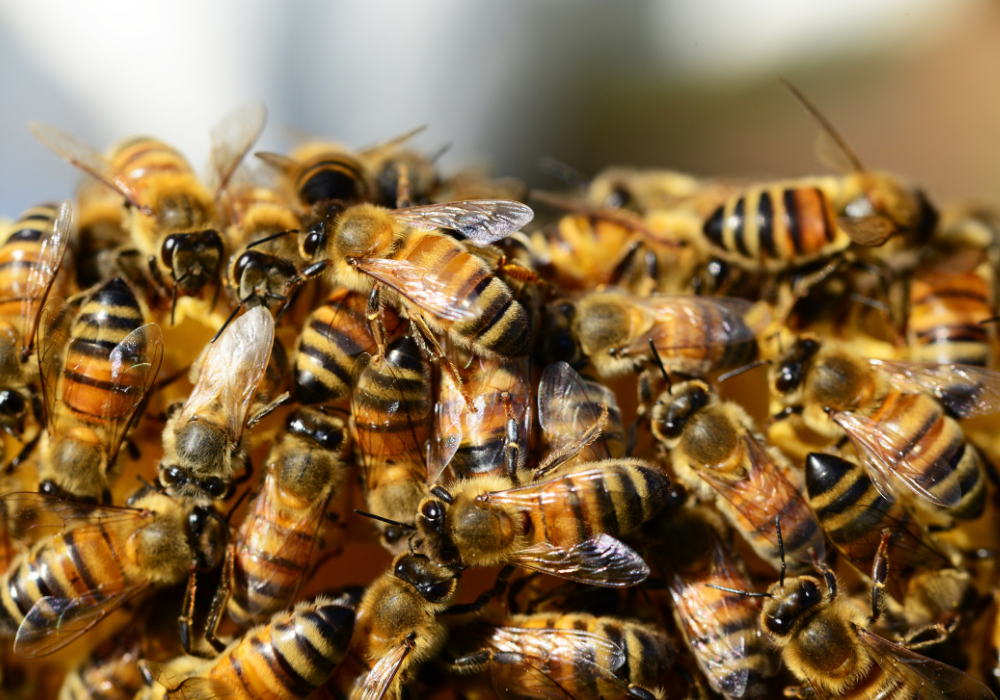
Bees survive through relentless teamwork. Inside the hive, it’s a full-time operation: some bees collect pollen, others protect the entrance, and many care for the young. Spencer McManamna notes in Insect Lore that every bee in the hive plays a role, and it’s this shared responsibility that keeps the colony thriving. When the hive is healthy, every role matters.
This isn’t just a neat fact about insects—it’s a survival model. In the middle of overlapping crises, individual effort will only take us so far. Community action, shared responsibility, and mutual support create the safety net we need. Even small contributions matter when they’re part of a larger whole. Bees remind us that no one survives in isolation. When every member of the hive shows up, the entire colony thrives. The same goes for us—especially now, when collective effort feels more urgent than ever.
2. Adaptation is the only reason the hive still has a chance.

Bees don’t waste time hoping the old ways will come back. When changing seasons throw off blooming schedules or development paves over their habitat, they shift course immediately. According to Friends of the Earth, bees respond to habitat loss by seeking out alternative food sources and nesting sites, even in urban spaces. Adaptability isn’t optional—it’s survival.
The lesson is loud and clear. Waiting for normal to return is a losing strategy. The hive survives by meeting change head-on, not resisting it. For us, this means letting go of outdated habits and building new ways to live with the planet’s shifting reality. Flexibility isn’t weakness—it’s strength. When bees change course without hesitation, they keep the colony alive. When we do the same, we give ourselves a fighting chance in a world that’s transforming faster than anyone predicted.
3. Even bees can’t survive the burnout trap—and neither can we.

Bees are known for their hustle, but even they have limits. In struggling colonies, bees work themselves to exhaustion trying to gather scarce food and keep the hive afloat. Isabelle Dequenne and others explain in PMC that this nonstop effort drains bees’ energy reserves, accelerating colony collapse instead of preventing it. With their strength depleted, bees lose the ability to maintain the hive’s basic functions, and collapse quickly follows.
Sound familiar? Our culture glorifies constant productivity, but it comes at a steep cost. Like the bees, humans are burning out trying to keep up with demands that keep piling on. Rest and recovery aren’t luxuries—they’re survival tools. The hive stays strong when its workers pace themselves, conserve energy, and care for one another. We need to do the same. No one can outrun collapse on sheer effort alone. Sustainable survival starts with honoring our limits before it’s too late.
4. Diversity keeps the hive alive when the world turns dangerous.

A healthy hive isn’t built on sameness. Queens that mate with many different drones create colonies full of bees with varied traits. This genetic diversity makes the entire hive stronger, helping it fight off disease and adapt to new challenges that come with a changing environment.
It’s not just a smart strategy—it’s life-saving. For humans, diversity in our communities, ideas, and solutions makes us far more capable of handling unpredictable crises. Different perspectives spot risks and opportunities others might miss.
When we lean into our differences instead of shying away, we build resilience. Bees don’t survive because they’re identical—they survive because they’re varied and versatile. In a world spinning faster into uncertainty, that lesson is impossible to ignore. Our strength lies in embracing the full range of what we bring to the table.
5. Without nonstop communication, the entire hive breaks down.

Bees are in constant conversation. Through dances, vibrations, and chemical signals, they update one another about food sources, threats, and the state of the hive. This flow of information is what keeps the colony organized and responsive, even when danger hits.
There’s no room for silence in survival. For humans, too, strong communication is the glue that holds communities together in a crisis. Sharing resources, warning of risks, and keeping each other informed can mean the difference between chaos and cohesion. Disconnection breeds vulnerability, while open lines of communication build strength. The hive survives because its members are never left in the dark. We need that same commitment to transparency if we’re going to navigate the challenges ahead. Talking to each other isn’t just helpful—it’s a survival skill.
6. Staying close to home is what keeps the hive alive and thriving.

Bees thrive when they forage nearby. Long journeys to distant flowers burn valuable energy, leaving less strength for hive maintenance and survival. When local ecosystems flourish, bees do too—they spend less time searching and more time building resilience where it matters most.
The parallel couldn’t be clearer for us. Depending on faraway supply chains and distant systems leaves us vulnerable to breakdowns we can’t control. Strengthening local food networks, energy sources, and community support makes us more self-reliant and adaptable. Bees remind us that survival starts close to home. By investing in our immediate surroundings, we protect ourselves from bigger shocks. The hive survives by focusing its energy locally, and there’s power in following their example as we build stronger, more resilient lives.
7. The hive survives because every bee knows its job—and why it matters.
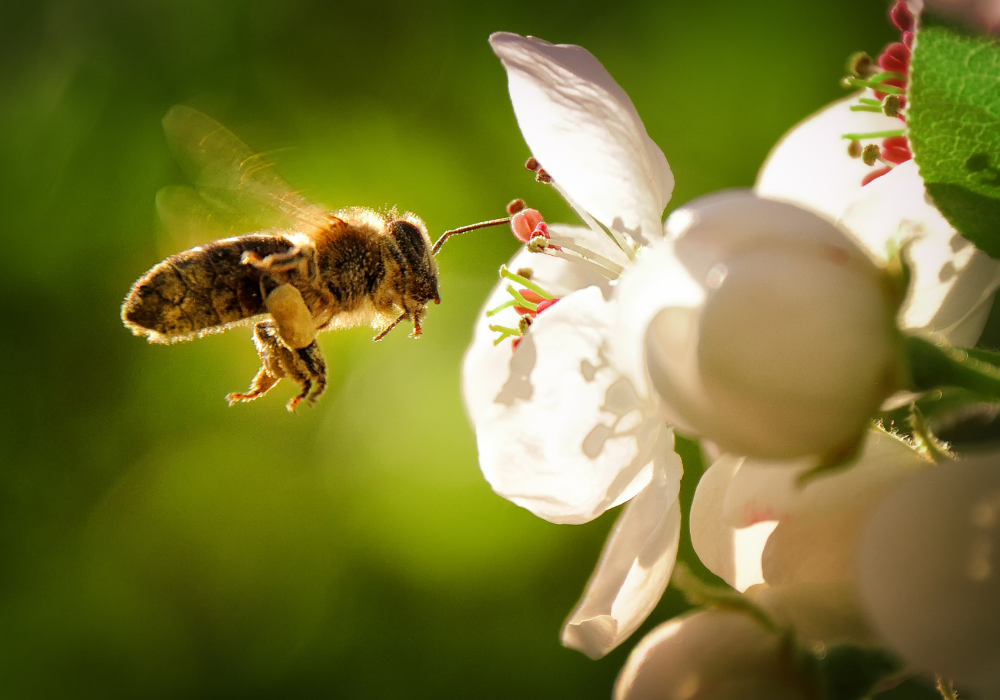
Inside a beehive, roles are clear and crucial. Foragers gather nectar, nurse bees care for the young, and guards protect the entrance. Each task supports the next, keeping the colony balanced and thriving. No one questions the importance of their role, because every bee understands survival depends on everyone pulling their weight.
It’s an example we need more than ever. In our own systems, people are too often left wondering if their effort matters, or if anyone notices at all. But survival—whether it’s of a community, an ecosystem, or a planet—is built on collective effort, big and small. When we recognize how our actions support the whole, we stay motivated to keep going, even when the odds feel overwhelming. Bees don’t survive because they’re perfect; they survive because every role, no matter how small, is valued and vital.
8. The hive’s enemies are many, but unity keeps them standing.

Bees face endless threats: parasites like Varroa mites, pesticides, habitat loss, and changing weather patterns. Any one of these could spell disaster, but bees don’t give up. They respond by rallying the entire hive, working in unison to fight off invaders and adapt to challenges as a team.
For us, the enemies are different but just as relentless—climate disruption, pollution, inequality, and systemic collapse. No single person can defeat them, but unity gives us a fighting chance. When we pull together, share knowledge, and defend our communities, we build collective strength that outlasts crisis after crisis. The hive shows us survival isn’t about facing fewer threats—it’s about facing them together, refusing to fracture even when the pressure builds. Our greatest defense is each other.
9. Rebuilding isn’t optional—it’s a way of life for bees.

When disaster hits a hive, bees don’t wait for rescue. If the colony is damaged, they immediately get to work repairing combs, feeding the queen, and nurturing new life. Rebuilding isn’t a last resort for bees—it’s part of their everyday survival routine, something they’re always ready to do.
Humans have a tendency to freeze after disaster, hoping things will magically return to normal. But bees teach us that rebuilding must be constant, not occasional. We need to expect disruption and be prepared to respond actively, not passively. Whether it’s rebuilding after wildfires, floods, or social upheaval, starting over is part of the process. Bees show us that resilience isn’t waiting for things to get better—it’s choosing to build again, even when it feels exhausting. That’s what keeps life going.
10. Bees protect the next generation like their future depends on it—because it does.

Inside the hive, the youngest bees are treated like precious cargo. Nurse bees tend to the larvae around the clock, feeding them nutrient-rich food and guarding them from harm. The health of future generations is never left to chance because the colony’s survival depends entirely on their success.
For us, this lesson couldn’t be clearer. Protecting children and future generations from climate collapse, polluted air, and political neglect isn’t optional—it’s survival strategy. Short-term fixes aren’t enough when long-term safety is at stake. Just as bees prioritize the wellbeing of their young, we need to make choices that protect those who come next. The hive survives because it never stops looking forward. If we want to do the same, caring for the future has to become our most urgent priority.
11. The hive flourishes when abundance is shared, not hoarded.

Bees collect nectar for the whole colony, not just for themselves. When they find a rich source of food, they alert others with the waggle dance, ensuring the entire hive benefits. Hoarding resources doesn’t cross their minds—it would weaken the group and waste precious opportunities.
Human systems often do the opposite, concentrating wealth and resources in the hands of a few while leaving many to struggle. Bees remind us that survival thrives on generosity and shared abundance.
By redistributing what we gather—whether it’s food, knowledge, or support—we strengthen the entire community. The hive teaches that when abundance flows freely, everyone stands a better chance of making it through hard times. Selfishness shrinks survival. Sharing multiplies it.
12. Even the smallest wings keep the whole hive in the air.
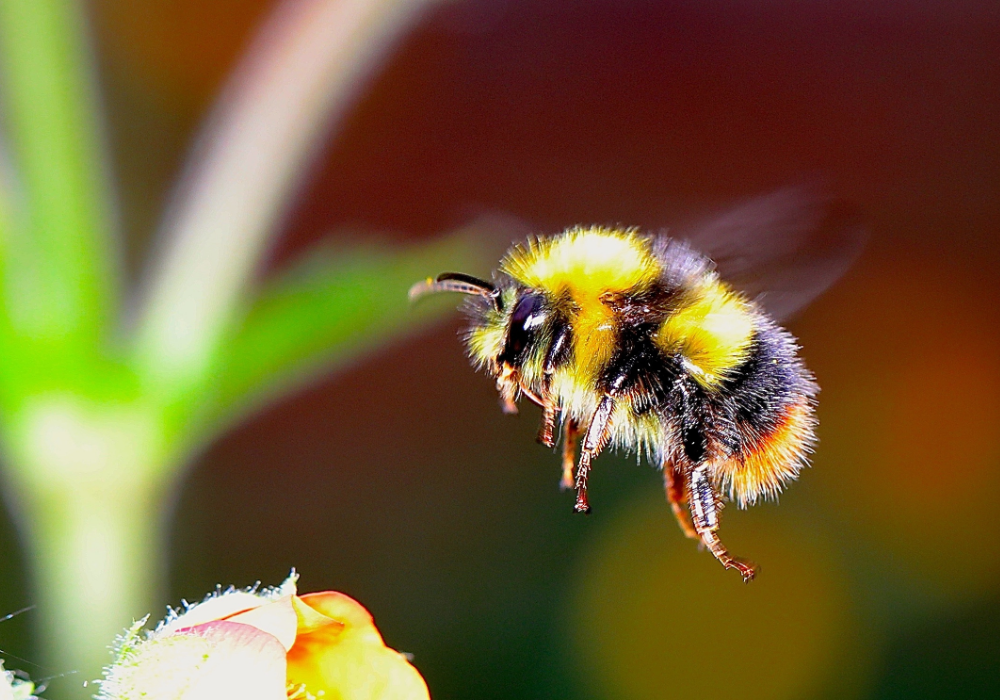
Bees may be tiny, but together, they shape entire ecosystems. Their pollination supports the growth of plants that feed animals and people alike. Every bee’s daily flight contributes to a global web of life, far bigger than they could ever imagine. They prove that even small efforts matter hugely.
It’s easy to feel powerless in the face of massive crises. But the hive shows us that small, steady actions stack up fast. Planting wildflowers, supporting local farmers, reducing waste—these choices ripple outward, just like the bees’ flights from flower to flower. Survival isn’t about single heroic acts—it’s about countless quiet contributions adding up to lasting change. The hive survives because no effort is too small, and neither is ours.