
Scientists confirm black hole characteristics through precise gravitational wave observations and models.
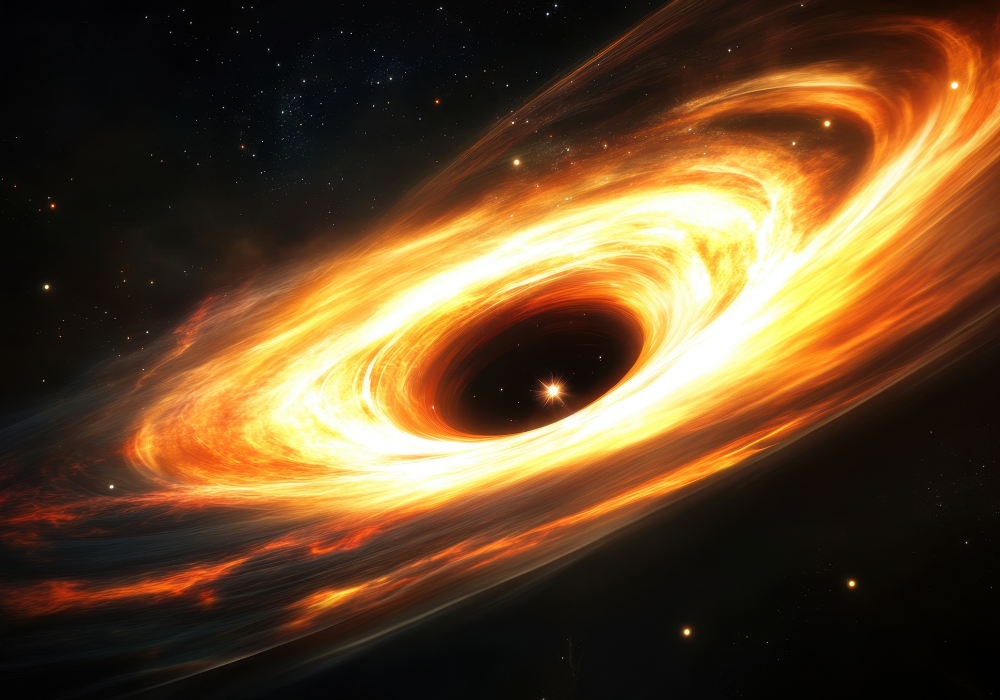
The recently observed phenomenon of a ‘ringing’ black hole offers compelling confirmation of long-standing scientific predictions rooted in Einstein’s theory of general relativity. Detected via gravitational waves emitted during black hole mergers, this cosmic ringing provides valuable insights into the mass, spin, and event horizon properties of black holes. These observations strengthen our understanding of spacetime distortions and open new avenues for studying black hole dynamics with unprecedented accuracy.
1. The black hole emits a distinctive ringing sound known as gravitational waves.
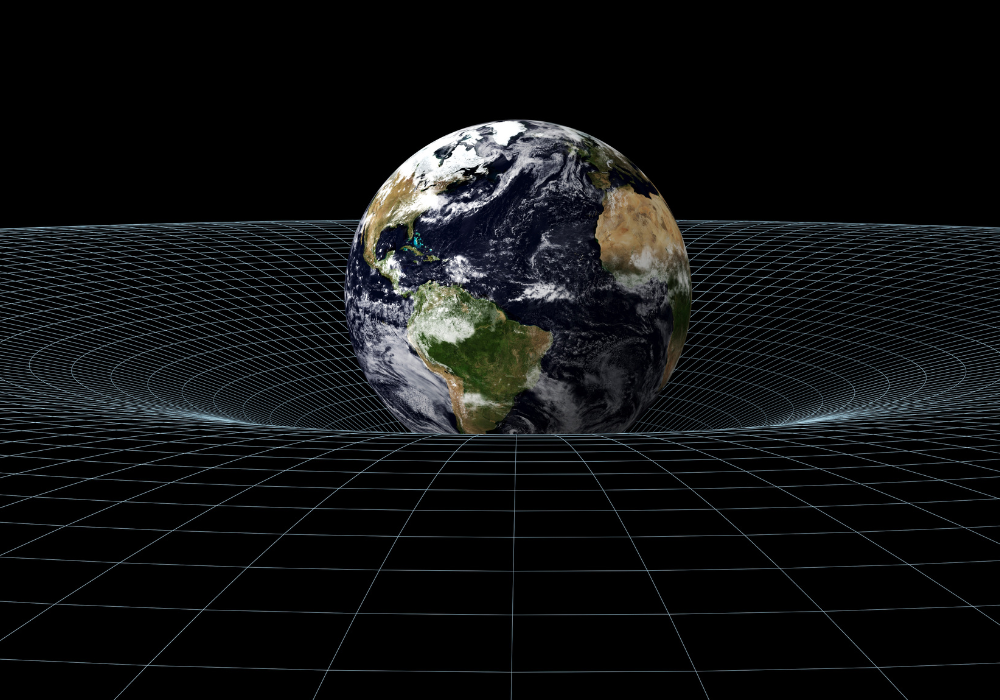
Ringing black holes produce gravitational waves, unlike any audible sound. This cosmic symphony occurs when black holes merge, sending ripples through spacetime. Gravitational wave detectors capture these oscillations, providing a window into the universe’s most mysterious phenomena.
These gravitational waves confirm predictions rooted in general relativity, showcasing a harmony between theory and observation. This alignment isn’t mere chance; it’s the result of precise mathematical models that have stood the test of time. By decoding these signals, scientists gain profound insights into fundamental cosmic processes.
2. Its mass aligns perfectly with what theoretical models had anticipated.
The mass of a ringing black hole is not surprising to scientists familiar with theoretical astrophysics. Using Einstein’s equations, researchers can predict its mass with remarkable accuracy. Such precision speaks to the power of these models.
This accurate mass prediction arose from years of meticulous research, combining simulations and real-time data from gravitational wave observatories. Each merger adds another piece to this cosmic puzzle. As more data pours in, scientists refine their understanding, honing the models that once seemed abstract into potent predictive tools.
3. The black hole’s spin rate matches predictions derived from Einstein’s equations.
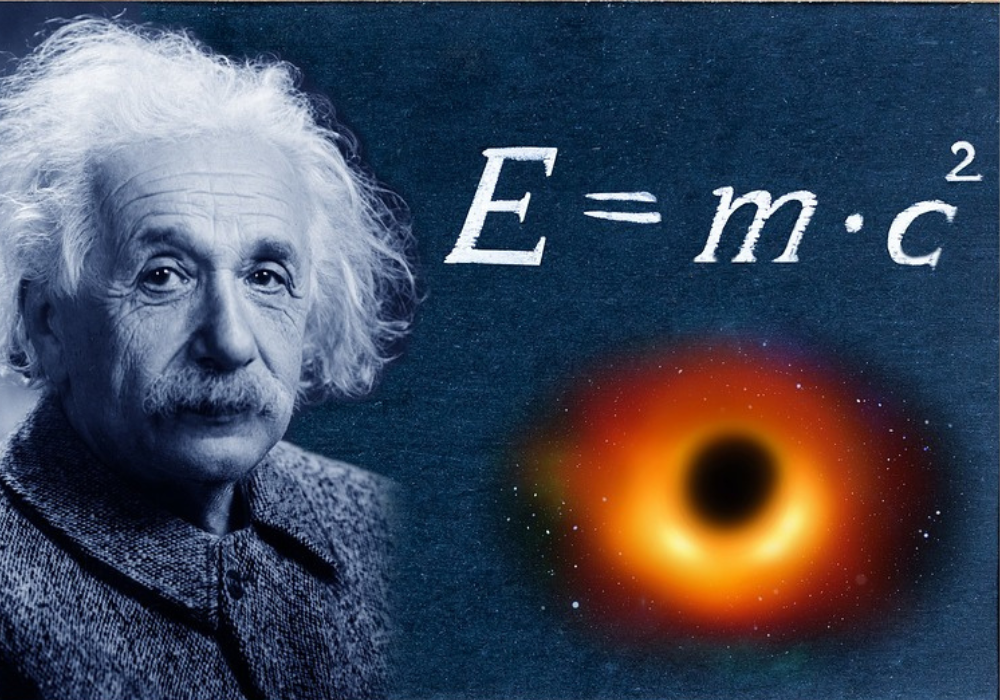
Einstein’s equations predict the spin rates of black holes with extraordinary detail. When a ringing black hole’s spin aligns with these predictions, it underscores the reliability of general relativity. This match signifies that scientists are on the right track.
Spin rates provide clues about prior stellar phenomena that led to the black hole’s creation. By investigating these rates, researchers deepen their understanding of stellar dynamics. Observations aligned with Einstein’s equations offer a gratifying affirmation of his groundbreaking theories, ensuring continued confidence in this framework.
4. The timing of its formation coincides with previous simulations of star collapse.
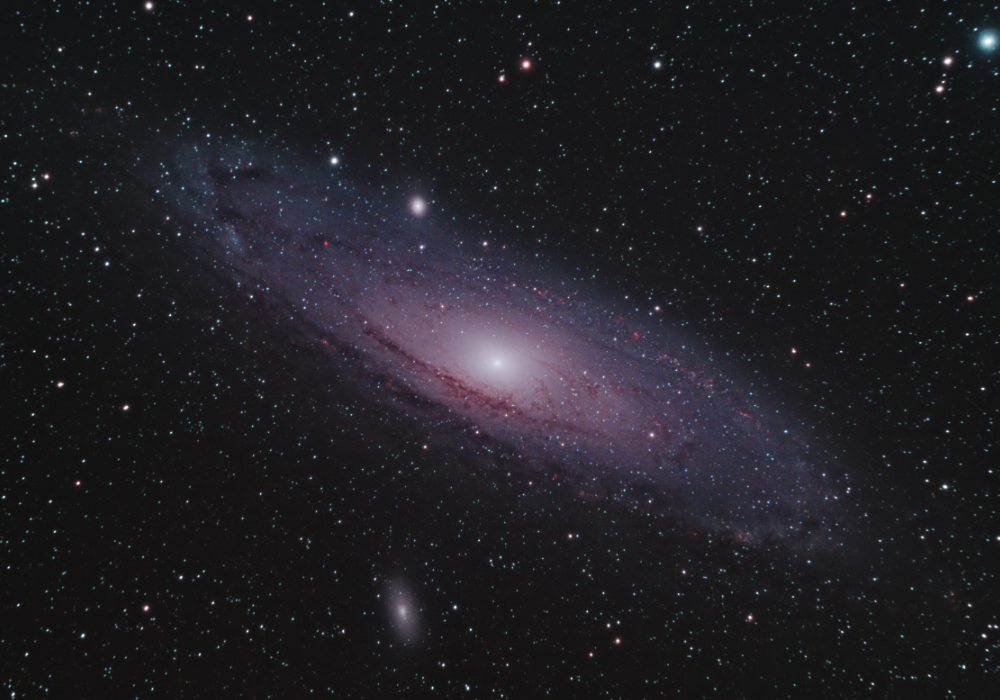
The formation timing of a ringing black hole can validate years of simulations. When it coincides with predicted timeframes from star collapse models, that timing reveals a fascinating alignment between theory and cosmic reality.
This synchronization allows scientists to trace back the cosmic chain of events leading to the black hole’s birth. With each coincidence, confidence in computational models grows, providing both reassurance and motivation for further exploration. Such timing precision is invaluable in piecing together the cosmic history written in the stars.
5. Scientists observed the black hole’s signal lasting longer than initially expected.
Ringing black holes sometimes exceed our expectations, exhibiting longevity beyond initial predictions. The length of gravitational wave signals can reveal intricate processes unfolding in events like black hole mergers.
Discovering longer-lasting signals challenges scientists to refine existing theories and models, pushing the boundaries of what’s known. Extended durations of these cosmic symphonies invite curiosity and further scrutiny, as researchers seek to understand star-sized complexities. Observing these unexpected details adds depth to our comprehension of black hole dynamics.
6. The detected waves offer direct evidence supporting the existence of event horizons.
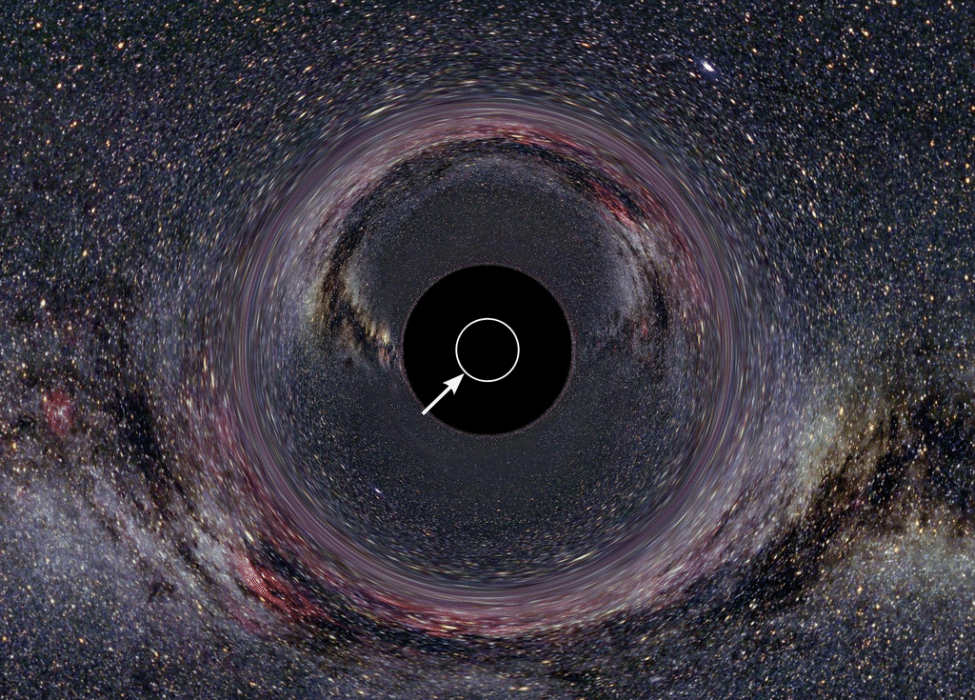
Black hole signals clarify an enduring mystery: the event horizon’s existence. Detected gravitational waves bolster this concept, a fundamental aspect of black holes. Waves captured from mergers offer concrete proof that these shadowy boundaries truly exist.
Detecting these signals helps delineate the boundary where light cannot escape, a keystone idea in astrophysics. Here, theoretical predictions meet observational evidence, paving the way for more nuanced discussions on cosmic horizons. Each detected wave deepens understanding, peeling back the layers of these celestial giants.
7. The frequency of the ringing resembles that of a vibrating bell in space.
The frequency of a black hole’s ringing evokes the resonance of a distant bell, capturing a universal rhythm. As gravitational waves echo through space, this frequency helps decode enigmatic phenomena at cosmic scales.
When scientists observe these bell-like frequencies, they compare them to predictions to verify theoretical models. The analogy highlights how cosmic frequencies can be as memorable as earthly ones. Such comparisons underscore the beauty of the universe, where timeless laws shape everything from a ringing bell to a black hole.
8. Its discovery helps validate decades of research in black hole physics.

This black hole’s discovery strengthens the foundations of black hole physics, affirming decades of scholarly work. Each observation ticks another box in the extensive ledger balancing theoretical predictions with nature’s phenomena.
By confirming mainstream theories, this case supports a collective academic journey. With decades of research validated, scientists feel assured their efforts illuminate the universe’s mysteries. Such validation ensures that the narrative of black holes, intriguingly constructed over the years, continues with consistency.
9. The black hole’s properties reveal new insights into how matter behaves near singularities.

As black holes sing, subtle nuances unfold, offering fresh insights on matter’s behavior near singularities, regions of infinite density. This behavior remains a key subject in astrophysics, bridging theoretical concepts with real-world observations.
Understanding these properties enhances knowledge of singularities, where traditional physics grapples with the unknown. Insights gleaned from ringing patterns become valuable assets in a field that continuously seeks to merge theory with observed reality. Each newfound detail adds to the compilation of cosmic knowledge.
10. The strength of its gravitational pull matches forecasts from astrophysical data.
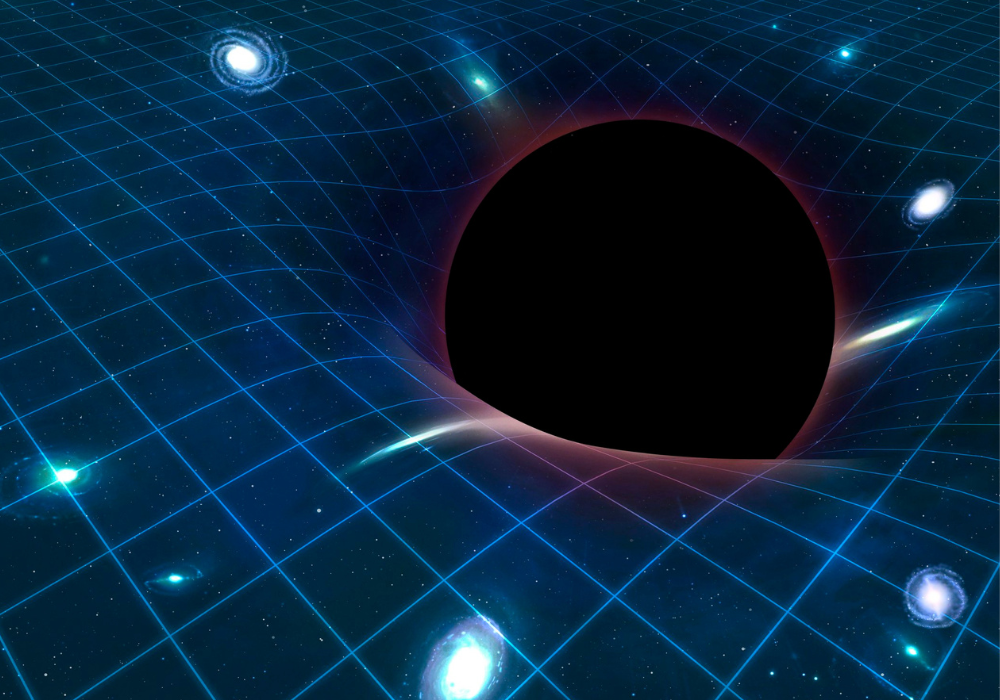
The gravitational pull of a ringing black hole exerts immense force, closely aligning with predictions. Astrophysical data meticulously forecast this strength, validating the theoretical frameworks painstakingly developed by physicists.
By seeing these forecasts materialize, scientists close the gap between simulations and reality. This confluence reassures scholars that they accurately assess cosmic forces. Meshing theoretical rigor with observable data facilitates robust explorations into how such formidable forces shape the universe’s vast landscape.
11. This black hole’s ringing pattern confirms predictions about wave damping rates.
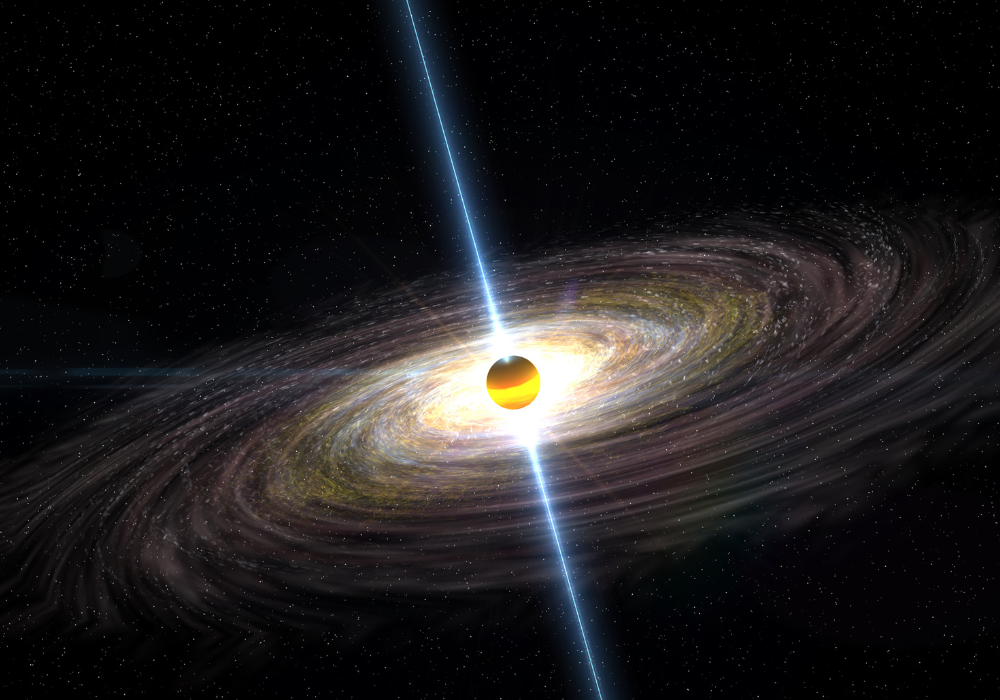
A ringing black hole confirms expectations about wave damping rates, where waves gradually lose energy. These rates are critical for verifying general relativity in action. When damping aligns with predictions, it notably strengthens theories.
Damping sculpture provides key insights not just theoretically but observationally as well. Wave patterns traced by gravitational wave detectors embody this phenomenon vividly. Reinforcing theoretical expectations through damped wave observations bolsters understanding, motivating further explorations into the fabric of spacetime.
12. Observations help refine the methods used to detect other distant black holes.

By observing ringing black holes, scientists refine techniques vital for detecting other distant black holes. These methods evolve as gravitational wave observations become more intricate and reliable.
Improving black hole detection methods allows broader scientific engagement in mapping the universe’s dark and elusive corners. Insights gathered from these refined techniques encourage expansive studies, pushing boundaries in black hole research. This cycle of refinement perpetuates discovery, constantly advancing knowledge.