
Social media broke the internet, and it’s coming for your sanity next.

At first, it felt like freedom. You could speak your mind, find your people, maybe even go viral for something hilarious or smart. But somewhere along the way, the vibe shifted. Now it’s algorithms over authenticity, outrage over nuance, and clout-chasing over connection. What used to be fun feels more like a job—or worse, a performance with constant judgment as the price of admission. You’re either posting or you’re invisible.
You’re either perfect or you’re problematic. And if you slip up, it’s not just embarrassment—it’s a takedown. The line between public and private has blurred, and no one’s really winning anymore. Whether you’re feeling drained, overwhelmed, or just over it, you’re not imagining things. The internet is having a meltdown in real time, and we’re all watching from the front row—whether we like it or not.
1. Everyone’s obsessed with the algorithm, not the content.
It’s not about what you’re saying—it’s about whether you’re saying it in the exact way the algorithm wants. You could post something thoughtful, creative, even important, but if it doesn’t check the right boxes (hook, format, length, timing), it vanishes into the void. So people start tweaking their tone, their timing, their entire personality just to survive the scroll. Suddenly, your online presence feels less like self-expression and more like feeding a machine that never stops demanding more.
Over time, this constant calibration rewires your brain. You don’t ask, “Do I want to share this?” You ask, “Will this perform?” According to Kyle Chayaka for The New Yorker, social media platforms design their algorithms to maximize user engagement, often promoting content that elicits strong emotional reactions, leading to what is called “algorithmic anxiety.” And when the algorithm ghosts you? It’s personal. Even though it isn’t.
2. Clout has replaced actual credibility—and everyone knows it.
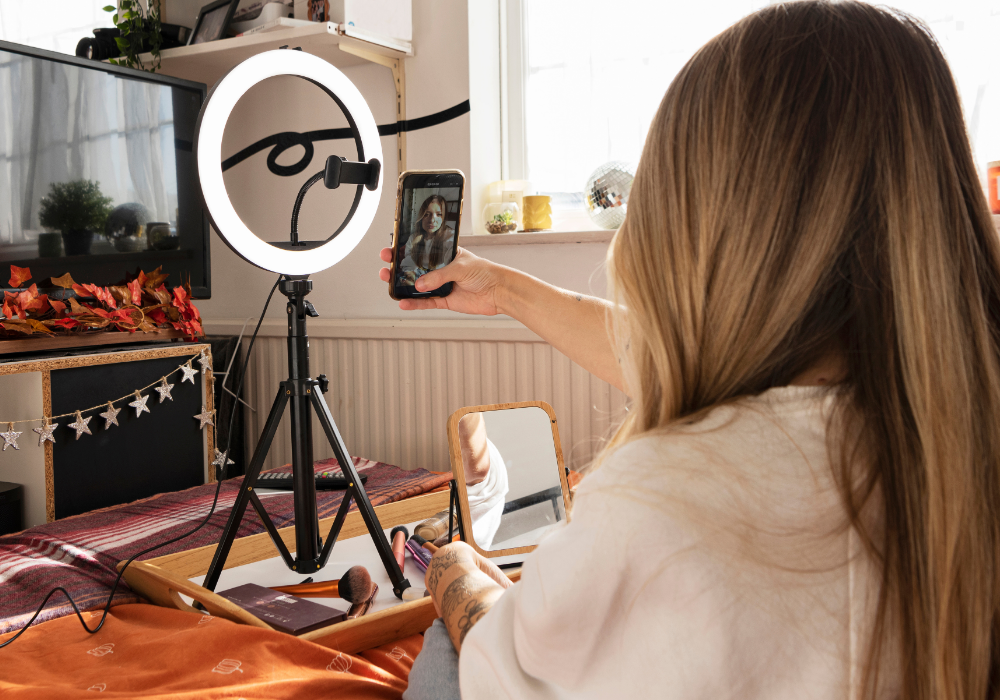
You could be an expert in your field, but if your content isn’t shiny, punchy, or trendy enough, no one cares. Meanwhile, someone with zero background can go viral by confidently shouting nonsense into a ring light. Authority has shifted from knowledge to visibility.
Research by Pouyan Eslami for ScienceDirect shows that users tend to perceive accounts with a large following as more credible and influential, which can lead to higher engagement and visibility, despite the absence of expertise. The wild part is how normalized it’s become. People know that follower count doesn’t equal value, but the system keeps rewarding it anyway.
Influencer deals, speaking gigs, podcast invites—they all chase numbers, not nuance. And that leaves thoughtful voices drowned out by the loudest, most marketable personalities. When clout is currency, people start faking it just to survive. And in the noise, real insight gets buried.
3. Cancel culture isn’t accountability—it’s performance art.

Calling people out used to mean something. It was about justice, consequences, maybe even change. But now, it’s often just another way to boost your own visibility. Per Emily A. Vogels for Pew Research Center, Americans are deeply divided over “cancel culture,” with some viewing it as a means of holding people accountable, while others see it as a form of unjust punishment. And once the mob gets rolling, nuance disappears fast. Context gets ignored, apologies don’t matter, and people cheer as careers crumble.
This isn’t about excusing harmful behavior—it’s about recognizing when the internet turns accountability into a show. It becomes less about what happened and more about who gets to go viral for saying something about it. And when cancellation becomes a tool for self-promotion, nobody learns, and everybody loses.
4. Everyone is curating a personal brand—even if they’re not trying to.
You might not think of yourself as a brand, but social media doesn’t care. Every post, every photo, every caption gets processed by an invisible audience. So you start editing yourself. Maybe you delete that post that didn’t do well. Maybe you pause before sharing something real. Without realizing it, your online self becomes a version of you that’s filtered for approval, trimmed for performance, and optimized for engagement.
It’s not just influencers. Regular people are curating, too—crafting digital personas that are aspirational, funny, aesthetic, or unbothered. But when your life becomes content, it’s hard to know where the real you ends and the internet version begins. Even your silence can feel like a statement. It’s a weird kind of pressure: to always be someone, even when you don’t feel like anyone. And it’s quietly exhausting.
5. Virality is the new popularity contest and it’s making everyone anxious.
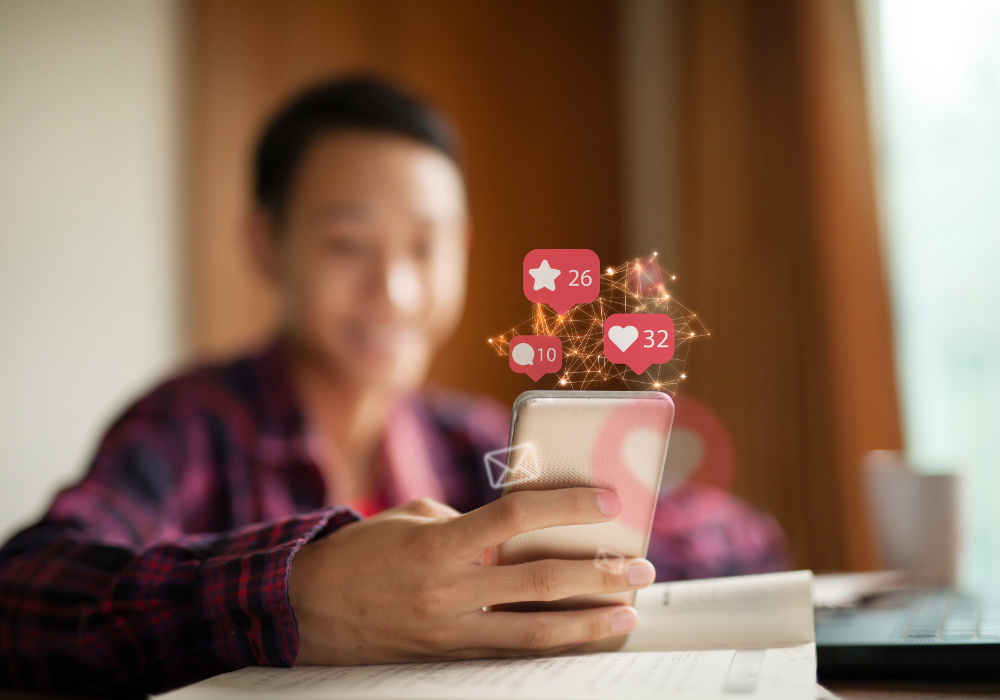
Going viral used to feel like a lucky break. Now it feels like the only way to matter. People chase it with trends, edits, and gimmicks, hoping for that one post that breaks through the noise. But when your worth feels tied to numbers, the pressure ramps up fast. Every flop feels like failure. Every hit raises the bar. Suddenly, you’re not just posting—you’re performing for validation that disappears in twenty-four hours.
And even when virality comes, it rarely feels like enough. It fades fast, and then it’s back to chasing the next moment. The cycle never stops, and neither does the comparison. You start measuring yourself against people who got lucky—or who manufactured it through outrageous takes and clickbait. It’s hard to feel content when the culture tells you that being seen is more important than being grounded.
6. Outrage content is dominating your feed and your mood.
There’s a reason it feels like everything online is making you mad lately. Outrage fuels the algorithm—it keeps people clicking, commenting, and sharing. So the content you see most often is the stuff that triggers you. Someone said something awful? Watch it. Someone made a ridiculous claim? Argue in the comments. It’s a digital pressure cooker, and even if you know it’s manufactured, it still gets under your skin.
This constant emotional whiplash starts to warp your mindset. You expect to be angry when you open an app. You brace for drama, for bad takes, for something to ruin your vibe. And slowly, you become less patient, more reactive, and emotionally drained. It’s not just social media anymore—it’s a mood machine. And it’s keeping you hooked through frustration instead of fun.
7. Everything is content now and nothing feels sacred anymore.

There used to be parts of life that felt private, messy, or just yours. Now, people record everything—breakups, breakdowns, family drama, even grief. Moments that once stayed behind closed doors are packaged for public consumption, complete with captions and hashtags. It’s not always exploitative, but it does blur the lines. You start to wonder if people are sharing because they want support—or because they want attention.
And the more we see others turning their lives into content, the more pressure we feel to do the same. You hesitate before doing anything meaningful without asking, “Should I post about this?” Even joy starts to feel performative.
And when everything becomes a potential post, nothing feels fully real. Experiences get filtered, cropped, and narrated instead of lived. Suddenly, you’re not just making memories—you’re managing optics.
8. The pressure to be constantly available is quietly destroying your peace.

Notifications, messages, DMs, tags—there’s always something pulling your attention. You post something and feel like you have to respond. You see a message and feel guilty for not replying fast enough. Social media turned connection into obligation, and now it feels rude to just disappear for a day. The expectation is always-on, and unplugging starts to feel like rebellion.
This constant accessibility chips away at your mental space. You never really clock out. Even when you’re not online, you’re thinking about what’s happening online. Did that story flop? Did someone misinterpret your post? Did you miss a trend? It’s a low-level buzz of anxiety that hums in the background, draining your focus. Rest doesn’t come naturally anymore—it has to be scheduled and defended. And that’s not sustainable.
9. Trends move so fast that authenticity can’t keep up.
One week it’s girl dinner, the next it’s de-influencing, and by the time you figure it out, something new is already taking over. The speed of social media trends has turned the internet into a treadmill you can’t get off. To stay relevant, people feel like they have to constantly adapt, shift their tone, and reinvent themselves. It’s less about finding your voice and more about keeping up with what’s viral.
That kind of instability makes it hard to feel grounded in who you actually are. When everything is a moment, there’s no space for consistency. You’re encouraged to post before you’ve processed, to react before you’ve reflected. Authenticity becomes performative, shaped by what will “land” instead of what feels real. And in the rush to keep up, it’s easy to lose yourself entirely.
10. Everyone’s afraid to speak up because the internet never forgets.

You might have something thoughtful to say, but that doesn’t mean you’ll say it. These days, even a well-intentioned post can be twisted, misquoted, or dragged into a dogpile. People scroll with pitchforks now, waiting for someone to slip. So instead of being open, you start editing yourself down to something safe and bland—if you speak at all. Silence becomes self-preservation.
And it’s not just about the moment. Old posts resurface. Screenshots get passed around. One bad take from five years ago can still haunt you today. So people stop taking risks. They stop learning out loud. And when everyone’s too scared to say anything real, we’re left with a feed full of noise, disclaimers, and surface-level takes. The fear of permanent judgment kills conversation before it starts.
11. Parasocial relationships are replacing real connection and no one’s talking about it.

It’s easy to feel close to someone you follow online. You see their morning routines, their rants, their face every single day. But that closeness is a one-way street. You might feel like you know them, but they don’t know you. And still, people build emotional attachments to influencers, creators, and internet personalities—treating them like friends, therapists, or role models without realizing how unbalanced it all is.
Over time, those fake connections can start to feel more fulfilling than real ones. They’re predictable, curated, and always available. But they don’t show up when you need a ride to the airport or someone to vent to at 2 a.m. That emotional energy goes somewhere, and when it’s all poured into people who don’t even know you exist, you’re left with a sense of intimacy that isn’t real—and a loneliness that absolutely is.
12. Social media exhaustion is real and it’s not just burnout—it’s grief.
You keep scrolling, but it doesn’t hit like it used to. The platforms that once felt exciting now feel hollow, repetitive, or straight-up depressing. You don’t laugh as hard. You don’t care as much. And deep down, you miss what it used to be. That early internet magic—random, weird, spontaneous—is gone. Replaced by brand deals, drama cycles, and a never-ending flood of curated content.
What you’re feeling isn’t just fatigue. It’s grief. Grief for the time lost, the energy spent, the friendships that faded, and the joy that got sucked up by algorithms and ads.
There’s a real sense of mourning when something that once felt like a lifeline starts to feel like a trap. And recognizing that emotion might be the first step toward stepping back, reclaiming your peace, and remembering that life doesn’t have to be scrollable to be meaningful.