
When your surroundings calm down, your mind finally can too.

Clutter doesn’t just crowd your closet—it crowds your brain. Every pile, every junk drawer, every “I’ll deal with it later” item weighs you down in ways you don’t even realize until it’s gone. A messy space creates mental noise, decision fatigue, and a low-key sense of failure that follows you around. But here’s the good news: you don’t need to become a minimalist monk to feel better. You just need a plan that works.
Decluttering isn’t about getting rid of everything. It’s about making room for what actually supports your life, not drags it down. When your environment feels lighter, your mind does too. It’s not magic—it’s momentum. The more you let go, the easier it gets. Whether you’re buried under laundry, drowning in digital files, or just sick of the chaos, these hacks will help you breathe again—without burning your life to the ground.
1. Handle small tasks the moment you think of them.

That coffee mug on your nightstand? Just take it to the sink. That email you’ve been putting off? Answer it now. Most of the clutter in our homes and brains starts with tiny tasks we avoid. Not because they’re difficult, but because we keep convincing ourselves we’ll get to them later.
Meanwhile, they stack up and turn into an overwhelming mess. According to productivity expert David Allen, who introduced the two-minute rule in his book Getting Things Done, any task that takes less than two minutes should be done immediately to avoid unnecessary buildup and mental drag.
The two-minute rule is a game-changer. If something takes less than two minutes to do, do it immediately. You’ll be shocked how much lighter your space feels once those little things stop piling up. It builds momentum fast, and momentum is everything when it comes to clearing out physical and mental clutter. You don’t need to overhaul your life. You just need to stop letting simple tasks sit around stealing your energy.
2. Keep your entryway clean or chaos will follow you in.

The first place you see when you walk through the door sets the mood for your entire home. If it’s cluttered, your brain reads that as disorganized—even if the rest of your space is spotless. Piles of shoes, bags, junk mail, and tangled keys all scream stress before you’ve even taken your coat off. Per Lola Houlton for Homes & Gardens, visual clutter in entryways can trigger the release of cortisol, the body’s primary stress hormone, making the space feel unwelcoming and increasing stress levels
Create a landing zone that actually works. Use a tray for keys, a hook for bags, and a bin for incoming mail. When your entryway is under control, everything else feels easier. It’s your reset point, your launchpad, and your unwelcome committee if you let it pile up. Take ten minutes to tame it and it will stop being a magnet for every random item you don’t know where to put.
3. Clear out your junk drawer before it becomes a black hole.
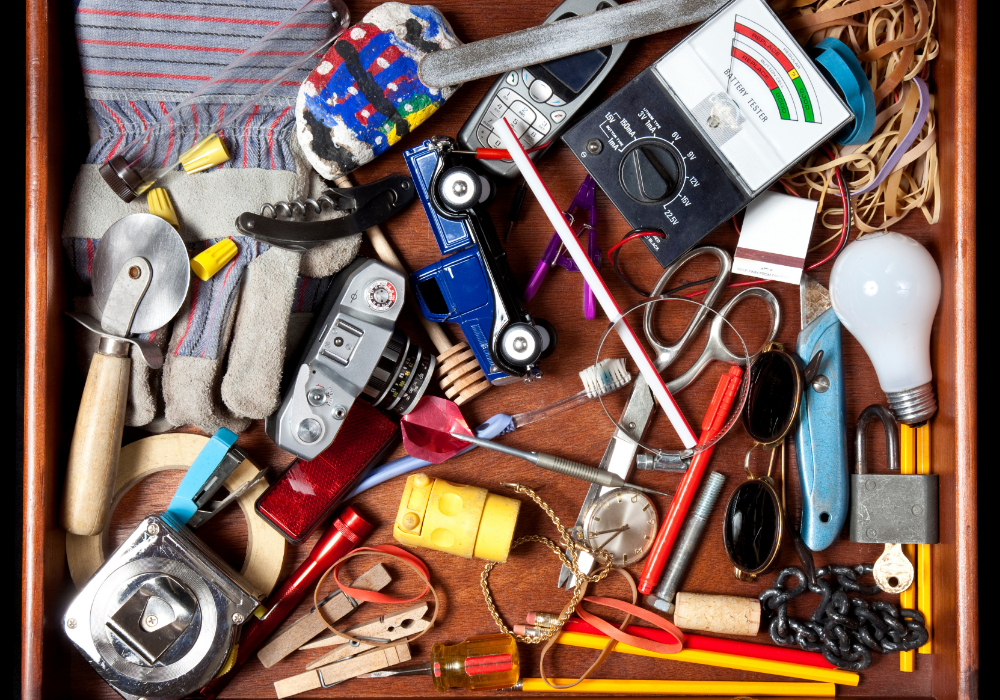
Everyone has one, and no one wants to open it. That junk drawer full of old batteries, takeout menus, and tangled cords is more than just annoying—it’s a daily reminder of postponed decisions. Every time you dig through it, your brain does a little eye roll. It’s visual clutter, and it comes with mental clutter baked in. As highlighted by a study published in the Journal of Environmental Psychology, clutter can increase stress and anxiety levels, making it harder to focus and process information.
Dump it all out. Seriously. Empty the whole thing and only put back what actually belongs there. Use little containers or dividers so things aren’t just floating in chaos. Keep what you use. Toss what you don’t. If it takes more than a second to find what you’re looking for, it’s not organized. The junk drawer doesn’t have to disappear—but the junk definitely should.
4. Treat your closet like a daily decision maker not a storage unit.

Your closet isn’t just where your clothes live. It’s where your confidence starts every single day. If it’s packed with clothes that don’t fit, things you don’t like, or items you feel weirdly guilty about, it becomes a mental minefield. No wonder you feel like you have nothing to wear.
Make it easy on yourself. Keep only what fits, what flatters, and what feels like you. Don’t hold onto pieces just because they were expensive or maybe-someday items that just make you feel bad. A clear closet means quicker mornings, better choices, and fewer moments spent second-guessing yourself in front of the mirror. Decluttering your wardrobe is like decluttering your self-image—and that’s worth way more than a sweater you never wear.
5. Stop letting your phone clutter your brain every five seconds.

Clutter isn’t just physical—it’s digital, and it’s relentless. Your phone is probably the worst offender. Between non-stop notifications, random screenshots, unopened emails, and 37 browser tabs “you’ll get to later,” your screen has quietly turned into a stress machine. All that visual noise pulls your focus, eats your time, and makes it way harder to feel present in the real world.
Start by muting the chaos. Turn off notifications that don’t matter. Organize your home screen so the useful apps are front and center. Archive the old messages. Delete the apps you haven’t opened in months.
Then go a step further and do a photo purge or clear your downloads folder. A digital detox doesn’t need to be dramatic—it just needs to give your brain room to breathe. A calmer phone leads to a calmer mind, and that’s the kind of clarity no filter can fake.
6. Give every item in your home one clear place to belong.

Clutter happens when your stuff doesn’t know where to go—and let’s be honest, most of us wing it way too often. You drop your sunglasses on the counter “for now,” your charger on the floor, your mail wherever there’s space. Before you know it, every surface is full and nothing has a home. That chaos builds silently until your space feels like it’s closing in on you.
The solution isn’t more bins or bigger closets—it’s better boundaries. Give every item one clear, logical place to live. That means the scissors, the receipts, the spare keys, the chargers. If it doesn’t have a home, it becomes clutter by default. Label drawers. Use dividers. Make it obvious. Once you train your space to function, putting things back becomes second nature. Your house starts to run itself, and your brain finally gets a break from chasing your stuff around.
7. Be ruthless about what stays on your surfaces.
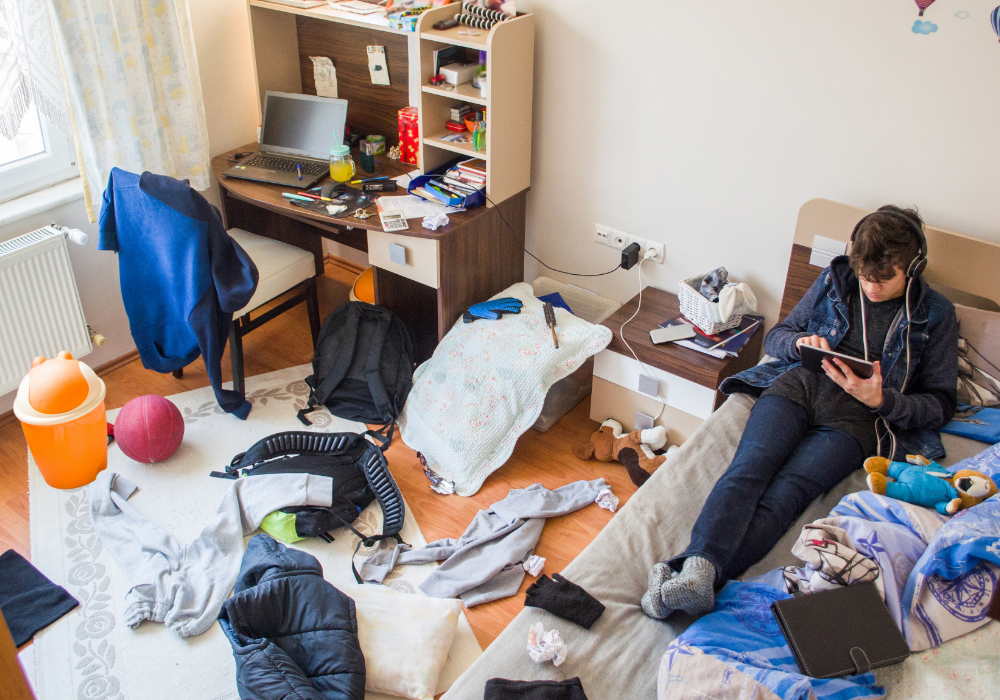
Clutter doesn’t need much space to take over—just a flat surface and a little bit of time. The kitchen counter becomes a dumping ground. The nightstand becomes a graveyard for books and receipts. The desk? Don’t even look at it. Once one thing lands there, the rest follows. And before long, your most visible spaces feel like storage units for your indecision.
Start by clearing everything. Yes, everything. Then put back only what you use daily or absolutely love. That’s it. Get comfortable with blank space. Flat surfaces aren’t meant to hold your stress—they’re meant to support your life. The more intentional you are with what stays out, the easier it is to keep your home feeling peaceful. It’s not about perfection. It’s about giving your brain fewer things to process every time you walk by. A clear surface is a daily gift to your future self.
8. Let go of the guilt you’ve attached to your stuff.

Some of the hardest clutter to deal with isn’t ugly—it’s emotional. It’s the fancy gift you never used, the dress that doesn’t fit, the hobby gear you gave up on. These things live in our closets and corners because we feel too guilty to let them go. We tell ourselves we’re wasting money or disrespecting someone’s kindness, so we hang on to stuff we don’t even like.
But here’s the truth: keeping things out of guilt doesn’t make you more responsible—it just makes your space heavier. You’re not honoring the object or the person who gave it to you. You’re punishing yourself with a daily reminder of regret. Letting go doesn’t erase the past. It just makes space for the present. Free yourself from the idea that value comes from possession. If something brings stress instead of support, it’s time to thank it and move on.
9. Learn to say no or your calendar will own you.

Some clutter lives on your shelves. Other clutter lives on your schedule—and it’s just as exhausting. We say yes too easily. Yes to work requests we hate. Yes to events we dread. Yes to responsibilities that don’t serve us. Before we know it, our time is booked solid and none of it feels like ours. That overload doesn’t just drain your hours—it drains your energy, your focus, and your peace of mind.
Start treating your time like your space. Declutter it. Look at your calendar the same way you look at a junk drawer: what do I actually use and need here? Cancel what you can. Say no more often. Create empty space and leave it that way. A schedule with breathing room gives your brain a break and your priorities a chance to rise to the top. Not every opportunity is meant to be accepted.
10. Stop treating your storage spaces like dumping grounds.
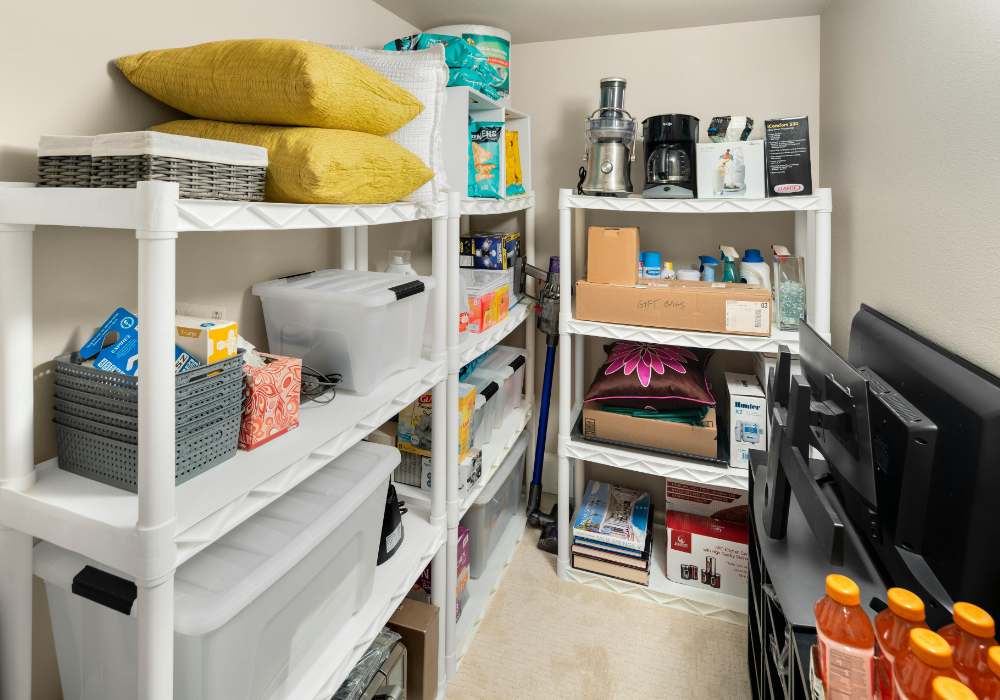
Storage should help you stay organized—not bury your forgotten mistakes. Closets, garages, basements, and attics become black holes of stuff we swear we’ll deal with “later.” But when later never comes, we’re left with mountains of mystery boxes, tangled wires, seasonal items we forgot we owned, and gear for hobbies we gave up five years ago. That’s not storage. That’s a landfill with walls.
It’s time to stop hiding clutter and start making decisions. Pull everything out. Yes, it will look worse before it gets better. Then sort it out. If you haven’t used it, worn it, fixed it, or thought about it in the last year, it’s not useful. It’s just taking up real estate. Decluttering storage isn’t about punishing yourself for the past—it’s about freeing up the future. Your space can breathe again, and so can you.
11. Finish what you start or clutter will keep restarting itself.

Half-done projects are clutter in disguise. That half-painted wall, the pile of papers that never got filed, the laundry basket that’s still waiting to be folded—these things don’t just take up space. They take up mental space. They sit quietly in the background whispering, “You’re behind,” every time you walk by. And when there are five or six of them scattered throughout your home? That low hum becomes a roar.
Pick one project. Just one. Finish it. Throw out the paint tray, file the last folder, put away the clothes. Then move to the next. You don’t need to finish everything in a day, but you do need to stop creating more half-finished tasks.
Clutter loves procrastination. It thrives in that in-between space. The most satisfying kind of tidy is the kind that’s fully done. Completion clears more than just your to-do list—it clears your mind.
12. Decluttering your space is just the beginning of real peace.

Getting rid of stuff feels amazing, but the true benefit isn’t just a cleaner house—it’s a calmer brain. Once the clutter is gone, the noise fades. You walk into your space and you don’t feel overwhelmed. You actually want to be there. The piles are gone. The guilt is gone. And what’s left is breathing room—for your thoughts, your routines, and your sense of control.
But here’s the truth most people miss: decluttering is not a one-time event. It’s a practice. The more you let go, the more you learn what actually matters to you. It’s not about white walls and empty shelves. It’s about removing everything that weighs you down—physically and emotionally—so you can live with more clarity and less chaos. When your home supports your peace instead of fighting it, that’s when life starts to feel a little more manageable again.